Complete Fleet Vehicle Damage Repair in Phoenix, AZ: Minimizing Business Downtime
Complete Fleet Vehicle Damage Repair in Phoenix, AZ: Minimizing Business Downtime
Why Fleet Vehicle Damage Repair Demands a Different Approach
A Phoenix landscaping company loses two trucks to a rear-end collision on I-17 during Monday morning traffic. Both vehicles need bumper work, one has frame concerns, and the crews scheduled to use them can’t start their routes. By noon, the business owner is fielding calls from frustrated clients and doing math on lost daily revenue. That’s the reality of fleet damage. It’s not just a body shop problem. It’s a business continuity problem.
Fleet vehicle damage repair is categorically different from fixing one person’s car after a fender bender. The scale alone changes everything. A single collision event can knock out multiple vehicles at once, and even routine wear and minor impacts accumulate across a fleet faster than most operators track. Coordinating repairs across several units, managing documentation for each one, and keeping drivers productive requires a shop that thinks operationally, not just technically.
Downtime costs are real. A commercial van sitting in a bay waiting for parts or a back-logged repair slot isn’t just inconvenient. It’s a daily expense measured in missed deliveries, rescheduled jobs, or hourly workers standing idle. Many fleet operators underestimate this number until they’ve actually calculated it. A repair that takes three extra days due to poor shop coordination can easily cost more than the repair itself.
Most body shops aren’t built for fleet work. They handle one vehicle at a time and operate on a first-come, first-served model that doesn’t account for the scheduling complexity fleet managers deal with. That’s not a criticism of general repair shops; it’s just a different workflow. Fleet operators in Phoenix, AZ, USA need a shop that can stage multiple repairs, communicate proactively, and prioritize getting vehicles back on the road without cutting corners on quality.
Brad’s Deer Valley Collision has been operating in Phoenix since 1985. Our fleet repair services are built around the specific demands of commercial operators, and our 40-year track record reflects a shop that knows how to handle complexity without letting quality slip. You can also read what customers say about working with us before you commit.
The right shop matters more for fleet work than almost any other repair scenario. Choosing based on lowest bid alone is a mistake that tends to cost far more later.
Priority Scheduling and Bulk Repair Coordination
Most shops treat fleet work like a stack of individual repairs. That’s where things go wrong. When three delivery vans show up with collision damage on the same Tuesday morning, a shop without a dedicated coordination system starts playing Tetris with its bay assignments, and somebody’s vehicle sits untouched for two days while a technician waits on a parts order. We’ve seen this pattern too many times over the past four decades.
At Brad’s Deer Valley Collision, fleet vehicle damage repair gets a separate intake track from the moment you call. We don’t drop your commercial vehicles into the general queue and hope for the best.
How Staggered Intake Actually Works
A lot of fleet managers assume that dropping off all their vehicles at once is the most efficient approach. Honestly, it usually isn’t. Staggered intake, where vehicles arrive in coordinated waves based on repair priority and parts availability, keeps technicians productive instead of waiting. We schedule the frame and structural work first, then move bumper repairs and paint through in sequence. Nothing sits idle because a critical part hasn’t cleared our receiving dock yet.
Our team does a rapid damage assessment on each vehicle before it enters the queue. That initial walkthrough catches hidden damage that would otherwise surface mid-repair and delay everything. We document findings with photos and share them with your fleet manager before any work begins. No surprises on the backend.
Dedicated Bays for Commercial Work
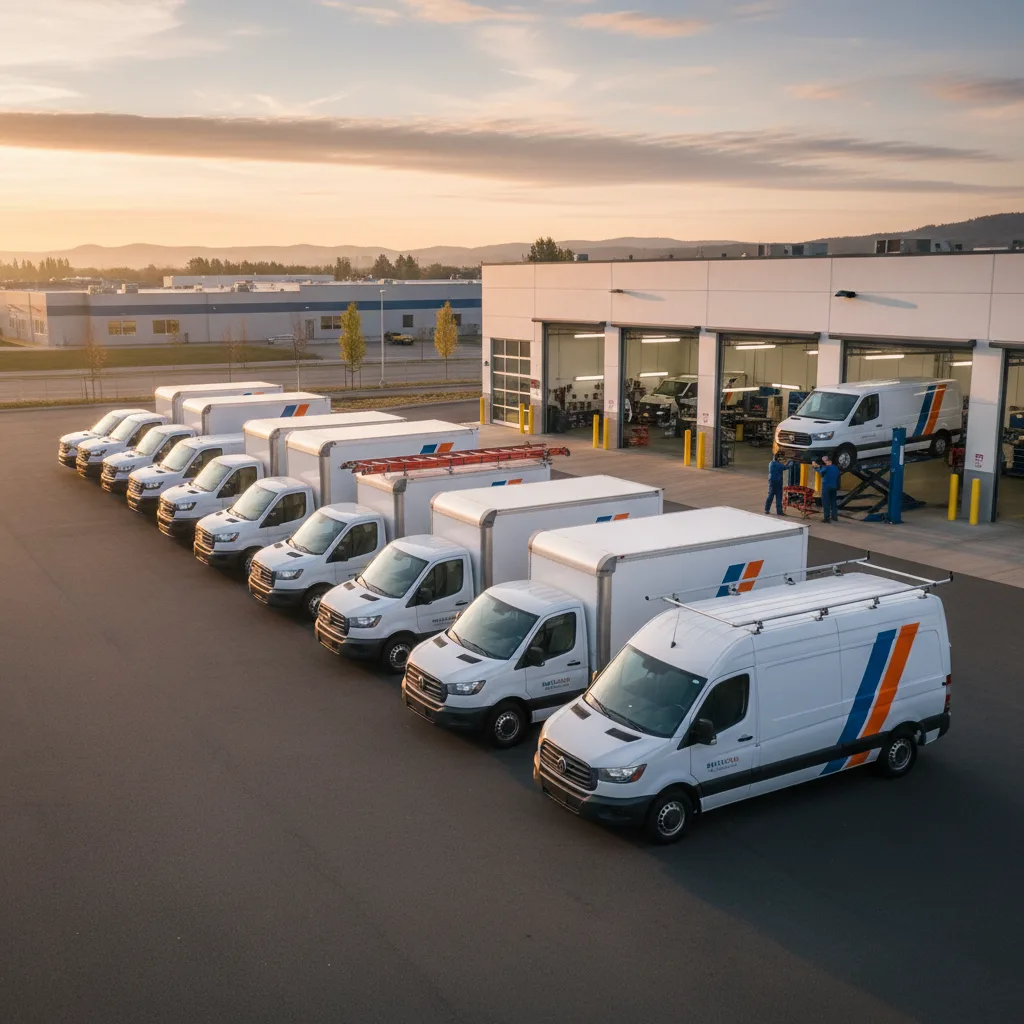
Capacity matters. We maintain dedicated bays specifically for fleet repair work, which means your commercial vehicles aren’t competing for space with individual customer drop-offs. Those bays are staffed by technicians who work fleet jobs regularly and understand the pace these accounts require.
Fleet managers in Phoenix, AZ can visit our facility directly to walk the floor and see how repairs are staged. We welcome that. You’ll find our workflow is a lot more structured than what most independent shops offer. Our fleet repair services page breaks down the full scope of what we handle for commercial accounts.
Communication That Keeps You in Control
Real-time updates are non-negotiable for fleet operators. Your dispatcher needs to know which vehicles will be road-ready by Thursday morning, not find out Friday afternoon. We provide scheduled status updates throughout the repair cycle so your team can plan routes, crew assignments, and customer commitments without guessing.
Our customer reviews reflect what this kind of coordination looks like in practice. Reach out to us directly to discuss a scheduling plan built around your fleet’s operational calendar.
Common Fleet Collision Damage Types and Repair Solutions
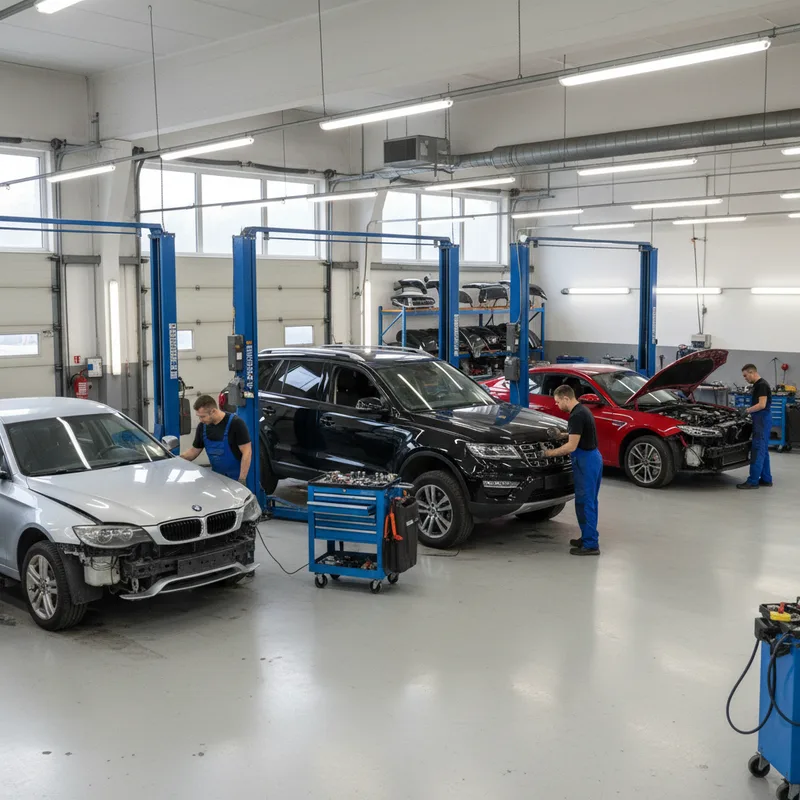
Delivery vans take rear hits. Service trucks pick up door dings in tight parking lots. Box trucks scrape loading docks on the driver’s side. After nearly four decades of fleet vehicle damage repair in Phoenix, AZ, the patterns are predictable, even if the individual damage isn’t.
Knowing what you’re dealing with changes how fast you can move. Here’s a practical breakdown of what we see most often and how each damage type gets resolved.
Rear-End Impact on Delivery Vehicles
This is the most frequent call we get from fleet operators. A driver stops short in traffic on the 101, someone clips the back end, and suddenly there’s bumper damage, a bent hitch receiver, and maybe a crumpled rear panel. The visible damage looks manageable. That’s where a lot of shops get it wrong.
Rear impacts transfer force up through the vehicle’s frame rails. What looks like a bumper replacement job can actually involve frame deflection that won’t show up without a proper measuring system. Skipping that diagnostic step is a mistake we’d never make, but plenty of quick-turnaround operations do. If the frame isn’t checked and corrected, that vehicle will handle poorly and wear tires unevenly for the rest of its working life.
Side-Panel and Door Damage on Service Vans
Tight commercial driveways and crowded job sites around the Phoenix metro create a lot of side-panel contact damage. Sliding door rails get bent. Body lines get creased. Paint gets scraped down to bare metal, which matters in the Arizona heat because oxidation accelerates quickly here.
Most of this damage is repairable without full panel replacement if it’s addressed before rust or structural compromise sets in. Dent removal, crack repair, and precise fleet repair services for panel work can get a van back in rotation without the cost of full replacement parts. The key is not letting minor damage sit on the back burner while the vehicle keeps working.
Front-End Damage on Work Trucks
Front bumper and grille damage happens when trucks back into obstacles or get tapped pulling out of commercial lots. These repairs often involve more than cosmetics. Radiator support brackets, headlight mounts, and hood alignment can all be affected. Any vehicle with advanced driver assistance systems, including automatic braking or lane departure warnings, needs those systems recalibrated after front-end work. That’s non-negotiable for safety compliance.
Why Expert Diagnosis Protects Your Fleet Long-Term
Hidden frame damage is the most expensive problem a fleet manager can ignore. A vehicle that looks road-ready but carries undetected structural compromise is a liability on Phoenix roads and a workers’ comp issue waiting to happen.
Our team has been doing this since 1985. We write accurate estimates, document everything, and don’t cut corners on the diagnostic side. If you want a second opinion on damage your current vendor flagged, reach out directly and we’ll take a look.
Insurance Claims and Fleet Repair Documentation
Fleet insurance claims are not like personal auto claims. The paperwork is heavier, the stakes are higher, and a disorganized shop can slow the whole process down by days. At Brad’s Deer Valley Collision, we’ve handled commercial vehicle claims long enough to know exactly what insurers need and how to get approvals moving fast.
We work directly with insurance carriers as a body shop that participates in direct repair programs. That means we communicate with your insurer on your behalf, submit detailed damage assessments, and provide the documentation adjusters need without putting that burden on your fleet manager.
What Fleet Documentation Actually Looks Like
A good commercial repair estimate goes well beyond a line-item parts list. For fleet vehicle damage repair in Phoenix, AZ, carriers typically want photographic evidence of all damage, a written scope of repairs with part numbers, labor time breakdowns, and confirmation of pre-repair vehicle condition. We produce all of that in-house during the initial assessment.
One thing we’d push back on: the common advice to simply let your insurer pick the shop. In Arizona, you have the legal right to choose your own repair facility regardless of what your carrier recommends. The Arizona Department of Insurance is clear on this. Insurer-preferred shops are not always the fastest or the most thorough. Choose the shop that knows commercial vehicles.
Keeping Your Fleet Manager in the Loop
We don’t wait for you to call us. Once repairs are authorized, we provide proactive updates so fleet managers aren’t left guessing about vehicle status. That matters when you’re coordinating routes, reassigning drivers, or dealing with a rental vehicle gap.
If you’re managing multiple vehicles with active claims, our team can handle concurrent documentation across all of them without the paperwork piling up on your desk. Contact us directly to set up a fleet account and discuss how we handle the claims process from intake to approval.
Good documentation doesn’t just speed up claims. It protects your business if a dispute arises later.
Frame Inspection, Alignment, and Safety System Recalibration
Hidden frame damage gets missed more often than most shops will admit. A van takes a moderate rear hit, the bumper looks bad, the tech replaces it, and the vehicle goes back into rotation. Three months later, the driver is fighting the wheel on the freeway and tire wear is uneven on one axle. That’s a frame issue that wasn’t caught on the first pass.
This pattern shows up constantly in fleet vehicle damage repair. Commercial vehicles take repetitive, lower-severity impacts. Delivery trucks back into loading docks. Service vans clip curbs. Each hit on its own might not trigger a full frame inspection, but the cumulative effect on structural alignment is real. Shops that skip the frame check to save time are handing the problem back to the fleet operator with a fresh coat of paint on top.
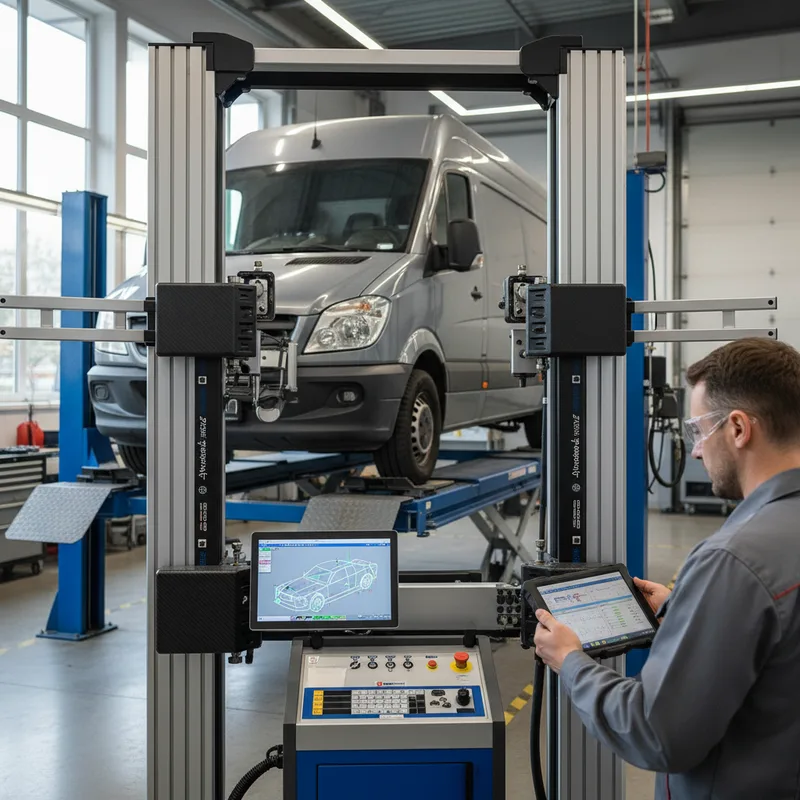
At Brad’s Deer Valley Collision, we use computerized frame measurement equipment on every vehicle where impact forces could have traveled into the structural rails. It’s not a judgment call we make based on how the damage looks from the outside. Frame distortion doesn’t always announce itself visually.
Post-repair alignment matters just as much. We perform a full alignment check after any structural work, not as an add-on, but as a required step before we call the job finished. Skipping alignment after frame correction is one of the most common shortcuts in this industry, and it’s one we won’t take.
ADAS Recalibration for Modern Fleet Vehicles
Newer fleet vehicles carry advanced driver assistance systems including automatic emergency braking, lane departure warnings, and collision avoidance sensors. These systems rely on cameras and radar units that are often mounted in bumpers, windshields, and grilles. Any repair that touches those areas can knock calibration out of spec, even if the sensor itself wasn’t damaged.
Most smaller shops don’t have the equipment to recalibrate these systems in-house. We do. For Phoenix fleet operators running late-model vans or trucks, this matters more than people realize. A vehicle with an uncalibrated forward collision system is a liability on the road, not just a maintenance issue.
Our work on frame correction and ADAS recalibration is backed by a written warranty. You can review our credentials and approach on our About page, or contact us directly to discuss your fleet’s specific needs before you bring a vehicle in.
Phoenix Fleet Operators: What to Expect and How to Prepare
Preparation makes a real difference. Fleet managers in Phoenix, Scottsdale, Tempe, and Chandler who show up organized get faster turnarounds and cleaner insurance outcomes. Here’s how to do it right from the first call.
What to Bring When You Drop Off a Damaged Vehicle
Bring your commercial insurance card, the incident report, and any photos taken at the scene. If your driver wrote a statement, bring that too. The more documentation you hand us at drop-off, the less back-and-forth slows down your claim. Remove any tools, equipment, or valuables from the vehicle before arrival. We’ll handle the rest.
Photograph the Damage Before Anything Else
Don’t skip this step. Before the vehicle leaves your yard or gets towed, photograph every angle: front, rear, both sides, the undercarriage if accessible, and any interior damage visible through the windows. These photos protect you if a coverage dispute comes up later. They also help our team during the initial assessment of fleet vehicle damage repair scope, which speeds up the written estimate process considerably.
Get the Estimate in Writing. Every Time.
A verbal quote is not a quote. We give every fleet client a detailed written estimate before any work begins, period. Some shops skip this step with commercial accounts because they assume repeat business creates enough trust. That’s a mistake. Written estimates protect both sides and give your accounting team the documentation they need for cost tracking.
You also have the legal right to choose your own repair shop regardless of what your insurer recommends. If an adjuster steers you toward a preferred network shop, you’re not obligated to go there. State insurance regulators consistently affirm that right.
Why Our 40-Year Reputation Matters to Your Fleet
Brad’s Deer Valley Collision has been operating in Phoenix, AZ since 1985. Our I-CAR and ASE certifications aren’t just wall decorations. They reflect consistent training standards that directly affect repair quality and liability exposure for your business.
Read our customer reviews, check our credentials, and then contact us to schedule a fleet assessment. Walk-ins are welcome. See our full fleet repair services for details on what we handle.
Frequently Asked Questions
How long does fleet vehicle damage repair typically take?
It really depends on how much damage we’re dealing with. Minor repairs like bumpers and dents usually take 3 to 7 days. Frame and structural damage can run 2 to 4 weeks. At Brad’s Deer Valley Collision, we dedicate specific bays to fleet vehicle damage repair so your vehicles don’t sit in a queue behind everyday retail jobs. We give you a written timeline upfront and keep you in the loop with text updates and photos throughout the process.
Do you offer loaner vehicles or shuttle service while my fleet is being repaired?
Yes, we do. We know that every day a vehicle is off the road costs your business money, and we don’t take that lightly. We offer shuttle service to locations throughout Phoenix, AZ, USA, and for extended repairs we can discuss loaner vehicle options depending on your fleet size and situation. Give us a call or stop by the shop and we’ll put together a plan that fits your operation.
Can you handle insurance claims for commercial fleet damage?
Absolutely. We work directly with insurance carriers as a trusted partner in direct repair programs, which means we handle the damage assessments, write the detailed estimates, and manage all the documentation on your behalf. You don’t have to chase anyone down or translate repair jargon into claim paperwork. We do that for you, so the process moves faster and your vehicles get back on the road sooner.
What makes Brad’s Deer Valley Collision different for fleet repairs?
We’ve been serving Phoenix, AZ, USA businesses since 1985, so fleet vehicle damage repair isn’t new territory for us. Our technicians hold I-CAR and ASE certifications, and we use advanced alignment equipment along with ADAS recalibration technology to make sure every vehicle leaves here safe and road-ready. We also back every repair with a strong written warranty and communicate openly throughout the entire job. No surprises, no runaround.
Should I choose OEM or aftermarket parts for fleet vehicle repairs?
Honestly, it depends on your budget and how critical the vehicle is to daily operations. OEM parts match the original manufacturer specifications exactly, which is great for precision vehicles or newer models still under warranty. Aftermarket parts cost less but may not perform identically in every situation. We’ll walk you through the tradeoffs for your specific vehicle type and give you a written estimate before any work begins, so you can make the call that’s right for your fleet.
Get Your Fleet Back on the Road Fast
If your business vehicles are sitting idle after an accident, every day costs you money, and we get that. At Brad’s Deer Valley Collision in Phoenix, AZ, USA, we work directly with fleet managers to get accurate written estimates quickly and repairs done right the first time. Stop by our Deer Valley shop, give us a call, or request an appointment online, and see why local businesses trust us by checking out what our customers are saying on Google.
Contact us today to schedule your comprehensive fleet damage assessment and let’s get your vehicles back where they belong.