After an Accident in Phoenix, AZ: Your Complete Guide to Choosing the Right Auto Body Shop
After an Accident in Phoenix, AZ: Your Complete Guide to Choosing the Right Auto Body Shop
What to Look for Immediately After Your Accident
Choosing the right auto body shop after an accident in Phoenix, AZ, USA comes down to four things: verified certifications, a written estimate you can compare against others, clear warranty terms, and a shop willing to work directly with your insurance company. Brad’s Deer Valley Collision meets all four, and understanding why each one matters helps you avoid shops that cut corners on collision repair.
Brad’s Deer Valley Collision has been repairing vehicles in Phoenix since 1985.
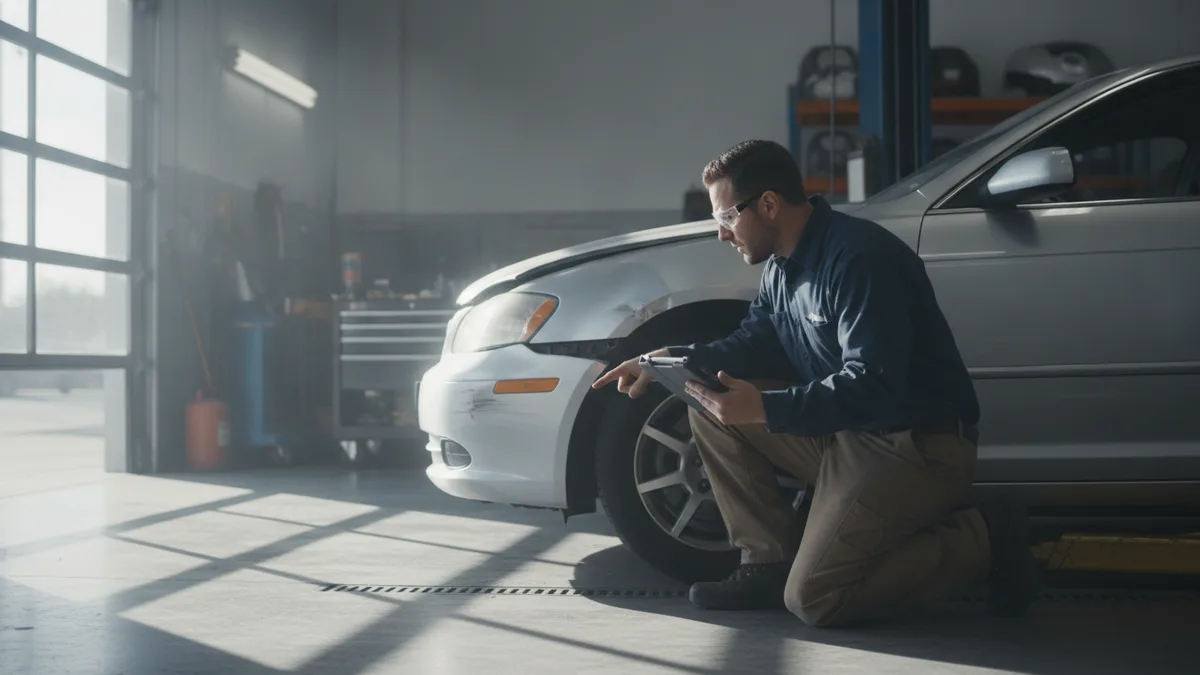
Picture this: your car just got sideswiped on Deer Valley Road and you’re standing in a parking lot trying to figure out what happens next. Adrenaline is high, and it’s tempting to just take your car to whatever shop the tow truck driver recommends. Don’t. This is the moment to slow down and ask a few pointed questions before you sign anything.
Start with credentials. Ask if the technicians hold I-CAR or ASE certification, since these programs indicate ongoing training on modern repair techniques and safety standards. Next, get everything in writing. A verbal estimate means nothing if a dispute comes up later, and a shop that hesitates to put numbers on paper is telling you something. Ask about warranty coverage too; a shop confident in its work will back it up with written terms, not vague promises.
Insurance partnerships matter more than most drivers realize. Some shops participate in direct repair programs with major insurers, which can simplify paperwork and speed up approval on estimates. That said, participation in a program doesn’t mean you’re required to use that shop. In our experience, drivers often assume their insurer’s “preferred” list is the only option, but Arizona law protects your right to choose your own repair shop regardless of what the insurance company suggests.
Here’s a short checklist worth keeping in your glovebox:
-
Confirm I-CAR or ASE certification before dropping off your vehicle
-
Request a written estimate, not just a verbal quote
-
Ask specific questions about warranty length and coverage
-
Find out if the shop works with insurance providers directly
Brad’s Deer Valley Collision outlines its full range of collision repair capabilities and certifications on its collision repair services and certifications page, which is a useful starting point before you commit to any shop in the Phoenix area.
Certifications and Credentials That Matter
Anyone can hang a sign that says “auto body repair.” Not everyone behind that sign has actually trained for it. That’s why certifications matter more than a clean-looking waiting room or a friendly front desk.
Two credentials come up again and again in this industry: I-CAR and ASE. I-CAR (Inter-Industry Conference on Auto Collision Repair) trains technicians on repair procedures specific to modern vehicle construction, including welding standards, structural repair, and increasingly complex materials like aluminum and high-strength steel. ASE (National Institute for Automotive Service Excellence) certifies individual technicians across various automotive disciplines, collision repair included. You can learn more about how these programs work directly through I-CAR’s website or the ASE certification database.
Here’s the part most guides skip: certification isn’t a one-time badge. Vehicle technology changes fast, and a tech certified five years ago on procedures for a 2015 sedan isn’t necessarily prepared for today’s ADAS-equipped vehicles. In our experience, shops that invest in ongoing training and recalibration equipment tend to catch issues that older-school shops miss entirely, especially with sensor and camera systems tied to bumpers and windshields.
Why This Affects Your Repair
An uncertified technician might get your bumper looking fine on the surface. Structural integrity is a different story. Frame alignment, weld strength, and safety system recalibration require specific training, not guesswork. A repair that looks good but wasn’t done to manufacturer specifications can affect how your vehicle performs in a future collision.
How to Verify Before You Commit
-
Ask to see certifications displayed on-site, not just mentioned verbally.
-
Check the shop’s I-CAR Gold Class status, a designation tied to ongoing technician training.
-
Look up individual ASE credentials for the technicians who’ll actually work on your car.
-
Ask directly whether the shop has ADAS recalibration capability in-house.
Brad’s Deer Valley Collision has held credentials and served Phoenix, AZ, USA drivers since 1985, and we display our certifications for exactly this reason. If a shop hesitates to answer questions about training, treat that as useful information. For anything involving your vehicle’s safety systems, it’s reasonable to ask a qualified technician to walk you through what recalibration involves before repairs begin.
Insurance, Estimates, and Your Right to Choose
Every week, someone calls our shop after their insurance company already told them where to take their car. Most drivers assume that recommendation is a requirement. It isn’t. Arizona law gives you the right to choose any auto body shop after an accident, regardless of which shops your insurer lists as “preferred” or “direct repair” facilities.
Direct repair programs (DRPs) exist because insurers negotiate rates and processes with certain shops to speed up claims. That arrangement can work fine, but it’s built for the insurer’s convenience first. In our experience, drivers who shop around often find that a non-DRP shop offers more thorough repairs, even if the initial estimate takes a bit longer to process. You’re free to decline a DRP referral and select a shop based on certifications, reviews, and your own comfort level.
Why Multiple Written Estimates Matter
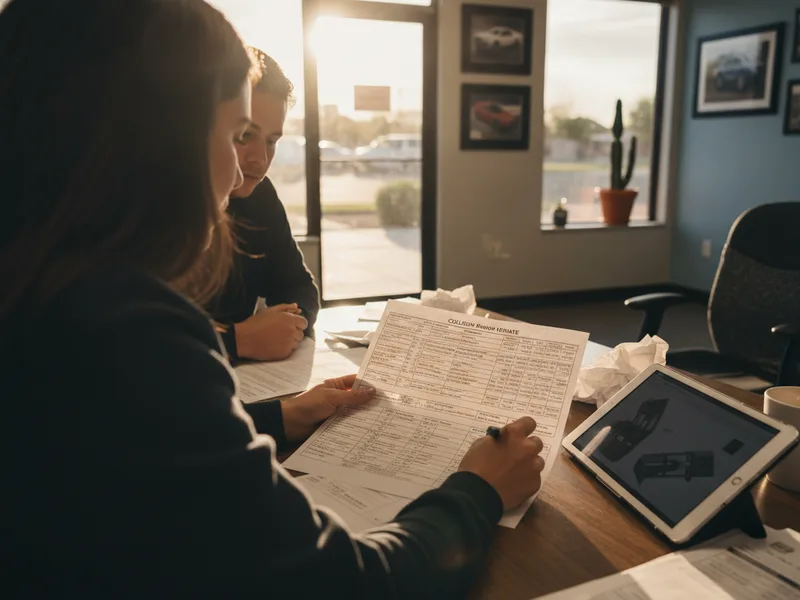
Get two to three written estimates before committing to repairs. Verbal quotes over the phone don’t hold anyone accountable. A written estimate lays out labor costs, parts, and paint work line by line, which makes it much easier to spot discrepancies between shops. If one estimate comes in far lower than the others, ask why. Sometimes it’s a legitimate difference in approach; other times it signals shortcuts that show up later.
OEM Versus Aftermarket Parts
Ask any shop you’re considering whether they plan to use OEM (original equipment manufacturer) parts or aftermarket alternatives. OEM parts come from your vehicle’s manufacturer and typically match factory specifications exactly. Aftermarket parts are made by third-party manufacturers and can cost less, but fit and durability vary by brand and part type. Neither option is automatically right for every repair; the decision often depends on your vehicle’s age, your insurance coverage, and safety systems like ADAS sensors that need precise alignment.
A reputable collision repair shop will explain these tradeoffs upfront rather than making the choice for you silently. If a shop can’t clearly answer questions about parts sourcing, that’s worth noting.
Letting a Shop Handle the Claim
Shops that work directly with insurance providers can manage much of the back-and-forth for you, from submitting estimates to handling supplement requests when hidden damage turns up mid-repair. That doesn’t mean you should skip reviewing what’s submitted. Ask questions, keep copies of paperwork, and don’t hesitate to consult your insurance agent or a licensed attorney if a claim dispute feels beyond routine. For Phoenix, AZ, USA drivers weighing their options, reaching out through our contact page with estimate details is a straightforward way to start comparing before making a final decision.
Red Flags to Avoid When Comparing Shops
Some warning signs.
After decades in this business, we’ve watched customers get burned by the same handful of mistakes. If a shop shows any of these behaviors while you’re comparing quotes around Phoenix, AZ, USA, take it as a signal to keep looking.
-
No written estimate. A verbal number means nothing once the car is on the lift. If a shop won’t put pricing on paper before work starts, don’t hand over your keys.
-
Bids that seem unusually low. Collision repair has real costs: parts, labor, paint materials, and calibration equipment. A bid that’s far below two or three others usually means something’s getting skipped, whether that’s proper corrosion protection or genuine OEM parts.
-
Vague or missing warranty terms. “We stand behind our work” isn’t a warranty. Ask for the specifics in writing, including what’s covered and for how long.
-
Pressure to accept aftermarket parts without disclosure. Aftermarket parts aren’t automatically bad, but you deserve to know what’s going on your vehicle before it’s installed, not after.
-
Poor communication. If a shop can’t tell you what’s happening with your repair without three phone calls, that’s a preview of how the rest of the process will go.
Most guides stop there, but we’d add one more: watch how a shop handles ADAS recalibration. Modern vehicles rely on sensors and cameras for safety features, and smaller shops often skip this step entirely because the equipment is expensive. That’s a corner nobody should cut.
Convenience matters too. Shops that offer loaner cars, shuttle service, or text updates with photos tend to run tighter operations overall. When you’re gathering estimates, pay attention to how you’re treated at the front counter. It tells you a lot about what happens once your car disappears into the shop.
Warranty Coverage and What It Protects
Ask five shops in Phoenix, AZ, USA what their warranty covers, and you’ll likely get five different answers. Some hand you a vague verbal promise. Others hand you a printed document with specific terms for paint, structural work, and labor. That gap tells you almost everything about how a shop views its own work.
A written warranty should spell out three things clearly: paint finish coverage, structural repair coverage, and workmanship on parts like bumpers, panels, and frame alignment. Paint warranties typically address peeling, fading, or mismatched color that shows up after the repair. Structural warranties cover frame and alignment work, since that’s what keeps a vehicle handling and crumpling the way it was engineered to. Workmanship coverage applies to the labor itself, separate from any manufacturer warranty on the parts used.
Limited warranties usually cap coverage to a specific repair area or time frame. Comprehensive warranties, sometimes called lifetime warranties, cover the work for as long as you own the vehicle. In our experience, the difference matters more than customers expect; a limited warranty that expires in a year isn’t worth much if hidden corrosion from a poor weld shows up eighteen months later.
Transferability is worth asking about directly. If a vehicle is sold before problems surface, some shops let the warranty pass to the new owner, while others tie coverage strictly to the original customer. Get this in writing rather than assuming either way.
None of this is guesswork if you read what past customers experienced firsthand. Our customer testimonials and reviews page lays out real accounts from Phoenix-area drivers who’ve had warranty claims handled after the fact, not just glowing praise from day one.
A shop confident in its craftsmanship puts that confidence on paper. If a shop hesitates to do that, treat it as useful information, not an oversight.
Customer Reviews, Turnaround Time, and Local Reputation
Star ratings don’t tell the whole story. Read the actual comments.
Look for patterns, not one-off complaints. A single bad review might mean a customer had an off day. Ten reviews mentioning slow communication or missed deadlines mean something else entirely. Pay attention to how a shop responds to negative feedback, too. A defensive or dismissive reply tells you more about their customer service than the original complaint does.
Turnaround time is where a lot of shops lose trust, not because repairs take long, but because nobody tells the customer why. Simple bumper repair or paint touch-up work might wrap up in a matter of days. Frame damage or full structural repair takes longer, especially if parts need to be ordered. In our experience, drivers get less frustrated by longer timelines than by silence. A shop that texts you photos of progress or calls with updates earns more loyalty than one that finishes a day faster but leaves you guessing.
Some guides tell you to prioritize the fastest shop you can find. We’d push back on that a little. Speed matters, but a rushed repair on a vehicle with ADAS sensors or structural damage isn’t worth saving a few days if it means skipped calibration steps.
Convenience Factors That Actually Matter
Getting hit doesn’t stop your life from moving. That’s why convenience factors deserve real weight when comparing shops:
-
Loaner vehicles or shuttle service so you’re not stranded
-
After-hours drop-off for drivers who can’t take time off work
-
Proactive updates by text or phone instead of you having to call and ask
Phoenix, AZ, USA drivers compare their body shop experience to ordering something online these days: fast updates, clear expectations, no chasing anyone down for answers. A shop’s reputation locally usually comes down to whether they treat customers that way consistently, not just on their best day. Ask around, check recent reviews, and trust the pattern you see over any single glowing testimonial.
Next Steps: Before You Drop Off Your Vehicle
We notice a pattern every week: drivers who prep before drop-off have fewer disputes later, both with the shop and with their insurer. A few minutes of preparation now saves confusion down the road.
Start with photos.
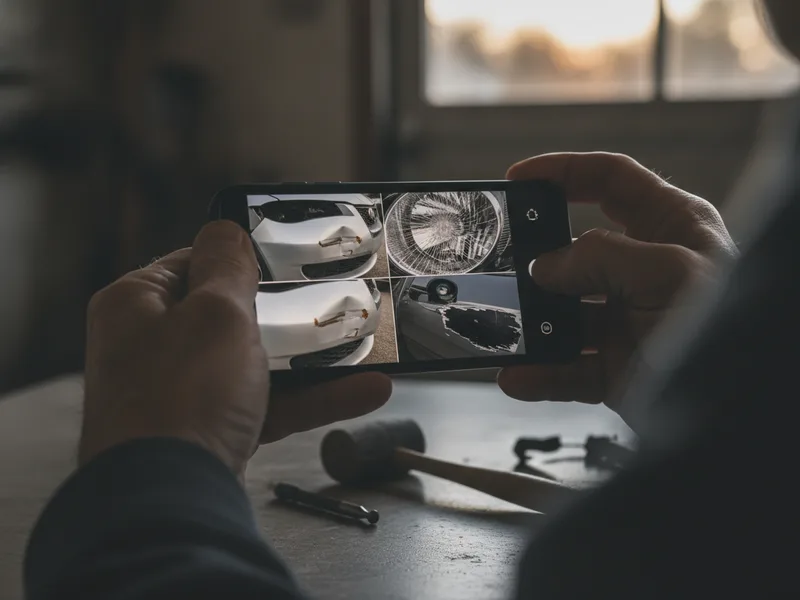
Take pictures of every angle of the damage, including close-ups of dents, scratches, and anything that looks structural. Do this before the car ever leaves your driveway. If a dispute comes up later about pre-existing damage, your own timestamped photos are worth more than a memory.
Next, clear out the vehicle. Remove valuables, garage door openers, parking passes, and personal items from the glovebox and center console. Shops take reasonable precautions, but a body shop isn’t a storage facility, and items left behind can go missing during the repair process.
Before you sign anything, ask these questions out loud:
-
Will the repair use OEM or aftermarket parts, and can that be specified in writing?
-
What’s the warranty coverage, and does it cover both parts and labor?
-
What’s the realistic turnaround estimate, and how will you get updates?
-
Does the shop handle direct communication with the insurance adjuster?
A shop that answers clearly and puts the answers in writing is generally one worth trusting. A shop that hedges or rushes you past these questions deserves a second look.
Brad’s Deer Valley Collision has handled collision repair for Phoenix, AZ, USA drivers since 1985, and our shop history and team credentials page covers our background in more detail. If you’re weighing where to take your vehicle after an accident, bring it by for a professional assessment and a written estimate. Walk-ins are welcome, and we’re happy to answer every question on your list before you commit to anything.
Frequently Asked Questions
Do I have to use the body shop my insurance company recommends?
No, you don’t. Drivers in Phoenix, AZ have the legal right to pick whatever auto body shop after accident they trust, whether that’s a shop on your insurer’s list or not. Insurance companies often push their “direct repair program” shops because it’s easier on their end, but your policy still has to cover repairs at the shop of your choice. Get a written estimate first, and call your insurer to confirm what they’ll cover before any work starts. If you have questions about your specific policy terms, a quick call to your agent or a licensed insurance professional clears that up fast.
What’s the difference between OEM and aftermarket parts?
OEM parts come straight from your vehicle’s original manufacturer, so they match what was on your car before the accident down to the fit and finish. Aftermarket parts are made by outside companies and usually cost less, but the fit and durability can vary quite a bit depending on the maker. Before your car goes into the shop, ask directly which type of part they plan to use and whether that choice affects any existing warranty on your vehicle.
How long does a typical collision repair take?
It really depends on how bad the damage is. A small bumper dent or minor fender scrape might only keep your car in the shop for 3 to 7 days. Something more involved, like frame alignment work or damage across multiple panels, usually runs 1 to 3 weeks. If there’s structural damage, you’re looking at 4 to 6 weeks or more in some cases. These are general ranges, not promises, since every vehicle and every repair is different. Ask your shop for a written timeline before you drop off the car so you know what to expect.
Should I photograph my vehicle’s damage before taking it to a body shop?
Yes, definitely take photos before you bring your car in. Walk around the vehicle and get clear shots from several angles in good lighting, front, back, sides, and close-ups of the damage itself. This gives you a record for your insurance claim and protects you if anyone later questions whether damage was already there before the shop touched it. Save the photos on your phone and email a copy to yourself too, just in case.
What should a written warranty cover after collision repair?
A solid collision repair warranty should spell out coverage for paint finish, structural welds, and general workmanship, usually for a set number of years (some shops offer coverage in the 3 to 5 year range, and others offer lifetime coverage on certain repairs). Ask whether the warranty transfers to a new owner if you sell the car down the road, and get clear on exactly which repairs are included. A shop that’s willing to put all of this in writing is usually one that stands behind its own work. If you’re ever unsure what a warranty document actually means for your situation, it’s worth having someone knowledgeable look it over with you.
Get Your Collision Damage Looked At
Bumper dents, frame damage, or a fender that won’t sit right after a fender bender all need an honest, trained eye before you decide what to do next. Bring your car by Brad’s Deer Valley Collision in Phoenix, AZ, USA and one of our certified technicians will walk you through what we see and put together a written estimate, no obligation attached.
We’ve been doing this work for Phoenix drivers since 1985, and we’d rather you make an informed decision than a rushed one. Take a look at our full range of collision repair services and certifications to see how we handle everything from minor body work to more involved structural repairs. Curious what other folks in the neighborhood think? You can check out our reviews on Google before you stop in.