Structural Frame Repair and Alignment in Phoenix, AZ: Restoring Vehicle Safety
Structural Frame Repair and Alignment in Phoenix, AZ: Restoring Vehicle Safety
Why Frame Alignment Matters After a Collision
A Phoenix driver pulls out of Desert Ridge Marketplace, gets clipped by another car at low speed, and walks away thinking it’s just a scuffed bumper. The dent looks minor. The car drives home fine. Three weeks later, the tires are wearing unevenly, the steering wheel pulls left, and the brakes feel slightly off. That’s not a coincidence. That’s a frame alignment problem that didn’t get caught.
Hidden structural damage is one of the most under-discussed consequences of collision repair. A vehicle’s frame isn’t just metal holding the body together; it’s the geometric foundation that keeps your wheels, steering, suspension, and braking system working in sync. When that geometry shifts, even slightly, the effects ripple through every system connected to it.
Most people assume a visible impact tells the whole story. It doesn’t.
Modern unibody vehicles, which now make up the vast majority of cars on Phoenix roads, absorb collision energy by deforming in controlled ways. That’s actually by design. The problem is that those deformations don’t always show up visually. A hit at 15 mph can push a rail out of spec by a few millimeters and cause no obvious body damage, but that shift is enough to throw your wheel alignment off, stress your suspension mounts, and put uneven load on your brakes.
There’s a commonly repeated idea that you don’t need frame work unless the car “looks bad.” That’s wrong, and a lot of vehicle owners have paid for it in premature tire replacement, suspension wear, and failed safety inspections down the road.
Proper frame alignment after any significant collision restores the vehicle’s structural geometry to manufacturer specifications. This matters for handling and tire wear, but it also matters for safety. A frame that’s even slightly out of alignment changes how your vehicle responds in an emergency maneuver and how well it protects occupants in a secondary collision.
At Brad’s Deer Valley Collision, we’ve been doing this work in Phoenix, AZ since 1985. We’ve seen firsthand what missed frame damage does to a vehicle over time. Catching it early, with the right equipment and trained eyes, is always less expensive than addressing the downstream damage it causes.
If your vehicle has been in any kind of impact, a proper structural inspection isn’t optional. Schedule one before you assume everything is fine.
The Frame Alignment Process: What Happens in the Shop
Most customers drop off a damaged vehicle with no idea what actually happens next. That’s fair. Frame alignment isn’t something most people encounter until they need it. Here’s a straight walkthrough of the process we follow at Brad’s Deer Valley Collision.
Step 1: Initial Inspection and Measurement
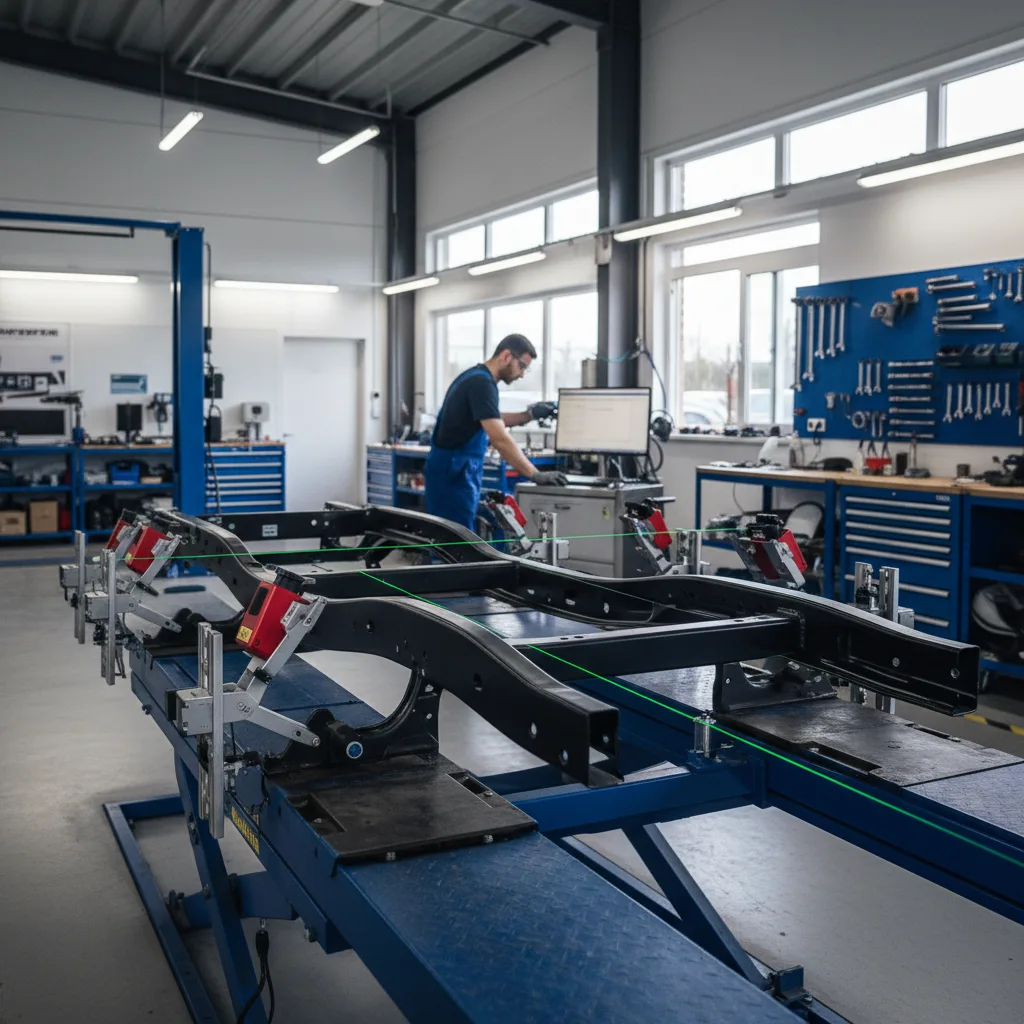
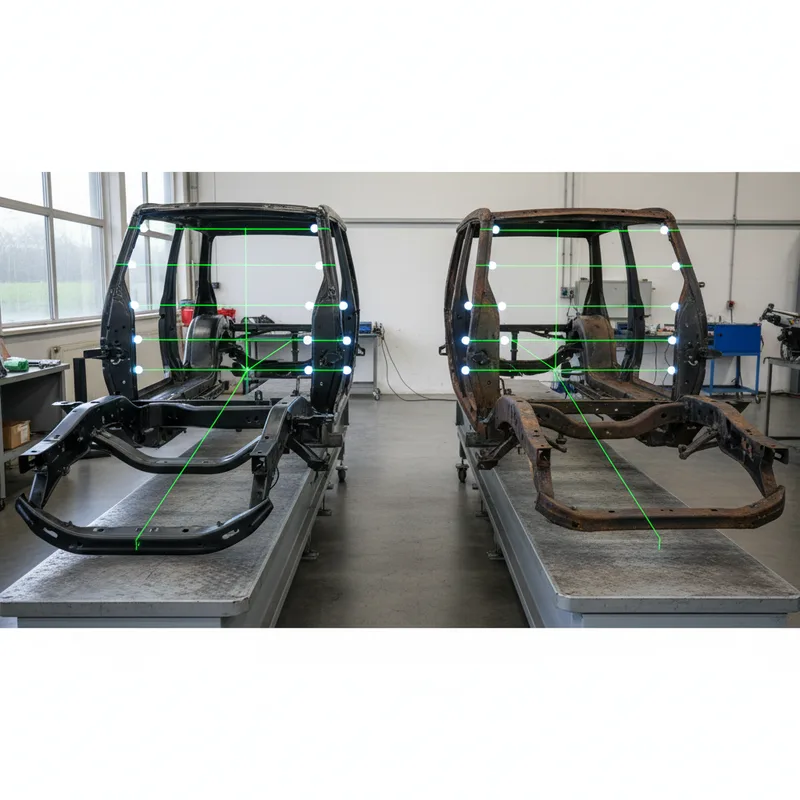
The process starts before we touch a single tool. We put the vehicle on a dedicated frame alignment rack and connect it to our computerized measuring system. This gives us precise, real-time data on every key structural point across the vehicle, comparing your car’s actual dimensions against factory specifications.
This step matters more than most people realize. A visual inspection alone will miss damage. We’ve seen Phoenix vehicles come in after what looked like a minor side-swipe, only for the measurement data to show the entire front cradle had shifted a quarter inch. You can’t eyeball that.
Step 2: Damage Mapping
Once we have the measurements, we map out all the deviations. This tells us not just where the damage is visible, but where the force traveled through the structure. Collision energy doesn’t stay in one spot. It transfers through the frame, and repairs have to account for the full path of that impact, not just the obvious dent.
Skipping this step is one of the most common mistakes we see in rushed repair jobs. Fixing one section of frame without understanding the full damage pattern almost guarantees alignment problems down the road.
Step 3: Hydraulic Straightening
Correction happens with hydraulic equipment that applies controlled, calculated force to bring the frame back to spec. This isn’t guesswork. The equipment pulls against anchored attachment points on the rack while the measuring system monitors the frame in real time. We’re watching the numbers change as the metal moves.
Some technicians rely too heavily on “it looks straight” at this stage. Professional opinion: if you’re not watching live measurement data during the pull, you’re approximating. That’s not good enough on a modern vehicle.
Step 4: Verification and Documentation
After corrections are made, we run a full re-measurement to confirm every point is back within factory tolerance. We document the before and after data. That paperwork matters, especially if your repair is going through an insurance claim.
Our team has handled frame alignment and structural repairs in Phoenix since 1985, and the documentation standard has never changed. You get the numbers, not just our word for it. If you want to see the process in person, contact us to schedule an inspection. Walk-ins are welcome.
Common Frame Alignment Mistakes and Red Flags
Rushed frame work is one of the most consistent patterns we see when customers bring us a vehicle that was “already repaired” somewhere else. The car looks fine on the outside. Then we put it on the measuring system and find the frame is still off by a significant margin.
Some of these errors come from inexperience. Others come from shops cutting corners to turn vehicles around faster. Either way, the person who pays for it is the driver.
Mistakes That Happen More Than They Should
Skipping a full structural scan after a collision. A visual inspection alone won’t catch hidden frame damage. Without computerized measurement, a technician is essentially guessing. We’ve seen shops in Phoenix skip this step entirely and then deliver a vehicle with misaligned suspension geometry they never detected.
Pulling the frame without verifying measurements at every stage. Frame alignment isn’t a one-pull fix. It requires incremental adjustments with measurement checks in between. Shops that rush this process often overcorrect one area while leaving another out of spec.
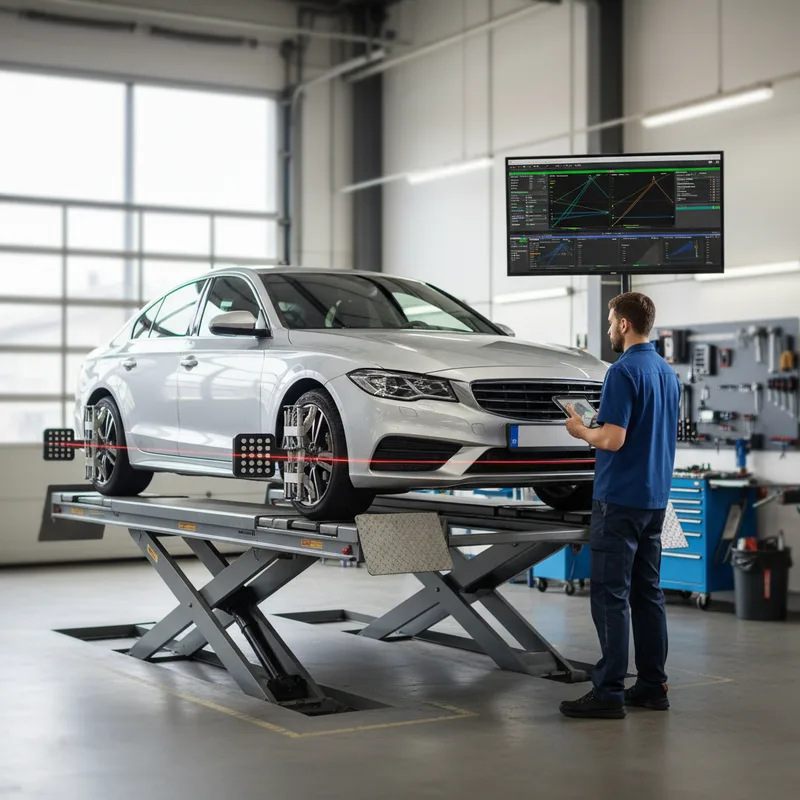
Neglecting post-repair alignment on the wheels. This one frustrates me because it’s so avoidable. Correcting the frame without following up with a four-wheel alignment is an incomplete repair. Tires will wear unevenly, and the vehicle won’t track straight. It’s a separate step, and it matters.
Failing to recalibrate safety systems. Modern vehicles on Phoenix roads have lane departure warnings, adaptive cruise control, and automatic emergency braking tied directly to the vehicle’s structural geometry. Frame alignment shifts that geometry. If those systems aren’t recalibrated afterward, they may not function correctly in an emergency.
Red Flags Before You Hand Over Your Keys
-
No written estimate with itemized line items
-
No mention of computerized frame measurement
-
No warranty offered on structural repairs
-
An unusually low bid with no explanation
Get the estimate in writing. Ask directly whether the shop holds I-CAR certification. Then check the shop’s credentials and history before committing. You have every right to take your time on this decision.
Advanced Technology and ADAS Recalibration in Phoenix
Most drivers don’t think about sensors when their frame gets repaired. That’s understandable. But modern vehicles are packed with cameras, radar units, and ultrasonic sensors that depend entirely on precise positioning to function correctly. When a frame shifts even slightly in a collision, those sensors shift with it.
Frame alignment corrects the physical structure. ADAS recalibration corrects the electronic systems that rely on that structure being straight.
This distinction matters more than most shops will tell you. A lot of facilities in the Phoenix, AZ area will straighten the frame and hand you back the keys. If your lane-keep assist, automatic emergency braking, or blind-spot monitoring isn’t recalibrated afterward, those systems may operate on flawed reference points. The car won’t warn you. It’ll just respond incorrectly when it matters most.
What Recalibration Actually Involves
There are two types: static and dynamic. Static calibration happens in a controlled shop environment using targets placed at specific distances and angles relative to the vehicle. Dynamic calibration requires driving the vehicle under specific conditions so the system can relearn positioning data. Some vehicles need both. The National Highway Traffic Safety Administration has documented the safety consequences when ADAS systems aren’t properly restored after collision repairs.
At Brad’s Deer Valley Collision, we invest in recalibration equipment because we believe skipping this step after frame repair isn’t a cost-saving measure. It’s a liability. We’ve seen vehicles come to us after repairs elsewhere, where the lane assist was actively working against the driver because nobody recalibrated after straightening the frame.
If you want to see the full scope of what we handle, our services page covers it in detail. Or contact us directly to talk through your specific vehicle.
Frame Repair Timeline, Costs, and Insurance Navigation
Most frame jobs take longer than customers expect. That’s not a complaint about shops; it’s just the reality of thorough work. A straightforward frame alignment in Phoenix, AZ typically runs two to four days once the vehicle is on the rack and measured. When hidden damage shows up during the repair, which happens more often than not after a significant collision, that timeline can stretch to a week or more.
Cost varies based on severity. Minor misalignment corrections can run a few hundred dollars. More involved structural repairs with multiple pull points, welding, or component replacement can reach several thousand. Anyone quoting you a flat price over the phone without inspecting the vehicle first is guessing, and that’s not a number you should trust.
Here’s where a lot of common advice gets it wrong: people are often told to get three estimates and go with the lowest. We’d push back on that. A low bid on frame work usually means someone is cutting the process short. Getting multiple estimates is smart; using price as the primary filter is not. Ask each shop what their estimate actually includes, specifically whether post-repair frame alignment verification and ADAS recalibration are part of the quote.
On the insurance side, you have more control than most people realize. Arizona law gives you the right to choose your own repair shop regardless of what your insurer recommends. You don’t have to use a preferred shop from their list. At Brad’s Deer Valley Collision, we’ve worked directly with insurers since 1985 and handle documentation, supplements, and claim communication on your behalf.
Before dropping off your vehicle, photograph all existing damage and remove your valuables. Ask for a written estimate and confirm the warranty covers both parts and labor. Those two steps alone prevent most of the disputes we see come through the door.
What Sets Brad’s Deer Valley Collision Apart in Phoenix
We’ve been doing this since 1985. That’s four decades of frame alignment work in Phoenix, AZ, through every generation of vehicle technology. Most shops can’t say that.
Our technicians hold I-CAR and ASE certifications, and we invest in equipment that smaller operations skip entirely, including full ADAS recalibration systems. A lot of shops still treat sensor recalibration as optional. We disagree with that position completely. If your vehicle has lane assist or automatic emergency braking, those systems need verification after any frame repair. No exceptions.
Every repair comes with a written warranty. Not verbal, not implied. Written.
We work directly with insurance providers, handle documentation, and give you accurate estimates upfront. You also have the legal right to choose your own shop regardless of what your insurer suggests. We’ll remind you of that if needed.
Walk-ins are welcome. If you’re coming from Scottsdale, Tempe, or anywhere across the Phoenix metro, our shop is easy to get to and our front counter team treats every customer like a neighbor.
Check out our full service menu, learn more about our shop, or contact us for an estimate today.
Frequently Asked Questions
How do I know if my vehicle needs frame alignment after a collision?
There are a few things to watch for: uneven tire wear, the vehicle pulling to one side while you’re driving, doors or the hood that don’t close quite right, squeaking or creaking noises, or a spongy feeling in the steering. Any of these can point to frame damage. We offer a free inspection at our shop in Phoenix, AZ, USA, and honestly, even a minor fender bender can transfer enough force to affect the frame. Don’t assume a small hit means no frame alignment is needed.
How long does frame alignment and repair typically take?
It depends on the extent of the damage. Minor frame straightening usually takes about 2 to 4 days. If the structural damage is more serious, you’re looking at closer to 1 to 2 weeks. Parts availability, paint curing time, and whether your vehicle needs ADAS recalibration all factor into the timeline. At Brad’s Deer Valley Collision, we give you an upfront estimate and keep you updated throughout the process so you’re never left guessing where things stand.
Does my insurance cover frame repair and alignment?
In most cases, yes. If the damage happened in an accident, your collision insurance should cover frame repair and alignment. The exact amount depends on your policy limits and deductible. We work directly with insurance companies and handle all the documentation on your behalf, so you don’t have to manage that back-and-forth yourself. When you come in for your initial estimate at our Phoenix, AZ, USA location, we’ll walk you through exactly what your coverage includes.
What is ADAS recalibration and why is it necessary after frame repair?
ADAS stands for Advanced Driver Assistance Systems. These are the sensors and cameras that power features like lane-keep assist, automatic emergency braking, and adaptive cruise control. After frame alignment or structural repair, those sensors can be shifted just enough to throw off their calibration, which means they won’t work correctly even if they appear to. Brad’s Deer Valley Collision specializes in ADAS recalibration. A lot of smaller shops skip this step entirely, which is a serious safety issue.
Can I trust aftermarket parts for frame repair, or should I use OEM parts?
For structural frame work, we recommend OEM (original manufacturer) parts. They’re built to exact specifications, which matters a lot when you’re talking about areas that affect the safety and integrity of the vehicle. Aftermarket parts can save money, and they’re fine for certain repairs, but in critical frame areas the fit and performance may not be the same. We’ll talk through both options with you honestly so you can make an informed decision before any work begins.
Worried About Frame Damage? Let Brad’s Deer Valley Collision Take a Look.
If your vehicle was in an accident, frame damage isn’t something you want to guess about. Our I-CAR certified technicians here in Phoenix, AZ, USA use advanced laser alignment technology to pinpoint structural issues and get your car back to factory specs safely and accurately. We offer free frame inspections, so there’s no reason to keep driving around wondering if something’s off.
Call us today to schedule your free inspection or stop by our Phoenix shop for immediate service. And if you want to know what your neighbors think of our work, check out our reviews on Google and see why so many Phoenix drivers trust Brad’s Deer Valley Collision to handle their frame alignment needs.