Professional Car Paint Job Cost in Phoenix, AZ: Understanding Auto Body Repainting Expenses
Professional Car Paint Job Cost in Phoenix, AZ: Understanding Auto Body Repainting Expenses
What Determines the Cost of a Professional Car Paint Job in Phoenix
You pull your Camry into a parking spot at Desert Ridge Marketplace, and there it is: a fresh scrape along the rear quarter panel courtesy of a shopping cart nobody claimed. Now you’re wondering what it’ll cost to fix, and why the first shop you called quoted $600 while another said $2,200 for what sounds like the same job. That gap is normal, and it’s exactly why understanding car paint job cost in Phoenix, AZ, USA matters before you sign anything.
Several factors drive the final number on your estimate. Vehicle size is the obvious one; a compact sedan takes less paint and less labor than a full-size truck or SUV. Damage extent matters even more. A single panel scuff is a different animal than a multi-panel repaint after a collision that crumpled a door and bumper together.
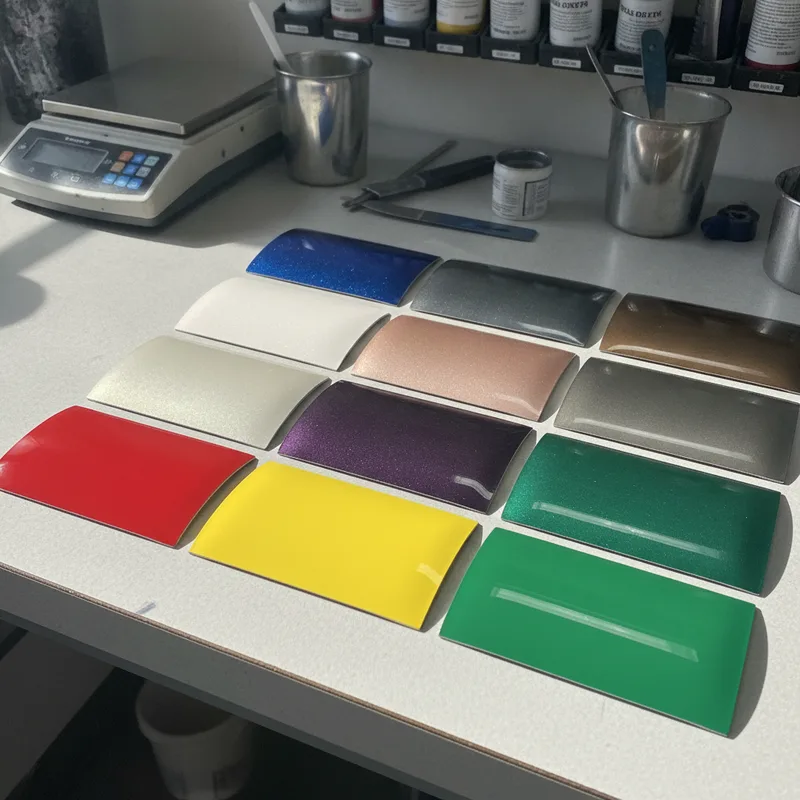
Paint type plays a bigger role than most car owners expect. Solid colors are the cheapest to match and apply. Metallics and pearls require additional clear coat layers and more careful blending, which adds both material cost and labor hours. If your vehicle has a specialty factory finish, expect that to show up on the invoice.
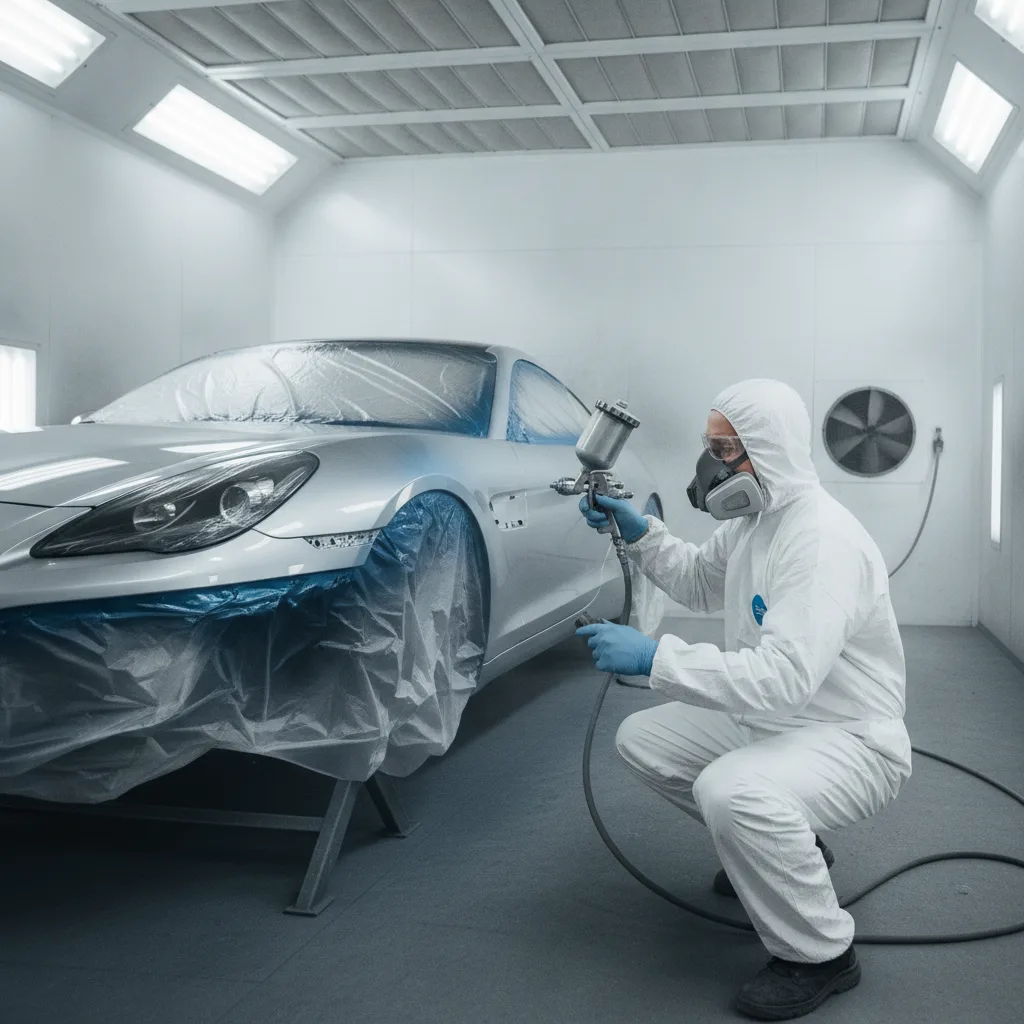
Labor complexity is where a lot of Phoenix customers get surprised. Masking off trim, removing bumpers or mirrors, and matching paint on curved panels all take time that doesn’t show up in a quick visual estimate. A shop that rushes this step isn’t saving you money; it’s setting you up for a finish that doesn’t hold up.
Why Estimates Vary So Much Between Phoenix Shops
Here’s an opinion that might ruffle feathers: the cheapest quote is rarely the best deal. A bid that’s dramatically lower than two others usually means shortcuts somewhere, whether that’s skipped surface prep, cheaper paint, or no warranty backing the work. We’d rather lose a price-shopping customer than watch their paint peel in the Arizona sun eighteen months later.
Our advice, after decades of doing this work across Phoenix, Scottsdale, Tempe, and Chandler: get two or three written estimates, and ask each shop to break down materials versus labor. That transparency tells you more about a shop’s honesty than the total price ever will.
Brad’s Deer Valley Collision has been assessing and repairing paint damage in the Phoenix area since 1985, and our team can walk you through your specific vehicle’s cost factors during an in-person estimate. Stop by our shop for a walk-in assessment, browse our full range of auto body services, or read what past customers have said on our reviews page before you decide who touches your paint.
Paint Type and Material Costs: Navigating Your Options
Paint. This is where a lot of your car paint job cost actually gets decided, and where a lot of shops don’t explain much beyond “basic” or “premium.”
Standard urethane basecoat/clearcoat systems are the industry norm, and honestly, for most vehicles rolling around Phoenix, AZ, USA, they’re the right call. They hold up well against UV exposure, which matters here more than almost anywhere else in the country given how much sun a car sits under from March through October. Acrylic enamel is cheaper but doesn’t last nearly as long under that kind of heat, so we rarely recommend it even when a customer’s trying to save a few hundred dollars.
Ceramic-based coatings sit at the top of the price range. They’re harder, more scratch-resistant, and hold gloss longer, but they cost more per panel and require more careful application. For a daily driver getting a quarter panel repair, that upgrade often isn’t worth it. For someone repainting a full vehicle they plan to keep another decade, it usually is. I’ll say this plainly: a lot of shops push premium coatings on jobs that don’t need them. Ask why before you agree to the upcharge.
Clearcoat quality deserves its own mention. A cheap clearcoat yellows and chips faster, especially with the intensity of sun exposure near Camelback Mountain or out toward South Mountain Park. Spend a little more here if you’re paying for a full repaint anyway.
What Actually Changes the Price
-
Metallic and pearl finishes require extra clear layers and more labor time
-
Specialty colors (custom mixes, matte finishes) often need special-order paint
-
OEM-matched formulas cost more than generic tinting but blend better
We walk every customer through these tiers before quoting anything, because guessing at material grade is how estimates go sideways later. You can see the full breakdown of paint and finish options on our services page, or stop by and we’ll show you actual panel samples in person. We’ve been mixing and matching finishes in this city since 1985, so we know which paint systems hold up to Phoenix summers and which ones fade fast.
The Role of Advanced Paint Matching Technology in Your Final Cost
Park ten silver Honda Accords in the same lot and you’ll see ten slightly different shades of silver. Sun exposure, age, and even the original factory batch all shift the tone. It’s why a paint job that looks perfect on paper can look wrong parked next to your bumper in daylight. This is the part of car paint job cost that catches people off guard, because it has nothing to do with labor hours and everything to do with equipment.
At Brad’s Deer Valley Collision, every color match starts with a spectrophotometer, not a guess. This tool reads the actual pigment composition of your vehicle’s existing paint, accounting for fade and UV exposure that’s inevitable after a few Arizona summers baking on a driveway near South Mountain Park. The device feeds that data into color-matching software, which cross-references manufacturer formulas and generates a custom blend specific to your car, not just its factory code.
I’ll say something that might go against what you’ve heard elsewhere: the factory paint code on your door jamb is a starting point, not the answer. Relying on it alone is a shortcut that leads to visible mismatches, especially on panels that have had more sun exposure than others. Shops that skip spectrophotometer readings and eyeball it from the code sticker are gambling with your car’s appearance.
Why This Technology Affects Pricing
Precision equipment costs money to buy, calibrate, and maintain. That expense shows up in your estimate, but it saves you from a much bigger expense down the road: redoing a botched blend job. Rework isn’t cheap. It means stripping panels back down, repainting, and paying for labor twice.
Proper matching also protects resale value. A car with a visible paint mismatch on the quarter panel gets noticed by buyers and appraisers alike, and it drags down what you can ask for the vehicle later.
Customers across Phoenix, Scottsdale, and Tempe bring us cars after other shops attempted repairs without this equipment, and the blend is off just enough to be distracting in direct sunlight. Fixing someone else’s mismatch usually costs more than getting it right the first time would have.
If you want to see this process firsthand, our shop welcomes walk-ins for estimates. Check our full range of auto body painting services or read what other Phoenix drivers have said about their results on our customer reviews page before booking.
Labor, Surface Preparation, and Hidden Costs: What Most Shops Don’t Explain
Here’s the truth. Paint is maybe 20 percent of your car paint job cost. The other 80 percent is labor, and most of that labor happens before a single drop of color hits the panel.
Sanding down old finish, treating rust spots, and priming bare metal takes hours our technicians don’t cut corners on, even when a customer’s in a hurry. We’ve seen shops in Phoenix skip proper sanding to save time, and it shows up six months later as peeling or bubbling, especially with our summer heat baking every imperfection into view. Masking alone, taping off trim, glass, mirrors, and door jambs, can eat up a full hour on a sedan. Do it wrong and you’ll have overspray on your windows or a hard line where tape should’ve been.
Where the Hidden Costs Creep In
Rust is the big one. What looks like surface corrosion often extends deeper into the metal, and once a technician starts sanding, they might find damage that wasn’t visible during the initial estimate. That changes your bill.
-
Rust treatment or metal replacement if corrosion goes past the surface
-
Extra masking time for vehicles with complex trim or emblems
-
Blend work on adjacent panels so the new paint doesn’t look patched
-
Clear coat buffing and polishing, which takes real skill, not just a machine
That blend work deserves its own mention. A lot of shops quote a single panel repaint without factoring in that the panel next to it will need blending too, or the color transition will be obvious from ten feet away. We build that into our estimates upfront rather than surprising you at pickup.
I’ll say something that might go against what you’ve heard elsewhere: the cheapest quote almost always means shortened prep time. There’s no way around that math. If two shops quote you $600 apart, ask specifically how many hours of prep and masking are included, not just “paint and labor.”
We walk every customer through this at drop-off, no vague line items. If you want to see how we break down estimates, our auto body painting services page outlines what’s typically included. Or stop by our Phoenix, AZ shop and we’ll show you the process in person, walk-ins are always welcome for a look at what’s happening in the bay.
Full Repaints vs. Spot Repairs: Cost Comparison and When Each Makes Sense
Nine times out of ten, a customer walks in convinced they need a full repaint when a blended spot repair would look identical for a third of the price. We see it constantly at our Phoenix shop. That door ding or bumper scuff feels like a bigger deal than it is once you’re staring at it in your driveway.
Spot repairs on a single panel typically run $300 to $900 depending on damage size and paint type. The technician feathers the new paint into the surrounding factory finish, blends the clearcoat, and buffs until the transition disappears. For an isolated scratch or a cart ding at Desert Ridge Marketplace, this is the right call almost every time.
Full repaints make sense in different situations. Sun damage across the whole car, multiple panels affected, or a color you’re trying to change entirely all point toward a complete job. Phoenix sun is brutal on clearcoat, and we see hoods and roofs fade years before the doors do. When fade is uneven like that, spot repair won’t blend right, and you’re better off biting the bullet on a full repaint.
Here’s where I’ll disagree with some shops: many push full repaints too aggressively because the ticket is bigger. If a blend job will hold up and match, we say so. Our reputation in Scottsdale, Tempe, and Chandler was built on repairs that fit the actual damage, not the biggest invoice possible.
When Insurance Covers the Difference
If damage came from a collision, insurance often covers full panel replacement and paint rather than a patch, especially when structural work is involved. That’s a different conversation than out-of-pocket scratch repair, and it changes the math considerably.
Bring your car in and we’ll tell you straight which route actually makes sense. Check our customer reviews to see how that approach has played out for other Phoenix drivers, then reach out through our contact page for a written estimate.
Working with Insurance and Getting Accurate Estimates in Phoenix
Insurance changes the math on your car paint job cost, but not always the way people expect.
If the damage came from a collision someone else caused, their insurer typically covers the repair minus your deductible. If it’s a solo incident like a parking lot scrape, you’re either paying out of pocket or filing against your own policy and watching your premium creep up next renewal. Either way, don’t assume the first number an adjuster gives you is final. Insurance estimates are starting points, not gospel.
Here’s where I’ll push back on common advice: people are told to just take whatever shop their insurer suggests. You don’t have to. Arizona law protects your right to choose your own repair shop, regardless of any “preferred vendor” list your insurer hands you. We participate in direct repair programs with several carriers, which speeds up approval, but you’re never obligated to use a shop just because your insurer named it first.
Get two or three written estimates before you commit to anyone. Compare them line by line. If one estimate is dramatically lower, ask why. Usually it’s cheaper paint, skipped prep work, or aftermarket parts substituted for OEM without disclosure.
What We Do Differently
Our team writes estimates that match what insurers expect to see, with the documentation to back up every line item. That means fewer delays and fewer surprise gaps between what’s approved and what your paint job actually requires. We handle the paperwork so Phoenix customers aren’t stuck negotiating alone.
Check our customer reviews to see how that process plays out for real jobs. Or just stop by the shop and we’ll walk you through your estimate in person.
Protecting Your Investment: Warranty, Maintenance, and Long-Term Paint Care
We see cars roll back into our lot two or three years after a repaint, and the difference in condition almost always traces back to two things: the warranty they got and what they did afterward. Paint that fails early rarely fails because of the paint itself. It fails because of shortcuts nobody mentioned at drop-off.
A written warranty should spell out coverage length, what voids it (unauthorized bodywork, certain wraps or coatings), and whether it covers labor or just materials. Anything vague deserves a follow-up question before you sign.
Short version: care matters more than people think.
Phoenix sun is brutal on clearcoat. UV exposure fades and chalks paint faster here than in milder climates, so hand washing weekly, avoiding automatic brushes, and parking in shade when you can (even just under a carport near Camelback Mountain or South Mountain Park) extends the life of any car paint job cost you’ve paid for. Wax or ceramic sealant every few months adds real protection against our heat and dust.
Red flags we tell people to watch for: no written warranty, refusal to explain exclusions, or a shop that won’t stand behind blend work in writing. We back our paintwork with clear terms and 40-plus years of doing this in Phoenix, AZ. Check our customer reviews, browse our full services, learn more about our shop, or contact us for a written estimate.
Frequently Asked Questions
How much does a professional car paint job cost in Phoenix?
Car paint job cost in Phoenix, AZ, USA varies a lot based on the damage, vehicle size, and paint choice. Spot repairs typically run $300 to $1,500, while full repaints usually fall between $1,500 and $4,000 or more. Brad’s Deer Valley Collision offers free written estimates, so bring your vehicle to our shop or schedule an appointment and we’ll give you a tailored price based on the exact work needed.
What affects the price of auto body painting services?
The main factors that affect car paint job cost are how many panels need painting, the level of surface prep required, and the paint type (standard versus premium). Color complexity, labor hours, and any hidden damage that needs repair also add cost. Using advanced paint matching technology can increase the initial price, but it prevents mismatches and costly rework later, which saves you time and money in Phoenix, AZ, USA.
Does my insurance cover the full cost of a professional paint job?
Whether insurance covers the full cost depends on your policy, your deductible, and claim approval. Brad’s Deer Valley Collision works directly with insurers and participates in direct repair programs to help you get the most coverage possible and reduce out-of-pocket expense. Bring your claim details and vehicle to our shop, and we’ll walk you through the estimate and insurance process for your car paint job cost.
Why is labor cost so high for professional paint jobs?
Labor covers much more than spraying paint. Technicians do surface prep, dent repair, priming, masking, multiple paint and clear coats, color matching, and a final quality inspection. Those are skilled, time-consuming steps that make repairs durable and invisible. Cutting corners lowers upfront cost but often leads to peeling or poor color match, which ends up costing more over time in Phoenix, AZ, USA.
How long does a professional car paint job take in Phoenix?
Turnaround depends on damage severity and the shop’s workload. Spot repairs generally take 3 to 5 days, while a full repaint can require one to two weeks. Brad’s Deer Valley Collision provides clear timelines with every estimate, and we offer loaner cars or rental assistance when needed, so you can plan around the repair and minimize disruption to your schedule.
Get Your Free Auto Body Painting Estimate Today
Wondering what your car paint job will really cost? Give Brad’s Deer Valley Collision a call or stop by our Phoenix, AZ, USA shop, and we’ll walk you through a free, detailed written estimate with no surprises. Our techs will explain every cost factor so you know exactly what you’re paying for and why. Before you decide, take a minute to check out our reviews on Google and see what your neighbors are saying about us.