Commercial Vehicle Body Repair in Phoenix, AZ: Fleet Management Excellence
Commercial Vehicle Body Repair in Phoenix, AZ: Fleet Management Excellence
Why Phoenix Businesses Choose Specialized Fleet Repair Services
A refrigerated delivery truck comes back to your Phoenix yard on a Tuesday afternoon with a crumpled rear quarter panel from a parking lot collision in Desert Ridge Marketplace. That truck runs a morning route six days a week. Every day it sits, you’re rerouting drivers, scrambling to cover deliveries, and explaining delays to clients who don’t want explanations. They want their orders.
That’s the reality fleet operators here deal with. Phoenix businesses run hard. The I-17 corridor, the Loop 101, surface streets through Tempe and Scottsdale, construction zones everywhere. Commercial vehicles take hits. The question isn’t whether damage will happen; it’s how fast you get back on the road when it does.
Most general collision shops aren’t equipped to answer that question well for fleets. They’re built around single-vehicle repair cycles, insurance timelines for individual consumers, and workflows that assume your vehicle can wait two weeks. That model doesn’t work when you’re managing five, ten, or thirty units.
Downtime is the real cost of commercial vehicle body repair done slowly or done wrong. A lot of fleet managers focus on the estimate number, and that instinct isn’t entirely wrong, but repair speed and quality determine your actual cost far more than the invoice does. A cheap repair that sidelines a truck for three extra days costs more than a correctly priced repair finished on schedule.
Phoenix-area businesses need a shop that treats fleet accounts differently from walk-in retail customers. That means priority scheduling, accurate damage assessments across multiple vehicles, consistent technician quality, and direct communication with whoever manages the account. Not a different service advisor every time you call.
Brad’s Deer Valley Collision has offered dedicated fleet repair services built specifically for commercial clients across Phoenix. Operating since 1985, the shop understands how local businesses operate and what they actually need when a vehicle comes in damaged. That’s forty years of working with Phoenix companies, not forty years of press releases about it.
Fleet operators can stop by the shop directly or reach out to schedule an assessment for their vehicles. No runaround. Just a straight conversation about what the repair involves and what it will take to get your unit moving again.
How Commercial Vehicle Body Repair Differs From Personal Auto Repair
Fleet work is a different animal. A technician who’s excellent with personal vehicles can still create serious problems on commercial vehicles if they don’t understand what’s actually at stake.
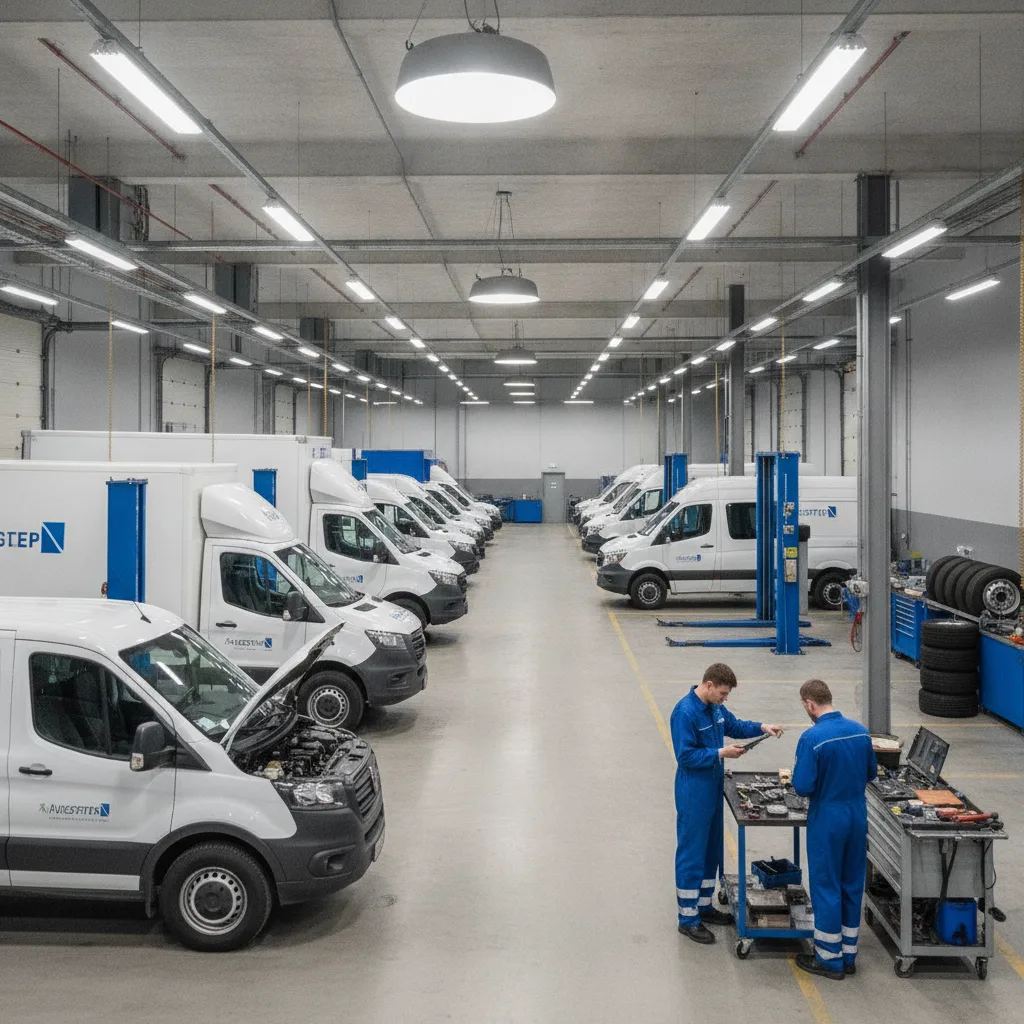
The most obvious difference is scale and urgency. A personal vehicle owner can usually manage without their car for a few days. A fleet manager cannot. When a delivery van or service truck sits in a bay, that’s lost revenue, missed appointments, and schedule gaps that ripple through the entire operation. Commercial vehicle body repair in Phoenix, AZ has to be planned around your business calendar, not just shop availability.
Technical Differences That Actually Matter
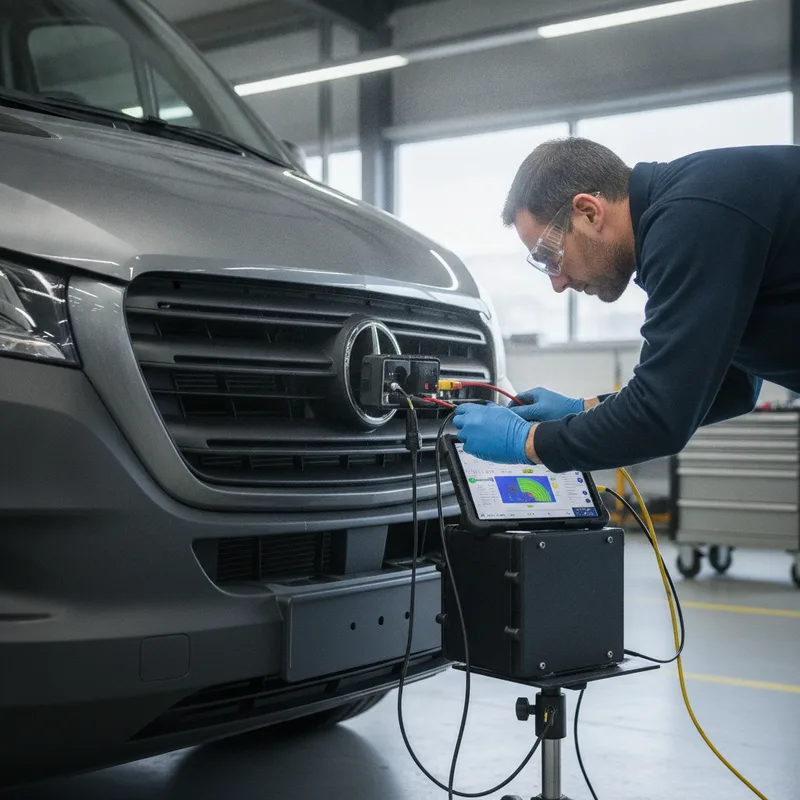
Modern commercial vehicles, especially newer vans and light trucks, are loaded with Advanced Driver Assistance Systems (ADAS). Cameras, radar sensors, automatic emergency braking, lane departure warnings. After any significant collision, these systems need professional recalibration, not just a visual check. Skipping this step is one of the most common and costly mistakes we see. A body panel can look perfect and still leave a forward collision sensor misaligned by enough to cause a failure on the road.
Frame geometry matters more on commercial vehicles too. They carry heavier loads and log far more miles than personal cars. Even minor frame deviation that might be acceptable on a commuter vehicle can cause premature tire wear, handling problems, or drivetrain stress on a work truck that runs 60,000 miles a year. Our full repair services include the frame alignment work that commercial vehicles specifically require.
Documentation and Compliance Requirements
Fleet repairs generate paperwork that personal repairs don’t. Fleet managers need detailed written records for insurance claims, DOT compliance, internal cost tracking, and vehicle history logs. A shop that hands you a vague one-line invoice is not equipped to handle fleet accounts. You need itemized estimates, part sourcing documentation, and repair summaries that hold up if audited.
Honestly, a lot of shops underestimate this side of fleet work. They treat it like a bigger version of a personal repair job. It isn’t. The logistics, the documentation standards, and the pressure around turnaround time make it a distinct service category entirely.
Brad’s Deer Valley Collision has been handling commercial accounts in Phoenix since 1985. Our team understands what fleet managers actually need, not just the body work, but the communication, the documentation, and the speed. Learn more about our fleet repair services or contact us to discuss your fleet’s specific needs.
Brad’s Fleet Repair Capabilities: What Sets Us Apart
Most body shops that claim fleet experience are really just personal vehicle shops that occasionally take in a van or box truck. There’s a difference, and fleet managers usually figure it out the hard way after a botched repair adds two extra weeks of downtime.
Brad’s Deer Valley Collision has been operating in Phoenix since 1985. That’s four decades of working with local businesses, learning how commercial fleets actually run, and building the processes that keep vehicles moving instead of sitting in a bay waiting on decisions.
Certifications That Matter in Commercial Work
We hold I-CAR and ASE certifications, and we display them because fleet managers should be asking for them. Certified technicians aren’t just better at the visible repair work. They’re trained to identify hidden structural damage and to recalibrate the ADAS systems that modern commercial vehicles depend on, things like automatic braking and lane-departure alerts. Skipping recalibration after a collision repair is one of the most common and costly oversights in this industry, and it’s something we don’t cut corners on.
Technology Built for the Job
Our shop uses advanced frame alignment and measuring equipment designed to handle the tolerances required on commercial vehicles. Passenger car specs and commercial vehicle specs are not interchangeable. We also use precision paint matching technology, so when a fleet vehicle returns to service, it looks consistent with the rest of your branded vehicles, not obviously patched.
Our full service capabilities include collision repair, frame alignment, bumper repair, dent removal, and paint work, all under one roof. That matters for fleet accounts because fewer handoffs means faster turnaround and clearer accountability.
What We Offer Fleet Accounts Specifically
-
Direct repair program participation with major commercial insurers
-
Accurate written estimates with documented damage photography
-
Loaner vehicles and shuttle service to keep your operation running
-
Proactive communication with text and photo updates throughout the repair
-
Priority scheduling for fleet accounts to minimize vehicle downtime
Convenience matters here. Phoenix businesses can’t afford to chase a shop for status updates or wait three days just to get an estimate back. We handle the documentation, coordinate directly with your insurance contacts, and keep you informed without you having to ask.
Fleet managers are welcome to walk in or contact us directly to discuss your account needs. Our commercial vehicle body repair program in Phoenix is built around your schedule, not ours.
Common Fleet Repair Mistakes That Cost Phoenix Businesses Money
Bad repairs cost more than good ones. That’s not an opinion, it’s an operational reality that fleet managers in Phoenix learn after one preventable breakdown or a failed DOT inspection.
Here are the mistakes we see most often, and what they actually cost you:
Rushed Diagnostics
A technician who spends twenty minutes on a visual inspection and calls it done is going to miss things. Commercial vehicles take impacts differently than passenger cars, and damage frequently travels through frames, crossmembers, and mounting points that aren’t visible from the outside. Shops that skip thorough measurement and structural analysis are guessing. You’re paying for that guess later.
Skipping Surface Prep
Paint adhesion on a commercial vehicle matters more than most shops admit. These units sit in direct Phoenix sun for hours daily. UV exposure, heat cycling, and constant road vibration will expose any prep shortcut within months. Blistering, peeling, and rust follow. A paint job that costs less upfront but fails in a year isn’t a deal.
Missing Hidden Frame Damage
This one is serious. I-CAR training exists specifically because hidden structural damage is easy to overlook without proper equipment and methodology. A van with compromised frame geometry handles poorly and puts your driver at risk. That’s a liability your business carries if the repair was done wrong.
No Communication With the Fleet Manager
Most shops treat fleet customers like any other drop-off. They don’t. You need status updates, accurate timelines, and honest conversations about parts availability. Silence is the default at too many shops, and it’s how a two-day repair turns into a two-week one.
Honestly, the industry underestimates how much poor communication costs businesses. A delayed truck isn’t just inconvenient; it disrupts routes, misses deliveries, and strains customer relationships. Our commercial vehicle body repair process in Phoenix is built around avoiding every one of these failures.
Insurance, Warranties, and Documentation: What Fleet Managers Must Know
Most fleet managers don’t realize they have the right to choose their own repair shop, regardless of what their insurance carrier recommends. Insurers can suggest preferred vendors, but the decision is yours. That distinction matters more than people think, especially when your vehicles require specialized commercial vehicle body repair that a general shop may not handle correctly.
Before any repair begins, get a written estimate. Not a ballpark. A line-item document that specifies parts, labor rates, and OEM versus aftermarket components. Vague estimates are one of the clearest warning signs in this industry, and fleet accounts with multiple vehicles are particularly vulnerable to scope creep without proper paperwork in place.
What to Demand Before Signing Off
-
A written warranty covering both parts and labor
-
Documentation of all repairs completed, including any supplemental work discovered after teardown
-
Confirmation that safety systems have been recalibrated if the vehicle carries ADAS technology
-
Photo records of pre-repair and post-repair condition
At Brad’s Deer Valley Collision, we handle the insurance documentation directly. Our team prepares accurate estimates, communicates with adjusters, and keeps the claim moving without putting that burden on your operations staff. We’ve been doing this in Phoenix since 1985, and we understand what adjusters need to process commercial claims efficiently.
Warranty coverage is a point where we’d push back on common advice. Many fleet managers accept limited warranties without question. Don’t. A shop confident in its work will stand behind it with clear, written terms. Ours do.
Ready to discuss your fleet’s repair and documentation needs? Contact our team or review our full fleet repair services to get started.
Getting Started With Commercial Vehicle Body Repair in Phoenix
Starting is simple. Call us, visit our shop in Deer Valley, or submit a request online to schedule a commercial vehicle body repair estimate. We’ll assess the damage, walk you through repair options, and give you a written estimate before any work begins.
A lot of fleet managers assume they need to have everything figured out before calling a shop. You don’t. Bring the vehicle in and let us do the assessment. That’s what we’re here for.
We’ve been serving Phoenix businesses since 1985. That history means we understand local fleet operations, Phoenix road conditions, and the operational pressure that comes with keeping commercial vehicles moving. We’re not a franchise running a script. We know this market.
Our fleet repair services cover everything from structural frame work to ADAS recalibration, and our full service capabilities mean you won’t need a second shop to finish the job.
Walk-ins are welcome. If you manage multiple vehicles, ask about setting up a fleet account so future repairs move faster from the first call forward.
Frequently Asked Questions
What is the typical turnaround time for commercial vehicle body repair at Brad’s Deer Valley Collision?
Turnaround time varies depending on the extent of the damage, parts availability, and paint curing time. For minor body repairs, you’re often looking at a few days. More significant structural or panel work can take a week or longer. We work directly with fleet managers to give accurate timelines upfront so you can plan around it. Send us photos of the damage for a quick initial estimate, or stop by our Phoenix, AZ shop for a full assessment.
Do you participate in fleet direct repair programs with major insurance carriers?
Yes, Brad’s Deer Valley Collision is a direct repair program partner with several major insurance carriers. This means we handle the documentation, communicate directly with the adjuster, and keep the claims process moving without a lot of back-and-forth on your end. For businesses managing commercial vehicle body repair across a fleet, this saves real time and helps avoid the kind of disputes that slow down a claim.
Can you repair multiple fleet vehicles simultaneously?
Absolutely. Our shop is set up to handle multiple commercial vehicles at the same time. We also have established relationships with trusted partner shops in Scottsdale and Tempe when we need extra capacity for larger fleets. Whether you’ve got two vehicles or ten that need attention, we’ll coordinate the work so your downtime across the fleet stays as short as possible and your operation keeps running.
What happens if hidden frame damage is discovered during a fleet vehicle repair?
We run thorough pre-repair inspections using advanced diagnostic equipment to catch hidden damage before we get deep into the job. If something does come up mid-repair, we stop and contact you right away. You’ll get photos and a revised estimate before we do anything further. No surprises, no added charges you didn’t approve. That’s how we handle commercial vehicle body repair here in Phoenix, AZ, and it’s how we protect your budget.
Do you offer loaner vehicles or shuttle service for commercial clients?
Yes, we offer both loaner vehicles and shuttle service for our commercial clients. We know that a vehicle sitting in the shop means a driver who isn’t working, and that costs your business real money. Our goal is to keep your team productive while we take care of the repairs. Just let us know what you need when you schedule your appointment and we’ll make the arrangements.
Keep Your Phoenix Fleet on the Road. Call Brad’s Deer Valley Collision Today.
When your commercial vehicles are down, your business feels it. At Brad’s Deer Valley Collision, we’ve been helping Phoenix, AZ, USA businesses get their fleets back in service since 1985, and we know how to move quickly without cutting corners. Stop by our Deer Valley location, give us a call, or check out our reviews on Google to see what local business owners are saying about our fleet repair work.
Schedule your fleet inspection and get a detailed repair estimate. We’ll take care of your vehicles so you can take care of your customers.