
Frame Damage After Accident in Phoenix, AZ: Assessment and Repair Timeline
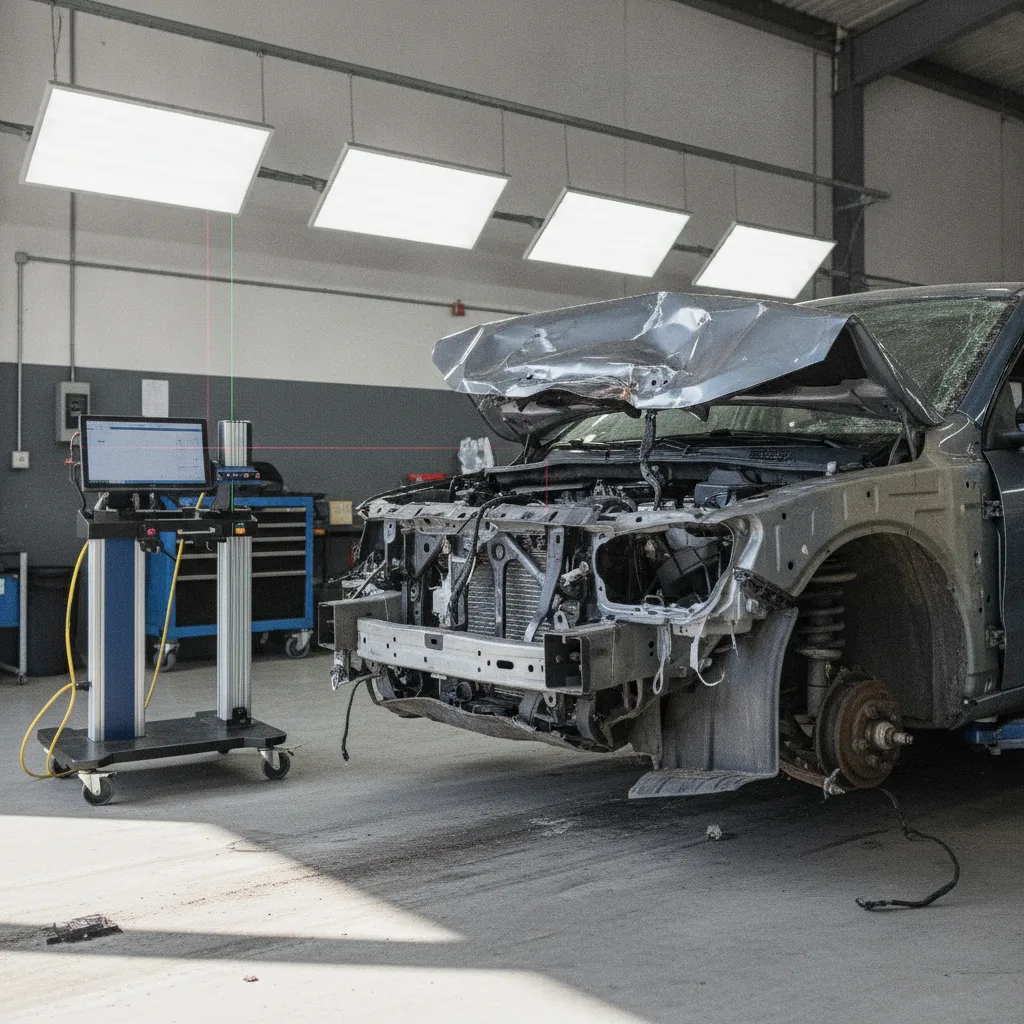
Frame Damage After Accident in Phoenix, AZ: Assessment and Repair Timeline
Why Frame Damage Assessment Matters More Than You Think
A Phoenix driver pulls out of a parking lot near Desert Ridge Marketplace after a low-speed rear collision. The bumper looks fine after a quick look. No fluid leaks. The car drives straight. So they assume the damage is cosmetic and skip the professional inspection. Three months later, the rear door won’t close properly, the tires are eating themselves unevenly, and a body shop confirms the frame took a hit that nobody caught.
That scenario plays out more often than most people realize.
Frame damage after accident situations is one of the most misunderstood problems in collision repair because the damage is rarely obvious from the outside. A frame can absorb significant force and bend in ways that aren’t visible to anyone without the right equipment. The vehicle still drives. The body panels look intact. But underneath, the structural geometry that keeps your car safe in the next collision is compromised.
Phoenix conditions make this worse. The Valley’s extreme heat cycles, combined with the concrete-heavy road surfaces on corridors like the I-17 and Loop 101, accelerate stress fractures in metal that might otherwise stay dormant in a cooler climate. A small bend in a frame rail that would take years to become a problem in Minneapolis can deteriorate noticeably faster here. Thermal expansion is not kind to damaged metal.
There’s a common belief that if airbags didn’t deploy, the crash wasn’t serious enough to cause frame damage. That’s not accurate. Frame deformation can happen in collisions well below airbag deployment thresholds, particularly in angled rear impacts or side-loading situations. Relying on airbag deployment as your benchmark for structural damage is a mistake.
The structural frame connects nearly every safety system in a modern vehicle. Misalignment affects steering geometry, suspension behavior, and, critically, how ADAS safety systems like automatic emergency braking and lane departure warnings perform. These systems are calibrated against a vehicle in proper alignment. Once the frame shifts, those calibrations can be off in ways that aren’t obvious until something goes wrong.
Getting a professional assessment after any collision, even a minor one, is not overcaution. It’s the only way to know what you’re actually dealing with. At Brad’s Deer Valley Collision, we’ve been doing this work in Phoenix since 1985, and we’ll tell you honestly what we find. You can reach us directly to schedule an assessment.

The Frame Damage Assessment Process at Brad’s Deer Valley Collision
Most shops start with a visual walkthrough and call it an assessment. We don’t. At Brad’s Deer Valley Collision, we’ve been doing this since 1985, and experience teaches you one thing quickly: what you can see rarely tells the full story after a collision.
Our process starts at the surface and works inward, systematically.
Step One: Visual Inspection and Documentation
The first thing our technicians do is photograph and document every visible point of impact. This isn’t just for insurance purposes. It builds a baseline so we can track what changes as we move deeper into the inspection. Phoenix drivers dealing with frame damage after accident often arrive thinking the problem is isolated to one area. The documentation phase usually reveals otherwise.
Step Two: Drive-On Measurement with 3D Alignment Technology
This is where most shops separate themselves, or fail to. We use a computerized 3D measuring system that maps your vehicle’s actual frame geometry against manufacturer specifications. The system detects deviations measured in millimeters, not eyeballed estimates. A frame that looks straight can be twisted, compressed, or laterally shifted in ways that create serious handling and safety problems down the road.
Plenty of shops skip this step because the equipment is expensive and the process takes time. We think that’s a false economy. Skipping precise measurement means you’re guessing, and guessing on structural repair is not acceptable.
Step Three: Identifying Hidden Structural Damage
Impact energy doesn’t always stop where the collision stopped. A front-end hit near Camelback Mountain Drive can transfer stress through the subframe, firewall, and strut towers. Our technicians know where to look because they’ve seen these patterns hundreds of times. We inspect welds, crush zones, and structural mounting points that don’t show up in a basic visual pass.
Step Four: Safety System Impact Review
Modern vehicles carry sensor arrays, cameras, and ADAS components tied directly to the structural frame. After frame damage after accident, those systems may be physically misaligned even if the electronics haven’t thrown a fault code yet. Our assessment includes a review of sensor mounting locations and a flag for recalibration needs before any repair work begins.
The full assessment results in a written damage report that we review with you directly. You can schedule your assessment online or walk in to our Phoenix location. We also encourage you to review our certifications and background, including our I-CAR credentials, before making any repair decision. You deserve a documented answer, not a verbal guess.
Common Frame Damage Types and What They Mean
Not all frame damage looks the same on the lift. After decades of pulling damaged vehicles into our bays here in Phoenix, AZ, one pattern becomes obvious: the type of impact usually tells you what you’re about to find before the measurement data even confirms it.
Here’s what the most common damage types actually mean for repair complexity and timeline.
Mash Damage
This happens when a front or rear collision compresses the frame rails inward along their length. The metal literally shortens. It’s most common after head-on collisions or hard rear impacts. Mash damage affects the vehicle’s overall length and puts the entire suspension geometry out of spec. Repair is possible in most cases, but it’s not a quick pull-and-go job. Expect extended time on the frame machine.
Sway Damage
Sway is a lateral bend, where the frame shifts left or right from a side or angled hit. You’ll often see uneven tire wear develop quickly after an accident that caused sway. Drivers sometimes assume their alignment is simply off. It’s usually deeper than that. Sway affects how the vehicle tracks at highway speeds, which matters a lot on the stretch between Phoenix and Scottsdale where you’re holding a straight line at 65 mph.
Twist Damage
Twist damage is one of the harder problems to catch without proper measuring equipment. The frame rotates along its axis, so one corner sits higher than the opposite corner. A vehicle with undiagnosed twist damage will handle unpredictably, especially in emergency maneuvers. This is exactly why we don’t rely on visual checks alone.
Diamond Damage
Diamond damage shifts the entire frame out of its rectangular shape. The rear of the vehicle moves to one side relative to the front. It’s less common but tends to occur in severe side-impact collisions. Repair is possible, though the timeline and cost are significant.
A common misconception is that minor frame damage after accident scenarios are always quick fixes. That’s not reliable advice. Even a modest bend in a structural rail can compromise crumple zone performance in a future collision. Our team at Brad’s Deer Valley Collision treats every damage type with the attention it actually requires, not the attention that’s convenient.
Frame Repair Timeline: What to Expect From Start to Finish
People ask us this every day: “How long is this going to take?” It’s a fair question. You need your car back. You’ve got work, family, and a commute that doesn’t pause because of frame damage after an accident.
The honest answer is that timeline depends entirely on what the frame actually needs, not just what the initial inspection reveals. Hidden damage, insurance approvals, and parts availability all factor in. Here’s how it typically unfolds at Brad’s Deer Valley Collision.
Phase 1: Diagnostic and Documentation (Days 1-2)
We start with a full structural measurement using computerized frame analysis equipment. This isn’t a quick visual check. We’re pulling precise data on every critical measurement point to understand exactly where the frame has moved and by how much. This phase also includes photos, written documentation, and the estimate your insurance adjuster will need.
Phase 2: Frame Straightening and Structural Repair (Days 2-6)
This is where the actual work happens. Mild misalignment on a unibody vehicle might be corrected in a day. Severe structural damage, bent subframes, or multiple impact zones take longer, sometimes three to five additional days. Rushing this phase is where shops get into trouble, and it’s something we refuse to do. A frame pulled too aggressively can introduce stress fractures that don’t show up until months later.
Phase 3: Alignment Verification (Day 6-7)
After the frame work is done, we put the vehicle back through measurements to confirm everything is within factory specification. No shortcuts here. Our I-CAR certified technicians know that alignment verification isn’t optional, it’s what separates a proper repair from a patch job.
Phase 4: Safety System Recalibration
This step surprises a lot of Phoenix drivers. Modern vehicles have cameras, radar sensors, and lane-assist systems tied to structural mounting points. After any significant frame repair, those systems need to be recalibrated. Skipping this step is genuinely dangerous, and plenty of shops skip it because they don’t have the equipment.
Total turnaround for most frame damage repairs in Phoenix, AZ runs between five and ten business days. Complex repairs involving multiple zones or significant parts ordering can extend that to two weeks.
Want a realistic estimate for your specific situation? Contact us directly and we’ll tell you exactly what we’re looking at, no guesswork, no runaround.
Critical Mistakes That Compromise Frame Repair Quality
Rushed repairs are the most expensive kind. After forty years of working on collision-damaged vehicles in Phoenix, AZ, that’s the pattern that repeats itself more than any other. A shop cuts corners under timeline pressure, the customer drives away satisfied, and then something goes wrong at highway speed on the I-17.
The three mistakes we see most often are skipping surface prep before pulling, missing secondary damage points during measurement, and ignoring post-repair alignment. That last one surprises people. A technician can straighten a frame to within spec and still send a car out with a suspension geometry problem that chews through tires and pulls hard at 65 mph.
The mistake we’d push back on hardest is the industry habit of treating frame damage after accident repairs as complete once the frame measurement checks out. It isn’t. Advanced driver assistance systems like automatic emergency braking and lane departure warning depend on sensors calibrated to factory angles. Bend the frame, straighten it, and those sensors are pointing somewhere slightly different than the manufacturer intended. Skipping recalibration isn’t a shortcut. It’s a safety failure.
Our I-CAR certified technicians follow a structured post-repair checklist that covers frame geometry confirmation, four-wheel alignment verification, and full ADAS recalibration before any vehicle leaves our facility. No exceptions.
Red flags to watch for at any shop:
-
No written estimate before work begins
-
No warranty offered on frame repair labor or parts
-
No mention of ADAS recalibration after structural work
-
Unusually low bids with vague line items
If you want a straight answer about what your repair actually involves, contact us for a written estimate. Walk-ins are welcome.
Insurance Claims, Estimates, and Your Rights as a Phoenix Driver
Your insurer does not get to choose your repair shop. Full stop. Under Arizona law, you have the right to take your vehicle wherever you want, regardless of what your insurance company recommends or which “preferred” shop they steer you toward. After 40 years in Phoenix, we’ve watched a lot of customers unknowingly hand that decision over without realizing they didn’t have to.
That matters a lot when you’re dealing with frame damage after an accident. A shop that’s optimized for insurer volume isn’t always optimized for repair quality. Those two goals sometimes conflict.
What a Written Estimate Should Actually Tell You
A proper estimate isn’t just a dollar figure. It should itemize labor hours, list each part by OEM or aftermarket designation, specify the repair procedures involved, and include a warranty statement. If a shop hands you a one-page summary with a total at the bottom, that’s not enough. You’re entitled to detail, and you should ask for it.
We recommend getting two or three written estimates before committing, even if you plan to use us. Comparing estimates tells you a lot about how different shops approach the same damage. Unusually low bids are usually low for a reason.
How We Handle Insurance at Brad’s Deer Valley Collision
We work directly with insurance companies and assist with documentation throughout the claim process. That includes providing accurate repair assessments, communicating with adjusters, and flagging any supplemental damage discovered once repairs begin. Contact us to get a frame damage estimate and we’ll walk you through what your coverage likely applies to.
The Arizona Department of Insurance outlines consumer rights for auto claims if you ever feel pressured by your insurer. Know those rights before you sign anything. Explore our full collision repair services to understand everything we handle in-house.
Frame Alignment and Safety Systems: The Final Step Most Shops Miss
Straightened metal doesn’t mean a safe vehicle. That’s the part of frame repair most shops quietly skip, and it’s the part that puts drivers at real risk.
Once structural repairs are complete, the vehicle needs a full four-wheel alignment check. Frame damage after an accident shifts more than sheet metal. It displaces suspension geometry, changes caster and camber angles, and throws off the thrust line the vehicle tracks on. A car that looks repaired but hasn’t been properly aligned will wear tires unevenly, pull under braking, and handle unpredictably. On Phoenix freeways like the I-17 or US-60, that’s not a minor inconvenience.
Why ADAS Recalibration Is Non-Negotiable
Modern vehicles carry cameras, radar sensors, and ultrasonic modules that connect to systems like automatic emergency braking, lane-keep assist, blind-spot monitoring, and adaptive cruise control. These systems depend on precise mounting angles and factory-specified sensor positions. Any frame repair, even a conservative one, can shift those positions by fractions of an inch, enough to throw off calibration entirely.
We’ve seen vehicles come to us from other shops where the frame was straightened but the forward-facing camera was never recalibrated. The driver had no idea their automatic braking system was operating on faulty reference data. That’s a real problem, and it’s more common than the industry admits.
At Brad’s Deer Valley Collision, post-repair alignment and ADAS recalibration are built into every structural repair process, not offered as optional add-ons. We’ve been doing collision work in Phoenix, AZ since 1985, and the technology has changed dramatically. Our equipment and training have kept pace.
Every vehicle leaves our shop verified against manufacturer specifications, not just straightened and painted. That means your safety systems work the way they’re supposed to before you merge onto the freeway.
If you’re dealing with frame damage after an accident in Phoenix, AZ, don’t settle for a shop that stops at the metal. Contact us to schedule your assessment, or stop by. We take walk-ins and we’ll give you a straight answer about what your vehicle actually needs.
Frequently Asked Questions
How long does frame damage repair take in Phoenix?
The timeline really depends on how severe the damage is. Minor frame damage after an accident can often be handled in 3 to 7 days. Moderate damage typically takes 2 to 3 weeks, and major structural repairs can run 4 to 6 weeks or longer. When you bring your vehicle into Brad’s Deer Valley Collision here in Phoenix, AZ, USA, we’ll give you a realistic estimate after the initial assessment so you’re not left guessing.
Can I choose my own repair shop for frame damage, or must I use my insurer’s recommendation?
You absolutely have the right to choose your own repair shop. Your insurer can suggest a shop, but that’s all it is, a suggestion. You’re in charge of that decision. At Brad’s Deer Valley Collision, we work directly with insurance companies and handle all the claim documentation on your behalf. You don’t have to spend time going back and forth between us and your insurer. We take care of that for you.
What is the difference between frame repair and frame straightening?
Frame straightening uses hydraulic equipment to pull bent structural components back into alignment. Frame repair goes a step further and may involve welding, replacing damaged sections, or a combination of both. They’re not always the same job, and the right approach depends on what we find during the inspection. Our I-CAR certified technicians at Brad’s Deer Valley Collision assess each vehicle and choose the method that restores it to factory specifications.
What happens if frame damage isn’t repaired properly?
A poorly repaired frame causes real problems down the road. You might notice uneven tire wear, handling that feels off, or suspension issues that keep coming back. It also affects how your airbags and other safety systems perform in a future collision. Resale value takes a hit too. At Brad’s Deer Valley Collision, we use 3D measuring technology and run a post-repair alignment check to make sure the frame is where it needs to be before your vehicle leaves our shop in Phoenix, AZ, USA.
Will my vehicle be safe to drive after frame repair?
Yes, it will be, as long as the repair is done correctly and completely. That includes recalibrating your ADAS (advanced driver assistance systems) after any structural work. A lot of shops skip that step, and it can leave your safety features working incorrectly. At Brad’s Deer Valley Collision, we run thorough alignment checks and recalibrate all safety systems before we hand your keys back. We don’t consider the job finished until the vehicle is genuinely safe to drive.
Get Your Frame Inspected by Brad’s Deer Valley Collision in Phoenix, AZ
Frame damage is serious, and driving on a compromised frame puts you and everyone else on the road at risk. At Brad’s Deer Valley Collision, we offer free frame damage assessments, work directly with your insurance company, and even provide loaner vehicles so your life doesn’t have to stop while we get your car back to where it needs to be. We’re proud to serve drivers across Phoenix, AZ, USA, and we’d love to help you too.
Call us today to schedule your free estimate or stop by the shop. You can also see what our customers are saying on Google before you come in. Don’t let frame damage wait. Reach out to Brad’s Deer Valley Collision now and let’s get you back on the road safely.