Body Shop Insurance Partnerships in Phoenix, AZ: Streamlining Your Collision Claim
Body Shop Insurance Partnerships in Phoenix, AZ: Streamlining Your Collision Claim
Why Insurance Partnerships Matter After Your Phoenix Accident
You’re sitting in a parking lot off Tatum Boulevard, bumper crumpled, phone in hand, trying to figure out who to call first. Your insurer picks up, walks you through the claim, and then suggests a list of “preferred” shops. You don’t recognize any of them. You don’t know if they’re any good. And nobody’s explained what happens next.
That moment is where insurance partnerships either save you a week of frustration or cost you one.
Choosing a body shop that works with insurance directly changes the repair experience in concrete ways. It’s not just about convenience. It’s about accuracy, speed, and avoiding the kind of miscommunication that leaves a vehicle sitting in a bay for two weeks while paperwork bounces between adjusters and technicians.
Shops that have established relationships with insurance carriers already know the documentation requirements, the supplement process, and the preferred communication channels each insurer uses. That institutional knowledge cuts days off your claim cycle. A shop without those relationships may do excellent repair work and still drag your timeline out simply because the back-and-forth is unfamiliar territory for them.
There’s a common belief that any certified shop can handle insurance work equally well. That’s not quite right. Certification covers repair quality, not claims processing. Two shops can hold the same I-CAR credentials and have completely different track records getting supplements approved quickly or keeping customers updated during the process. The administrative side of collision repair is a skill set of its own.
Here’s what a real insurance partnership typically delivers:
-
Faster estimate turnaround because the shop knows exactly what adjusters need in writing
-
Fewer delays caused by missing documentation or mismatched line items
-
Direct communication between the shop and your insurer, so you’re not playing middleman
-
Accurate initial estimates that reduce the chance of surprise costs appearing mid-repair
For Phoenix, AZ drivers, this matters even more after major weather events or high-volume accident periods when insurers are managing hundreds of claims at once. A shop with established insurer relationships gets prioritized responses. A shop without them waits in line.
Since 1985, Brad’s Deer Valley Collision has built those relationships across Phoenix, AZ. If you want to understand the full range of repair and claims support available, browse our services or reach out directly to get started.
Understanding Direct Repair Programs (DRPs) and What They Mean for You
Most drivers in Phoenix hear the term “preferred shop” and assume it’s just insurer shorthand for “convenient.” It’s actually more structured than that.
A Direct Repair Program is a formal agreement between an insurance carrier and a body shop. The shop agrees to follow the insurer’s repair guidelines, pricing schedules, and documentation standards. In return, the insurer sends claims directly to that shop and often fast-tracks the approval process. Less back-and-forth. Faster turnaround.
DRP shops are audited regularly. Insurers track cycle times, customer satisfaction scores, and repair quality. A shop that cuts corners or draws frequent complaints gets pulled from the program. That accountability matters, and it’s one reason why finding a body shop that works with insurance through a formal DRP can make the claim process smoother for everyone involved.
Here’s where a lot of drivers get the wrong idea, though. Being on an insurer’s preferred list doesn’t mean a shop works for the insurance company. A reputable DRP shop still works for you. The obligation is to repair your vehicle correctly, and any shop worth its certification will push back on an insurer if the approved scope doesn’t cover all the legitimate damage.
What DRP participation actually signals:
-
The shop has met minimum standards for equipment, training, and facility requirements
-
Repair estimates follow a standardized process that insurers can verify
-
The shop has a documented track record the carrier has reviewed
-
There’s a direct communication channel between the shop and adjuster, which cuts delays
That said, DRP status alone isn’t a guarantee of quality. Some program shops still rush jobs or use parts that just barely meet the spec. Credentials like I-CAR Gold Class certification matter more than being on a preferred list.
At Brad’s Deer Valley Collision, we’ve worked within insurance frameworks since 1985. Phoenix drivers who want to understand exactly what’s covered, what we’ll document, and how the process runs are welcome to stop in and talk it through before committing to anything.
How Brad’s Deer Valley Collision Simplifies Your Insurance Claim
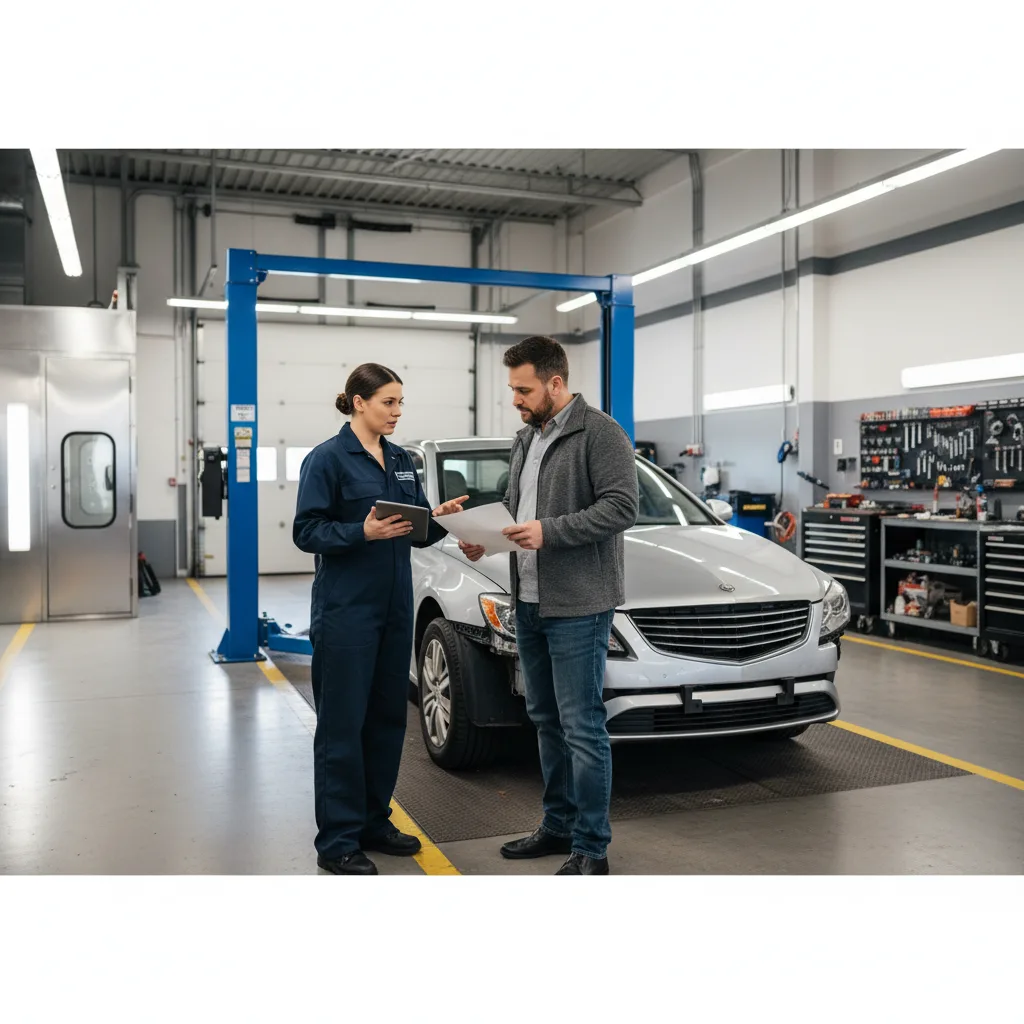
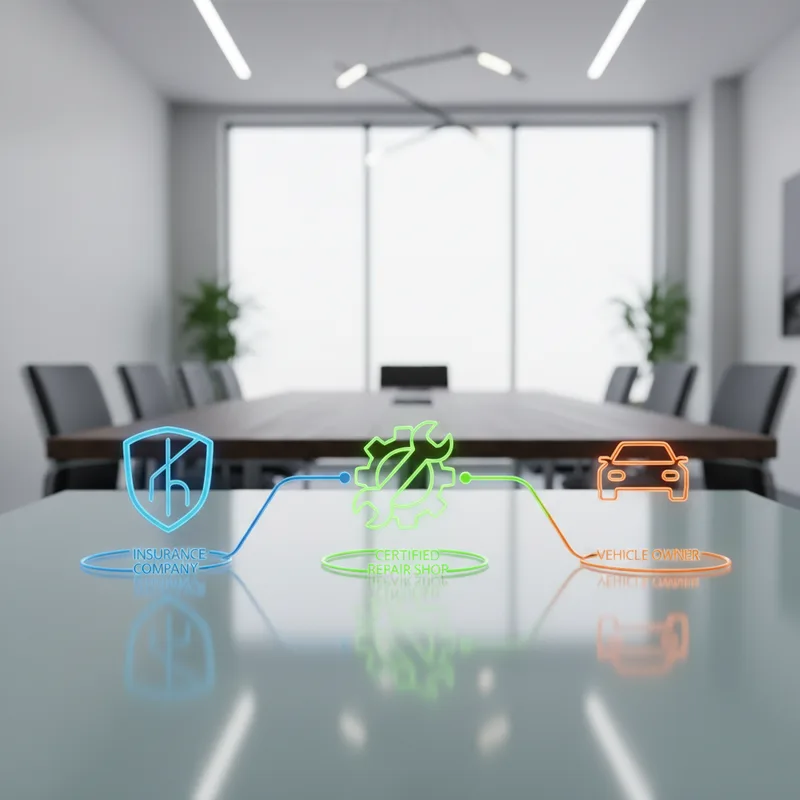
Most of the friction in a collision claim happens between the shop and the insurer, not between you and your insurer. That’s the part drivers rarely see, and it’s exactly where an experienced body shop that works with insurance earns its keep.
Brad’s Deer Valley Collision has been operating in Phoenix, AZ since 1985. That’s four decades of working through supplement disputes, navigating adjuster timelines, and learning which carriers move fast and which ones need a follow-up call. That institutional knowledge isn’t glamorous, but it saves customers real time and real money.
What the Process Actually Looks Like
It starts before your car even enters the bay. When you contact us, we collect your claim number, carrier information, and a basic description of the damage. From there, our team handles the adjuster coordination directly. You don’t have to play telephone between your insurer and the shop.
Once your vehicle arrives, we perform a thorough damage assessment. This is where a lot of shops cut corners. A visible crumpled bumper can hide frame stress, bent mounting brackets, or compromised safety sensors. We document everything with photos and written notes before touching the vehicle, and that documentation goes straight into the claim file.
We then submit a detailed estimate to your insurer. If hidden damage turns up mid-repair, which it often does, we file a supplement and wait for approval before proceeding. Some shops push ahead and deal with the paperwork later. We don’t, because that approach creates billing disputes that delay your pickup.
Where We Disagree With Common Advice
You’ve probably read that you should get two or three estimates before choosing a shop. That advice makes sense in theory. In practice, if you’ve already found a qualified shop with verifiable credentials and a written warranty, chasing extra bids mostly delays your repair and adds stress. Verify the credentials. Read the reviews. Then commit.
At Brad’s, we provide a written estimate upfront, confirm parts sourcing before ordering, and keep you updated throughout the repair. No vague timelines. No surprises at pickup.
Our full range of collision repair services means we handle everything in-house, including frame alignment and ADAS recalibration, rather than farming work out to other facilities. That keeps your claim cleaner and your repair timeline tighter.
Ready to get started? Contact our team to schedule an estimate or walk in during business hours. We’re located in Phoenix and ready to take the insurance headache off your plate.
OEM Parts vs. Aftermarket: What Your Insurance May Cover
Parts matter. A lot of drivers don’t find this out until the repair is already done.
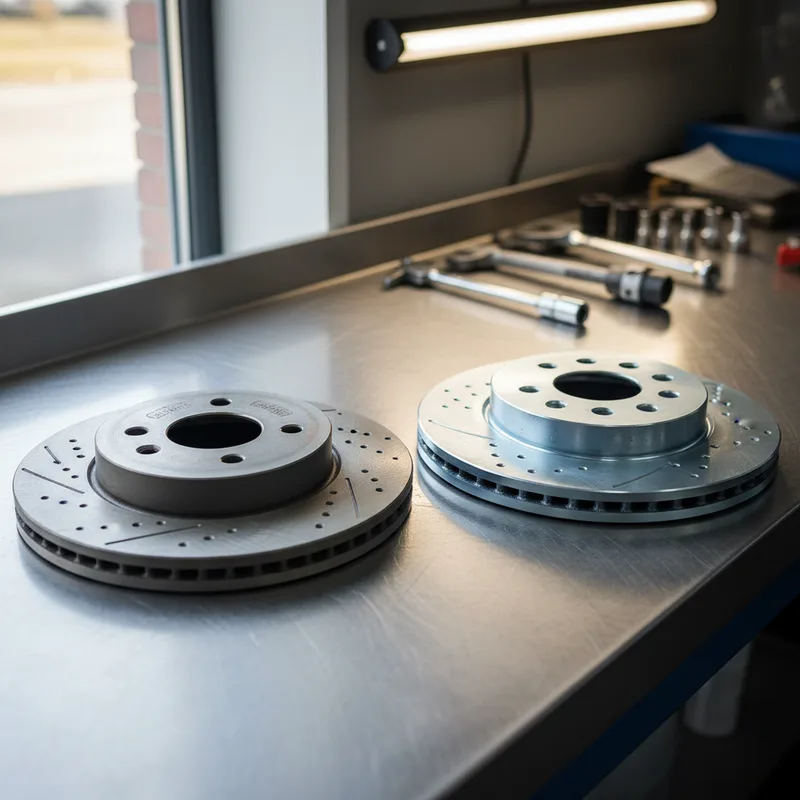
OEM parts (original equipment manufacturer) come directly from your vehicle’s manufacturer. Aftermarket parts are made by third-party suppliers and designed to fit your vehicle, but they’re not the same thing. Insurance carriers often push for aftermarket components because they cost less. That’s their prerogative. But you have a say in what goes on your car.
Here’s the honest truth about a common misconception: many drivers assume OEM parts are always worth fighting for on every repair. That’s not necessarily true. For structural components, safety systems, or anything tied to your vehicle’s ADAS technology, OEM matters significantly. For a door handle or a splash guard? The quality difference is often minimal. Knowing which parts to push on saves you time and frustration.
Your insurance policy language is the starting point. Many policies allow aftermarket parts on vehicles over a certain age or mileage threshold. Some carriers have clauses that guarantee parts will match OEM quality. Read your policy carefully, and if the language is vague, ask your adjuster to clarify in writing before the repair begins.
At Brad’s Deer Valley Collision, we’ve been navigating these conversations with insurers since 1985. As a body shop that works with insurance carriers across Phoenix, AZ, we know how to flag part substitutions that could compromise your vehicle’s safety or resale value, and we know how to document the case for OEM when it genuinely counts.
Questions worth asking before any repair starts:
-
Will any aftermarket parts affect my vehicle’s warranty?
-
Are there safety-related components where OEM is required?
-
Will the estimate clearly list each part type?
Get it in writing. Every time. Contact us to walk through your estimate line by line before anything gets ordered.
Red Flags: What to Avoid When Choosing a Body Shop
The shops that cause the most trouble aren’t always obvious at first glance. Some look fine from the outside. The problems show up later, after your car is already torn apart and your claim is mid-process.
If you’re searching for a body shop that works with insurance in Phoenix, AZ, here’s what should make you pause before you commit.
No Written Estimate
Walk away from any shop that won’t put numbers on paper. A verbal quote is meaningless once your vehicle is disassembled. Every legitimate repair facility provides a written, itemized estimate before work begins. No exceptions.
Missing Certifications
I-CAR and ASE credentials aren’t just wall decorations. They indicate that technicians have completed ongoing training on current repair methods and vehicle systems. A shop without these certifications may not be equipped to handle the ADAS recalibration your modern vehicle likely needs after a collision. Skipping that step can disable your lane assist or automatic braking without triggering any warning light.
No Warranty on Repairs
Reputable shops back their work. If a shop hesitates or offers only a vague “we’ll take care of it” instead of a clear written warranty, that’s a problem. You need something in writing that specifies what’s covered and for how long.
Poor Communication
You shouldn’t have to chase your shop for updates. Consistently unreturned calls and zero status updates during the repair process are a pattern, not a one-time slip. That same lack of communication usually means the shop isn’t coordinating well with your insurer either.
Unusually Low Bids
A bid that comes in significantly below two or three other estimates isn’t a deal. It’s a signal that someone is cutting corners on parts, labor, or surface prep. Cheap repairs tend to show up within a year, often as paint failure or misaligned panels.
Before you commit anywhere, visit the shop in person. Ask about certifications, get the estimate in writing, and check recent reviews. You can learn more about our background and credentials or contact us directly to ask questions before your car ever arrives.
Your Right to Choose Your Own Shop—and Why It Matters in Phoenix
You have the right to choose. Full stop.
Under Arizona insurance law, your carrier cannot legally require you to use a specific repair facility. They can recommend shops. They can suggest preferred vendors. But the final decision is yours, and a legitimate insurer won’t punish you for exercising it. If anyone tells you otherwise, that’s a pressure tactic, not a policy requirement.
This matters more than most drivers realize. Insurer-preferred shops are chosen partly for their ability to keep costs low and cycle times fast. That’s good for the carrier’s bottom line. It isn’t always good for your vehicle. When you choose your own body shop that works with insurance in Phoenix, AZ, you’re choosing who holds the wrench, not who holds the contract.
Here’s the honest opinion you won’t often hear: the “preferred network” isn’t a quality guarantee. It’s a business relationship. Some network shops do excellent work. Others cut corners because volume and speed are what the program rewards. The shop’s loyalty is split. Yours doesn’t have to be.
Choosing an independent, locally established shop like Brad’s Deer Valley Collision means your repair is handled by technicians who’ve been doing this in Phoenix since 1985. Our loyalty runs to the vehicle in the bay and the customer waiting on it, not to a carrier’s cycle-time metrics.
If your insurer pushes back, stay firm. Document everything, get your own written estimate, and know that the shop you select is your call. Contact us to get started with a straightforward insurance claim estimate, no pressure involved.
Certifications and Credentials That Prove Insurance-Ready Expertise
Credentials get skipped. Most drivers never ask, and most shops never volunteer the information. That’s a mistake on both sides.
Two certifications carry real weight in this industry: I-CAR (Inter-Industry Conference on Auto Collision Repair) and ASE (Automotive Service Excellence). I-CAR Gold Class status means the shop’s technicians complete ongoing training in current repair procedures, including the increasingly complex requirements around ADAS recalibration, aluminum repair, and structural work. ASE certification signals competency in specific technical areas, tested and verified by a third party. These aren’t honorary titles; they require continuing education to maintain.
Here’s where a lot of commonly repeated advice falls short: people are told to “look for certified shops” without being told what to actually verify. Don’t just take a shop’s word for it. Ask to see current certificates. I-CAR Gold Class status is searchable directly on the I-CAR website. If a shop displays a plaque from five years ago and can’t confirm active status, that’s worth noting.
Insurance carriers pay attention to these credentials. A body shop that works with insurance regularly needs to demonstrate repair quality and documentation accuracy. Certified shops tend to have fewer disputes with adjusters because their estimates and procedures are grounded in current industry standards.
At Brad’s Deer Valley Collision, we’ve been serving Phoenix, AZ since 1985. Our certifications aren’t wall decorations. They shape how every repair gets done, from initial disassembly through final safety system checks. You can read more about our history and credentials here.
Before you commit to any shop, ask the direct question: are your I-CAR and ASE certifications current? Then contact us and ask us the same thing. We’ll show you.
Frequently Asked Questions
Can I choose my own body shop even if my insurance company recommends another?
Yes, absolutely. Arizona law gives you the right to choose any body shop that works with insurance in Phoenix, AZ, USA, regardless of what shop your insurer recommends. Insurance companies maintain preferred vendor lists, but those are suggestions, not requirements. Your insurer is still obligated to cover your repair at the agreed-upon estimate amount. Don’t let an adjuster pressure you into a shop you didn’t choose. You can bring your vehicle to Brad’s Deer Valley Collision and we’ll work directly with your insurance company on your behalf.
What does it mean when a body shop is part of a Direct Repair Program (DRP)?
A Direct Repair Program means the shop has a formal partnership with one or more insurance carriers. To qualify, the shop has to meet strict quality and service standards set by the insurer. In practical terms, it means faster estimate approvals, smoother claims documentation, and less back-and-forth for you. As a body shop that works with insurance in Phoenix, AZ, USA, Brad’s Deer Valley Collision handles the claims paperwork directly so you’re not stuck in the middle trying to coordinate everything yourself.
How long does the insurance claim process take at a Phoenix body shop?
Generally, you’re looking at 3 to 7 business days for estimate approval once the claim is submitted. The actual repair time depends on how much damage there is. Most standard collision jobs run about 1 to 3 weeks. At Brad’s Deer Valley Collision, we work hard to keep things moving on our end so you’re not waiting longer than necessary. Stop by our shop in Phoenix, AZ, USA and we can give you a realistic timeline based on your specific situation right away.
Should I request OEM or aftermarket parts for my insurance claim?
You do have the option to request OEM (original equipment manufacturer) parts, but keep in mind that many insurers default to covering aftermarket parts as long as they meet safety and quality standards. OEM parts are made by your vehicle’s manufacturer, while aftermarket parts are made by third parties. Neither choice is wrong, it really depends on your vehicle, its age, and what your policy covers. When you bring your car to us, we’ll walk you through the difference and help you make the right call for your specific repair.
What certifications should I look for in a Phoenix body shop handling insurance claims?
The two big ones to look for are I-CAR certification and ASE credentials. I-CAR focuses specifically on collision repair training and keeps technicians current on the latest repair methods and vehicle technology. ASE stands for Automotive Service Excellence and covers a broader range of mechanical and repair standards. Together, they tell you the shop you’re trusting is held to real industry benchmarks. When you’re searching for a body shop that works with insurance in Phoenix, AZ, USA, those certifications are a reliable sign you’re in good hands.
Let Brad’s Deer Valley Collision Handle Your Insurance Claim in Phoenix, AZ
With more than 40 years of experience and direct relationships with major insurers, we take the stress out of the repair process and work with your insurance company so you don’t have to figure it out alone. We’re a certified, insurance-partnered body shop right here in Phoenix, AZ, USA, and we’re ready to walk you through every step from the initial estimate to getting your vehicle back on the road. See what our customers are saying on Google and then stop by or give us a call today for your free, detailed collision repair estimate.