
Is Frame Damage Repairable in Phoenix, AZ? Assessment Guide from Brad’s Deer Valley Collision
Is Frame Damage Repairable in Phoenix, AZ? Assessment Guide from Brad’s Deer Valley Collision
Understanding Frame Damage: The Basics
A Phoenix driver merges onto the I-17 and gets clipped hard on the driver’s side. The airbags don’t deploy, the car still drives, and the visible damage looks manageable. But at the shop, the technician finds the unibody has absorbed a lateral load it was never designed to survive intact. That’s frame damage, and it’s a completely different animal than a crumpled quarter panel.
Frame damage affects the structural skeleton of your vehicle, not the cosmetic sheet metal wrapped around it. Body damage is what you see. Frame damage is what holds everything else together.
Most modern vehicles use a unibody construction, where the frame and body are integrated into a single welded structure. Older trucks and body-on-frame SUVs have a separate chassis rail system. Either way, when that core structure bends, twists, or cracks under collision forces, the entire geometry of the vehicle shifts. Doors may not close properly. Tires wear unevenly. Steering pulls to one side. And critically, the vehicle’s ability to protect you in a future collision is compromised.
This is why the question of is frame damage repairable deserves a real answer, not a blanket yes or no.
A lot of people assume frame damage automatically means a totaled car. That’s an oversimplification that doesn’t hold up in practice. Mild to moderate frame damage, caught early and repaired correctly with proper equipment, can restore a vehicle to its original structural specifications. The key phrase there is “repaired correctly.” Shoddy frame work done without a proper measuring system or computerized alignment bench doesn’t fix anything; it just hides the problem temporarily.
At Brad’s Deer Valley Collision, we’ve been assessing structural damage in Phoenix, AZ since 1985. Frame repair is one of the most technical services we offer, and it requires both the right equipment and the experience to interpret what the measurements are actually telling you. The Insurance Institute for Highway Safety consistently links vehicle structural integrity to crash survivability, which is exactly why we take every frame assessment seriously.
How Brad’s Deer Valley Collision Assesses Frame Damage
Most shops give a vehicle a quick visual once-over and call it an assessment. That’s not how we do it here.
At Brad’s Deer Valley Collision, our technicians start every potential frame damage case with a systematic inspection process built around measurement, not guesswork. We’ve been doing this since 1985, and one thing that experience teaches you is that what you can see on the surface rarely tells the whole story. A car that looks like it took a minor hit can have significant structural displacement hiding underneath.
The Measurement Process
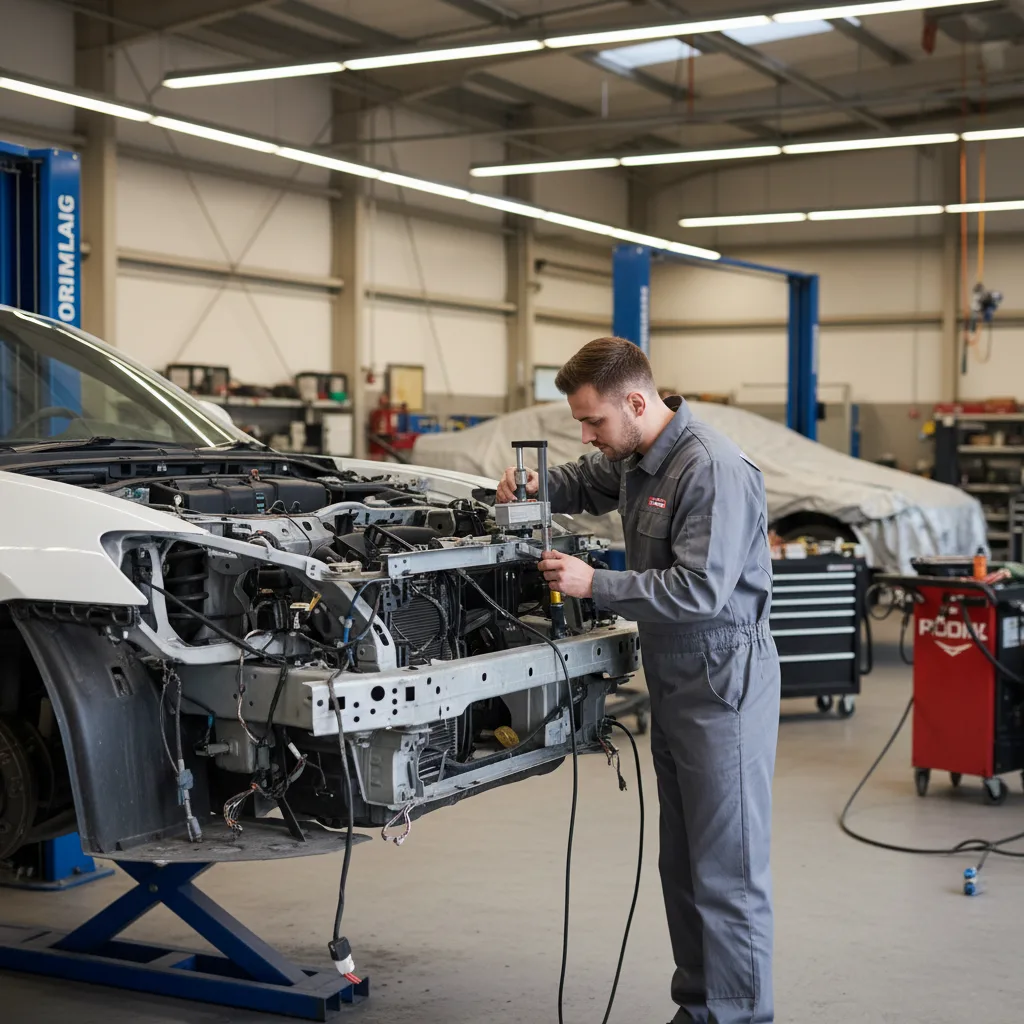
The first tool we reach for is our computerized frame measuring system. This equipment maps the vehicle’s actual dimensions against the manufacturer’s factory specifications, identifying deviations in key structural points that no eye test can catch. We’re talking about tolerances measured in millimeters. A deviation of even a few millimeters in the wrong location can affect wheel alignment, suspension geometry, and how the vehicle absorbs energy in a future collision.
We also use three-dimensional imaging to get a full picture of how the frame or unibody has deformed. This is where the real diagnostic work happens. Two vehicles can show the same visible damage but have completely different structural profiles underneath. One might be straightforward to repair; the other might have stress fractures or metal fatigue that changes the answer to whether is frame damage repairable in that specific case.
What Technicians Are Actually Looking For
Our technicians are checking for more than bent metal. They’re evaluating the direction and severity of the load the frame absorbed during impact. A direct frontal hit puts force into the vehicle differently than an offset or side impact, and that matters for both repairability and safety system recalibration afterward.
Here’s a professional opinion that some customers don’t want to hear: a single written estimate from a shop that only does a visual inspection isn’t worth much. We’ve seen Phoenix, AZ vehicles come through our doors after being “cleared” elsewhere, only to find measurable frame displacement that was completely missed. Get the measurements in writing.
Our full assessment process also flags damage to adjacent systems, including suspension components, engine mounts, and ADAS sensors, because frame repairs that ignore those systems create new problems down the road.
You can learn more about our certifications and experience, or browse our full range of repair capabilities. If you’ve got a vehicle you’re concerned about, schedule a frame damage assessment and we’ll give you a straight answer.
Five Key Indicators That Frame Damage Is Repairable
Most of the time, the cars that come through our doors with frame damage are actually good candidates for repair. That surprises people. The assumption is that bent metal equals total loss, but that’s not how it works in practice.
Whether frame damage is repairable depends on specific, measurable conditions, not just how bad the impact looked. Here’s what our technicians at Brad’s Deer Valley Collision evaluate when making that call for Phoenix, AZ drivers.
-
Deflection within manufacturer tolerances. Frame measuring systems give us precise deviation numbers. If the deflection falls within a range that hydraulic straightening equipment can correct, repair is viable. Small deviations often do.
-
No compromise to crush zones. Crumple zones are engineered to absorb energy in a controlled collapse. If those zones are intact and only the structural rails show bending, the repair path stays open. Crushed crumple zones change the equation entirely.
-
Metal integrity at the damage point. Stretched, work-hardened metal can lose its structural memory. Our technicians check for thinning and micro-fractures before committing to a repair. Clean bends without metal fatigue are far more predictable to correct.
-
Localized, not distributed, damage. Damage concentrated in one zone is manageable. When force has traveled through multiple structural nodes, the repair complexity compounds quickly.
-
No compromised safety-critical geometry. Firewall position, strut tower alignment, and subframe mounts all affect crash protection and ADAS sensor calibration. If those reference points are correctable, the vehicle can be restored safely.
A lot of shops skip this level of detail. We think that’s a disservice to the customer. Contact us to schedule a proper assessment, or visit our services page to see the full scope of what we handle.
When Frame Damage Requires Replacement Instead of Repair
Some frames can’t be saved. That’s a hard truth, but Phoenix drivers deserve a straight answer.
There’s a common belief that any frame can be pulled back into spec with enough time and equipment. We’d push back on that. A frame that’s been bent, twisted, and bent again in a subsequent accident has metal fatigue you won’t see on a measuring system. The structural memory is gone. Trying to repair it anyway doesn’t make the vehicle safer; it creates a false sense of security.
Here are the conditions where replacement is the right call rather than repair:
-
Severe crush zone collapse where the crumple zones have fully compressed and the impact energy traveled into the primary structure
-
Multiple damage points across different structural zones, particularly when the front, mid, and rear sections all show measurable deviation
-
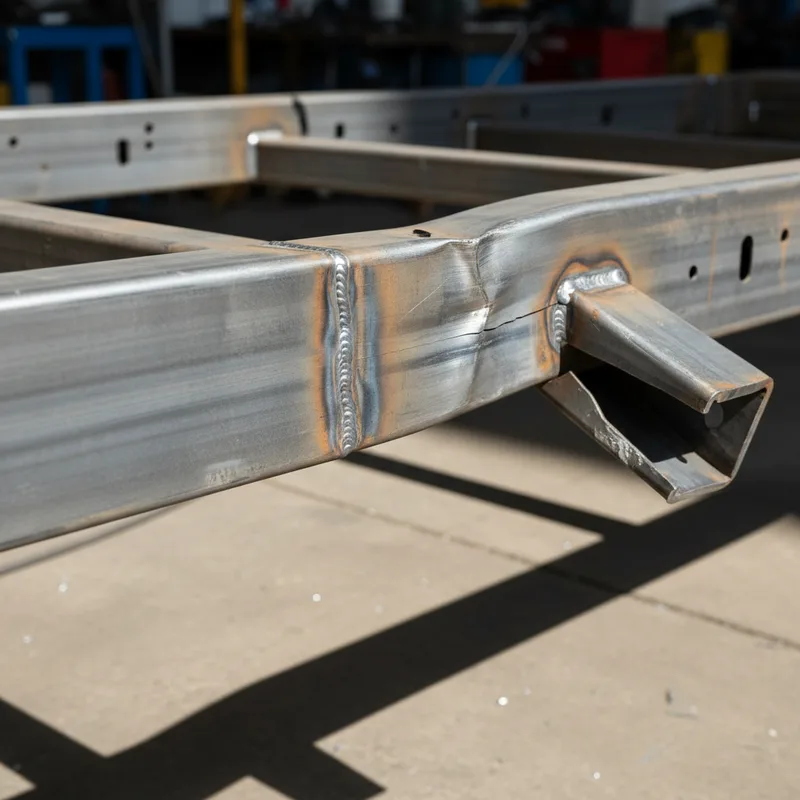
Cracking or tearing in the metal rather than bending, because fractured steel doesn’t regain strength through straightening
-
Prior frame repairs that were done incorrectly, leaving welds or patches that compromise the base structure before the new damage is even addressed
-
High-speed collision impact where the frame absorbed energy beyond its design threshold, even if the visual deformation looks modest
Modern vehicles built with advanced high-strength steel complicate this further. That material is engineered to deform in specific ways during a crash. Once it’s been pushed past its limit, it doesn’t respond to conventional straightening the way mild steel does.
So is frame damage repairable in every case? No. And an honest shop will tell you that before taking your money.
At Brad’s Deer Valley Collision, we’ve been doing this since 1985. We know the difference between a frame worth repairing and one that puts your family at risk if we try. Contact us and we’ll give you a straight answer, not the answer that’s easiest to sell.
The Hidden Costs of Frame Damage: Beyond the Visible Damage
The bent metal is rarely the whole story. After nearly 40 years working on collision-damaged vehicles in Phoenix, AZ, we’ve learned that the visible frame damage is often just the starting point for what a thorough inspection uncovers.
A lot of drivers ask is frame damage repairable and focus entirely on the structural piece. That’s understandable. But the frame doesn’t absorb impact in isolation. Everything connected to it takes a share of the load.
What Gets Pulled Out of Alignment
Suspension geometry is the first casualty. A frame that’s shifted even a few millimeters can pull control arms, tie rods, and wheel mounting points out of their engineered positions. The car will still drive. It might even feel close to normal at first. But uneven tire wear, a steering wheel that sits slightly off-center, and a persistent pull to one side are signs that the suspension geometry is wrong.
Steering components are equally vulnerable. Rack-and-pinion systems on modern vehicles have very tight tolerances. A compromised frame puts those components under abnormal stress, and that stress compounds over time.
ADAS Recalibration Is Non-Negotiable
Here’s where we’d push back on a common assumption. Many people think safety system recalibration is optional after a frame repair. It isn’t. Cameras and sensors for lane assist, automatic emergency braking, and adaptive cruise control are calibrated to specific vehicle geometry. Change that geometry, even slightly, and those systems can behave unpredictably. Most smaller shops in Phoenix don’t have the equipment to handle this step. We do. You can review our full capabilities on the services page.
Skipping recalibration isn’t a cost savings. It’s a liability. If you have questions about what a complete assessment actually covers, reach out to our team directly.
Frame Damage and Your Insurance Claim in Phoenix
Insurance companies have their own answer to whether is frame damage repairable or not, and it’s almost always financial. They’re calculating repair cost against the vehicle’s actual cash value. If repairs push past a certain threshold, usually 70–80% of ACV, they’ll lean toward a total loss declaration. That’s their right. But Phoenix, AZ drivers have rights too, and most don’t know them.
You can choose your own shop. Full stop.
Your insurer may steer you toward a preferred network shop. They’ll make it sound like a convenience. In our experience, those referrals often benefit the insurer’s cost controls more than your repair quality. Arizona law does not require you to use any shop your insurance company recommends. Brad’s Deer Valley Collision has worked directly with insurers since 1985, and we know how to navigate the claims process without compromising the repair standard your vehicle deserves.
Here’s what to do before you sign anything:
-
Get a written estimate from us before accepting the insurer’s initial offer
-
Ask specifically whether the estimate covers full structural realignment and ADAS recalibration
-
Photograph all visible damage the day of the accident, not the day of drop-off
-
Confirm whether OEM or aftermarket parts are being used in the approved repair plan
We handle the documentation, the supplement requests, and the back-and-forth with adjusters. Our team reviews industry-recognized structural repair guidelines to support every claim we process. You focus on your schedule; we manage the paperwork.
Contact us to start your estimate and let us handle the insurance side with you.
Getting a Professional Frame Damage Assessment: What to Expect
Most drivers show up not knowing what questions to ask. That’s completely normal. Here’s what the process actually looks like when you bring your vehicle to us.
When you arrive at Brad’s Deer Valley Collision, the first thing we do is a walk-around with you present. We want you to see what we see. A technician will point out visible damage, explain what’s worth investigating further, and give you an honest read on whether is frame damage repairable in your specific situation before we ever put the car on the frame rack.
From there, we pull measurements using our computerized alignment system and compare them against manufacturer specs. If the numbers are off, we’ll show you exactly where and by how much. No vague language. No “trust us, it’s bad.” You’ll get a written estimate that breaks down labor, parts, and what’s OEM versus aftermarket, because that distinction matters more than most shops admit.
Turnaround on the assessment itself is typically same-day. The repair timeline depends on damage severity and parts availability, but we communicate throughout. You won’t be left wondering where your car is.
A few things worth knowing before you visit:
-
Photograph your vehicle before drop-off and remove any valuables
-
Ask specifically about warranty coverage on frame repairs
-
Confirm whether your vehicle requires ADAS recalibration after structural work, because many Phoenix shops skip this step entirely
-
You have the right to choose your own repair facility regardless of insurer preference
Our team has been doing this in Phoenix, AZ since 1985. Our background and certifications are posted openly because we think transparency earns more trust than sales language. Schedule your assessment or walk in. Either works.
Frequently Asked Questions
How do I know if my vehicle’s frame damage is repairable?
The honest answer is that you won’t know for sure until a trained technician takes a proper look. At Brad’s Deer Valley Collision in Phoenix, AZ, USA, we use computer-aided imaging and specialized measurement equipment to compare your frame’s current condition against the manufacturer’s original specifications. If the damage falls within safe, correctable tolerances, it’s repairable. Severe bending, cracking, or misalignment that goes beyond those limits may mean the frame needs replacement instead. Stop by and we’ll give you a straight answer.
What’s the difference between frame repair and frame replacement?
Frame repair means we use hydraulic straightening equipment to bring a bent or damaged frame section back to factory specs. Frame replacement means installing a completely new frame structure. Repair is usually faster and more cost-effective, but the right call depends entirely on how severe the damage is and whether the structural integrity can be fully restored. We don’t recommend repair just because it’s cheaper. If a replacement is what’s needed to keep you safe, that’s what we’ll tell you.
Can a vehicle with repaired frame damage be safe to drive?
Yes, absolutely, as long as the repair is done right. A lot of customers ask us “is frame damage repairable to a safe standard,” and the answer is yes when certified technicians handle it with proper equipment and thorough post-repair checks. At Brad’s Deer Valley Collision, we make sure repaired frames meet or exceed the original manufacturer specifications. We also recalibrate safety systems like lane assist and automatic emergency braking, so your vehicle isn’t just structurally sound but fully functional from bumper to bumper.
Will my insurance cover frame damage repairs in Phoenix?
In most cases, yes. Comprehensive and collision coverage typically includes frame damage repairs. If you’re dealing with a claim in Phoenix, AZ, USA, Brad’s Deer Valley Collision works directly with insurers as a trusted direct repair program partner. That means we handle a lot of the back-and-forth for you and help you understand your coverage limits and what you’ll owe out of pocket. We’d rather you focus on getting your vehicle back than getting lost in paperwork.
How long does frame damage assessment and repair take?
A thorough assessment usually takes between one and three hours, depending on how complex the damage looks. Repairs are a different story. Minor frame work might take a few days, while more serious damage can take several weeks. We know that waiting on your vehicle is frustrating, so we give you a realistic timeline upfront and keep you updated as the work progresses. Don’t hesitate to call us or come into the shop if you have questions at any point during the repair.
Not Sure If Your Frame Damage Is Repairable? Let’s Find Out Together.
If you’re dealing with frame damage anywhere in Phoenix, AZ, USA, bring your vehicle to Brad’s Deer Valley Collision and we’ll give you an honest, detailed evaluation at no charge. Our certified technicians will walk you through exactly what we find and explain all your repair options in plain language, so you can make the right call for your situation. See what our customers are saying on Google and then stop by or call us today to schedule your free frame damage assessment.