Commercial Fleet Collision Repair in Phoenix, AZ: Minimizing Business Downtime
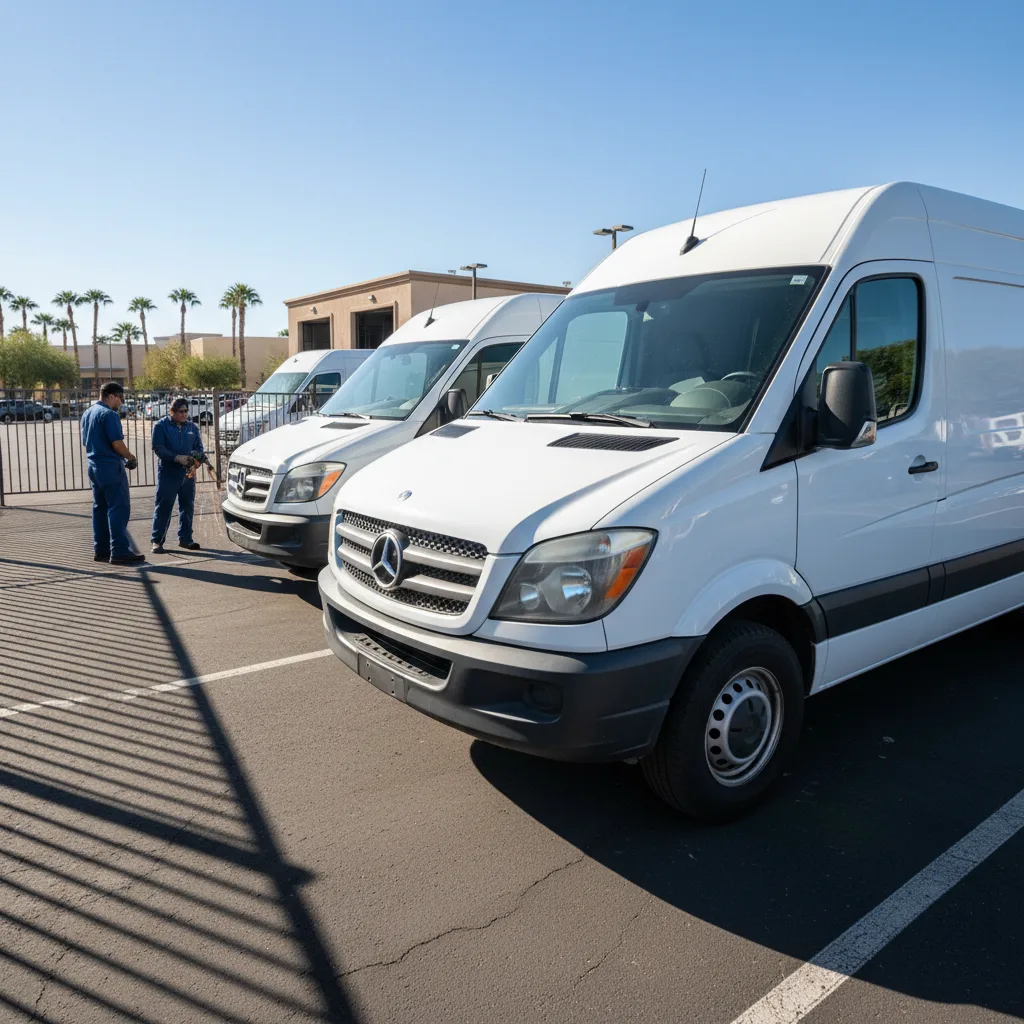
Commercial Fleet Collision Repair in Phoenix, AZ: Minimizing Business Downtime
Why Fleet Downtime Costs Phoenix Businesses More Than Vehicle Damage
A delivery driver calls in from the I-17 on a Tuesday morning. One of your vans got rear-ended near Desert Ridge Marketplace. The damage looks repairable, but the vehicle won’t be back on the road for at least a week. That’s not just a repair bill coming. That’s a route reassigned, a customer delivery delayed, and a scramble to cover capacity your schedule didn’t have room for.
Most fleet managers focus on the repair cost. That’s understandable, but it’s the wrong number to watch first.
The real financial hit from fleet vehicle damage repair isn’t the labor and parts invoice. It’s the compounding effect of a vehicle sitting idle while your operation keeps moving around it. According to the Federal Motor Carrier Safety Administration, commercial vehicle downtime costs vary widely by industry, but lost productivity and substitute vehicle expenses routinely exceed the repair cost itself, especially for small and mid-size fleets that don’t carry much surplus capacity.
Phoenix businesses feel this harder than many markets. The metro sprawls across hundreds of square miles, and service routes here aren’t short. A vehicle out of rotation in Phoenix, AZ doesn’t just affect one neighborhood. It affects a corridor. Rescheduling isn’t always possible, and customers notice.
There’s a common belief that the cheapest repair estimate is the smartest financial decision for a fleet. That thinking gets expensive fast. A shop that takes twelve days on a repair that a well-equipped facility handles in five costs your operation roughly 140 additional hours of downtime. At that point, the “savings” on the estimate disappeared before the vehicle was even delivered back to you.
Turnaround time deserves the same scrutiny as price. Ask shops directly: what is your average cycle time for commercial fleet vehicles? A vague answer tells you something important.
Hidden damage makes this worse. Missed frame issues or unchecked ADAS systems after a collision can pull a repaired vehicle back off the road weeks later, sometimes at the worst possible moment. That’s a second round of downtime nobody budgeted for.
Fleet vehicle damage repair in Phoenix, AZ requires a shop that treats your operational calendar as seriously as your vehicle’s condition. The repair timeline isn’t just a courtesy metric. It directly determines how much a collision actually costs your business.
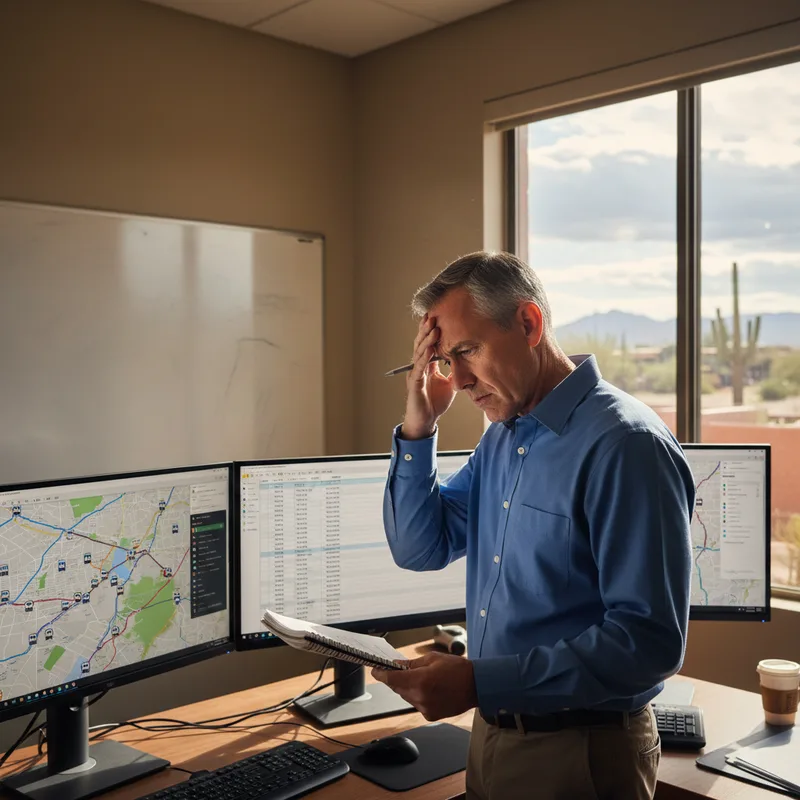
How Phoenix Fleet Repair Specialists Coordinate Rapid Assessments
Speed matters the moment a commercial vehicle comes off the road. Every hour it sits in a lot waiting to be evaluated is an hour it’s not generating revenue. That’s why the intake process at a dedicated fleet repair facility looks nothing like what happens when a private customer brings in a personal vehicle.
At a shop built for fleet work, the assessment workflow starts before the vehicle even arrives. A fleet manager calls in with basic damage details, and a technician is already assigned and prepped. When the truck or van pulls in, there’s no waiting at the front counter while someone looks for an available bay. The vehicle moves directly into evaluation.
What a Proper Fleet Intake Process Actually Involves
Documentation is the first step, and it’s more involved than most fleet managers expect. Technicians photograph every panel, note pre-existing wear separate from accident damage, and run a structural scan on any vehicle with significant impact. This protects both sides and keeps the insurance process honest.
One opinion worth sharing: a lot of shops rush the damage assessment to look efficient. That’s a mistake. Missing hidden frame damage or skipping an ADAS system check after a collision adds days to the back end of the repair, not hours. A slightly slower intake that catches everything upfront is the faster path overall.
Multi-bay coordination is what separates a real fleet repair facility from a general shop. While one technician handles structural evaluation, another can be sourcing parts and a third preparing the paint booth. These parallel workflows compress total repair time significantly for fleet vehicle damage repair in Phoenix, AZ.
-
Digital damage reports shared directly with fleet managers in real time
-
Parts procurement initiated during assessment, not after approval
-
Dedicated fleet bays that don’t compete with retail customer scheduling
The full scope of what’s possible, from frame alignment to ADAS recalibration, is covered across our complete services menu. Getting the assessment right is what makes every step after it run clean.
Five Critical Mistakes That Extend Fleet Repair Timelines
Most repair delays don’t come from parts shortages or insurance holdups. They come from decisions made in the first hour after a vehicle arrives at the shop.
Fleet managers in Phoenix, AZ sometimes assume a fast turnaround quote means the shop actually has a fast process. It usually doesn’t. A low bid with a short estimate window is often the first sign that someone is planning to cut corners on the work itself. That instinct to move quick almost always backfires.
Here are the five mistakes that push fleet vehicle damage repair past its target completion date:
-
Skipping surface prep. Paint failures, bubbling, and adhesion problems show up weeks later, sending the vehicle back for rework that takes longer than the original repair.
-
Missing hidden structural damage. A rear-end collision that looks like a bumper swap can involve frame deformation you won’t catch without a proper measuring system. Shops that skip this step send vehicles back onto Phoenix roads with compromised structural integrity.
-
No post-repair alignment check. Frame and suspension work without a follow-up alignment means the vehicle handles poorly and wears tires unevenly. That’s a liability waiting to happen.
-
Ignoring ADAS recalibration. This one gets skipped more than it should. Any vehicle with lane assist, automatic braking, or adaptive cruise control needs sensor recalibration after a collision repair. Skipping it creates a real safety problem, not just a warranty issue. The Insurance Institute for Highway Safety has documented how uncalibrated ADAS systems increase crash risk.
-
Vague communication with fleet managers. No status updates means your team is making scheduling decisions with bad information. That compounds the downtime problem significantly.
Reviewing a shop’s full service capabilities before signing anything tells you a lot about whether they’re equipped to handle these steps correctly.
Streamlining Insurance Claims for Commercial Fleet Vehicles
Insurance delays kill fleet schedules. A vehicle that’s structurally ready to leave the shop can sit for days waiting on an adjuster, a missing document, or a coverage dispute that nobody flagged at intake. That’s the part most fleet managers don’t anticipate.
The common advice is to just “let your insurer handle it.” Honestly, that approach costs you time. Commercial fleet policies are more complex than personal auto coverage, and adjusters who mostly process passenger vehicles sometimes misread the scope of fleet vehicle damage repair. An experienced shop in Phoenix, AZ doesn’t wait for confusion to sort itself out. It gets ahead of it.
What Proactive Claim Handling Actually Looks Like
At Brad’s Deer Valley Collision, the documentation process starts at intake, not after the estimate is approved. Photos, measurements, and damage notations are compiled in a format that’s usable by the insurer from day one. Written estimates are specific and line-itemized. Vague estimates generate back-and-forth. Precise ones get approved faster.
Direct repair relationships matter here too. Shops that work directly with insurance carriers have established communication channels and agreed-upon labor rates. That eliminates a round of negotiation before any actual repair work begins. It’s not about cutting corners; it’s about removing friction from a process that has enough of it already.
Fleet-Specific Claim Challenges
Multi-vehicle incidents complicate things fast. If two fleet vehicles from the same company are damaged in the same incident, the claim structure can split across policy endorsements depending on how the fleet coverage is written. A shop that handles commercial accounts regularly has seen this before and knows how to document each vehicle’s damage as a separate, clean claim file.
-
Separate written estimates for each vehicle, even in multi-unit incidents
-
Clear documentation of pre-existing damage versus incident-related damage
-
Direct adjuster communication so the fleet manager isn’t the messenger
Remember: you have the right to choose your own repair facility regardless of what your insurer recommends. Don’t let a preferred-vendor list make that choice for you. Learn more about our approach on the Brad’s Deer Valley Collision about page.
What Sets Brad’s Deer Valley Collision Apart for Phoenix Fleet Managers
Fleet managers who’ve worked with multiple shops quickly notice that certifications on a wall mean nothing if the technicians don’t use the right equipment. Credentials have to match capability. At Brad’s Deer Valley Collision, the shop has held I-CAR and ASE certifications since long before those credentials became standard talking points. That history matters because it reflects consistent investment in training, not a badge picked up to win bids.
A lot of shops overlook ADAS recalibration after fleet vehicle damage repair. That’s a real problem in Phoenix, AZ, where commercial vehicles frequently run highway miles on the I-17 and Loop 101 corridors with forward collision warning, lane departure, and automatic braking systems active. If those systems aren’t recalibrated after a structural repair, a driver is back on the road in a vehicle that can’t protect itself. Brad’s handles that recalibration in-house, which cuts one more source of delay out of your repair timeline.
Technology matters. So does communication.
Fleet managers consistently report that the worst part of vehicle repair isn’t the repair itself. It’s not knowing where the vehicle is in the process. Brad’s provides proactive text updates so your operations team isn’t chasing phone calls. You’ll know when the vehicle enters paint, clears inspection, and is ready for pickup, without having to ask.
Loaner vehicles and shuttle service are available for fleet clients who need to keep personnel moving while a unit is being repaired. Businesses in Scottsdale, Tempe, and across greater Phoenix rely on this continuity when a commercial vehicle comes off rotation unexpectedly.
The full scope of repair capabilities, including frame alignment, structural restoration, and precision paint matching, means fleet vehicles aren’t bounced between subcontractors. Everything happens under one roof, which is how a shop that has served Phoenix businesses since 1985 earns repeat contracts.
If you manage commercial vehicles in Phoenix, AZ and want to see the operation firsthand, walk-ins are welcome. You can also visit the fleet repair services page to review what Brad’s offers before your next vehicle comes off the road.
Getting the Most from Your Fleet Repair Partnership
Preparation makes a measurable difference. Fleet managers who show up with documentation, photos, and a clear list of affected vehicles move through intake faster and avoid the back-and-forth that adds days to a repair timeline.
Before You Drop Off Any Vehicle
-
Photograph all existing damage, not just the collision point. This protects you and the shop.
-
Pull the vehicle’s service history so technicians can flag any prior frame repairs that might affect current structural work.
-
Confirm whether your insurance requires OEM parts or allows aftermarket. Get that in writing before authorization.
-
Ask specifically about ADAS recalibration on any vehicle with lane assist or automatic braking. Many shops skip this step entirely.
What to Verify Before Committing
Check for I-CAR and ASE certifications. Then ask whether the technicians performing your repairs actually hold them, not just the shop owner. That distinction matters more than most fleet managers realize.
A common piece of advice is to always get three estimates. Honestly, two solid written estimates from certified shops will tell you everything you need. Chasing a third low bid usually wastes time and signals price-shopping over quality.
Stay involved throughout the repair. Request photo updates on structural work, especially for any fleet vehicle damage repair involving frame or alignment correction.
Brad’s Deer Valley Collision has worked with Phoenix, AZ businesses since 1985. Visit our fleet repair services page or contact us directly to schedule a free fleet assessment. Walk-ins are welcome.
Frequently Asked Questions
How quickly can Brad’s Deer Valley Collision repair fleet vehicles in Phoenix?
Turnaround depends on the extent of the damage, but we’re set up to move fast. Our multi-bay facility and coordinated workflows let us complete most fleet vehicle damage repair assessments within 24 to 48 hours. We don’t leave you guessing. You’ll get an estimated completion date upfront so you can plan accordingly and keep your operations running with as little disruption as possible.
Do you work directly with commercial vehicle insurance carriers?
Yes, we do. Brad’s Deer Valley Collision is a trusted direct repair program partner with major commercial insurance carriers. That means we handle the estimates, documentation, and claims communication on your behalf. For fleet managers in Phoenix, AZ, USA, that’s a significant time saver. You don’t have to chase adjusters or juggle paperwork. We take care of it so you can stay focused on your business.
Can you recalibrate ADAS systems on commercial fleet vehicles?
Absolutely, and this is something a lot of shops skip over entirely. After fleet vehicle damage repair, systems like lane-keeping assist, automatic emergency braking, and collision detection sensors often need to be recalibrated to function correctly. Our technicians are properly equipped to handle this step. Skipping it creates real liability exposure and puts drivers at risk, so we treat it as a standard part of the repair process, not an afterthought.
Do you offer loaner vehicles or shuttle service for fleet repairs?
We do. We offer both loaner vehicles and shuttle service to help minimize downtime while your fleet units are being repaired. Stop by our shop in Phoenix, AZ, and we’ll work out the logistics with you directly. It’s one of the ways we go beyond what a typical body shop offers. Keeping your operation moving while your vehicles are in for fleet vehicle damage repair is something we take seriously.
What should I verify before choosing a fleet repair shop?
A few things worth checking: confirm the shop holds I-CAR and ASE certifications, ask specifically about their OEM vs. aftermarket parts policy, and get a written estimate that includes warranty terms. You’ll also want to verify they’re part of an insurance direct repair program and ask about realistic turnaround times. Getting two or three quotes before committing is smart. For fleet vehicle damage repair in Phoenix, AZ, USA, those details separate a reliable shop from one that’ll cost you more in the long run.
Keep Your Fleet Moving. Brad’s Deer Valley Collision Has You Covered.
When your commercial vehicles are off the road, your business feels it fast. At Brad’s Deer Valley Collision, we work hard to get your fleet repaired and back on the job with as little downtime as possible, serving businesses across Phoenix, AZ, USA, including Scottsdale and Tempe.
Stop by our Phoenix location or give us a call today to schedule your free commercial vehicle damage assessment and repair estimate. We’re ready to work around your schedule so your operations don’t skip a beat.
Curious what other local business owners think about working with us? Check out our reviews on Google and then reach out. Let’s talk about keeping your fleet in top shape.