
Collision Repair Estimate After Monsoon Damage in Phoenix, AZ
Collision Repair Estimate After Monsoon Damage in Phoenix, AZ
What Should You Do First After Monsoon Storm Damage in Phoenix?
After monsoon storm damage in Phoenix, AZ, photograph every dent, crack, and scrape before the car moves, then write down when and where the damage happened. With those records in hand, schedule a collision repair estimate with a shop such as Brad’s Deer Valley Collision, so the damage is assessed in writing.
Brad’s Deer Valley Collision has served Phoenix customers since 1985.
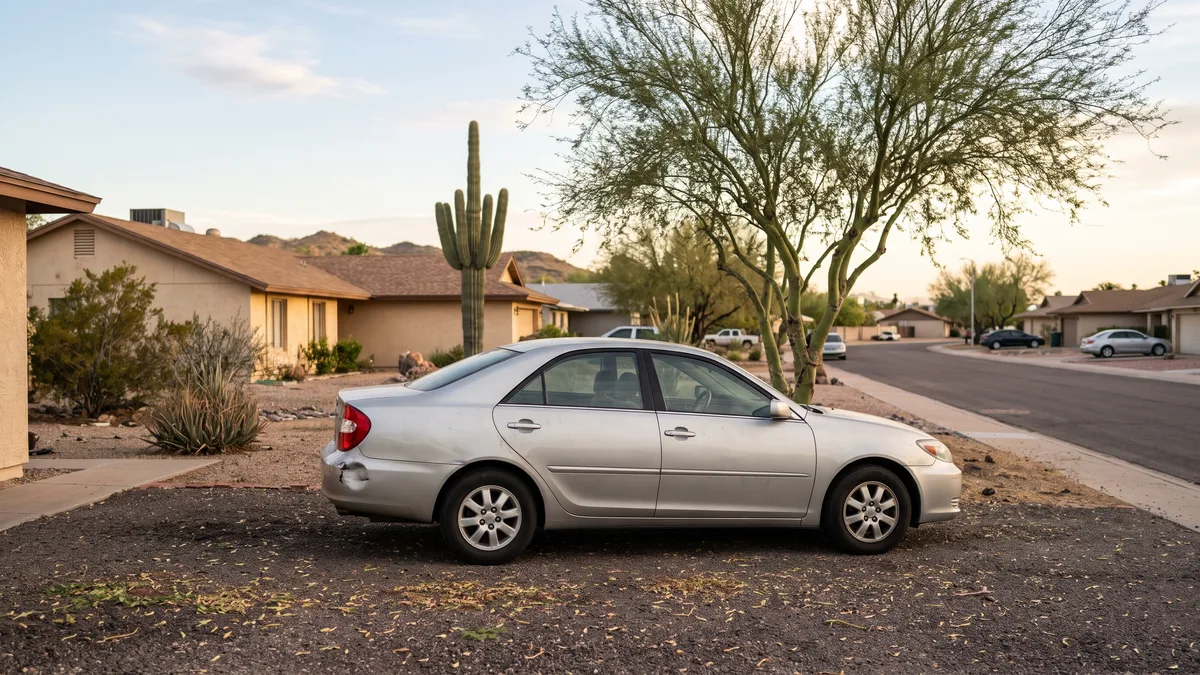
Picture a bumper cracked by flying debris in a storm, or a fender dented in a low-visibility bump. Your notes and photos give the estimator a clear starting point. You can also browse the collision and bumper repair services to see what the shop handles before you visit.
Why Do Monsoon Winds, Debris, and Low Visibility Lead to Fender and Bumper Hits?
Monsoon storms change how a Phoenix drive works in seconds. A gust pushes a car toward the next lane. Heavy rain cuts the distance you can see, and brake lights show up late.
Tight following gaps turn that late warning into a low-speed rear-end hit. Those hits can leave scuffed bumper covers, dented fenders, and cracked plastic.
Blowing debris causes its own damage. Branches, loose trash, and gravel can scratch paint, chip edges, and crack bumper plastic without a loud impact. Plastic can look fine while the mounting tabs behind it are bent.
Short and plain: look the car over after the storm.
A walk-around in daylight is worth the few minutes. Hairline cracks, shifted panel gaps, and paint damage are easy to miss in rain or at night, and they’re easier to document before more driving.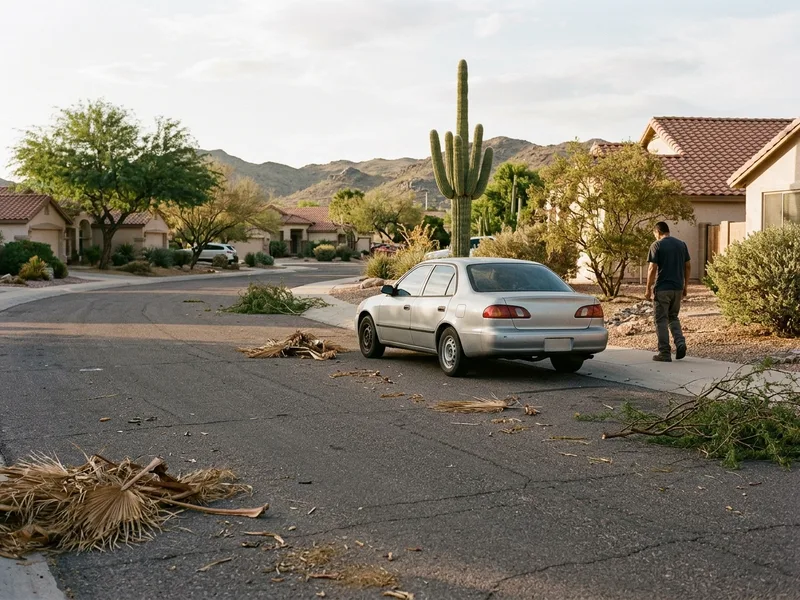
How to Document Storm Damage Before You Move the Car
A car that’s been shuffled to a safer spot before anyone takes a photo is hard to assess later. Water spots dry, debris gets kicked aside, and the story of how the damage happened gets thinner. A few minutes of records can make a collision repair estimate easier to write and an insurance claim easier to follow.
- Photograph each damaged area from several angles. Shoot straight on, from each side, and up close. Include a coin or key beside a dent or crack for scale. Check bumper corners, fender edges, and the lower valance, where scrapes hide.
- Take a wide shot of the car’s location. Show the car, the lane or lot around it, and any fallen branch, sign, or other object nearby. This frames the damage in context.
- Write down the date, time, and what was involved. Note the object or debris, such as a tree limb, a loose trash bin, or another vehicle. Add a line on conditions, like heavy rain or poor visibility.
- Gather witness details. Get a name and a phone number or email from anyone who saw it. A short note on what they saw is enough.
- Photograph the whole car, too. Capture all four sides, including panels that look fine. That separates new damage from older marks.
Keep everything in one phone album and back it up. When you bring the car to Brad’s Deer Valley Collision in Phoenix, the team can walk the photos against the vehicle during the estimate. Storefront visits mean you can show the notes in person and ask questions on the spot.
Before drop-off, remove valuables from the cabin and trunk.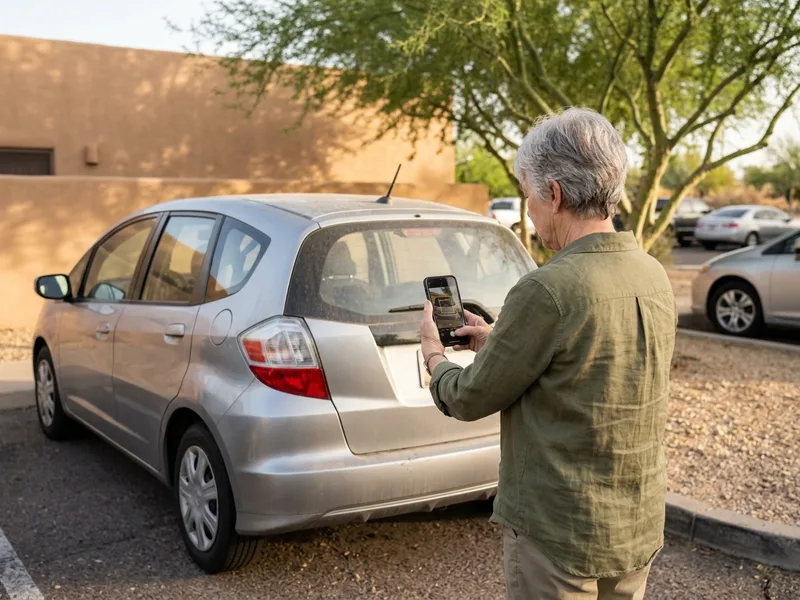
When Is the Right Time to Schedule a Minor Collision Repair?
Soon after the storm is a sound default. A minor fender or bumper hit is worth a look once the weather clears, especially if plastic is cracked, a panel gap has shifted, or the car will sit outdoors through more monsoon weather in Phoenix.
Waiting has a cost. Cracked plastic can catch debris and moisture, and small damage tends to pile up when a car keeps driving and parking outside. A shifted gap can also point to something behind the panel that a quick glance won’t show.
A prompt collision repair estimate is a practical way to learn what you’re dealing with. Customers can come to the shop in person.
Ask how long the repair is expected to take, and get that answer in writing alongside the estimate. Ask about warranty coverage too.
How Should You Prepare for an Insurance-Supported Estimate After a Storm?
A folder on the front seat makes an estimate appointment go faster. Paperwork scattered across a phone, a glovebox, and an email inbox slows everything down.
Gather these items before you head in:
- Your insurance information, including the policy number and any claim number you’ve been given
- The photos and notes from the scene, with the time and place of the hit
- The vehicle’s registration
- A written list of visible damage, panel by panel
Short list, big payoff. The estimator can match what’s on paper to what’s on the car.
You Choose the Shop
Drivers can pick their own repair shop, no matter which one an insurer recommends. That choice is yours to make.
Compare Before You Commit
Getting two or three written estimates gives you something real to compare. For each one, ask about:
- Whether parts are OEM or aftermarket
- What warranty coverage applies to the repair
- How long the work is expected to take
Be cautious with a quote that isn’t in writing or one that’s far lower than the rest. Those are common red flags.
Brad’s Deer Valley Collision works with insurance providers, including direct repair programs. Bring your documentation to the shop and ask for a collision repair estimate. You can also contact the shop with questions before you visit.
Policy terms and claim rights vary, so confirm the details of your coverage with your insurer or another qualified professional.
Frequently Asked Questions
Do I need to report storm damage to my insurer right away?
Many auto policies ask for prompt notice of a loss, so check your policy terms and contact your insurer soon after storm damage happens. Keep your photos and notes handy when you call.
Is it safe to keep driving a car with a storm-damaged bumper?
Check a storm-damaged bumper for loose or hanging parts, sharp edges, and lights that no longer work. If anything looks unsafe, limit your driving and have a shop look at it before longer trips.
Can I get a collision repair estimate without an insurance claim?
Yes. Brad’s Deer Valley Collision can give you a collision repair estimate for minor damage whether or not you file a claim. The estimate helps you decide if the repair is worth scheduling.
Should I call before bringing my car in after a storm?
Calling ahead is a good idea to confirm availability, especially after a busy storm week when more drivers are coming in.
Bring Your Monsoon-Damaged Car to Brad’s Deer Valley Collision
Hail dents, wind-blown debris, and flooded-road scrapes are all part of a Phoenix monsoon season, and the next step is simply getting someone to look at the car. Stop by Brad’s Deer Valley Collision for a collision repair estimate, or call ahead with questions about how to document the damage first. Photos, dates, and notes tend to matter when you talk with your insurer, and the team is happy to talk through what’s worth capturing.
Want to know what repairs they handle? Browse the collision, bumper, and fender repair services, and look up Brad’s Deer Valley Collision on Google before you visit.