Scratch Repair and Repainting in Phoenix, AZ: From Assessment to Flawless Finish
Scratch Repair and Repainting in Phoenix, AZ: From Assessment to Flawless Finish
What Professional Scratch Repair and Repainting Actually Involves
Professional scratch repair and repainting is a sequenced process that starts with a hands-on damage assessment and paint code analysis, continues through sanding, filling, and primer work, and finishes with color-matched paint application, clear coat, and a final inspection. Brad’s Deer Valley Collision has handled this process for Phoenix, AZ, USA drivers since 1985. Done right, the repaired panel should blend into the rest of the vehicle instead of standing out as an obvious patch job.
Picture a Phoenix commuter who backs into a low retaining wall in a parking garage downtown. The scratch looks minor, maybe a few inches of exposed primer along the rear quarter panel. Plenty of drivers grab a touch-up pen from the auto parts store and call it done. In our experience, that approach almost always leaves a visible ridge or color mismatch once the sun hits it, especially with metallic or pearl finishes that shift depending on lighting.
Scratches that look surface-level often go deeper than they appear.
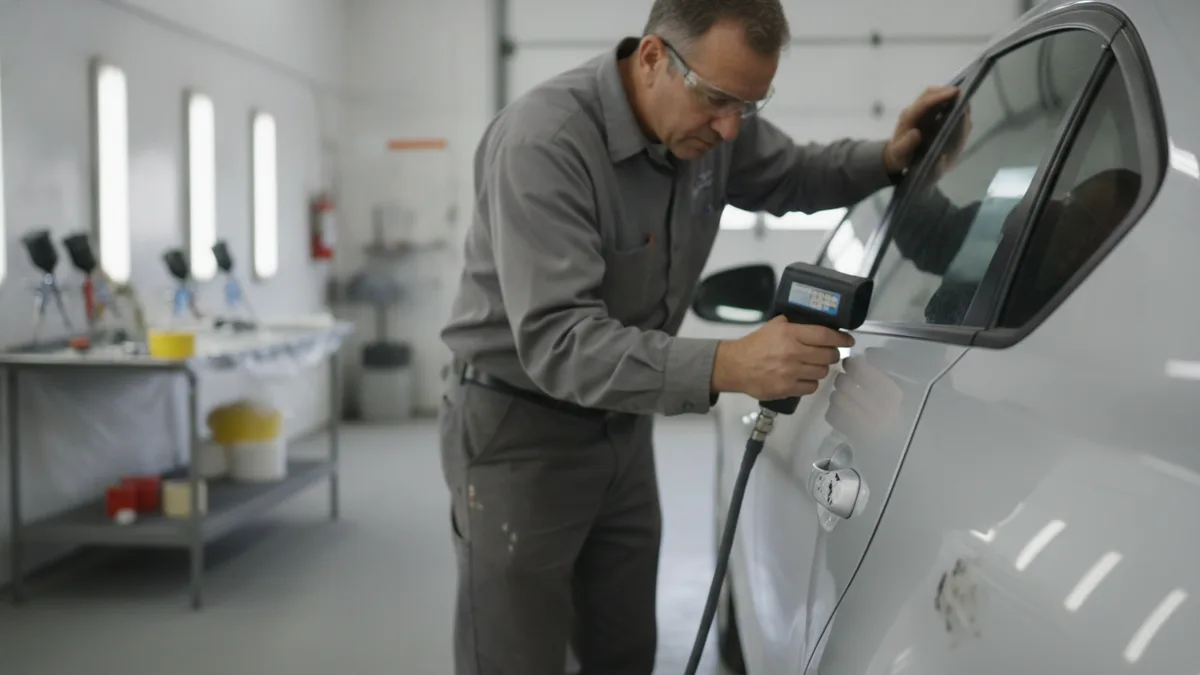
A trained technician checks whether the damage has reached the base metal, whether there’s any hidden dent beneath the paint, and whether UV exposure from Arizona’s sun has already faded the surrounding panel. That last part matters more here than in milder climates; paint that’s baked in the sun for a few years rarely matches a stock color code without some blending work. This is why DIY kits tend to fall short on anything beyond the shallowest scuffs. Specialized spray equipment, climate-controlled booths, and calibrated paint-matching tools aren’t things most car owners have sitting in a garage.
Anyone weighing repair options can review Brad’s Deer Valley Collision’s full auto body and paint services to see how scratch repair fits alongside bumper work, dent removal, and frame alignment.
The Assessment and Preparation Phase
Every scratch tells a different story. Before a technician at Brad’s Deer Valley Collision touches a sander or a spray gun, they need to know exactly what they’re dealing with. Skip this step and even the best paint match in the world won’t hold up.
The first job is classification. A surface-level scratch that only affects the clear coat looks similar to a deep gouge at a glance, but they require completely different repair paths. Clear coat scratches often respond well to buffing and polishing, sometimes without full repainting. Scratches that cut through the base color or into the primer are a different matter entirely; they need filling, sanding, and a proper paint sequence to blend seamlessly with the surrounding panel.
Depth isn’t the only concern. Technicians also run a fingernail test and visual inspection to check for rust or exposed metal, especially on older vehicles or scratches that have been sitting untreated in Phoenix, AZ, USA’s dry heat for months. Rust changes the entire scope of the job. Left unaddressed, it spreads under the paint and undermines any repair, no matter how good the color match looks on day one. In our experience, this is the step some shops rush through, and it’s usually the reason a “repaired” scratch reappears a year later.
Surface Preparation: The Unglamorous Part That Actually Matters
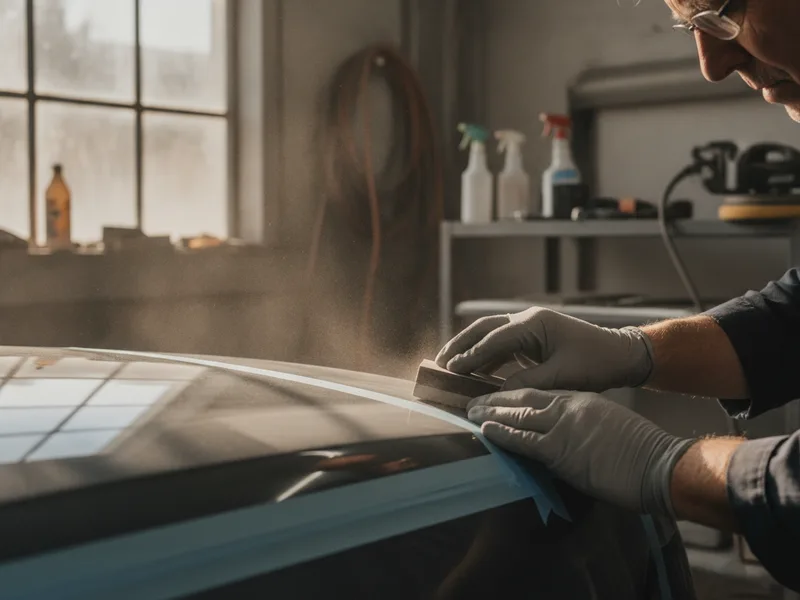
Sanding, masking, and priming don’t photograph well, but they determine whether the final finish looks flawless or slightly off. Sanding smooths the damaged area and feathers the edges so the new paint doesn’t sit as a visible ridge. Masking protects trim, glass, and adjacent panels from overspray. Priming builds a stable base that helps the color coat adhere evenly and resist chipping down the road.
Rushing prep work is one of the most common shortcuts in this industry. A shop might quote a fast turnaround, but if sanding is inconsistent or primer is applied too thin, the repainted section can show texture differences under direct sunlight, which Phoenix drivers deal with most of the year.
Customers dropping off a vehicle at our shop are welcome to walk through this assessment stage with a technician. Seeing the classification and prep process firsthand helps set realistic expectations before any paint gets applied. If a shop can’t explain what they found during assessment or why they’re prepping a certain way, that’s worth asking more questions about.
Paint Matching Technology and Color Precision
Two cars can leave the factory with the same paint code and still look slightly different by the time they’re five years old. That’s the thing most people don’t expect. Sun exposure, oxidation, and prior touch-ups all shift a finish away from its original formula, which is exactly why a paint code alone isn’t enough to guarantee a clean blend.
Phoenix, AZ, USA sunlight makes this harder than it looks. Harsh, direct light exposes even minor variation in a way that overcast climates rarely do. A repair that looks fine under shop lighting can show a faint edge or halo once the vehicle sits in a parking lot at midday. Technicians who’ve worked here long enough learn to check matches outdoors, not just under the booth’s fluorescent lights.
Metallic and pearl finishes add another layer of difficulty. These paints contain tiny reflective flakes that scatter light differently depending on viewing angle, so a match that looks correct straight-on can shift when viewed from the side. Getting this right takes more than a can of matching paint off a shelf.
How Spectrophotometers Improve the Match
A spectrophotometer reads the actual pigment and flake pattern on the vehicle’s existing paint, then cross-references that data against a digital formula library. This gives painters a starting mix that accounts for real-world fade rather than relying only on the factory code. It’s a meaningfully more accurate starting point, though in our experience it still takes an experienced eye to fine-tune the final blend, especially on older vehicles with years of sun exposure.
Certified painters at Brad’s Deer Valley Collision use this technology alongside manual test panels sprayed and checked against the vehicle before any topcoat goes on. That extra verification step catches subtle mismatches that software alone can miss. For anyone comparing scratch repair and repainting providers in Phoenix, AZ, USA, it’s worth asking directly whether a shop uses spectrophotometer matching or eyeballs it. The answer says a lot about the finish you’ll drive away with.
Spray Application and Layering
Here’s what actually happens once the color match is confirmed. Primer goes on first, sealing bare metal or filler and giving the base coat something even to grip. Skip a proper primer step and paint can look fine for a few months, then start showing texture or lifting at the edges.
Thin coats win. Every time.
A lot of budget shops try to save time by loading on one heavy coat of base color. It looks okay walking out the door. Six months later, under Phoenix sun, that thick coat is more prone to cracking and uneven fading because it never cured evenly all the way through. Technicians at Brad’s Deer Valley Collision build color in multiple light passes instead, letting each layer flash off before the next goes on. It takes longer at the gun, but the finish holds up better against UV exposure and everyday wear.
Phoenix heat and dry air actually work in favor of the process, up to a point. Low humidity speeds up solvent evaporation, which helps each coat set faster between passes. Push it too far, though, and paint can dry too quickly on the surface before it’s cured underneath, trapping solvents and causing texture problems down the road. That’s why spray booth conditions get controlled rather than left to whatever the weather’s doing outside.
Clear coat goes on last, and it’s not just for shine. It’s the layer that fights UV breakdown and resists minor chipping from gravel and road debris. Brad’s Deer Valley Collision uses spray equipment and booth setups built for consistent temperature and airflow, which matters more than most people realize. You can read more about that 40+ years of collision repair experience behind these standards.
Quality Assurance and Final Inspection Checklist
Most paint problems don’t show up in the booth. They show up two days later, once the car’s been sitting in Phoenix sun and the clear coat has fully cured. That’s why the checks after spraying matter as much as the spraying itself.
Wet sanding comes first, knocking down any texture before polishing brings out the gloss. Technicians at Brad’s Deer Valley Collision then check the finish under natural light outside, not just shop lighting, since fluorescent bulbs hide flaws that daylight exposes immediately. A paint thickness gauge confirms the new layers sit within a normal range compared to the surrounding panels; too thick or too thin can signal trouble down the road.
Final inspection covers edges, seams, and blend zones for any texture mismatch or dust nibs. In our experience, this is where shops cut corners when they’re behind schedule, and it’s the step customers never see but always notice later if it’s rushed.
-
Wet sand and polish for surface uniformity
-
Gloss check under natural and artificial light
-
Paint thickness measurement against factory spec
-
Panel-by-panel defect inspection before delivery
A finish that passes every step holds up. That’s what protects the warranty and keeps Phoenix, AZ, USA drivers happy long after they leave the lot.
Common Mistakes to Avoid When Choosing a Scratch Repair Provider
Not every shop offering scratch repair and repainting in Phoenix, AZ, USA operates the same way. Some cut corners that only show up months later. Here’s what to watch for before you sign anything.
-
No written estimate. A verbal quote protects nobody. Get it on paper, and get two or three from different shops so you can compare labor, materials, and parts.
-
No warranty on paint or labor. If a shop won’t stand behind its work in writing, that tells you something about how confident they are in it.
-
Dodging the OEM versus aftermarket paint conversation. A shop should explain what materials they’re using and why, without getting vague on you.
-
Bids that are unusually low. In our experience, a bid that’s dramatically cheaper than everyone else’s usually means shortcuts in prep, thinner coats, or aftermarket parts nobody mentioned upfront.
-
No visible I-CAR or ASE certifications. Ask directly. A shop with trained technicians won’t hesitate to show proof.
Brad’s Deer Valley Collision has been doing this work in Phoenix since 1985. That kind of tenure isn’t a guarantee of anything by itself, but it does mean a long track record you can check through reviews and referrals. We provide written estimates, discuss parts options honestly, and keep our certifications posted for anyone who asks. If you’re gathering quotes, take your time. A rushed decision on scratch repair costs more to fix later than it does to get right the first time.
Your Next Step: Professional Scratch Repair in Phoenix
Cars with the same scratch rarely need the same fix. That’s something you notice fast when you’ve been doing this since 1985: paint depth, panel age, and prior repairs all change the plan. What stays consistent is the standard behind it. Brad’s Deer Valley Collision displays I-CAR and ASE certifications for a reason, and backs every job with a written warranty instead of a handshake promise.
Convenience matters too. Phoenix drivers shouldn’t have to rearrange their week around a repair, which is why walk-in visits, direct communication with insurance providers, and honest timelines are part of how the shop operates.
Before committing anywhere, it’s reasonable to compare a couple of written estimates and ask about parts and warranty coverage. When you’re ready, you can schedule a free estimate for your vehicle and talk through what your scratch repair and repainting actually needs.
Frequently Asked Questions
How long does professional scratch repair and repainting take?
Timing depends on how deep the scratch goes and how much of the vehicle needs work. A small scratch on one panel usually takes about 2 to 3 days at Brad’s Deer Valley Collision. Deeper damage or jobs that stretch across multiple panels can run 5 to 7 business days, since paint and clear coat need real time to dry and cure properly. During your initial assessment, we’ll write up an estimate that includes a timeline, so you’re not left guessing.
Will my repainted panel match the original paint color?
Getting a clean color match is the goal, and it’s something our shop takes seriously. We use spectrophotometer technology and digital color matching to read your car’s exact paint formula, including tricky metallic and pearl finishes. Every repaired panel gets checked under both natural sunlight and shop lighting before we call the job done, because Phoenix’s harsh sun shows imperfections that indoor lighting can hide.
What warranty does Brad’s offer on scratch repair and repainting?
Brad’s Deer Valley Collision backs its paintwork with a written warranty, and we go over the specifics with you during your estimate consultation. Coverage details can touch on things like chipping, fading, or how well the paint adheres over time. If you have questions about what’s included for your specific vehicle, our team is happy to walk through it in person at our Phoenix shop.
Can insurance cover scratch repair and repainting?
In many cases, yes, especially if the scratches came from a collision or another covered incident. Brad’s Deer Valley Collision works directly with insurance companies as a trusted repair provider, and we handle the estimate, the claim paperwork, and the back-and-forth communication with your insurer. Coverage still depends on your specific policy, so it’s worth confirming details with your insurance agent before repairs start.
Should I attempt DIY scratch repair instead of professional repainting?
DIY touch-up paint can sometimes handle a very light surface scratch, the kind that hasn’t broken through the clear coat. But once you’re looking at deeper scratches, exposed primer, or a scratch that needs to blend into surrounding panels, professional repainting gives you a more durable result. Phoenix’s sun is rough on unprotected paint, and a shop-applied finish holds up to UV exposure far better than a store-bought pen ever will.
Get Your Vehicle’s Paint Job Done Right
Faded clear coat, scratches, and mismatched panels don’t have to stick around. Brad’s Deer Valley Collision in Phoenix, AZ, USA can take a look at your vehicle and give you a free estimate on scratch repair and repainting, no pressure, just an honest assessment of what it’ll take.
Stop by during business hours or give us a call to set up a time with one of our certified technicians. Want to see the full range of what we handle? Check out our auto body and collision repair services, from paint matching to frame alignment. If you’re curious what other folks in the neighborhood think, you can also check out our reviews on Google.