Professional Auto Body Paint Matching Technology in Phoenix, AZ: Achieving Seamless Results
Professional Auto Body Paint Matching Technology in Phoenix, AZ: Achieving Seamless Results
Why Auto Body Paint Matching Matters More Than You Think
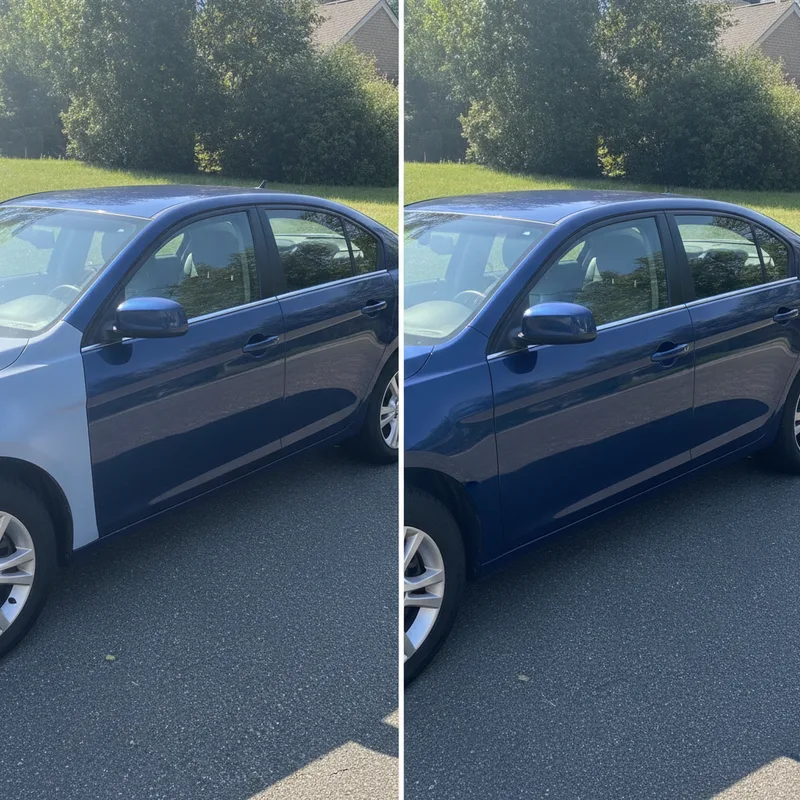
A Phoenix driver pulls out of the parking lot at Desert Ridge Marketplace, gets clipped by another vehicle, and ends up with a six-inch scrape across the passenger door. The dent gets fixed. The panel gets painted. But two months later, standing in direct sunlight, you can see exactly where the repair ends and the original finish begins. The color is close, but not right. That gap is what poor auto body paint matching looks like in the real world.
Most people assume paint work is mostly cosmetic. It isn’t. A mismatched repair affects your vehicle in ways that go well beyond appearance.
Resale value takes a direct hit. Buyers and dealerships inspect paint lines closely, and a visible color difference signals either a poorly done repair or undisclosed damage. Either way, it reduces what your car is worth. Insurance adjusters also factor finish quality into claim settlements, and a shoddy paint job can complicate your documentation if you ever need to file a subsequent claim.
There’s also a durability problem that most shops don’t talk about honestly. When paint isn’t matched correctly in formula and application, the new layer can cure differently than the surrounding finish. That mismatch in flexibility and adhesion causes the repaired area to fade, chip, or peel faster than the rest of the vehicle. You end up paying twice.
Phoenix, AZ makes all of this worse. The Valley averages over 300 days of sun per year, with UV intensity that accelerates paint oxidation significantly faster than in most U.S. cities. According to the U.S. Department of Energy, Arizona receives some of the highest solar radiation levels in the country. A paint formula that holds up in Seattle may degrade visibly within a year here if it isn’t matched to the vehicle’s specific factory coating properties and applied with that environment in mind.
Shops that treat paint matching as a final cosmetic step get it wrong consistently. At Brad’s Deer Valley Collision, we’ve approached it as a precision process since 1985, because the Phoenix sun doesn’t forgive shortcuts. You can contact us anytime to schedule an estimate and see the difference that commitment makes in person.
How Advanced Paint Matching Technology Works
Color matching used to be a guessing game. A technician would pull up a paint code, mix a formula, spray a test panel, and hope it came close enough. Sometimes it did. Often it didn’t, especially on older vehicles where the factory finish had shifted over years of Phoenix sun exposure.
Today’s process is measurably different, and the tool that changed everything is the spectrophotometer.
What a Spectrophotometer Actually Does
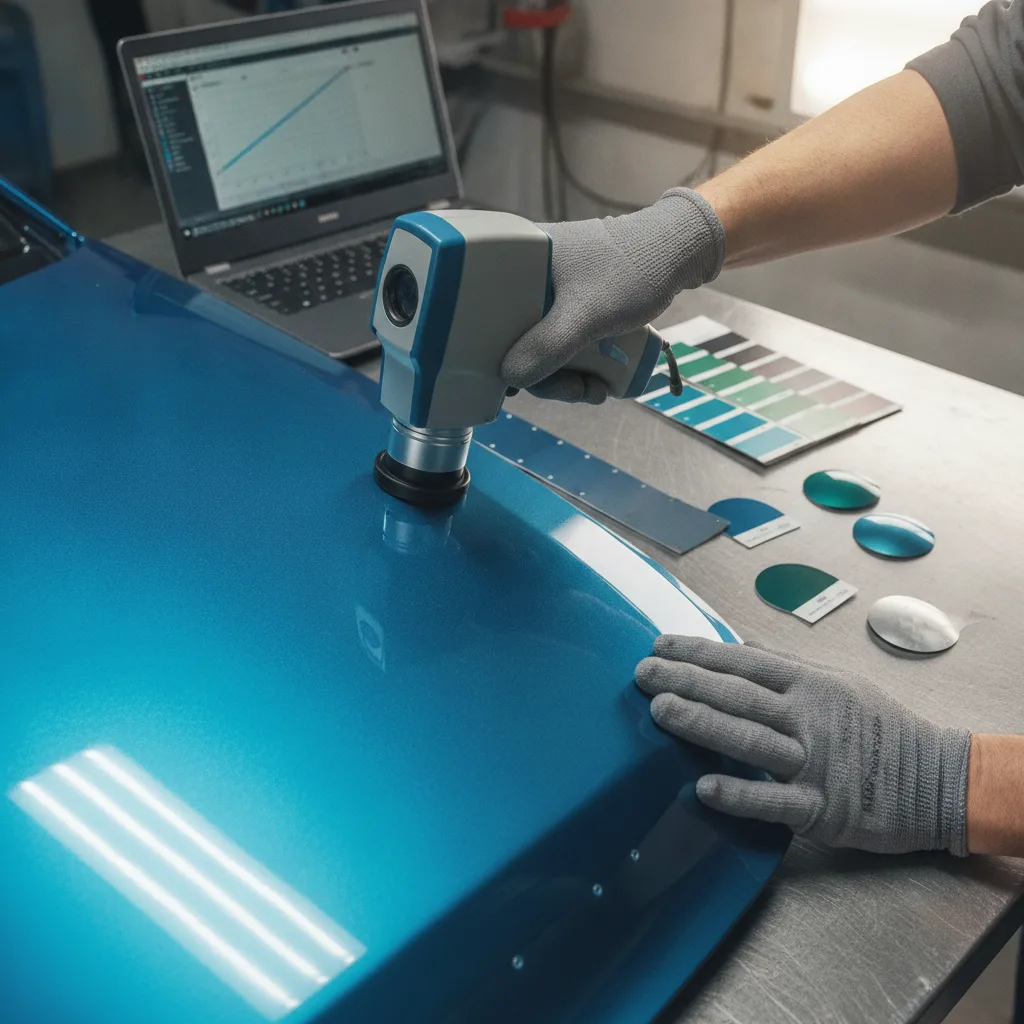
A spectrophotometer reads the surface of your vehicle’s existing paint at a microscopic level. It measures how light reflects off the finish across dozens of wavelength points, capturing data that a human eye simply cannot process consistently. That data feeds directly into paint-mixing software, which generates a formula calibrated to your car’s specific color, not just the general factory code for that model year.
This distinction matters more than most people realize. Two vehicles from the same plant, painted the same color, on the same production line, can have measurably different finishes once they’ve been exposed to heat, UV, and years of washing. Phoenix’s climate accelerates that drift faster than most parts of the country. A formula built on paint code alone will miss those real-world shifts. A spectrophotometer reads what’s actually on the car.
Digital Color Analysis vs. the Old Paint-Code Method
The old method relied on manufacturer paint codes and the technician’s experience. That experience absolutely counts, and we’d never discount it. But experience alone can’t account for metamerism, which is the phenomenon where two colors look identical under one light source and completely different under another. A shop using only visual matching may get a result that looks perfect under fluorescent shop lights and looks wrong in afternoon sunlight outside a Scottsdale parking lot.
Digital color analysis eliminates that variable. The software accounts for lighting conditions, calculates tinting adjustments, and flags potential metamerism issues before any paint is mixed. The result is a formula built for real-world viewing, not just the paint booth.
At Brad’s Deer Valley Collision, our technicians use spectrophotometric equipment as a standard part of every auto body paint matching job, not as an optional upgrade. We’ve invested in this technology because imprecise color work is one of the most visible ways a repair can fail a customer long after the vehicle leaves our shop.
The equipment is only part of the equation. Knowing how to read its output, adjust for local conditions, and apply the result correctly takes real expertise. That’s where four decades of hands-on experience in Phoenix, AZ genuinely changes the outcome.
The Paint Matching Process: Step by Step
Most paint failures happen before a single drop of color ever hits the panel. Surface prep is where jobs are won or lost, and it’s the step most shops rush when they’re trying to move cars out the door quickly. At Brad’s Deer Valley Collision, we don’t work that way.
Here’s how our auto body paint matching process actually runs, from the moment your vehicle comes in to the final inspection before we hand back your keys.
-
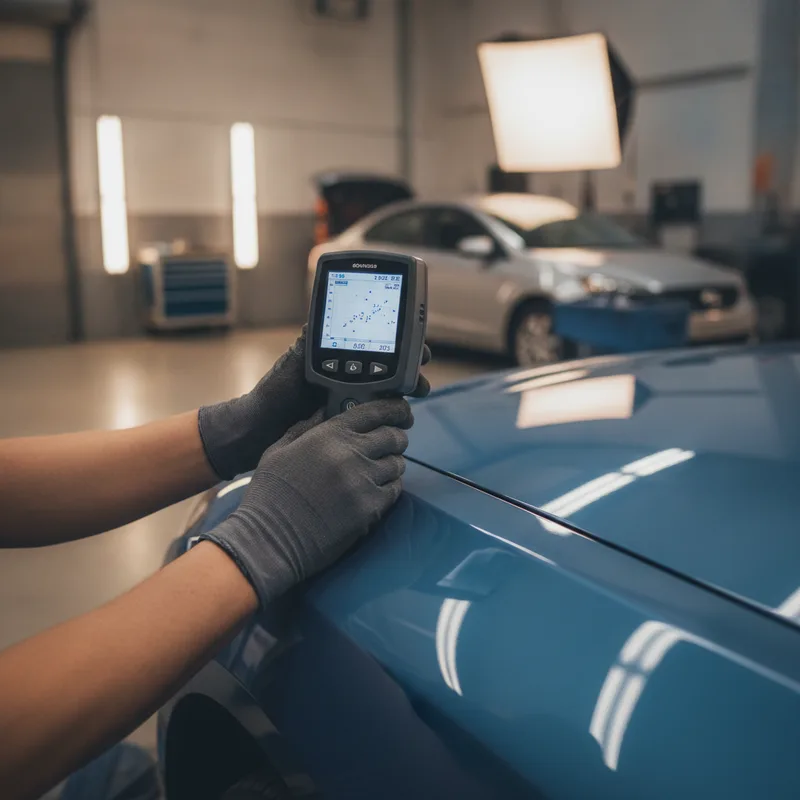
Initial damage assessment and color capture. Our technicians document all damage first. Then, using a spectrophotometer, we scan your vehicle’s existing finish in multiple locations. Phoenix’s intense UV exposure means paint fades unevenly, so we pull readings from the roof, doors, and adjacent panels rather than relying on a single scan or the factory paint code alone.
-
Formula development and test spray. The spectrophotometer data feeds directly into our mixing system, which generates a custom formula. We spray a test card and compare it to your vehicle under both natural and artificial light before mixing a full batch. If it’s not right, we adjust. This step matters more than most people realize.
-
Surface preparation. The repair area gets sanded, primed, and feathered so the transition between old and new material is invisible. Skipping or shortcutting this stage is one of the most common mistakes in the industry, and it’s exactly why some paint jobs look fine for two weeks and then start peeling or showing hard edges.
-
Base coat application and blending. We apply the matched color in controlled layers, then blend the edges into adjacent panels where needed. Blending is a skill, not a shortcut. Done correctly, it makes the repair undetectable.
-
Clear coat and curing. A proper clear coat protects the color layer and gives the finish its depth. We cure it correctly rather than rushing the process.
-
Final quality control inspection. Every vehicle goes through a dedicated inspection under high-intensity lighting before it leaves our shop.
You can read what Phoenix customers say about our finished results on our customer reviews page, and see the full range of services we provide at Brad’s Deer Valley Collision services. If your vehicle needs attention, contact us to schedule an assessment.
Common Paint Matching Mistakes and Red Flags
Cut corners on paint work and you’ll pay for it twice. That’s not an opinion. It’s a pattern we’ve seen play out consistently since we opened our doors in 1985, and it hasn’t changed.
The most common mistake shops make is rushing surface prep. A technician scuffs the panel lightly, skips the proper primer steps, and lays color over an unstable base. The job looks fine leaving the shop. Three months later, the paint is peeling, bubbling, or oxidizing unevenly. Phoenix heat accelerates every one of those failure points faster than most customers expect.
Shortcuts That Show Up Later
Insufficient color sampling is another major issue. Some shops pull a paint code from a database, mix a single batch, and spray it without taking spectrophotometer readings or shooting test panels against the actual vehicle in direct light. This approach works occasionally on newer cars with factory-fresh finishes. It fails frequently on anything that’s been sitting in the Arizona sun for a few years, where oxidation has shifted the tone significantly.
Rushing the curing process is a mistake we’d push back on the industry about. The common advice is that modern waterborne paints cure faster and require less dry time. That’s true under ideal conditions. But real-world shops dealing with volume pressure often pull vehicles out of the booth before the clear coat has fully hardened, which compromises the depth and durability of the finish.
There are also red flags that have nothing to do with the paint itself. If a shop can’t give you a written estimate, walk away. If there’s no mention of warranty coverage on the paint work, that’s a problem. Unusually low bids on auto body paint matching and collision repair almost always mean someone is cutting time or materials somewhere in the process.
One red flag Phoenix customers miss is the failure to recalibrate ADAS systems after a repair. Cameras and sensors behind painted panels need recalibration. A shop that doesn’t mention it probably isn’t doing it.
Read what actual customers have experienced at Brad’s Deer Valley Collision before you commit to any shop. Real results speak louder than any estimate.
Paint Matching for Different Vehicle Types and Finishes
Every finish behaves differently under Phoenix’s sun. That’s something you notice quickly when you’ve been doing this work since 1985.
A lot of shops treat auto body paint matching as a single process with minor variations. That’s where they get into trouble. The gap between matching a standard single-stage finish on a fleet pickup and matching a tri-coat pearl on a luxury SUV is significant, and pretending otherwise produces repairs that don’t hold up to scrutiny.
Finish Types That Require Separate Approaches
Metallic finishes are tricky because the metal flake orientation changes how the color reads at different viewing angles. You can match the color perfectly in direct light and still produce a repair that looks mismatched when someone views the panel from the side. The spray angle, pressure, and distance all affect flake lay, not just the formula.
Pearl and tri-coat finishes add another variable. There’s often a mid-coat layer that contributes significantly to the final appearance, and matching just the base color while ignoring that layer produces repairs that look slightly off in certain lighting.
Matte finishes are unforgiving. Clearcoat sheen levels vary by manufacturer, and blending is more restricted than on gloss finishes. Most shops that struggle with matte work are trying to apply standard processes to a finish that won’t tolerate them.
Vehicle-Specific Considerations
Fleet vehicles usually involve older paint that has faded under consistent sun exposure. Matching the current weathered color, not the original factory code, is what actually produces a seamless result. Our services cover fleet work specifically because commercial clients can’t afford visible mismatches on their branded vehicles.
Luxury vehicles present the highest expectation bar. Manufacturers like BMW, Mercedes, and Lexus use proprietary formulations that require precise spectrophotometer readings and careful formula adjustment. Our customers in Phoenix, AZ know we treat every vehicle at that standard, regardless of make.
Why Phoenix Auto Body Shops Need Advanced Paint Matching Capability
Phoenix is genuinely hard on paint. That’s not a sales pitch. It’s just physics.
The Valley gets over 300 days of sun per year, with UV index levels that regularly hit 11 or higher during summer months. The EPA’s UV index scale classifies anything above 11 as extreme. Phoenix sits there routinely from May through September. That kind of sustained UV exposure breaks down clear coat faster than in most other U.S. cities, which means repaired panels age differently than the surrounding factory finish, and they do it faster than you’d expect.
Add dust storms to that. Haboobs roll through the Phoenix area and blast fine particulate against every painted surface on your vehicle. Over time, that creates micro-abrasions that shift how light reflects off the paint. A repair that matched perfectly in October can look noticeably different by July if the surrounding panels have weathered and the repaired area hasn’t caught up.
This is why auto body paint matching in Phoenix, AZ requires more than just pulling a factory code. The existing finish on your vehicle has already been modified by the local climate. A shop needs to account for that drift, not just match what came off the assembly line.
A lot of people assume any certified shop can handle this equally well. We’d push back on that. Local experience matters. Brad’s Deer Valley Collision has been working with Phoenix paint conditions since 1985, which means our team understands how the desert environment affects finish aging across Scottsdale, Tempe, Chandler, and the broader Valley. Our customers notice the difference.
Getting a Paint Matching Estimate and What to Expect
Most customers walk into an auto body shop focused on price. That’s understandable, but it’s the wrong first question. The right first question is whether the shop can actually match your paint, and what happens if they don’t.
Before you commit to any auto body paint matching work in Phoenix, AZ, get a written estimate. Not a verbal quote. Not a ballpark figure. A written document that breaks down labor, materials, and any parts involved. If a shop hesitates to put it in writing, that tells you something important.
Questions Worth Asking Before You Drop Off Your Vehicle
-
Are OEM or aftermarket parts being used, and does that affect the paint finish?
-
What’s the warranty on paint work, and does it cover fading or peeling?
-
What’s the realistic turnaround time given your current workload?
-
Are your technicians I-CAR or ASE certified?
Certifications matter. A shop that displays current I-CAR credentials has technicians who train on updated repair and finishing standards. You can verify this independently, and you should.
On the insurance side, Phoenix drivers have the right to choose their own shop regardless of what their insurer recommends. Don’t let a direct repair referral be your only option. Get two or three written estimates and compare them carefully.
Photograph all existing damage before dropping off your vehicle. Remove valuables. It’s a simple step most people skip and later regret.
At Brad’s Deer Valley Collision, we’ve been doing this work since 1985. Walk-ins are welcome, and our team handles the full estimate process in person. Check our services and certifications, read what local customers say, and then contact us to schedule your consultation. No pressure. Just straight answers.
Frequently Asked Questions
How long does auto body paint matching take?
The color analysis and selection part of auto body paint matching is actually pretty quick, usually 30 minutes to an hour. The full painting process is where the time adds up. Surface prep, primer, base coat, clear coat, and proper curing typically takes 3 to 7 days depending on how much damage we’re dealing with. When you come into our Phoenix, AZ shop, we’ll give you a detailed turnaround estimate during your consultation so you know exactly what to expect.
Is paint matching covered by insurance?
Yes, professional auto body paint matching is a standard part of collision repair, and most comprehensive or collision insurance policies cover it. At Brad’s Deer Valley Collision, we work directly with insurance companies and handle all the documentation on your behalf. You won’t have to chase down paperwork or play phone tag with adjusters. Your deductible and specific policy terms still apply, but we make the process as straightforward as possible for Phoenix, AZ drivers.
Can paint matching fix small scratches and touch-ups?
Absolutely. Auto body paint matching isn’t just for big collision repairs. We use the same precision color-matching technology for minor scratches, scuffs, and touch-ups as we do for full panel repaints. Our certified painters at Brad’s Deer Valley Collision treat every job the same way, whether it’s a door ding or major damage. If your car has a scratch that’s bothering you, don’t wait, small repairs are straightforward and the results look great.
What’s the difference between OEM and aftermarket paint?
OEM (original equipment manufacturer) paint is made to match your vehicle’s exact factory finish, and it’s what we’d typically recommend for the best color accuracy and long-term durability. Aftermarket paint costs less but can sometimes fall short on precision matching or longevity. At our Phoenix, AZ location, we’ll walk you through both options honestly so you can decide based on your budget and how long you plan to keep the vehicle. There’s no pressure either way.
What warranty does Brad’s offer on paint matching work?
We back all of our auto body paint matching work with a written warranty that covers adhesion, finish quality, and color matching. The specific terms can vary depending on the service level, so we’d encourage you to ask about warranty details when you stop in for your free estimate. We want you to feel confident about the work we do, and putting it in writing is how we stand behind it. Come visit us in Phoenix, AZ and we’ll go over everything with you.
Get a Free Paint Matching Estimate at Brad’s Deer Valley Collision in Phoenix, AZ, USA
If you’re dealing with mismatched paint or collision damage, our certified technicians use advanced color-matching technology to make the repair completely seamless. We’ve helped drivers all across Phoenix get their vehicles looking like nothing ever happened, and we’d love to do the same for you. See what our customers are saying on Google, then stop by or give us a call today to schedule your free consultation.