Professional Auto Body Paint Matching in Phoenix, AZ: Invisible Repairs and Flawless Results
Professional Auto Body Paint Matching in Phoenix, AZ: Invisible Repairs and Flawless Results
How Precision Paint Matching Delivers Invisible Repairs
Auto body paint matching is the process of blending a repaired panel’s color, finish, and texture so closely with the surrounding factory paint that no eye can find the seam. At Brad’s Deer Valley Collision in Phoenix, AZ, USA, technicians rely on spectrophotometer readings and formula adjustments rather than guesswork to get there. Brad’s Deer Valley Collision has been doing this work since 1985.
Picture a Phoenix driver with a scuffed rear quarter panel from a parking lot mishap. The panel itself is an easy fix. The paint match is where shops separate themselves.
Most guides tell customers that any competent painter can eyeball a color match. In our experience, that’s where a lot of touch-up jobs go wrong, especially with metallics and pearls that shift under different light. A digital color read gets you close; a trained painter’s tinting adjustment gets you invisible. Phoenix’s intense sun exposure also fades factory paint unevenly over time, so matching isn’t just about the formula code, it’s about accounting for how that specific vehicle’s paint has aged.
Customers ready to see the full range of repair and paint services can review Brad’s complete auto body and paint services before scheduling an estimate.
The Technology Behind Seamless Paint Blending
Paint mismatch used to be a coin flip. Shops mixed by eye, guessed at fade patterns, and hoped the panel looked right once the sun hit it. That’s not how it works anymore, at least not at shops that have invested in the right equipment.
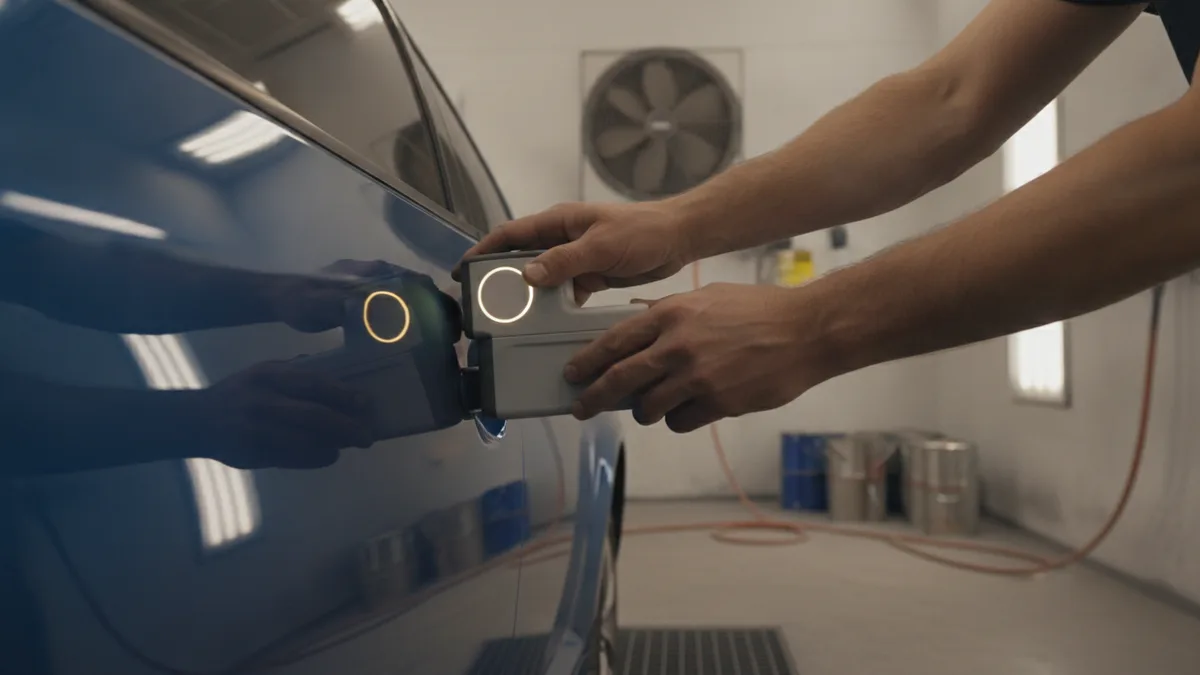
A spectrophotometer is the tool that changed the game. It’s a handheld device that reads the actual color of your vehicle’s paint, including how it’s aged and faded under the Arizona sun, and translates that into precise data points. Factory paint codes tell you what color a car left the assembly line wearing. They don’t tell you what that color looks like after years of exposure in Phoenix, AZ, USA, where UV intensity and heat push paint to fade faster than in milder climates. The spectrophotometer captures the paint as it actually is right now, on your specific vehicle.
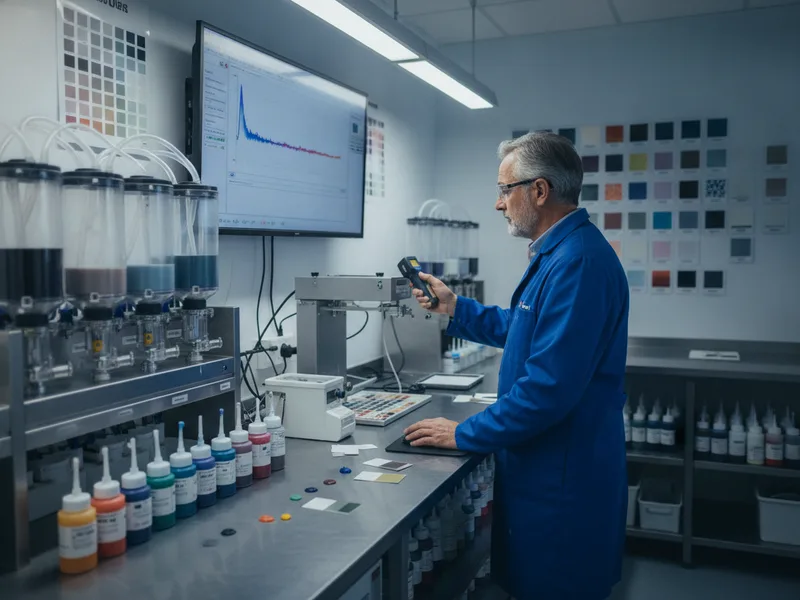
That reading feeds into digital color-matching software, which cross-references thousands of paint formulas and adjusts for tint, pigment ratio, and clear coat variance. The software generates a custom mixing formula built for that one car, not a generic match pulled from a catalog. Technicians then mix the paint using that formula, apply test cards, and compare them against the vehicle under different lighting before committing to the actual panel.
Why the Blend Matters as Much as the Match
Getting the formula right is only half the job. Painters still have to blend the new paint into the surrounding factory finish so the transition disappears, and that takes trained hands, not just good software.
Most guides tell customers to focus entirely on whether a shop owns a spectrophotometer. In our experience, that’s only part of the story. We’ve seen shops with excellent equipment produce visible mismatches because the technician rushed the blend zone or skipped test panels. The technology narrows the guesswork; it doesn’t replace skill.
Lighting adds another layer. Paint that looks perfect under shop lights can read differently in direct sunlight, which is why reputable painters check finished work outdoors before calling it done. Metallic and pearl finishes are especially sensitive to this, since the mica particles in the paint shift appearance depending on viewing angle.
None of this happens by accident. It requires calibrated equipment, updated paint databases, and a painter who understands how to read a car’s finish beyond what a machine reports. Customers evaluating auto body paint matching capabilities should ask directly what equipment a shop uses and how technicians verify a match before final application.
Why Standard Paint Shops Miss the Mark in Phoenix
Pull up next to a repaired vehicle at a stoplight and you can usually spot the panel that got painted. The hood or fender catches light a shade off from the rest of the body. That’s the tell of a shortcut repair, and it happens more often than most car owners realize.
A lot of shops still rely on the paint code stamped on the door jamb and call it done. That code gives you the original factory formula, but it doesn’t account for how sunlight, washing, and years on the road have shifted that panel’s actual color. Phoenix sun is intense, and paint here fades and oxidizes at a different rate than in milder climates. A ten-year-old white sedan repainted straight from the code chart often ends up looking brighter and flatter than the surrounding panels.
Metallics and pearls make the problem worse. These finishes contain tiny flakes or light-reflective particles that shift appearance depending on viewing angle, and eye-matching or basic color chips can’t capture that. Shops without a spectrophotometer are guessing, even when the person doing the guessing has years of experience.
In our experience, some shops also skip blending into adjacent panels to save time, painting only the damaged piece instead of feathering color into the next panel over. That approach might pass a quick glance in the shop, but it rarely holds up outdoors under changing light.
Phoenix drivers dealing with sun-faded paint, older vehicles, or specialty finishes deserve a shop that measures rather than estimates. Brad’s Deer Valley Collision has worked on vehicles across Phoenix, AZ, USA since 1985, and that kind of repetition teaches you where the common shortcuts actually show up on a finished car. Customers considering any auto body paint matching work are welcome to stop by the shop and see the equipment and process firsthand before deciding where to trust the repair.
Paint Matching for Different Vehicle Types and Finishes
Not all paint behaves the same way once it’s on a panel. A solid color is the most forgiving finish to work with; there’s no metallic flake or pearl to align, just a straight color match. Metallic finishes add a layer of difficulty because the aluminum flake inside the paint has to sit at the same angle and density as the factory application, or the panel will look darker or lighter depending on the light hitting it.
Pearl coats push the challenge further. These finishes use mica particles that shift color slightly depending on viewing angle, which means a technician has to build multiple layers and test the blend under different lighting before committing to a full panel. Tri-coat systems, common on higher-end vehicles, add a clear pearl layer over a base color and require a third step most standard shops skip entirely because it takes more time and material.
Matte finishes are their own category. There’s no clear coat to buff or polish, so any misstep in texture or sheen shows up immediately. Matte repairs require different techniques than gloss finishes, and in our experience, a lot of general repair shops underestimate how unforgiving matte paint really is.
Here’s a quick breakdown of what typically changes by finish type:
-
Solid colors: straightforward color match, fewer variables
-
Metallic finishes: flake alignment and layering matter as much as color
-
Pearl coats: multiple layers, angle-dependent testing
-
Matte finishes: texture and sheen control instead of gloss and polish
-
Tri-coat systems: an added clear pearl step most shortcuts skip
Vehicle age plays a role too. Factory paint fades over years of Phoenix, AZ, USA sun exposure, so a color that matched perfectly at delivery may need adjustment to match a ten-year-old hood versus a two-year-old one. Technicians who’ve built their process around this, and who back it up with the kind of certifications and equipment investment detailed on Brad’s Deer Valley Collision’s about page, tend to catch these variables before they become visible mistakes. If a vehicle has an unusual finish, it’s reasonable to ask a shop directly how they plan to handle it before work begins.
The Cost of Paint Matching and What to Expect
Customers sometimes ask why one estimate for a door panel repaint runs higher than another shop’s quote for the same job. The answer usually comes down to what’s included, not what’s being skipped.
Several factors drive the price of auto body paint matching. The number of panels involved matters, since blending onto adjacent panels to hide a seam takes more material and labor than painting a single piece. Finish type plays a role too; a solid color costs less to match than a tri-coat pearl that needs multiple passes. Vehicle age affects things as well, since factory paint fades over years of Phoenix sun exposure, and matching a repair to that faded finish takes more adjustment than matching fresh paint.
Written estimates should break these factors down clearly. In our experience, a bid that’s noticeably lower than two others usually means something got left out, whether it’s blending into a third panel or using a lower-grade clear coat. That’s not always obvious until the car comes back with a visible edge months later.
Turnaround time is worth asking about directly. Paint matching that includes proper drying and curing takes longer than a rushed job, and that difference often shows up in how the repair holds up over time. Brad’s Deer Valley Collision provides written estimates that spell out what’s covered, and customers are welcome to bring in two or three quotes for comparison before deciding. Stopping by the shop in Phoenix, AZ, USA for a walk-in estimate is often the fastest way to get real numbers instead of guesses over the phone.
What to Ask Your Phoenix Auto Body Shop About Paint Matching
Ask the right questions before you sign anything. A shop that’s confident in its work will answer without hesitation.
Start with certifications. Ask whether the technicians hold I-CAR training and ASE certification, and ask to see them, not just hear about them. A shop that’s proud of its credentials usually has them posted somewhere visible. If you’re getting quotes around Phoenix, AZ, USA, this is one of the fastest ways to separate a serious operation from one that’s cutting corners. The I-CAR website lets you verify training claims directly if you want extra confirmation.
Next, ask about equipment. Does the shop use a spectrophotometer for color reading, or does someone eyeball it against a swatch book? Most guides tell customers to just ask if a shop “matches paint well.” In our experience, that question gets you nowhere; every shop says yes. Ask specifically what tool they use to read color and how they verify the match before the car leaves the booth.
Get the warranty in writing. A verbal promise means nothing if the paint fades or flakes six months later.
Ask about OEM versus aftermarket parts, since panel material can affect how paint takes and cures. Get two or three written estimates so you have something to compare beyond price alone. And remember, you have the right to choose your own repair shop regardless of what your insurance company suggests, a point worth confirming with your insurer directly if you’re unsure.
Watch for red flags: no written estimate, no warranty, or a bid that’s noticeably lower than everyone else’s. Those usually mean shortcuts somewhere in the process, whether it’s the prep work or the paint itself.
Brad’s Deer Valley Collision: Precision Paint Matching Since 1985
Walk into any shop long enough and you learn to spot the ones that treat paint matching as an afterthought. We’ve been doing this since 1985, and that history changes how a shop approaches a panel repaint. Our techs carry I-CAR training and ASE certification, and we keep that documentation ready to show, not tucked in a drawer somewhere.
The equipment matters just as much. Spectrophotometer readings, computerized mixing, and a proper booth setup are what separate a repair that holds up from one that looks fine for a month. Most Phoenix shops skip ADAS recalibration entirely; we don’t, and that’s a gap worth asking about wherever you take your car.
Customers also notice the smaller things: text updates while their car is in the shop, a loaner when they need one, a written estimate they can actually read. That experience counts as much as the paint match itself.
If you’re weighing a repair or just want a second opinion on a quote, our team can walk through options for scheduling a consultation and estimate. Stop by our Phoenix location, ask questions, and see the shop firsthand.
Frequently Asked Questions
Can paint matching fix a color mismatch from a previous repair?
Auto body paint matching can absolutely fix a mismatch left behind by an earlier repair. When a shop uses a spectrophotometer, it can read the exact pigment makeup of your car’s current finish and pull up the correct formula, or adjust it, so the new paint blends in properly. Brad’s Deer Valley Collision can take a look at the mismatched area and figure out the best way to correct it, whether that means a small touch-up or repainting a larger panel.
How long does paint matching take for a typical repair?
The color matching part itself is quick, usually somewhere around 15 to 30 minutes once the technician gets a good read on the paint. What takes longer is everything around it: prepping the surface, laying down primer, and letting the paint cure properly. Most repairs at Brad’s Deer Valley Collision wrap up within about 3 to 5 business days, though that can shift depending on how much bodywork is involved. We’ll give you a realistic timeframe once we’ve looked at your vehicle in person.
Will my vehicle’s paint match if it’s an older or discontinued color?
Older and even discontinued paint colors can still be matched with a good degree of accuracy. Spectrophotometer technology can read faded, sun-worn paint and work backward to figure out the original formula, which helps a lot with vehicles that have been sitting in the Phoenix sun for years. Brad’s technicians pull from color databases and archived formulas to track down rare or older finishes, so don’t assume an aging paint job is a lost cause before asking.
Is paint matching covered by insurance after an accident?
In most cases, yes. If the paint work is needed to bring your vehicle back to the condition it was in before the accident, insurance companies generally treat that as part of the repair rather than an extra. That said, coverage details vary by policy, so it’s worth confirming specifics with your insurance provider directly. Brad’s Deer Valley Collision works with insurance companies on a regular basis and can help put together estimates and documentation to support your claim.
What warranty do you offer on paint matching work?
Brad’s Deer Valley Collision backs its paint work with a written warranty covering both the quality of the paint job and how well the color holds up over time. The specific terms depend on the type of repair, so we go over warranty details with you when we put together your estimate. If you have questions about what’s covered for your particular vehicle, just ask us during your visit and we’ll walk you through it.
Get Your Paint Match Done Right
Faded panels, mismatched clear coat, or a repair that just doesn’t blend in can bug you every time you walk up to your car. If you’re dealing with any of that, Brad’s Deer Valley Collision in Phoenix, AZ, USA can take a look and tell you honestly what it’ll take to fix it.
Stop by the shop or give us a call to set up a free consultation and estimate. You can also browse our full lineup of auto body and painting services to see what else we handle. Curious what other Phoenix drivers think of the work? Check out our reviews on Google before you swing by.