Professional Auto Body Paint Matching in Phoenix, AZ: Achieving Invisible Repairs
Professional Auto Body Paint Matching in Phoenix, AZ: Achieving Invisible Repairs
Why Paint Matching Matters After a Collision Repair
Picture this: you’ve just picked up your car after a rear-end collision repair, you’re standing in the parking lot off Deer Valley Road, and something looks off. The repaired panel is slightly lighter than the rest of the vehicle. In direct sunlight, it’s obvious. You drove here relieved, and now you’re frustrated.
That moment is exactly why auto body paint matching matters so much. It’s not vanity. It’s the difference between a repair that’s truly finished and one that permanently advertises the accident to every buyer, adjuster, or neighbor who walks by.
Resale value takes a real hit.
Phoenix drivers tend to keep vehicles longer than the national average, partly because our dry desert climate actually preserves cars well. But a visible color mismatch tells a prospective buyer that the repair work was rushed or cut corners. Even a perfectly straightforward fender repair can cost you hundreds, sometimes over a thousand dollars, in negotiating position if that panel doesn’t match. Carfax shows the accident, and mismatched paint confirms the story.
Here’s a professional opinion that a lot of people don’t want to hear: a cheap paint job is almost always more expensive in the long run. We’ve seen customers come through our shop after going with the lowest bid, and the re-do costs more than the original repair would have.
The emotional side matters too. Your car is a daily part of your life. Seeing a mismatched panel every morning is a constant reminder of the accident. Good auto body paint matching in Phoenix, AZ gives you your vehicle back, not just a patched version of it.
Learn more about our background and commitment to quality craftsmanship before your next repair decision.
The Science Behind Advanced Paint Matching Technology
Most people assume paint matching is about a trained eye and a good color chip book. It’s not. At least, not anymore.
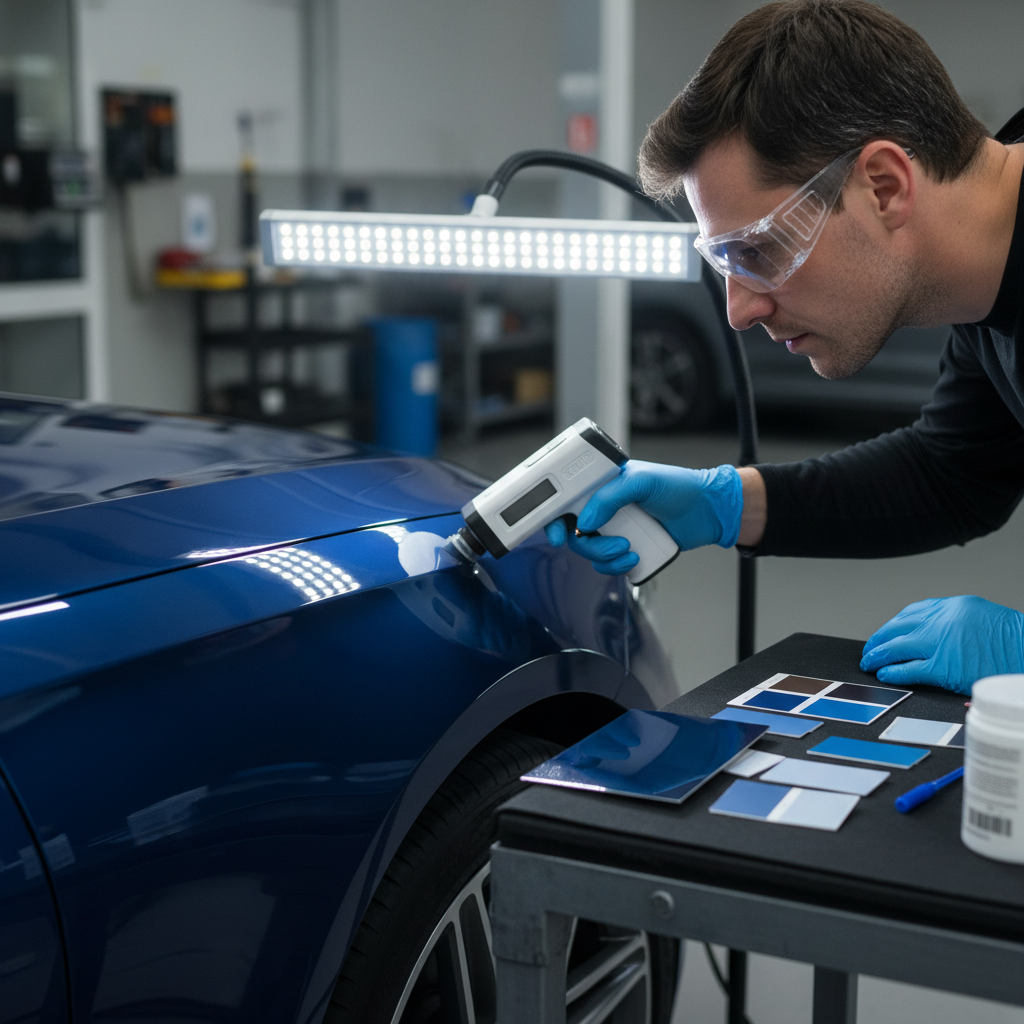
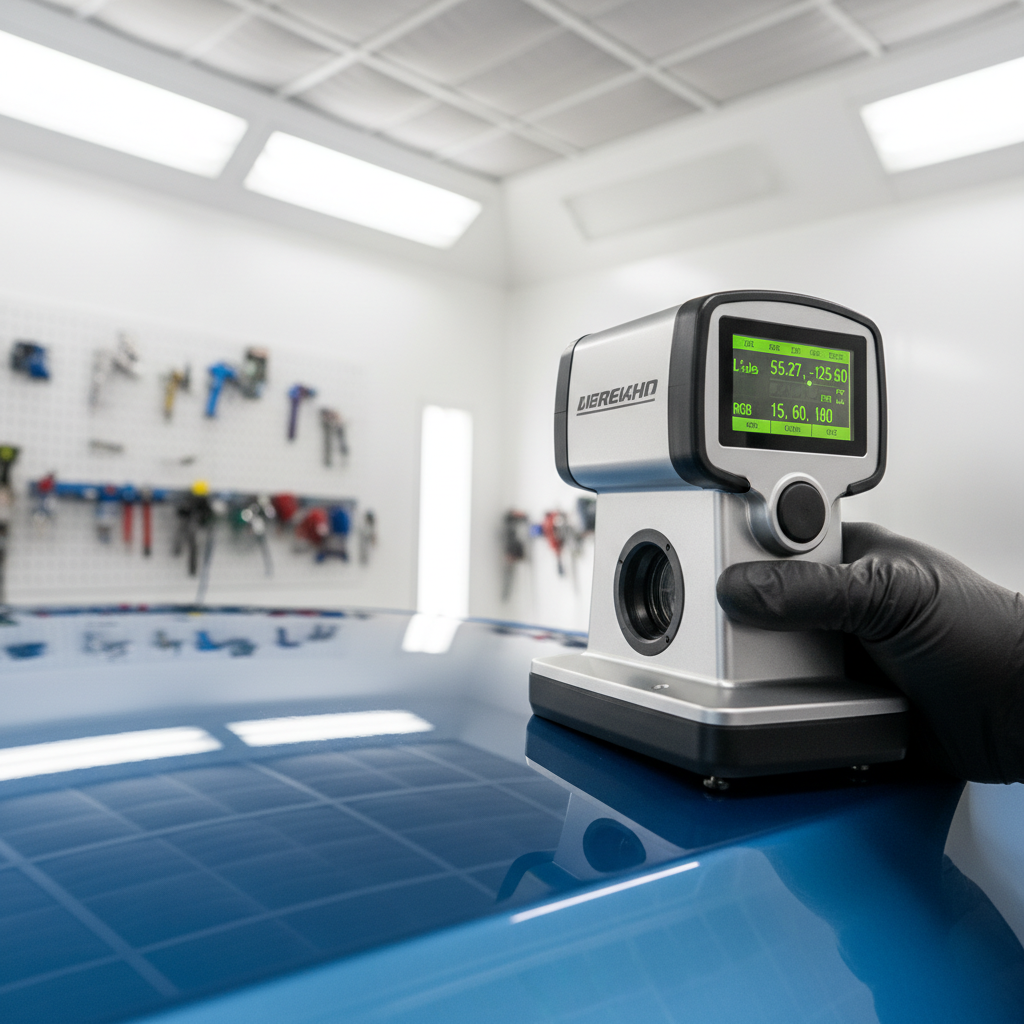
The real work happens with a device called a spectrophotometer. We point it directly at your vehicle’s painted surface, and it reads how light reflects off the finish across multiple angles. It’s measuring wavelengths, not just color. That distinction matters more than most shops will tell you.
How Spectrophotometry Actually Works
Light hits a painted surface and bounces back differently depending on the pigment layers, metallic flake orientation, and clear coat thickness. A spectrophotometer captures that reflected light and maps it across what’s called a color space, essentially a three-dimensional model of hue, lightness, and chroma. The tool sends that data to a formulation database that identifies the closest possible paint mix to your vehicle’s current finish.
This is instrumental matching. It’s more accurate than visual matching, full stop.
Visual matching still has a place, but relying on it alone is where shops get into trouble. The human eye adapts to surrounding colors and lighting conditions. What looks right inside a paint booth might look completely wrong under Phoenix’s midday sun. Instruments don’t have that problem.
Why Color Space Mapping Changes Everything
Your car’s original paint code is a starting point, not a final answer. Paint fades, oxidizes, and shifts over time. A 2019 vehicle sitting in Phoenix, AZ heat has a different actual color than the same vehicle sitting in a garage in Minnesota. The color space data the spectrophotometer captures reflects what your paint is right now, not what it was when it left the factory.
That’s why our team at Brad’s Deer Valley Collision combines instrumental readings with hands-on paint formulation experience. Technology gives you precision. Experience helps you interpret that data and adjust the mix before a single drop hits a panel.
Accurate auto body paint matching in Phoenix, AZ also accounts for how paint cures differently in desert heat, but that’s covered in a later section. For now, know that the science behind a truly invisible repair is anything but guesswork.
Want to talk through what this process looks like for your specific vehicle? Reach out to our team and we’ll walk you through it before you commit to anything.
Common Paint Matching Mistakes and How to Avoid Them
After doing this work since 1985, I can spot a rushed paint job from across a parking lot. The mistakes that lead to visible mismatches aren’t usually about skill. They’re about shortcuts. Here’s what goes wrong most often.
Skipping Proper Surface Preparation
This one’s the most damaging. If a panel isn’t cleaned, sanded, and primed correctly before paint is applied, the color sits differently on the surface than it does on the original factory finish. The result looks close in the shop under artificial light and completely wrong in Phoenix’s bright afternoon sun. No amount of expert auto body paint matching technology fixes a bad foundation.
2.
Ignoring Metallic Flake Orientation
Metallic and pearl paints are tricky. The flakes inside the paint layer need to be applied at the right angle and spray distance to reflect light the same way as the surrounding panels. A lot of shops underestimate this. Spray too close and the flakes flatten out, producing a darker, muddier look. Spray too far and the finish appears washed out. It’s not just about the color code.
Failing to Match Clear Coat Thickness
Clear coat depth affects how color appears to the eye. A fresh, thick clear coat looks glossier and slightly different in tone compared to aged clear on neighboring panels. Technicians need to account for this and adjust accordingly, sometimes by blending into adjacent panels rather than stopping at the repair edge.
Not Accounting for Sun Fade
This is the mistake I see most often, and honestly it’s the one other shops talk about least. Vehicles driving around Phoenix, AZ experience intense UV exposure year-round. Your car’s existing paint has faded to some degree. Spraying a factory-formula color straight from the formula produces a patch that’s noticeably fresher than everything around it. A skilled painter adjusts the mix to meet the car where it actually is, not where it started.
Want to see how we handle these details? Learn more about our approach and certifications, or schedule a free estimate with our team.
Phoenix Climate Challenges for Paint Durability and Color Matching
Phoenix is brutal on paint. Full stop.
We see UV index readings here that most of the country never experiences. That sustained sun exposure doesn’t just fade paint over time, it does it unevenly. Panels that face south or sit exposed on the hood will oxidize faster than door panels shaded by rooflines. So when we’re doing auto body paint matching on a vehicle that’s spent a few Phoenix summers baking in the sun, we’re not just matching the factory color. We’re matching what that color has become on your specific car.
That distinction matters more than most people realize, and I’d push back on anyone who says a fresh factory formula is always the right starting point. On a three-year-old vehicle in Phoenix, AZ, it almost never is.
Heat and Curing: A Factor Most Shops Don’t Discuss
Extreme heat affects how paint cures after application. In the summer months, shop temperature and ambient conditions have to be controlled carefully. Paint that flashes too quickly in dry desert heat can trap solvents beneath the surface, which leads to adhesion problems down the road. Our paint booths maintain controlled temperature and humidity regardless of what’s happening outside, because Phoenix ambient conditions during July are not conditions you want influencing a fresh clear coat.
Dust is the other issue. The haboobs that roll through the Valley deposit fine particulate matter that gets embedded in clear coat over time. That layer of micro-abrasion changes how a panel reflects light, which directly affects color perception during the matching process.
We account for all of this before we ever spray a drop. That’s what four decades of working in this specific climate teaches you. If you want to talk through how these factors apply to your vehicle, reach out and schedule a free estimate with our team.
What to Expect During the Paint Matching Process at Brad’s Deer Valley Collision
Customers are often surprised by how many steps happen before a painter ever picks up a spray gun. That surprise tells me most shops aren’t explaining the process well enough.
At Brad’s Deer Valley Collision, we’ve been doing this since 1985, and our workflow reflects decades of refinement. Here’s what actually happens from the moment you drop off your vehicle to the moment you drive away.
Step One: Assessment and Documentation
We photograph everything first. All existing damage, all adjacent panels, the whole vehicle. This protects you and us. Then we take spectrophotometer readings directly off your car’s painted surfaces, not off the VIN code alone. Factory color codes are a starting point, but Phoenix sun exposure means your actual paint has shifted from that original spec. We measure what’s there, not what the sticker says.
Step Two: Formula Development and Test Spraying
This is where auto body paint matching gets technical. Our painters develop a custom formula, mix it, and spray test panels before anything touches your vehicle. We evaluate those test panels under multiple light sources, including natural sunlight, because that’s the condition that matters most in Phoenix, AZ. Color approval happens before we commit to your car.
Step Three: Surface Preparation
Here’s an honest professional opinion: most paint failures I’ve seen weren’t mixing errors. They were prep failures. We sand, clean, and prime properly because there are no shortcuts here that don’t show up later.
Step Four: Application and Blending
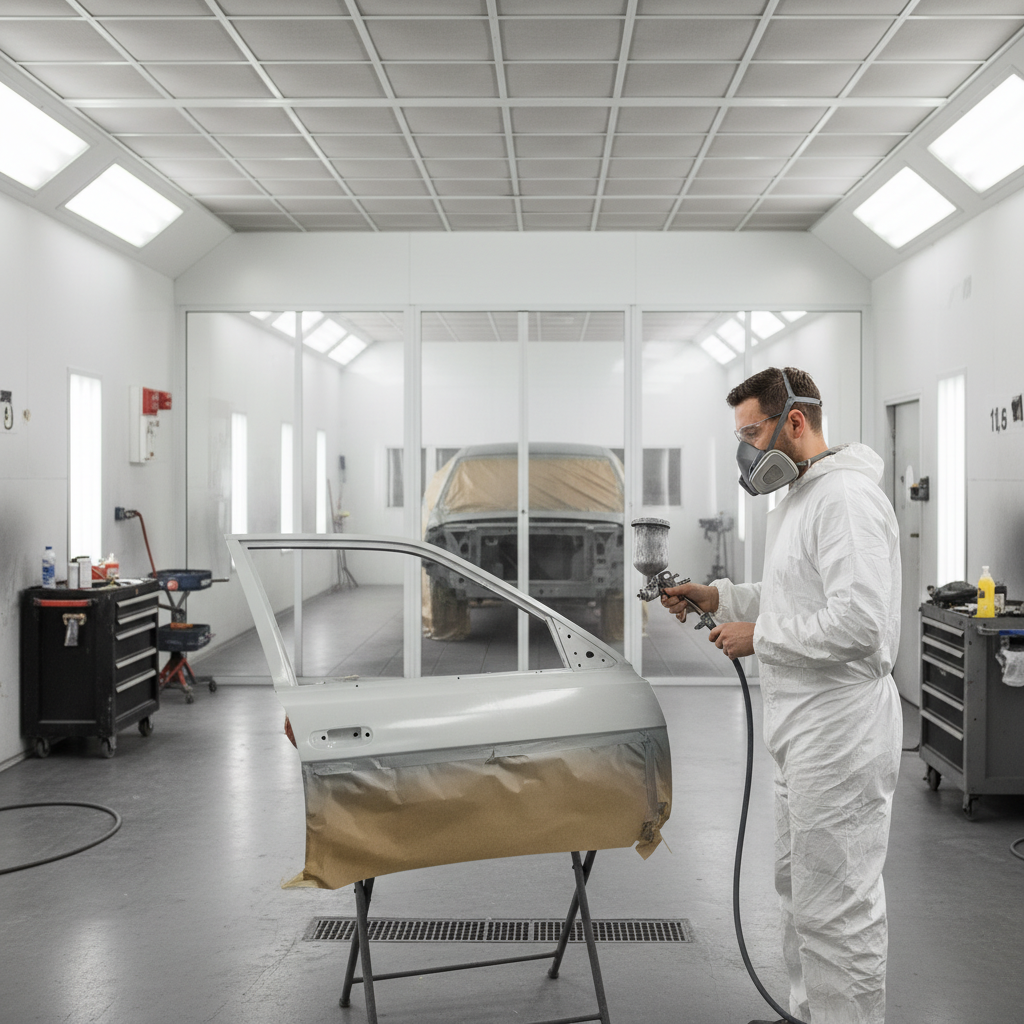
Our I-CAR certified technicians apply the matched paint in a climate-controlled environment and blend into adjacent panels as needed. This is what creates invisible repairs. A perfect color match on a single panel can still look wrong without proper blending technique.
Step Five: Final Inspection and Warranty
Every completed job goes through a structured quality inspection before you’re called. We back our work with a written warranty. You’ll know exactly what’s covered before you sign anything.
Turnaround time varies by damage scope, and we’ll give you a realistic timeline upfront. Contact us to schedule your estimate and talk through the full process with our team. Explore our complete service offerings to see everything we handle beyond paint work.
OEM vs. Aftermarket Paint: Making the Right Choice for Your Vehicle
Not all paint is equal. That sounds obvious, but it surprises customers when they realize how much variation exists between OEM formulations and aftermarket alternatives.
OEM paint comes directly from the vehicle manufacturer. It’s formulated to match your car’s original color code exactly, including the specific metallic flake density, pearl layering, and clear coat chemistry. For newer vehicles, luxury cars, or any repair where color accuracy is non-negotiable, OEM is almost always the right call.
Aftermarket paint isn’t automatically inferior. High-quality aftermarket formulations from reputable suppliers can perform extremely well, and for older vehicles with significant pre-existing fade, they’re often the smarter financial choice. The problem is that low-grade aftermarket options cut corners on pigment quality and binder chemistry, and those shortcuts show up fast under Phoenix’s unforgiving sun.
Here’s my honest opinion: a lot of shops default to aftermarket paint on every job to protect their margins. I don’t think that serves the customer. At Brad’s Deer Valley Collision, we make the recommendation based on your specific vehicle, its age, and the scope of the repair. Not a blanket policy.
A few things worth knowing before you decide:
-
Some manufacturer warranties can be affected by non-OEM materials, so confirm your coverage before authorizing work.
-
Proper auto body paint matching in Phoenix, AZ requires accounting for existing fade regardless of which paint source you use.
-
Always get the paint choice documented in your written estimate.
Have questions about what’s right for your vehicle? Reach out to us directly and we’ll give you a straight answer.
Frequently Asked Questions
How long does professional paint matching and repainting take?
Most auto body paint matching and repainting jobs at our Phoenix, AZ, USA shop take anywhere from 3 to 7 days. The timeline depends on how much damage we’re working with, whether the repair needs multiple clear coat layers, and how long the finish needs to cure properly. We don’t just hand you a vague estimate and disappear. Brad’s Deer Valley Collision gives you a written timeline upfront and keeps you in the loop with text updates and photos as your vehicle moves through the process.
Can you match metallic and pearl paint colors accurately?
Yes, absolutely. Metallic and pearl finishes are tricky because you’re not just matching a color, you’re matching flake size, flake orientation, and how the finish catches light at different angles. Brad’s uses spectrophotometer technology to measure all of that precisely. These complex finishes may take a little more time than a standard solid color, but the result is a match that holds up under the Arizona sun. Don’t settle for a shop that’s guessing at your pearl white or champagne metallic.
What warranty does Brad’s offer on paint repairs?
Brad’s Deer Valley Collision backs all paint work with a comprehensive written warranty that covers color match, adhesion, and finish defects. You’ll see the full warranty terms spelled out in your estimate and repair agreement before we ever touch your vehicle. We want you walking out of our Phoenix, AZ, USA shop confident in your repair, and a clear, written warranty is how we stand behind that. If something doesn’t look right down the road, you bring it back and we make it right.
Does Arizona’s heat and sun affect paint matching?
It really does. Phoenix, AZ, USA gets intense UV exposure and extreme heat year-round, and that fades your vehicle’s original paint over time. If we matched your repair to the factory color spec without accounting for that fade, the repaired panel would look noticeably different from the rest of your car. Our technicians assess how much the surrounding paint has aged and adjust the color formulation to blend with your actual current finish, not a color that left the factory years ago.
What is the difference between paint touch-up and a full repaint?
A touch-up targets small isolated chips or scratches without repainting the whole panel. It’s a quicker, lower-cost option when the damage is truly minor. A full panel repaint means we cover the entire panel from edge to edge, which gives you a uniform color and finish with no blending lines. During your free estimate at our shop, we’ll look at the damage honestly and tell you which approach makes the most sense. Good auto body paint matching starts with recommending the right repair, not the most expensive one.
Get a Free Paint Matching Estimate at Brad’s Deer Valley Collision
If your vehicle needs auto body painting and you want it done right the first time, we’re ready to help you right here in Phoenix, AZ, USA. Our advanced color matching technology delivers results that are truly invisible, and we work directly with your insurance company so you’re not stuck navigating the paperwork alone. Stop by our shop or give us a call today to schedule your free estimate and see firsthand why Phoenix drivers trust Brad’s Deer Valley Collision to bring their vehicles back to life.