How to Photograph Damage and Prepare for Your Phoenix Auto Body Estimate
How to Photograph Damage and Prepare for Your Phoenix Auto Body Estimate
Start with Clear Photographs Before You Drive to Brad’s
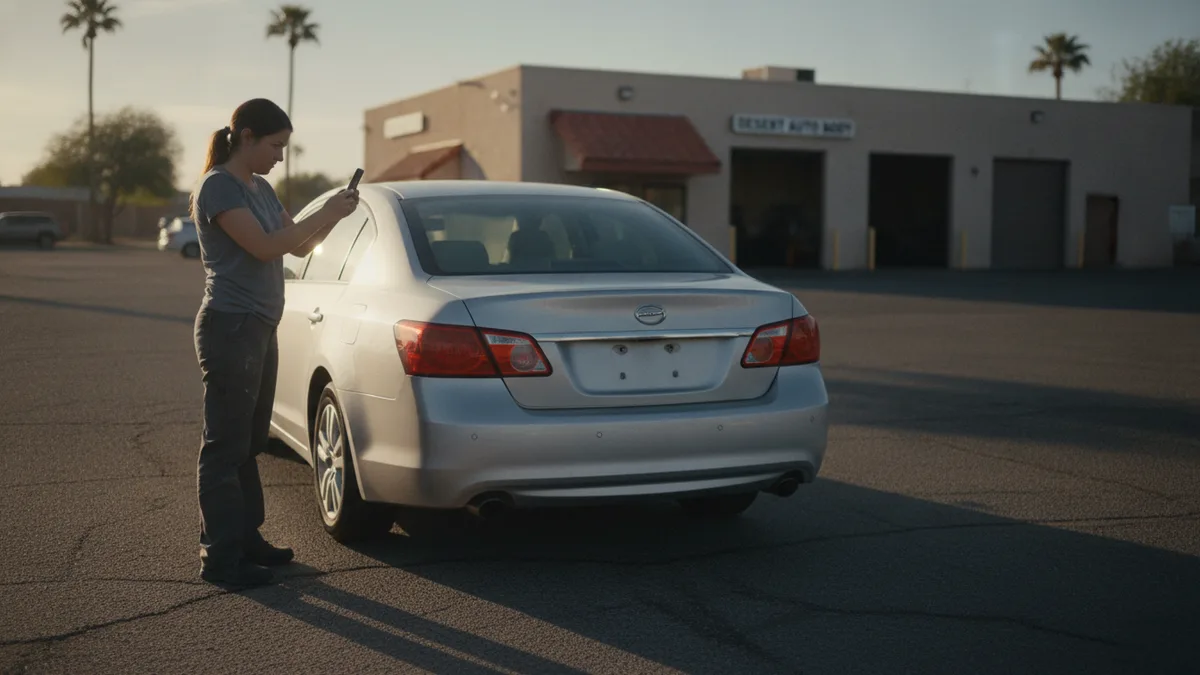
Photograph every visible dent, scrape, or crack from multiple angles in good daylight before your appointment at Brad’s Deer Valley Collision. Capture wide shots, close-ups, and detail images from at least three sides of your vehicle, plus one shot showing the overall scene. This groundwork helps our Phoenix, AZ, USA estimators prepare an accurate car body repair estimate before you even arrive.
Brad’s Deer Valley Collision has been repairing vehicles in Phoenix since 1985.
Say a shopping cart or another vehicle clips your bumper in a parking lot. Most guides tell you to snap one quick photo and move on. In our experience, that single shot rarely tells the whole story. A cracked bumper often hides stress fractures in the mounting brackets behind it, and a photo of the surrounding area (the curb, the other vehicle, the parking space) gives our team context that a close-up alone can’t.
Good daylight matters more than a fancy camera. Overcast midday light, or early morning sun, shows texture and depth without harsh shadows hiding a crack line. Once you’ve got your photos, scheduling time with our team is simple. You can request an estimate appointment through our contact page and bring those images along, whether you’re dropping in or booking ahead.
Photograph Damage the Right Way: Angles, Lighting, and What to Capture
Timing matters more than most people think. Early morning or late afternoon light in Phoenix, AZ, USA gives you soft, even lighting that shows dents and creases without washing them out. Midday sun here is harsh and direct overhead, and it tends to create glare on painted panels that hides exactly the detail an estimator needs to see. If you can wait an hour or two for the light to shift, do it.
Position yourself so the sun is behind you or off to the side, never shining straight into the damaged area. A shadow across the panel can be just as misleading as glare, so try a couple of angles before you settle on the shot.
The Three-View Standard
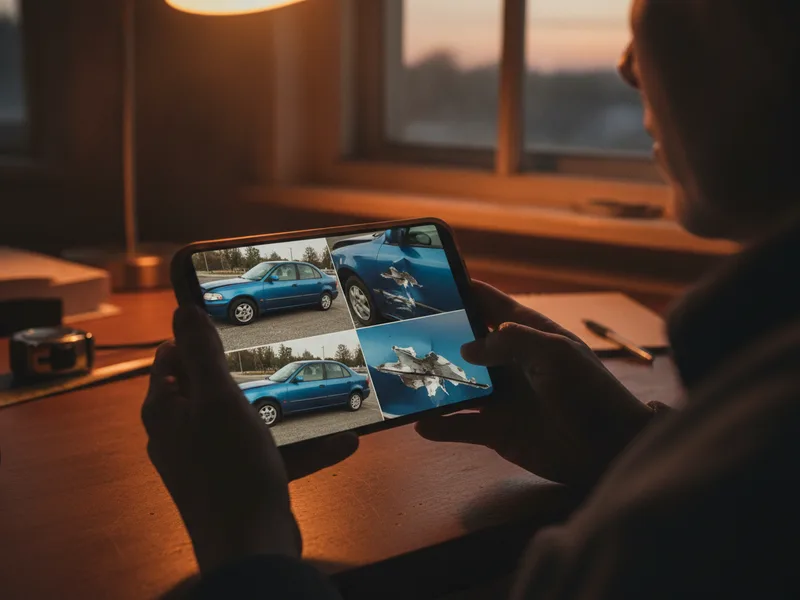
Get a shot of the damage straight on, then one from each side at roughly a 45-degree angle. This three-view approach lets our estimators judge depth and spread, not just the flat appearance of a scratch or dent. A single straight-on photo often flattens damage and makes a deep crease look like a minor scuff.
-
Front-on shot showing the full panel or bumper section
-
Angled shot from the left showing how the damage curves or extends
-
Angled shot from the right for the same reason
-
A wider shot showing where the damage sits relative to the whole vehicle
Close-Ups That Actually Help
Wide shots tell us where the damage is. Close-ups tell us how bad it is. Get within a foot or two of the panel and capture paint texture, cracking, or peeling directly. For dents, angle your phone almost level with the surface; this lowers the camera’s line of sight and makes depth visible in a way that a straight-down photo never will. Trim pieces, clips, and seams deserve their own photos too, since these are often where hidden damage hides.
Most online guides tell people to snap a handful of quick photos and move on. In our experience, that approach leaves out the detail that actually speeds up a car body repair estimate. Estimators at Brad’s Deer Valley Collision rely on these images to spot structural concerns before a vehicle even arrives, which shortens the in-person inspection and gets you a more accurate number sooner. Clear photos don’t replace a hands-on look, but they give us a real head start.
Gather Documentation Before Your Appointment
Half the delays we see at intake have nothing to do with the vehicle. They come from customers digging through a glove box for an insurance card while the estimator waits. A little prep changes that entirely.
Bring a few basics.
-
Your insurance card and policy number, plus the claim number if one’s already been assigned
-
A valid driver’s license
-
The police report, if one was filed (a report number is often enough if you don’t have the full document yet)
-
Photos of the accident scene, if it was safe to take them at the time
-
Any prior repair records for the vehicle, especially if it’s had bodywork done before
That last item gets skipped constantly, and it shouldn’t. Prior repair history tells an estimator whether panels were previously replaced, whether factory welds are intact, and whether aftermarket parts are already on the car. Most guides don’t mention this, but in our experience, it can change how a repair is scoped, particularly on structural work near an older repair site.
At Brad’s Deer Valley Collision, we’ve worked with Phoenix, AZ, USA drivers on everything from a single cracked bumper to full frame alignment jobs, and paperwork gaps are one of the most common reasons an estimate takes longer than it needs to. Having documents ready doesn’t just speed up your visit. It gives our team accurate context for building a car body repair estimate that reflects your vehicle’s actual condition and history, not guesswork.
If you’re unsure what your policy covers or what your insurer requires for documentation, a quick call to your insurance agent beforehand can clear that up before you arrive. Insurance requirements vary by carrier, so confirming details with your provider is worth the extra few minutes.
Remove Valuables and Personal Items from Your Vehicle
Clear out the car before you drop it off. Phones, sunglasses, chargers, gym bags, garage door remotes, that stack of mail in the console. Bumper repair work often means your vehicle sits with us for a stretch while parts are ordered and matched, and there’s no reason to leave anything tempting inside during that time.
Here’s an opinion we’ll stand behind: the “just leave it locked in the trunk” advice you hear doesn’t always hold up. Technicians need trunk access for alignment checks and panel fitting on plenty of bumper jobs, so valuables stored there aren’t as protected as owners assume.
Brad’s Deer Valley Collision takes vehicle security seriously once your car is on our Phoenix, AZ, USA lot, but removing personal items is just good practice at any collision repair shop, not a reflection of our precautions. It also speeds up your car body repair estimate, since estimators won’t need to work around clutter to inspect interior trim or dash damage. Browse our full range of collision and bumper repair services before your visit if you’re curious what’s involved.
What the Estimator Will Check That Your Photos May Not Show
Every experienced estimator has seen it: a bumper that looks like cosmetic scuffing in photos turns out to hide a cracked mounting bracket or a misaligned sensor once it’s up on the rack. Photos capture the surface. They don’t capture what’s underneath, and that gap is exactly why a car body repair estimate in Phoenix, AZ, USA should always include hands-on inspection, not just a photo review.
Frame damage is a common example. A vehicle can look straight from every angle in your driveway and still have measurable misalignment that only shows up on a frame rack. Suspension issues work the same way; a hard impact can throw off alignment without leaving a visible mark anywhere near the point of contact. Hidden dents behind bumper covers, cracked brackets, and bent reinforcement bars often stay invisible until a technician pulls the panel.
Modern vehicles add another layer. Many cars built in the last several years rely on ADAS, advanced driver assistance sensors tied to cameras and radar around the bumpers and windshield. A bumper repair that doesn’t account for recalibrating these systems can leave safety features working incorrectly, even when the paint looks flawless. This is one area where our technicians, trained through I-CAR and ASE programs, look closely, since recalibration equipment isn’t something every smaller shop invests in.
Some guides suggest photos alone are enough to get a rough number before you commit to a shop. In our experience, that rough number often shifts once we get the car on a lift, sometimes significantly, because hidden damage changes the scope of repair. We’d rather walk a customer through what we find in person than have them anchored to an estimate built on incomplete information.
If you’re weighing a repair decision that touches your vehicle’s safety systems, it’s worth confirming recalibration needs with a certified technician rather than guessing from the outside. Stop by our Phoenix location and we’ll walk the vehicle with you before writing anything down.
Common Documentation Mistakes to Avoid Before Drop-Off
We see the same handful of errors over and over at intake. None of them are hard to fix once you know what to look for.
-
Blurry or backlit shots. A photo taken against a bright sky or from a moving hand doesn’t show enough detail for an accurate car body repair estimate.
-
Skipping the interior. Airbag deployment, cracked trim, or a dashboard shifted from impact often gets left out because customers focus only on the exterior.
-
No wide shots. Close-ups alone don’t show where the damage sits relative to the rest of the panel or the vehicle as a whole. Estimators need both.
-
Ignoring pre-existing damage. That old parking lot scrape or curb scuff needs its own photo. Otherwise it can get lumped in with new damage during review, which slows things down for everyone.
Most guides tell customers to snap a quick photo and move on. In our experience, that’s where disputes start. Brad’s Deer Valley Collision keeps customer photos as part of the estimate file for every vehicle that comes through our Phoenix, AZ, USA shop, and thorough documentation upfront tends to prevent disagreements later. If you’re unsure whether an insurance issue applies to your situation, a licensed agent can confirm your specific coverage.
Get Your Written Estimate and Ask the Right Questions
Once the walkaround is done, the paperwork starts. This is where a lot of drivers go quiet and just nod along. That’s a mistake. A written car body repair estimate is a starting point for questions, not a final answer you have to accept without discussion.
Ask whether the estimate uses OEM parts or aftermarket equivalents, and why. Both have a place depending on the vehicle’s age and the type of repair, but you should know which one you’re paying for before work begins. Ask about warranty coverage in plain terms: what’s covered, for how long, and what would void it. Ask for a realistic turnaround window, understanding that parts availability and hidden damage can shift the timeline.
Here’s a question most guides skip: does the estimate include frame alignment or ADAS recalibration if your vehicle has them? Plenty of smaller operations leave recalibration off entirely, either because they don’t have the equipment or don’t think to mention it. In our experience, that’s one of the most common gaps between a low bid and a complete repair.
Phoenix, AZ, USA drivers comparing estimates should feel free to get two or three before deciding. It’s a normal part of the process, and any legitimate shop expects it. If you want to check credentials before you commit, Brad’s Deer Valley Collision’s background on certifications and decades of local repair work is outlined on its about page detailing shop credentials, which covers the I-CAR and ASE training our estimators and technicians carry.
Clear photos, solid documentation, and a few direct questions put you in a much stronger position. For anything involving your legal rights with an insurer, a quick check with your state insurance department or a licensed agent is always worth the time.
Frequently Asked Questions
What phone camera settings give the clearest damage photos?
You don’t need special settings for a car body repair estimate in Phoenix, AZ. Just shoot in natural daylight and skip the flash, since it tends to wash out dents and scratches. Wipe your lens off first (pocket lint is the enemy here). Hold your phone steady and snap a few shots from different angles for each spot. Most phones made in the last few years handle this just fine.
How many photos should I take of the damage?
Somewhere between 8 and 12 photos usually covers it. Start with wide shots that show the whole vehicle and where the damage sits on it, then move to medium shots of the damaged panel or area. Finish with close-ups of any dents, cracks, or paint chips. Getting angles from the front, side, and rear of the vehicle gives our team at Brad’s Deer Valley Collision a full picture before you even walk in.
Do I need to document pre-existing damage before drop-off?
Yes, and it’s worth the five minutes. Snap photos of any scratches, dents, or worn spots on your car before you bring it to our Phoenix shop. This gives you a clear record and helps our repair team draw a line between what was already there and what needs fixing from the collision. It keeps everyone on the same page once the work starts.
Can I drop my vehicle off after hours at Brad’s Deer Valley Collision?
Give Brad’s Deer Valley Collision a call and ask, since after-hours drop-off availability depends on staffing and scheduling on a given day. A lot of Phoenix customers like the option because it fits around work or family schedules. Our team can walk you through what’s available for your specific date and time and get things set up ahead of your visit.
Should I inform Brad’s if I’ve already received an estimate from another shop?
Definitely let us know. Sharing a prior estimate helps our estimator see the full scope of the damage right away and put together a detailed, competitive car body repair estimate without duplicating work. It also gives us a chance to explain how our approach to parts, labor, or warranty coverage might differ. If insurance is involved, it’s a good idea to confirm coverage details with your adjuster or a licensed insurance professional as well.
Get Your Bumper Repair Estimate in Writing
A dented or scraped bumper isn’t always as simple as it looks, and the only way to know what’s really involved is a written estimate from someone who’s inspected it in person. Bring your photos and any documentation you’ve gathered to Brad’s Deer Valley Collision in Phoenix, AZ, USA, and we’ll walk you through what the repair actually involves before any work begins.
Stop by the shop or schedule an estimate appointment through our contact page, and we’ll give you a clear picture of your bumper’s repair scope. Curious what other folks in the neighborhood think of our work? You can check out our reviews on Google before you swing by.