How to File an Auto Body Insurance Claim in Phoenix, AZ: A Step-by-Step Walkthrough
How to File an Auto Body Insurance Claim in Phoenix, AZ: A Step-by-Step Walkthrough
What You Need to Know Before You File: The Insurance Claim Basics
Filing an auto body insurance claim in Phoenix, AZ, USA means reporting the accident to your insurer, getting a damage estimate, and coordinating repairs with a shop of your choosing, not necessarily one your insurance company hands you. Brad’s Deer Valley Collision has assisted Phoenix drivers with claim paperwork and repair coordination since 1985. Arizona law gives you the right to select your own repair shop regardless of what your insurer suggests.
That right matters more than most drivers realize. Insurance companies often steer customers toward “preferred” shops in their network, and while those shops aren’t necessarily bad, you’re never obligated to use one. In our experience, drivers who shop around for two or three estimates tend to feel more confident about their repair quality and their claim outcome than those who accept the first recommendation they’re given.
Picture a fender bender on I-17 during rush hour. The other driver’s insurance adjuster calls within a day, asking for a recorded statement and pushing a specific repair shop. You’re not required to decide on the spot. Take time to review your policy, understand your deductible, and confirm whether the claim will run through your own collision coverage or the other party’s liability coverage.
Timelines vary by insurer and by the complexity of the damage, so it’s worth asking your adjuster directly what to expect rather than assuming a fixed schedule. A collision repair specialist can also walk you through documentation requirements before you commit to anything. Brad’s Deer Valley Collision’s full range of collision repair and insurance assistance services covers everything from initial estimates to final inspection, which can simplify a process that often feels confusing to drivers who haven’t dealt with a claim before.
Step 1: Document the Accident and Preserve Evidence
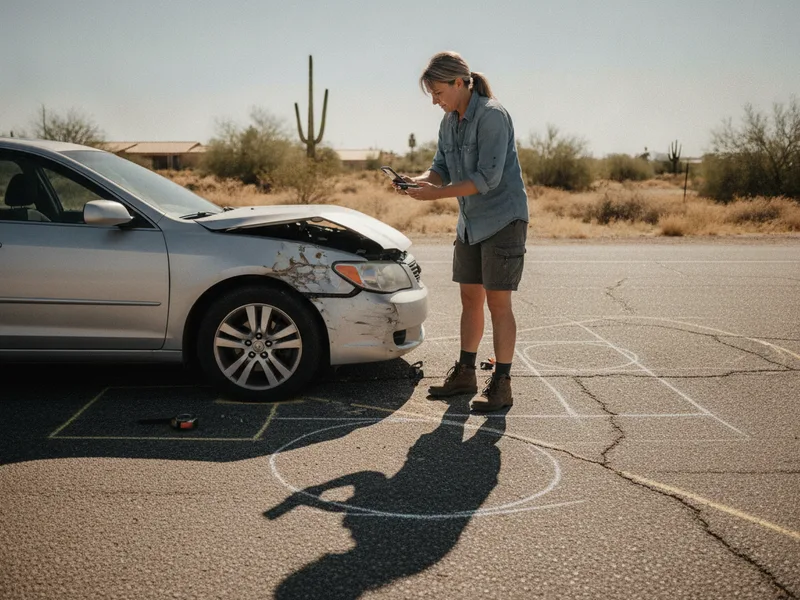
Grab your phone before you do anything else. Photos and notes taken at the scene become the backbone of your claim, and adjusters in Phoenix, AZ, USA rely heavily on that visual record when they scope out damage.
Shoot wide shots of the whole scene first: both vehicles, the road position, traffic signals, and any skid marks. Then move in close on every dent, crack, or scrape, including damage that looks minor. Insurance companies sometimes downplay small scuffs, so a clear photo timeline protects you if hidden structural damage shows up later during a teardown.
Get the other driver’s license plate, insurance card, and phone number. Write down the names of any responding officers and the report number if police show up. If there are witnesses, ask for a phone number; their account can matter if fault is disputed.
Here’s something a lot of guides skip: remove valuables from the car before you report the claim or drop it off anywhere. Chargers, sunglasses, garage door openers, anything you don’t want to lose track of during repairs. Shops and tow yards aren’t responsible for personal items left behind, and disputes over missing belongings only complicate an already stressful process.
One more habit worth building: photograph your odometer and dashboard warning lights right after the collision. It’s a small step most people forget, but it gives you a timestamped record of the vehicle’s condition before any repair work begins. If you have questions about what documentation your specific policy requires, your insurance agent can walk you through it directly.
Step 2: Report the Claim to Your Insurance Company Promptly
We see a pattern at the shop almost every week. A customer waits four or five days to call their insurer because they’re busy, or they assume the other driver’s insurance will handle everything automatically. That delay almost always makes the claim harder to process, and adjusters start asking why there’s a gap between the accident date and the report date.
Most policies ask for prompt notice. In practice, that means within 24 to 48 hours. Some insurers allow more flexibility, but you should confirm your specific reporting window with your agent or read your policy documents directly, since terms vary by carrier and by policy type.
Before you pick up the phone, gather what you documented at the scene. Insurers typically request:
-
The date, time, and location of the accident
-
Names and insurance information for everyone involved
-
A brief, factual description of what happened
-
Photos of the vehicle damage and the accident scene
-
A copy of the police report, if one was filed
Having this ready saves time and keeps your account consistent from the first call through the final repair sign-off.
Choosing Your Repair Shop
Here’s where a lot of Phoenix, AZ, USA drivers get steered without realizing it. Insurance companies often recommend a shop from their direct repair program during that first call. That’s fine as an option, but it’s not a requirement. Arizona drivers have the right to choose their own collision repair provider, regardless of what the insurer suggests.
In our experience, customers who ask their insurer to send the estimate directly to a shop of their choosing, rather than accepting the first referral, tend to feel more confident about the parts and workmanship going into their vehicle. If you’re unsure about your rights in this process, it’s worth a quick conversation with your insurance agent or a licensed professional who can walk you through your specific policy terms.
Step 3: Get an Estimate from Your Collision Repair Shop
Here’s the deal. Your insurance company doesn’t get to force you into a specific shop. Arizona drivers have the right to pick their own repair shop, and that choice matters more than most people realize when they’re stressed out after a wreck.
A real estimate. Not a napkin figure. It should break down labor, parts costs, paint and materials, and a clear timeline for the work. If a shop hands you a number without a written document backing it up, that’s a problem. Walk away from anyone who won’t put it on paper.
Get two or three estimates before committing to repairs. Prices vary between shops for legitimate reasons, but they can also vary because someone’s cutting corners you won’t notice until months later. An unusually low bid usually means cheap aftermarket parts, rushed labor, or corners cut on structural work that won’t show up until something fails down the road.
Ask directly about OEM versus aftermarket parts. OEM parts come from your vehicle’s original manufacturer and typically cost more; aftermarket parts are made by third parties and can vary widely in fit and quality. A shop that can’t explain this difference clearly, or dodges the question, probably isn’t the shop you want handling your car.
Check credentials before you sign anything. I-CAR and ASE certifications indicate technicians have gone through structured training on modern repair techniques, including ADAS recalibration, which fewer shops handle correctly than you’d expect. You can read about our certifications and history our shop’s background and credentials before deciding who works on your vehicle.
Red flags worth remembering:
-
No written estimate provided
-
No warranty offered on parts or labor
-
Pricing that’s noticeably lower than every other quote
-
Vague answers about parts sourcing
In our experience, customers who shop around for estimates in Phoenix, AZ, USA end up more satisfied with both the repair quality and how smoothly their claim moves forward.
Step 4: Review the Insurance Adjuster’s Assessment and Coordinate Repairs
Nine times out of ten, the adjuster’s first number doesn’t match the shop’s estimate. That’s not a red flag on its own. It’s just how the process works. Adjusters often write their assessment from photos or a quick in-person look, while a repair shop opens panels and checks for hidden damage that only shows up once the vehicle is on the lift.
In Phoenix, AZ, USA, most insurers send a staff adjuster or a third-party appraiser to inspect the vehicle, either at the shop or through a virtual estimate submission. Once that inspection happens, you’ll get a written breakdown of what the insurer is willing to pay for parts, labor, and paint. Compare it line by line against your shop’s estimate. Missing items are common: refinishing labor, corrosion protection, or calibration for advanced driver assistance systems are frequently left off the first pass.
Here’s where a supplement comes in. If your shop finds additional damage during teardown, they’ll submit a supplemental estimate to the insurer for approval before continuing work. This back-and-forth can add a few days to the timeline, and that’s worth knowing upfront so it doesn’t catch you off guard.
Working with a shop enrolled in a Direct Repair Program (DRP) can smooth out a lot of this friction. DRP shops have established communication channels with specific insurers, which often means faster approval on supplements and fewer stalled claims. Brad’s Deer Valley Collision participates in direct repair programs with several carriers, and in our experience, those relationships cut down on the paperwork delays that frustrate customers most.
You’re not required to accept the adjuster’s first figure without question, and you’re never required to use a shop the insurer suggests. If a disagreement over scope or pricing drags on, ask your insurance agent or a licensed adjuster to clarify your policy’s dispute resolution options.
Common Claims Mistakes to Avoid
We’ve watched customers make the same handful of mistakes for decades. Here’s what trips people up, and what to do instead.
Signing Blank or Incomplete Forms
Never sign anything you haven’t fully read. Some drivers sign authorization forms without checking what they’re agreeing to, then find out later it limited their repair options or waived a right they didn’t know they had. Read every line. Ask questions before you sign, not after.
Accepting the First Estimate Without Comparison
An insurance adjuster’s first number is a starting point, not a final answer. Getting two or three written estimates from certified shops gives you a real picture of what the repair actually requires. In our experience, drivers who skip this step often end up settling for less than the repair needs.
Skipping Photo Documentation
No photos, no proof. If there’s a dispute later about what damage existed and when, pictures settle it fast. Take them before the tow truck even shows up if you can.
Waiting Too Long to Report
Delayed reporting slows everything down and can complicate coverage. Call your insurer as soon as it’s safe to do so.
Assuming the Insurer Picks Your Shop
This one costs people the most. Arizona drivers can choose their own repair shop, full stop. Insurance companies may suggest a shop in their network, but that suggestion isn’t a requirement. Choosing a shop with I-CAR and ASE certifications, and asking about warranty coverage upfront, matters more than convenience.
None of this replaces advice from your insurance agent or a licensed adjuster on the specifics of your policy. Every claim has its own wrinkles.
Why Choose a Certified Collision Repair Shop for Your Phoenix Claim
Customers who’ve been through a claim before tend to ask the same question first: who’s actually going to stand behind this repair. It’s a fair thing to wonder, and it usually separates a shop worth trusting from one that just wants the job done fast.
Brad’s Deer Valley Collision has been repairing vehicles in Phoenix, AZ, USA since 1985. That kind of longevity happens because a shop keeps its word to customers and insurers alike, not because of a marketing push.
A few things matter more than most drivers realize when picking a shop for a claim:
-
Certifications you can verify. Ask about I-CAR and ASE credentials before you commit, and don’t take a shop’s word for it if they can’t show proof.
-
A written warranty. If a shop won’t put their work in writing, that’s worth questioning.
-
ADAS recalibration capability. Modern vehicles rely on sensors and cameras that need proper recalibration after collision repair. In our experience, this is the step a lot of smaller shops skip or outsource without telling you.
-
Direct insurance coordination. Working with a shop that communicates directly with adjusters can cut down on back-and-forth delays.
-
Proactive updates. Text updates and photos throughout the repair process should be standard, not a bonus feature.
None of this replaces your own judgment. Read reviews, get a couple of written estimates, and ask direct questions about parts and turnaround before you sign anything.
If you’re ready to talk through your situation, you can schedule a consultation and estimate and walk through your options with someone who’s handled Phoenix claims for decades.
Frequently Asked Questions
Can I choose my own collision repair shop, or does my insurance company have to approve it?
You have the right to pick any certified collision repair shop in Phoenix, AZ, no matter what your insurer suggests. Insurance companies often push their Direct Repair Program partners because it’s easier for them, but that doesn’t mean you’re stuck with those options. Arizona law backs your choice, and a legitimate, licensed shop must get paid for the work regardless of who recommended it. Check your policy details or ask a licensed adjuster if you have specific questions.
What if my insurance adjuster’s estimate is lower than my repair shop’s estimate?
This happens more often than you’d think, especially once a technician opens up the vehicle and finds damage that wasn’t visible during the initial inspection. Ask your repair shop for an itemized breakdown showing exactly where the numbers differ and why. Hidden frame damage, bent brackets, or damaged wiring are common culprits. A shop that regularly handles insurance claims can usually contact the adjuster directly and work out the difference without you having to referee the conversation.
How long does the insurance claim process typically take in Phoenix, AZ?
For a straightforward claim, you’re generally looking at somewhere in the range of 5 to 10 business days from the day you report the accident. Damage involving the frame, multiple vehicles, or backordered parts can stretch that out to two or three weeks. Timelines vary by insurer and by how quickly parts and inspections get scheduled, so it’s worth asking your shop for a rough estimate once they’ve assessed the vehicle in person.
Should I remove valuables from my car before dropping it off for repairs?
Yes, always take out anything personal or valuable before handing over your keys. Electronics, chargers, sunglasses, garage door openers, whatever you’d hate to lose should come with you. It’s also smart to snap a few photos of the interior and exterior right at drop-off. That gives you a clear record of the car’s condition going in, which protects both you and the shop if any questions come up later.
What is a Direct Repair Program, and does it affect my claim?
A Direct Repair Program, or DRP, is an arrangement between an insurance company and a specific collision repair shop meant to speed up paperwork and communication on claims. If your insurer has a DRP shop and you use it, things can move a little faster since the shop and insurer already have an established process. That said, you’re never required to use a DRP shop. Filing a claim and choosing an independent shop in Phoenix, AZ is entirely your call.
Get Help With Your Insurance Claim Today
Dealing with an insurance claim after a collision is a hassle nobody wants, and that’s exactly why we handle the back-and-forth for you. Brad’s Deer Valley Collision works directly with insurance adjusters in Phoenix, AZ, USA to get your estimate documented correctly the first time. Stop by our shop or give us a call, and we’ll walk you through what the process looks like for your specific vehicle.
Every claim is different, so it’s worth confirming coverage details with your insurance provider before repairs begin. Visit our insurance claim assistance and repair services page to see how we support drivers through the whole process, from initial estimate to final repair. Curious what other Phoenix drivers think of working with us? You can check out our reviews on Google before you decide.