
How Much Does Bumper Replacement Cost in Phoenix, AZ: Budget Guide for Collision Damage
How Much Does Bumper Replacement Cost in Phoenix, AZ: Budget Guide for Collision Damage
Understanding Bumper Replacement vs. Repair in Phoenix
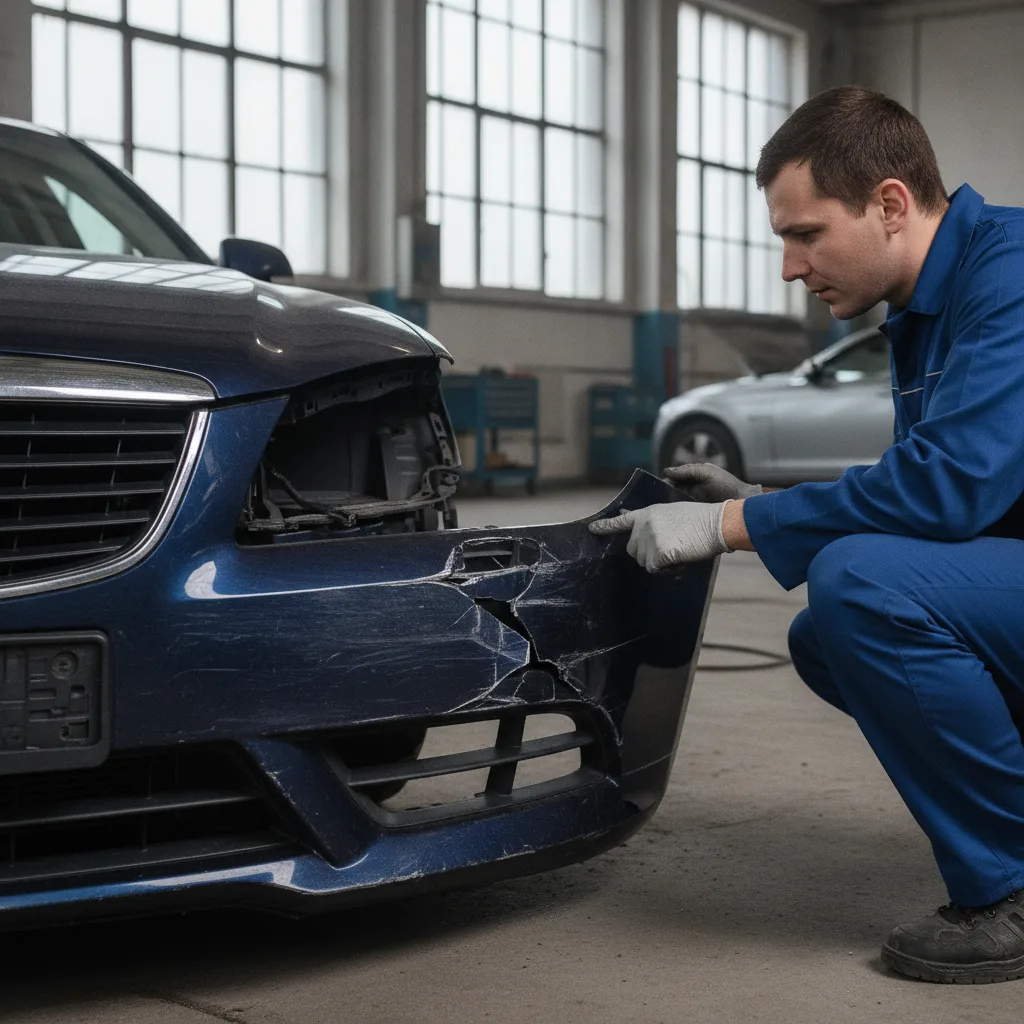
You back out of a parking spot at Desert Ridge Marketplace, hear that familiar crunch, and walk around to find your rear bumper cracked clean through with the fascia sagging on one side. Now you’re staring at it in the Phoenix sun wondering whether you actually need a full replacement or if someone can just patch it up.
That’s the question most drivers get wrong before they ever call a shop.
Repair is the right call for surface-level damage. Minor scuffs, shallow scratches, and small dents in plastic bumper covers can often be filled, reshaped, and repainted without swapping out the whole assembly. A skilled technician can restore those to factory appearance at a fraction of replacement cost. But once a bumper cover has a structural crack, a deep split, or torn mounting tabs, repair becomes a patchwork solution that won’t hold up.
There’s also the layer most people don’t think about: the energy-absorbing foam and the reinforcement bar sitting behind the cover. A bumper can look relatively intact on the outside after a low-speed hit and still have a completely crushed foam absorber underneath. That foam exists to protect you in the next collision. If it’s gone, your bumper is decorative. Replacing only the cover while leaving damaged components behind is one of the most common shortcuts in this industry, and it’s one we won’t take.
How Phoenix Climate Affects the Decision
Phoenix heat matters here more than most guides acknowledge. UV exposure and sustained temperatures above 110°F accelerate plastic degradation over time. A bumper cover that’s already brittle from years in the Arizona sun is a poor candidate for repair. Adhesives and fillers don’t bond as reliably to heat-fatigued plastic, and the repair can fail within a season. In a cooler climate, that same bumper might repair fine.
This is why a proper damage assessment has to account for material condition, not just visible damage.
At Brad’s Deer Valley Collision, we’ve been doing these assessments in Phoenix since 1985. We look at the full picture before recommending repair or replacement, and we’ll explain exactly what we found and why. If you’re trying to understand how much does bumper replacement cost before committing to anything, start with an honest assessment. Contact us to schedule yours.
Key Factors That Influence Bumper Replacement Pricing
Two Phoenix drivers can walk into a shop with bumper damage and walk out with estimates that differ by $800. That gap isn’t random. Several concrete variables drive bumper replacement costs, and understanding them helps you evaluate any quote you receive.
Vehicle Make and Model
This is the biggest variable. A bumper fascia for a 2019 Honda Civic costs far less to source than one for a Mercedes GLE or a Ram 1500 with integrated tow sensors. Luxury and late-model trucks often have bumper assemblies that include fog light housings, radar modules, and active grille components. More parts mean more labor and more cost. It’s not the shop’s markup that drives the difference; it’s the engineering complexity of the vehicle itself.
OEM Versus Aftermarket Parts
Parts sourcing changes the price significantly. OEM (original equipment manufacturer) bumpers are made to factory specs and typically carry a manufacturer warranty. Aftermarket parts cost less upfront but fit tolerances can vary, and some don’t play well with modern sensor systems. We’ll cover this trade-off in depth in the next section, but know that a shop quoting a suspiciously low price is almost always quoting aftermarket parts. That’s not automatically bad, but you should know what you’re getting before you sign anything.
Labor Intensity
Labor rates in Phoenix typically range from $75 to $125 per hour depending on the shop’s certifications and equipment. A straightforward rear bumper swap on a sedan might take two to three hours. A front bumper replacement on a truck with a built-in parking assist system, adaptive cruise radar, and LED light clusters can run five hours or more. The physical difficulty of the disassembly, not just the parts cost, is what stretches the bill.
Paint Matching
Paint is where a lot of people get surprised. A new bumper has to be primed, painted, and clear-coated to match your existing finish. Phoenix’s intense UV exposure fades vehicle paint faster than in most U.S. cities, which means even a three-year-old car may need blending on adjacent panels to avoid a visible color mismatch. Proper paint matching requires calibrated mixing equipment and a skilled painter. Shops that cut corners here produce work that looks fine in the shade and obvious in daylight.
Hidden Structural Damage
The bumper cover is the visible plastic fascia. Behind it sits the bumper beam, impact absorbers, and in many vehicles, ADAS sensor brackets. Our team at Brad’s Deer Valley Collision, with over 40 years serving Phoenix, finds hidden damage on a significant portion of bumper jobs once disassembly begins. Any estimate written without a teardown inspection should be treated as preliminary, not final.
ADAS Recalibration
Modern vehicles with lane-keep assist, automatic emergency braking, or adaptive cruise control often require sensor recalibration after a bumper replacement. Many shops overlook this entirely. Skipping recalibration leaves safety systems operating on incorrect data, which is a serious problem. Ask every shop you contact whether their estimate includes this step.
If you’re ready to get an accurate number for your specific vehicle, reach out to us directly for a written estimate that accounts for all of these factors, not just the part on the surface.
Phoenix-Area Bumper Replacement Cost Ranges: Front vs. Rear
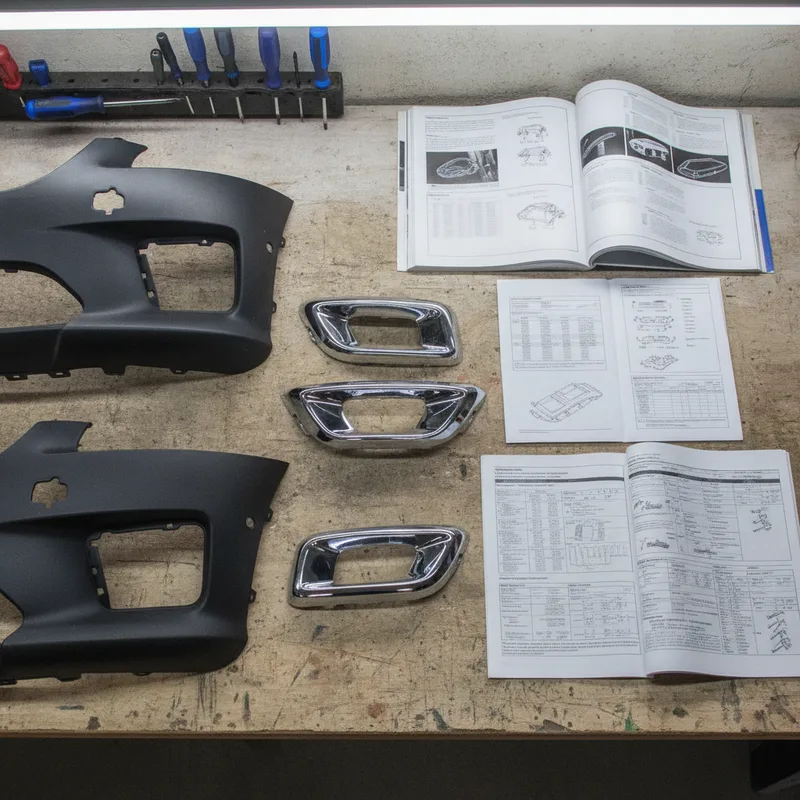
Front bumpers almost always cost more to replace than rear bumpers. That pattern holds across vehicle classes, and it surprises a lot of Phoenix drivers who assume the prices should be roughly equal.
The reason is sensor density. Modern front bumpers house radar modules, parking sensors, adaptive cruise components, and sometimes camera mounts. Every one of those systems needs to be removed, transferred, or replaced during the job. Rear bumpers carry sensors too, but typically fewer of them, which keeps labor hours lower.
Typical Cost Ranges by Vehicle Type
Here’s what bumper replacement realistically costs in the Phoenix market right now, using aftermarket parts as the baseline:
-
Economy and compact cars (Honda Civic, Toyota Corolla): Front bumper replacement runs $350 to $600. Rear bumper replacement typically falls between $275 and $500.
-
Mid-size sedans and crossovers (Honda Accord, Toyota RAV4): Front bumper replacement ranges from $500 to $900. Rear bumper replacement comes in at $400 to $750.
-
Full-size trucks and SUVs (Ford F-150, Chevy Tahoe): Front bumper replacement can reach $800 to $1,400 depending on trim level. Rear bumper replacement generally runs $600 to $1,100.
-
Luxury and European vehicles (BMW, Mercedes-Benz, Audi): Front bumper replacement often starts at $1,200 and can exceed $2,500. Rear bumper replacement typically runs $900 to $2,000.
Paint and blending add $200 to $500 on top of those figures for most jobs. Skipping a proper paint match is one of the biggest mistakes a Phoenix shop can make, especially in our climate where UV exposure is relentless and mismatched panels stand out fast.
If you’re asking how much does bumper replacement cost for your specific vehicle, the only honest answer is: get a written estimate. Generic online calculators don’t account for your trim level, sensor configuration, or the condition of the bumper beam underneath.
At Brad’s Deer Valley Collision, we’ve been writing estimates for Phoenix drivers since 1985. You can stop by or contact us to get a real number based on your actual vehicle, not a ballpark pulled from a national database.
OEM Parts vs. Aftermarket Bumpers: Cost and Quality Trade-offs
This choice directly affects your final bill, your paint match, and how long that repair actually holds up. It’s worth understanding before you approve any estimate.
OEM (Original Equipment Manufacturer) bumpers come straight from your vehicle’s manufacturer or an authorized supplier. They’re built to the exact tolerances of your original part. Aftermarket bumpers are produced by third-party manufacturers, often at a lower price point, and they vary widely in quality depending on who made them.
The Price Gap Is Real, But Not Always What You Think
Aftermarket bumper covers typically run 20 to 40 percent cheaper than OEM equivalents. On a $600 OEM bumper, that could mean saving $150 to $240 upfront. Phoenix drivers on a tight budget often see that number and jump at the aftermarket option without asking the follow-up questions that matter.
Here’s where it gets complicated. Aftermarket parts sometimes require additional fitting time because the tolerances are slightly off. That extra labor can quietly eat into your savings. A cheaper part that takes two extra hours to mount isn’t always the deal it looks like on paper.
Paint Matching and Finish Quality
Paint match is the issue we see most often at the shop. OEM bumpers use the same substrate and surface texture as your factory panels, which gives our painters a predictable canvas. Aftermarket bumpers can have surface inconsistencies that affect how paint absorbs and reflects light. You might not notice it in the shade. In full Phoenix sun, the difference can be obvious.
Honestly, the conventional advice to always choose OEM isn’t universally correct either. For older vehicles where resale value is low, a quality aftermarket bumper from a reputable supplier can be a perfectly sensible call. At Brad’s Deer Valley Collision, we’ve been making these part recommendations since 1985, and the right answer depends on your vehicle, your budget, and your goals.
Warranty Implications
OEM parts generally carry stronger warranty backing. Some insurance policies also specify OEM parts for newer vehicles still under manufacturer warranty. Ask your insurer before you assume aftermarket is approved.
If you want a direct conversation about which option fits your situation, contact us and we’ll walk through it with you, no pressure. Understanding how much bumper replacement costs in Phoenix, AZ means accounting for part quality, not just the sticker price on the part itself.
Hidden Costs and Common Pricing Mistakes to Avoid
The quote you approve on day one rarely matches the invoice you pay at pickup. That gap is something we see regularly, and it catches Phoenix drivers off guard more often than it should.
Several expenses don’t show up in a basic bumper replacement estimate but are completely legitimate charges once the technician starts working. The most common one is sensor recalibration. If your vehicle has parking sensors, a backup camera, or automatic braking tied into the bumper assembly, those systems require recalibration after replacement. The NHTSA has documented how ADAS components interact with structural repairs, and skipping recalibration creates real safety risk. Budget an additional $150 to $300 depending on your vehicle’s system complexity.
Frame alignment is another charge that surprises people. A hard enough hit to crack a bumper can shift the underlying structure. Shops that skip alignment checks aren’t doing you a favor by keeping costs low; they’re setting you up for uneven tire wear and handling problems down the road.
Red Flags That Cost You More Long-Term
Vague estimates are the biggest warning sign. If a shop gives you a number without specifying parts, labor hours, and paint materials as line items, that number is meaningless. Get everything in writing before you approve any work.
-
No written warranty offered on parts or labor
-
Unusually low bids with no parts sourcing explanation
-
No mention of ADAS recalibration on newer vehicles
-
Disposal fees added without prior disclosure
A common piece of advice is to always take the lowest estimate. Professionals who’ve worked in collision repair since the 1980s will tell you that’s often the most expensive decision you’ll make. Low bids typically reflect skipped steps, not efficiency.
At Brad’s Deer Valley Collision, every estimate breaks down exactly what you’re paying for. Contact us before you commit anywhere, and we’ll walk through your specific damage line by line.
Insurance Coverage and Getting Accurate Estimates in Phoenix
Your insurance adjuster is not your shopping guide. That’s a professional opinion a lot of Phoenix drivers don’t hear until after they’ve already been steered toward a shop they didn’t choose. In Arizona, you have the legal right to select your own repair facility, regardless of what your insurer recommends or which shops appear on their “preferred” list.
Direct repair programs can work in your favor, but understand what they are. Insurers negotiate volume agreements with certain shops, which can speed up the claims process. The trade-off is that those shops sometimes operate under cost pressure that influences parts choices and labor time. Knowing that going in puts you in a better position to ask the right questions.
What a Solid Estimate Actually Looks Like
Always request a written, itemized estimate. A quote that just says “bumper replacement, $1,200” tells you almost nothing. You want line items: parts cost, whether those parts are OEM or aftermarket, labor hours, paint materials, and any shop fees. If a shop won’t break it down, that’s a red flag worth taking seriously.
Get two or three estimates before committing. Prices for bumper replacement in Phoenix, AZ vary enough between shops that a single quote gives you no frame of reference. A shop with a higher estimate isn’t automatically overcharging, and a low bid isn’t automatically a deal. The itemized breakdown tells the real story.
How to Handle the Insurance Side
-
Document all damage with photos before dropping off your vehicle
-
Ask your insurer specifically what your policy covers for bumper replacement, including rental reimbursement
-
Confirm whether your shop will bill the insurer directly or require you to pay out of pocket first
-
Request written documentation of any supplement if hidden damage is discovered during the repair
At Brad’s Deer Valley Collision, we’ve been working with insurance companies since 1985 and handle all claim documentation in-house. If you’re trying to figure out how much does bumper replacement cost under your specific coverage, contact us directly for an accurate, itemized estimate with no pressure attached. You can also review our full range of services to understand everything we cover before you visit.
Making the Right Choice: Budget Smart, Don’t Sacrifice Quality
Drivers who focus only on price almost always end up back in a shop sooner than they expected. That’s the pattern we’ve seen repeatedly over 40 years of collision work in Phoenix, AZ. The lowest bid rarely accounts for hidden structural damage, ADAS recalibration, or the kind of prep work that keeps a paint match looking right two summers from now.
Price matters. But value is what you’re actually buying.
When Phoenix drivers ask how much does bumper replacement cost, they’re really asking whether the shop they choose will get it right the first time. A $400 price gap between two estimates is meaningless if the cheaper shop skips recalibrating your automatic braking system or uses a fascia that doesn’t sit flush. You’ll feel it at 75 mph on the I-17.
Before you approve any estimate, ask three direct questions: Is there a written warranty? Are the technicians I-CAR or ASE certified? Does the shop have ADAS recalibration equipment on site? A shop that can’t answer all three clearly is not the shop you want touching your vehicle.
Commonly repeated advice says to always get three estimates and go with the middle one. We’d push back on that. Three estimates help you spot outliers, but the deciding factor should be the shop’s credentials and warranty terms, not which bid lands in the middle of the range.
At Brad’s Deer Valley Collision, we’ve been restoring Phoenix vehicles since 1985. Our full range of collision repair services covers everything from minor fascia work to complex structural repairs, all backed by certifications and a commitment to quality that doesn’t cut corners. Stop in any time, or contact us today to schedule your estimate.
Frequently Asked Questions
How much does a bumper replacement typically cost in Phoenix?
If you’re wondering how much does bumper replacement cost in Phoenix, AZ, USA, here’s a realistic breakdown. Front bumper replacements generally run between $800 and $2,500 depending on your vehicle’s make, the extent of the damage, and whether you go with OEM or aftermarket parts. Rear bumpers tend to be a bit cheaper, usually falling in the $600 to $1,800 range. Keep in mind that hidden frame damage or sensor issues can push that number higher. Always get a written estimate before you commit to anything.
Should I choose OEM or aftermarket bumper parts?
OEM parts cost roughly 20 to 40 percent more than aftermarket options, but you’re getting a guaranteed fit, factory-matched paint quality, and full warranty coverage. Aftermarket parts can save you money upfront, but they sometimes need extra prep work and usually come with shorter warranties. The right choice really depends on your vehicle’s value, how long you plan to keep it, and what your insurance covers. Stop by our shop in Phoenix and we can walk you through the options for your specific situation.
Does insurance cover bumper replacement in Phoenix?
Yes, it typically does if you carry collision or comprehensive coverage. Your deductible will apply, and the repair cost beyond that is covered by your policy. One thing a lot of people don’t realize is that you have the right to choose any qualified repair shop in Phoenix, AZ, USA. You don’t have to go where your insurer directs you. Get a detailed, itemized estimate from us and bring that to your adjuster. It makes the claims process a lot smoother.
Why do bumper replacement estimates vary so much between shops?
There are a few reasons estimates can look very different from one shop to the next. Labor rates vary across Phoenix, and shops source parts differently, whether OEM or aftermarket. Some shops do a thorough inspection for hidden damage, sensor issues, and frame alignment problems, while others give you a surface-level quote that leaves out those potential costs. That’s why we always recommend getting two or three itemized estimates so you’re comparing the full scope of work, not just the bottom-line number.
What hidden costs should I expect with bumper replacement?
A few costs can catch people off guard. ADAS sensor recalibration runs about $400 to $800, frame alignment can add $300 to $600, and structural reinforcement repairs vary depending on the damage. Paint prep labor and disposal fees are two more line items that don’t always show up in initial quotes. Some shops bundle these into one price, and others break them out separately. Before any work starts at Brad’s Deer Valley Collision, we’ll give you a complete breakdown so you know exactly what you’re paying for.
Get Your Bumper Replacement Estimate Today at Brad’s Deer Valley Collision
If your bumper took a hit and you’re not sure where to start, we’re here to make it straightforward. Stop by our shop in Phoenix, AZ, USA for a free in-person assessment, and we’ll walk you through your repair options, costs, and how to work with your insurance. We’re open for walk-ins and happy to answer every question you’ve got before any work begins.
Give us a call, visit us in person, or check out our reviews on Google to hear directly from customers we’ve helped. Let’s get your vehicle back to looking right.