
Frame Damage After an Accident: Why Professional Frame Repair Matters in Phoenix, AZ
Frame Damage After an Accident: Why Professional Frame Repair Matters in Phoenix, AZ
Frame Damage Is More Serious Than It Looks
Picture this: you’re pulling out of a parking lot near Desert Ridge Marketplace, someone clips your front end, and the visible damage looks minor. A scuffed bumper, maybe a small crinkle in the hood. You’re thinking it’s cosmetic. You might even consider skipping the shop altogether. That’s a mistake that Phoenix drivers make more often than you’d expect, and it’s one that can follow them for years.
Frame damage after an accident doesn’t always announce itself.
That’s the part most people miss. The outer body panels on modern vehicles are designed to absorb and redirect impact energy, which means the real structural damage often hides behind sheet metal that looks almost fine. By the time a technician gets eyes on the actual frame rails or unibody structure, the picture can look very different from what you saw in the parking lot.
Here’s a professional opinion that runs counter to what a lot of people assume: the severity of visible damage has almost no reliable relationship to the severity of structural damage underneath. We’ve seen low-speed impacts at 15 miles per hour cause significant frame deformation, and we’ve seen high-speed side-swipes that left the structure intact. You genuinely can’t judge it from the outside. A written estimate from a shop with proper frame measuring equipment is the only way to know what you’re actually dealing with.
At Brad’s Deer Valley Collision, we’ve been doing this work in Phoenix since 1985. In that time, we’ve seen what happens when frame damage after an accident goes unaddressed or gets a rushed patch job. Vehicles that pull to one side. Tires that wear out in months instead of years. Doors that won’t close right. And in a serious secondary collision, a compromised frame won’t protect the occupants the way it was engineered to do.
The Insurance Institute for Highway Safety has published extensive research on how vehicle structure directly affects crash survival rates. Frame integrity isn’t a secondary concern. It’s the foundation everything else depends on.
Don’t let a repair decision get made based on how something looks on the surface. The structural story is always deeper than that.
How Frame Damage Compromises Vehicle Safety Systems
Your frame doesn’t work alone. That’s the part most drivers don’t fully appreciate until it’s too late.
Modern vehicles are engineered as integrated systems. The frame is the foundation everything else is built around, including the technology designed to keep you alive in a collision. When frame damage after an accident goes unaddressed or gets a patch job instead of a proper repair, those safety systems don’t just underperform. They can fail completely when you need them most.
ADAS Systems Depend on Frame Geometry
Advanced driver assistance systems (ADAS) include features like automatic emergency braking, lane departure warnings, blind spot monitoring, and forward collision alerts. These aren’t luxury add-ons anymore. They’re standard on most vehicles sold in the last five years.
Here’s the problem. Every ADAS sensor, camera, and radar unit is calibrated to specific angles based on your vehicle’s factory frame geometry. If that geometry shifts even slightly after a collision, those sensors are now pointing in the wrong direction. The car thinks it’s reading the road accurately. It isn’t.
A lot of shops skip recalibration after frame repair. That’s a serious mistake, and it’s one we don’t make at Brad’s Deer Valley Collision, where proper ADAS recalibration is a standard part of the repair process.
Airbag Deployment Relies on Structural Integrity
Airbags aren’t triggered by impact sensors alone. They’re triggered by how force travels through the vehicle’s structure during a crash. Crumple zones, which are intentionally designed sections of the frame that absorb and redirect energy, control exactly how and when that signal fires.
A compromised frame changes that equation. Bent or weakened structural sections can cause airbags to deploy too early, too late, or not at all. In a second accident, that miscalculation isn’t just inconvenient. It can be fatal.
This is why the National Highway Traffic Safety Administration (NHTSA) consistently emphasizes proper structural repair as a safety standard, not just a cosmetic one.
Alignment Is Not Optional
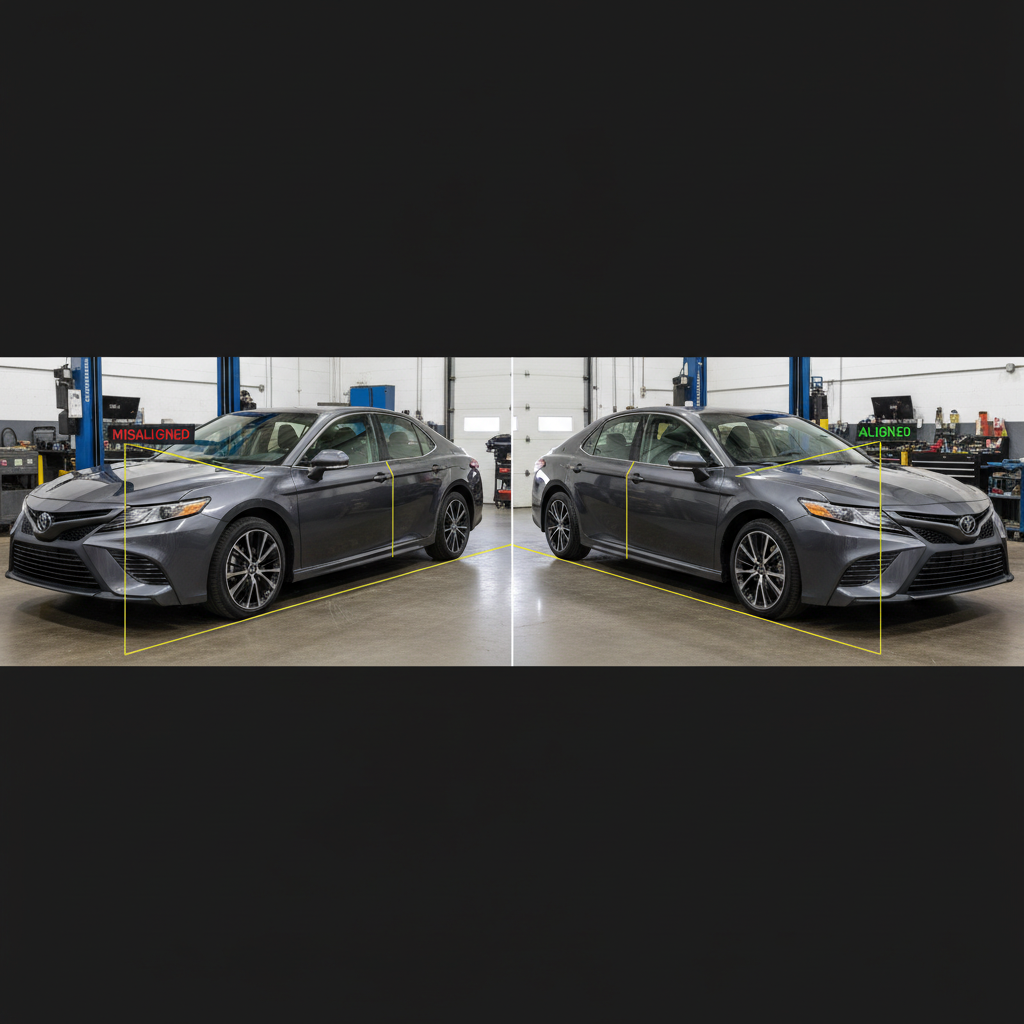
Post-repair alignment gets treated like a finishing detail by some shops. We’d push back on that thinking entirely. Alignment directly affects how your vehicle handles under emergency braking, how evenly your tires wear, and how accurately your steering responds.
Frame damage after an accident in Phoenix, AZ changes the angles your suspension components rely on. Skipping alignment after frame repair means driving a vehicle that handles differently than you expect, and that gap between expectation and reality is where accidents happen.
Explore our full frame repair and alignment services or contact us to schedule an assessment today.
The Hidden Costs of Skipping Professional Frame Repair
Here’s a pattern we see regularly at our shop: a driver gets a quote from a certified collision center, winces at the number, and decides to go with the cheapest option they can find. Three months later, they’re back with more problems than they started with. Sometimes significantly more expensive ones.
Cutting corners on frame damage after an accident isn’t just a safety gamble. It’s often a financial one too.
What You’re Actually Risking
-
Resale value collapse. A vehicle with unresolved or improperly repaired frame damage carries a permanent mark on its vehicle history report. Phoenix buyers are savvy. Dealers will discount an improperly repaired vehicle by thousands, and private buyers will walk away entirely once they see that flag.
-
Failed post-repair alignment. A bent frame that isn’t corrected on a proper computerized alignment rack will pull your vehicle consistently to one side. That means accelerated tire wear, reduced fuel efficiency, and a handling problem that compounds every mile you drive.
-
Safety system failures you won’t notice until you need them. We covered this in the previous section, but it bears repeating here as a cost factor. Recalibrating ADAS sensors after frame work isn’t optional. Shops that skip it aren’t saving you money. They’re shifting liability onto you.
-
Hidden damage that compounds over time. A shop without proper frame measuring equipment may straighten what’s visible and miss what isn’t. Stress fractures and micro-bends worsen with Phoenix’s extreme heat cycles. What starts as a missed bend can become a structural failure after a second impact.
-
Voided warranties and insurance disputes. If a future claim involves your frame and the insurer discovers prior improper repairs, that documentation gap can seriously complicate your coverage.
We’ve been doing this since 1985, and the honest truth is that a cheap repair almost never stays cheap. Get a proper written estimate from a qualified shop before you decide. You can reach us here to schedule an assessment and see exactly what your vehicle needs.
What Professional Frame Repair and Alignment Involves
Here’s what actually happens when you bring a vehicle with frame damage after an accident to a shop that knows what it’s doing.
It’s not just pulling bent metal straight and sending you on your way. That old-school approach misses too much. At Brad’s Deer Valley Collision, the process starts before anyone touches a wrench.
Step One: Diagnostic Scanning Before Anything Else
We run a full diagnostic scan on every vehicle with structural damage. Not because it’s required, but because modern vehicles carry dozens of sensors embedded throughout the frame and body structure. A collision can trigger fault codes that won’t show up as a warning light until you’re already back on the I-17. Catching those codes early shapes the entire repair plan.
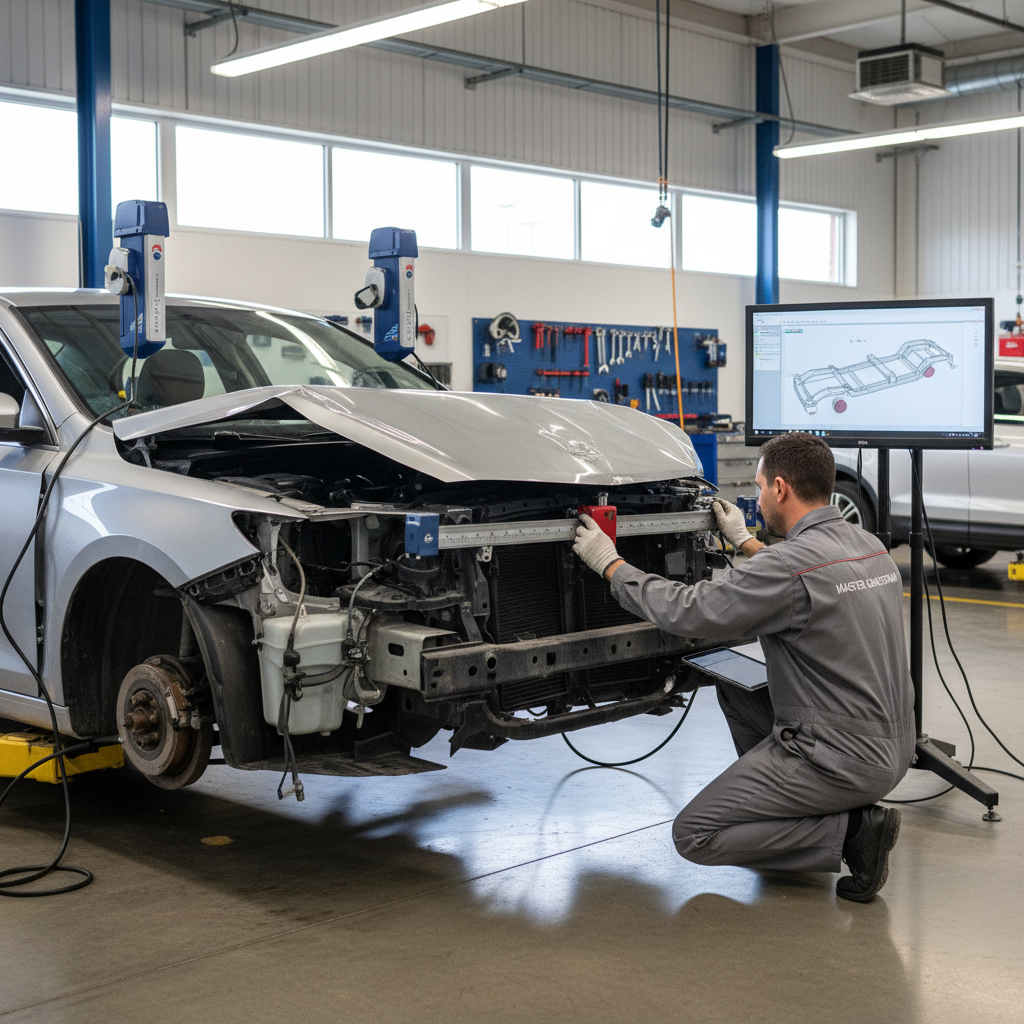
We also do a physical measurement assessment using computerized frame measuring equipment. This tells us exactly how far the frame has shifted from factory specifications, down to the millimeter. Eyeballing it isn’t an option.
Step Two: Frame Straightening on a Certified Pulling System
This is where precision matters most. Our technicians use a hydraulic frame straightening bench with computerized measuring to apply controlled force and pull the frame back to OEM specifications. It’s not guesswork. Every pull is measured against manufacturer data in real time.
A lot of drivers assume frame straightening is a quick job. It usually isn’t, and any shop telling you otherwise is cutting corners somewhere. Properly correcting frame damage after an accident can take several hours or longer depending on the severity, the vehicle’s construction, and whether hidden damage reveals itself mid-repair (which it often does).
You can learn more about the structural design standards modern vehicles are built to from the Insurance Institute for Highway Safety. Understanding those specs helps explain why frame tolerances are measured in millimeters, not rough estimates.
Step Three: Post-Repair Wheel Alignment
Straightening the frame doesn’t automatically mean your wheels are tracking correctly. These are two separate procedures. After structural repairs are complete, the vehicle goes on our alignment rack for a four-wheel alignment check. Skipping this step is one of the most common mistakes in the industry, and it leads directly to uneven tire wear and handling problems that customers blame on the car, not the shop that missed it.
Step Four: ADAS Recalibration
This step gets skipped more than it should across Phoenix, AZ shops. If your vehicle has lane departure warning, automatic emergency braking, or adaptive cruise control, those systems depend on cameras and sensors mounted to specific positions on the frame and body. Any structural repair can shift those positions. Recalibration confirms the systems are reading the road accurately again.
Our full range of repair services includes this recalibration as part of our structural repair process, not as an afterthought.
From the first scan to the final alignment check, professional frame repair is a process. That’s what we’ve been doing since 1985. Contact us to schedule your assessment.
Why Phoenix Drivers Choose Professional Shops Over Insurance Recommendations
One of the most consistent things we hear from drivers who’ve dealt with frame damage after an accident is this: “My insurance company told me to go to this shop.” And honestly, that guidance isn’t always wrong. But it’s worth understanding what’s actually behind that recommendation before you hand over your keys.
Your insurer has a preferred shop list. Those shops have agreed to certain pricing structures and turnaround targets that benefit the insurance company’s workflow. That doesn’t automatically make them bad shops, but it does mean their priorities aren’t always perfectly aligned with yours. You have the legal right to choose your own repair facility in Arizona. No adjuster can force you to use a specific shop, regardless of what they imply.
What to Verify Before You Commit
Not all body shops are equal. Here’s what actually matters when you’re evaluating a shop to handle structural repairs.
-
Certifications: Look for I-CAR and ASE credentials displayed openly, not just mentioned verbally. These aren’t just plaques on a wall; they reflect ongoing training on modern repair standards.
-
Written estimate: Any shop that hesitates to put the scope of work in writing is a red flag. Get it in writing, every time.
-
Warranty coverage: Ask specifically what’s covered and for how long. A shop confident in its work will back it up.
-
OEM vs. aftermarket parts: This matters especially for structural components. Ask the question directly.
We’d also push back on the common advice to “always get three estimates.” That’s not bad guidance, but chasing the lowest number on frame damage is genuinely risky. A low bid usually means something is being skipped. Focus on value and accountability, not just price.
Red flags are real. No written estimate, no warranty, and unusually low bids are the three biggest warning signs in this industry.
At Brad’s Deer Valley Collision, we’ve been repairing vehicles in Phoenix, AZ since 1985. Our I-CAR and ASE certifications, written warranties, and transparent estimates aren’t talking points. They’re how we’ve built a 40-year reputation with Phoenix drivers. You can review our full repair and frame alignment services online, or contact us directly to schedule an assessment and get a written estimate you can actually rely on.
Your Frame Repair Checklist: What to Do Right Now
Stop guessing. If you’ve been in a collision and suspect frame damage after an accident, there are a few things you should do before anything else.
Before You Drop Off Your Vehicle
-
Photograph everything. Walk around the entire vehicle and document all visible damage with your phone. Angles matter. Get close-ups and wide shots.
-
Remove your valuables. Personal items, documents, charging cables. Once the car is in the shop, access gets limited.
-
Write down your questions. Ask about turnaround time, warranty coverage, and whether OEM or aftermarket parts will be used. A shop that hesitates on any of those answers is worth a second look.
What to Ask the Shop
Get a written estimate. Not a verbal ballpark. A written, itemized estimate that spells out what’s being repaired and how. We’ve seen drivers skip this step and regret it. A shop that won’t put it in writing is a shop we’d personally avoid.
Ask about warranty coverage on frame and structural repairs. At Brad’s Deer Valley Collision, we back our work with a strong written warranty, and we think every shop in Phoenix, AZ should be held to that same standard.
You also have the right to choose your own shop, regardless of what your insurance company suggests. That’s not opinion, that’s your legal right as a vehicle owner.
Schedule Your Diagnosis
Don’t wait. Frame issues that seem minor often worsen with regular driving. Our full repair capabilities include computerized frame measurement and safety system recalibration that most smaller shops simply can’t offer.
We’ve been serving Phoenix drivers since 1985. That kind of track record doesn’t happen by cutting corners. Contact us today to schedule your frame damage assessment and get a written estimate you can actually rely on.
Frequently Asked Questions
How do I know if my car has frame damage after an accident?
There are some pretty clear warning signs to watch for: doors or windows that don’t open and close the way they used to, uneven tire wear, your car pulling to one side while driving, or visible gaps between body panels that weren’t there before. That said, some frame damage after an accident isn’t visible at all without the right equipment. At Brad’s Deer Valley Collision in Phoenix, AZ, USA, we offer free frame damage assessments using advanced alignment technology to catch problems you simply can’t see with the naked eye.
Can frame damage be repaired, or will my car be totaled?
In most cases, frame damage after an accident is repairable. The general rule of thumb is that if the repair cost stays under roughly 80% of your vehicle’s value, it makes sense to fix it. Modern frame straightening equipment lets us restore vehicles to their pre-accident condition with real precision. We’ll give you a full estimate when you bring your car in, and we’ll be straight with you about whether repair is the right call or whether it’s more of a total loss situation.
What’s the difference between frame repair and frame alignment?
They’re related but not the same thing. Frame repair is the physical work of straightening or replacing bent structural components using specialized hydraulic equipment. Frame alignment comes after that. It uses precision diagnostic systems to verify that every measurement on the vehicle matches the manufacturer’s original specs. You need both done correctly to make sure your car handles safely and drives the way it should. Skipping the alignment step after a repair is a mistake we see too often from shops cutting corners.
Why does frame damage affect my vehicle’s resale value?
Frame damage history shows up on vehicle history reports, and that tends to make buyers nervous, even after a solid repair. It’s a fair concern. What you can do is make sure the repair is done by a certified shop and documented properly with a written warranty. At Brad’s Deer Valley Collision, we provide exactly that. A well-documented, professionally repaired frame damage after an accident will hold up much better in a resale situation than a repair that was rushed or poorly documented elsewhere in Phoenix, AZ, USA.
How long does professional frame repair take in Phoenix?
It really depends on how severe the damage is. Straightforward frame damage after an accident typically takes one to two weeks to repair. If the structural damage is more extensive, or if we’re waiting on parts and coordinating with your insurance company, it can run three to six weeks. We don’t give you a number just to make you feel good. At Brad’s Deer Valley Collision, we give you a realistic timeline from the start, and we also offer loaner vehicles so you’re not stuck without transportation while your car is in our Phoenix, AZ, USA shop.
Get Your Frame Damage Diagnosed by Professionals You Can Trust
If you’ve been in a collision and suspect frame damage, don’t guess about it. Brad’s Deer Valley Collision has been serving drivers in Phoenix, AZ, USA since 1985, and our I-CAR and ASE certified technicians use advanced alignment technology to give you an honest, detailed written estimate. We work directly with your insurance company and offer flexible scheduling with after-hours drop-off so getting your vehicle fixed doesn’t have to disrupt your day.
Call us today or stop by the shop and let’s take a look at what your vehicle needs. We’re here to help you get back on the road safely.