Frame Alignment in Phoenix, AZ: Why Structural Integrity Matters After a Collision
Frame Alignment in Phoenix, AZ: Why Structural Integrity Matters After a Collision
What Frame Alignment Is and Why It Matters After a Collision
Frame alignment is the process of measuring and correcting a vehicle’s structural frame after a collision so it matches the manufacturer’s original specifications. At Brad’s Deer Valley Collision in Phoenix, AZ, USA, technicians use this process to restore a car’s structural integrity, which affects how the vehicle handles, brakes, and protects occupants in a future crash. We’ve done this work since 1985.
Picture a fender-bender on Loop 101 or a low-speed parking lot collision near a Phoenix shopping center. The bumper looks fine. The paint barely scratched. But the frame underneath can shift by a fraction of an inch, and that’s enough to throw off wheel alignment and crash safety systems designed around exact tolerances.
Here’s where we differ from a lot of general advice. Many drivers assume that if a car “drives straight,” the frame must be fine. In our experience, that assumption misses a lot. Frames can twist or sag without any obvious symptom until months later, when tires wear unevenly or a warning light appears for no clear reason.
A bent or misaligned frame changes how crash forces travel through the vehicle. Airbags, seatbelts, and crumple zones are engineered to work together based on a frame that meets factory dimensions. When that geometry is off, those systems don’t perform the way engineers intended.
This is why a professional assessment matters more than a quick visual check. Anyone weighing repair options can review the full range of collision and structural repair services Brad’s Deer Valley Collision offers to understand what a proper inspection actually involves. For broader guidance on vehicle safety standards, the National Highway Traffic Safety Administration is a useful resource. If you’re uncertain about the extent of damage after any collision, a qualified technician’s assessment is the safer starting point.
Hidden Structural Damage: What You Can’t See
Here’s the problem with judging collision damage by eye.
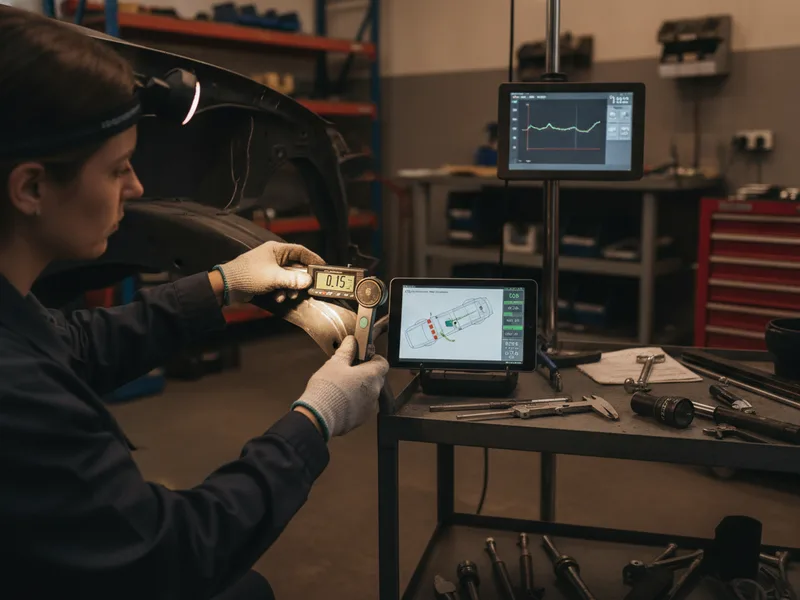
A bumper can look fine while the frame behind it has shifted by a fraction of an inch. That small shift changes how the entire vehicle sits, drives, and handles. Suspension geometry can move out of spec without a single visible dent anywhere on the body panels. Wheels can point in slightly different directions than they did before the accident, and nobody notices until tires start wearing unevenly a few months later.
Micro-bends are the trickiest part of this. A frame doesn’t have to bend in an obvious way to be compromised. Metal can flex under impact and spring back close to its original shape, but “close” isn’t the same as correct. These small deviations often show up only when a shop puts the vehicle on a frame alignment machine and measures it against factory specifications. Without that measurement, a bent frame member can go unnoticed for the life of the vehicle.
Chassis misalignment works the same way. Two frame rails that are off by even a small margin can throw off how weight distributes across the vehicle. Drivers sometimes describe this as the car “feeling different,” which is a fair description of a real structural issue, not a vague complaint.
In our experience, a lot of general advice tells drivers to check for obvious signs like a crooked hood or gaps around the doors. That’s not bad advice, but it’s incomplete. We’ve seen vehicles come through our shop in Phoenix, AZ, USA with perfectly aligned body panels sitting on top of a frame that measured out of spec in three different spots. Visual inspection catches maybe half the picture.
This is why a proper assessment after any collision, even a low-speed one, matters more than most drivers assume. Frame alignment measurement uses fixed reference points built into the vehicle by the manufacturer, and those points don’t lie the way a visual check can. A shop with the right equipment can identify hidden shifts that would otherwise go undiagnosed.
If you’re unsure whether your vehicle needs this kind of evaluation, it’s worth asking a certified technician to check before you assume everything is fine. Anyone with safety concerns about how a vehicle handles after a repair should also have it reviewed by a qualified mechanic or ASE-certified technician before returning to regular driving.
How Frame Misalignment Affects Vehicle Performance and Safety
Pull a car up on the alignment rack after a collision and you can usually spot trouble before the numbers even print out. Tires worn unevenly on one side. A steering wheel that sits slightly off-center even though the driver swears they never touched it. These are the fingerprints a bent frame leaves behind.
A vehicle with a misaligned frame doesn’t drive the way it left the factory. Handling changes are often the first thing drivers notice. The car may pull to one side, wander on straight roads, or feel unstable during turns, especially at highway speeds common on Phoenix, AZ, USA freeways. Tires wear unevenly because the suspension can’t hold proper contact with the road, which shortens tire life and adds unexpected expense down the line.
Braking is another area that suffers. If the frame has shifted, weight distribution across the wheels changes too. That can lead to longer stopping distances or a car that pulls during hard braking, both of which matter in Phoenix traffic where sudden stops happen more often than drivers expect.
The Safety Question That Matters Most
Here’s the part most drivers don’t think about until it’s explained to them. A vehicle’s frame is engineered to manage crash energy in a specific way. Crumple zones, reinforced sections, and mounting points all work together based on precise measurements set by the manufacturer. Once a frame is bent and left uncorrected, that engineered crash response no longer behaves as designed. The National Highway Traffic Safety Administration maintains detailed data on vehicle safety design, and structural integrity is central to how that protection works.
In our experience, some drivers assume a car that “feels fine” after a fender bender doesn’t need a full frame check. We’d push back on that a bit. Handling issues often show up gradually, not immediately, which means a car can feel driveable for weeks while still carrying misalignment that affects crash performance. For questions about how structural damage might affect a specific vehicle, a qualified technician’s inspection gives a clearer picture than guesswork.
The Frame Alignment Process at Brad’s Deer Valley Collision
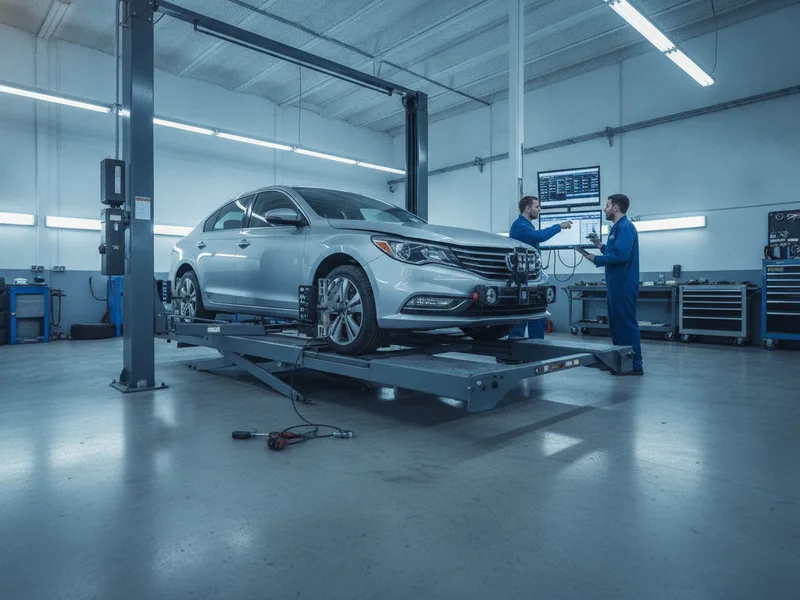
Every vehicle that comes through our doors starts with a full measurement, not a guess. We hook the car up to a computerized measuring system that compares its current dimensions against the manufacturer’s factory specifications, down to fractions of a millimeter. That printout tells us exactly where the frame has moved and by how much, which takes the guesswork out of what could otherwise be a subjective process.
From there, our technicians identify every point of damage, not just the obvious ones near the impact zone. A hit to the front corner can transfer force through the frame rails and show up as a measurement discrepancy near the rear axle. In our experience, shops that only check the damaged area and skip the full-body measurement miss these secondary shifts more often than people realize. That’s one reason we measure the whole structure before we touch the repair.
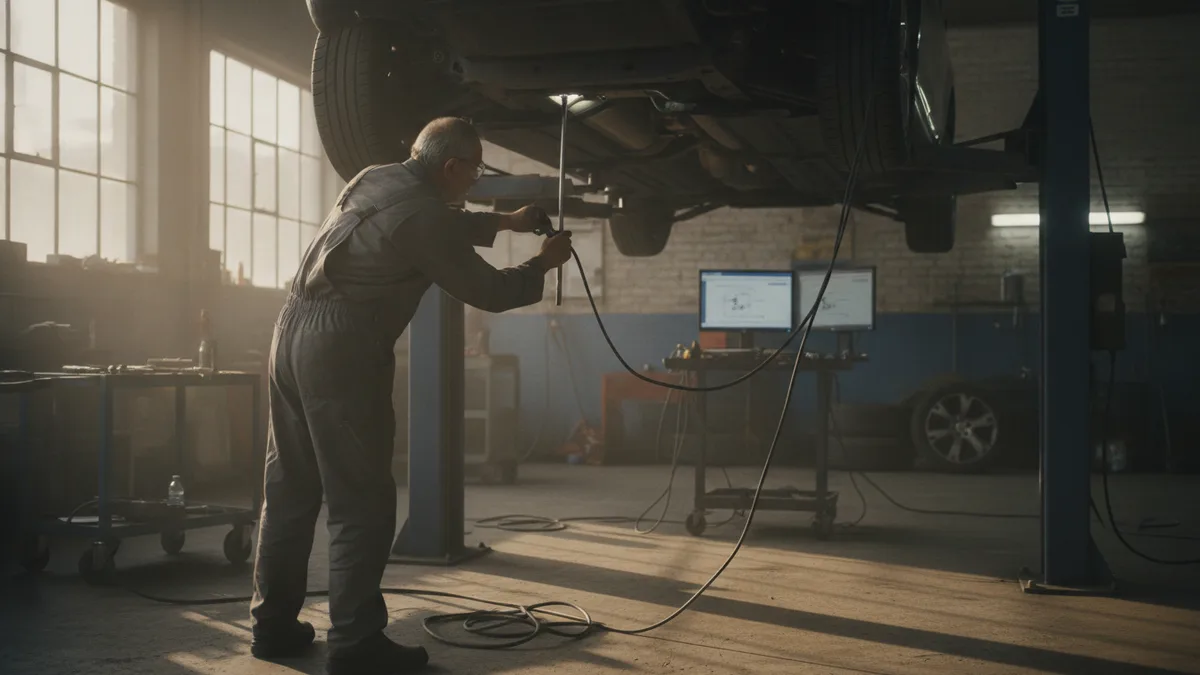
Correction happens on a frame rack using hydraulic pulling systems anchored to the vehicle at multiple points. The equipment applies controlled, directional force to move the metal back toward its original position, and we’re checking the live measurements throughout the pull rather than pulling blind and hoping the numbers land right. This is slow, deliberate work. Rushing a pull to save time tends to create new stress points instead of fixing the original ones.
Verification Before the Car Leaves the Shop
Once the frame is back within specification, we re-measure. Every point gets checked again against the factory data, and if a vehicle has ADAS components like cameras or sensors, those get recalibrated too since frame corrections can throw off their alignment. Many smaller shops skip this recalibration step entirely, which is worth asking about wherever you take your vehicle.
We also do a final road-worthiness check before handoff. Steering response, tire contact, panel gaps, all of it gets a final look.
Phoenix, AZ, USA drivers are welcome to see this process firsthand. We’re set up for walk-ins, and if you’d rather start with questions before bringing your car in, our team ready to answer questions can walk you through what a specific repair might involve. For safety-related concerns beyond frame work, it’s always reasonable to confirm details with a qualified mechanic or your insurance representative as well.
Common Mistakes to Avoid When Choosing a Frame Alignment Shop
We’ve seen plenty of cars roll in after a “repair” somewhere else that never solved the real problem. The pattern is usually the same. A shop patches the visible damage, skips the frame inspection entirely, and sends the car back on the road with a structural issue nobody caught.
Skipping the frame check is the biggest mistake we see. A close second: picking a shop that doesn’t own computerized measuring equipment. Without it, there’s no way to compare a vehicle against factory specifications, and any “alignment” work is really just a guess.
Watch for these red flags before committing to a shop in Phoenix, AZ, USA:
-
No written estimate, or one that’s vague about what work is included
-
No mention of frame measurement equipment or a documented before-and-after printout
-
Reluctance to show I-CAR or ASE certifications
-
No written warranty on the repair
-
Bids that come in unusually low compared to other quotes
Most advice says get one estimate and move on. In our experience, two or three written estimates give a clearer picture of what’s normal for your damage. Ask about OEM versus aftermarket parts too; that choice affects both fit and long-term value.
Insurance Claims and Frame Alignment: Your Rights in Phoenix
Here’s a misconception we hear constantly. A driver assumes their insurance company gets to pick the repair shop. Not true. In Arizona, you have the legal right to choose whoever fixes your vehicle, regardless of which shop your insurer suggests or which “preferred” list they hand you.
Insurers can recommend a shop through a direct repair program, and that’s fine as a starting point. But the final decision belongs to you. If an adjuster pushes back when you mention a specific shop, that’s worth questioning, not accepting at face value.
Coverage for structural correction work is typically included under collision coverage, though policy language and deductibles vary. Ask your adjuster directly how frame work gets scoped and documented, and request that any measurement report be included in the claim file.
In our experience, drivers who stay involved in the estimate process, asking questions and requesting documentation, tend to end up with more thorough repairs than those who let the process run on autopilot. For specific coverage questions, a conversation with your insurance agent or a licensed adjuster is the right move. Brad’s Deer Valley Collision, serving Phoenix, AZ, USA, helps customers understand the claims paperwork every step of the way.
Why Brad’s Deer Valley Collision Is Your Frame Alignment Partner
Walk into any shop and ask to see their frame measuring equipment. The answer tells you a lot. We’ve been doing this work in Phoenix, AZ, USA since 1985, and that kind of tenure only happens when the frame alignment holds up over years of Arizona driving, not just past the final inspection.
Our technicians carry I-CAR and ASE certifications, and we keep those credentials posted at the front counter because customers deserve to verify who’s actually working on their car. We’ve also invested in ADAS recalibration technology, something a lot of smaller shops skip entirely. In our experience, that gap is where a surprising number of comeback repairs originate; a frame can measure out fine while the sensors behind it are still reading the world wrong.
Every vehicle gets a full computerized measurement against factory specifications before any repair work starts. No guesswork, no eyeballing a fender and calling it good. We back our repairs with a written warranty, and we’re upfront about turnaround expectations from the first estimate.
Short version: we treat frame work like the safety issue it is.
If you’d like more background on our shop’s history and the team behind the repairs, our shop history and technician credentials page lays it out in detail. For anything involving your specific vehicle’s safety systems, it’s worth confirming recalibration requirements with a qualified technician before you get back on the road.
Stop by our Phoenix location for a frame assessment, or call ahead to arrange a convenient drop-off time.
Frequently Asked Questions
How do I know if my vehicle needs frame alignment after a collision?
Frame alignment isn’t something you can confirm just by looking at your car after a wreck. A shop needs to put it on a frame measuring machine to see what’s actually going on underneath the sheet metal. Watch for warning signs like tires wearing unevenly, the car pulling to one side, or the steering feeling off, even after what seemed like a small fender bender. Brad’s Deer Valley Collision runs a full structural check on vehicles in Phoenix, AZ, so hidden damage doesn’t get missed.
What’s the difference between frame repair and frame alignment?
Frame repair and frame alignment are two different steps in fixing a damaged vehicle. Repair means straightening bent metal or replacing broken frame sections, usually with hydraulic pulling equipment. Alignment is the measuring and adjusting process that gets the frame back to the manufacturer’s original specs. A lot of collisions in Phoenix, AZ call for both, since you can’t properly align a frame that’s still bent out of shape from the impact.
How much does frame alignment cost in Phoenix?
Frame alignment costs in Phoenix, AZ depend on how bad the damage is, what kind of vehicle you drive, and how many corrections the frame actually needs. A minor tweak might run a few hundred dollars, while a car with serious structural damage can climb into the thousands. Brad’s Deer Valley Collision gives written estimates after inspecting the vehicle in person, and it’s a good idea to get a couple of quotes before you decide who does the work.
Will my insurance cover frame alignment?
Frame alignment is usually covered under collision insurance once your claim gets approved, since most insurers treat it as part of repairing accident damage. What you pay out of pocket still depends on your deductible and the specifics of your policy, so it’s worth confirming the details with your insurance agent directly. You also have the right to pick your own repair shop, no matter what the insurance company suggests. Brad’s Deer Valley Collision works with insurers on paperwork and claims for customers in Phoenix, AZ.
How long does frame alignment take?
Frame alignment time depends on how much damage there is to correct. A simple measurement check with minor adjustments might only take a few hours in the shop. If the frame took a harder hit, or there’s other collision repair happening at the same time, the job can stretch into several days. Brad’s Deer Valley Collision gives customers a realistic timeframe once they’ve looked at the vehicle in person at the Phoenix, AZ shop.
Get Your Frame Checked Before It Becomes a Bigger Problem
A frame that’s even slightly out of alignment can affect how your vehicle handles, wears its tires, and holds up in a future collision. If your car’s been in an accident, or it just doesn’t drive quite right, the team at Brad’s Deer Valley Collision in Phoenix, AZ can take a look and tell you plainly what’s going on underneath.
Stop by for a free inspection and written estimate; we’ll walk you through the findings so you can decide what makes sense for your situation. For anything involving your safety on the road, it’s worth getting a second set of trained eyes on the problem. Take a look at our full range of collision repair and frame alignment services to see how we approach the work, or check out our reviews on Google to hear from folks we’ve helped around Phoenix.