Frame Alignment After Collision: Why Precision Frame Straightening Is Critical in Phoenix, AZ
Frame Alignment After Collision: Why Precision Frame Straightening Is Critical in Phoenix, AZ
What Happens to Your Frame During a Collision
You’re sitting at a red light on Tatum Boulevard, and a distracted driver rear-ends you at 35 mph. The impact feels significant, but your car still drives. The body damage looks manageable. So you figure it’s probably fine, right? That assumption is exactly where things go wrong.
Your vehicle’s frame absorbs collision forces that your body panels never could. During a moderate to severe impact, those forces travel through the steel in ways that aren’t always visible from the outside. The frame can bend, twist, compress, or develop what technicians call a “diamond condition,” where the entire structure shifts out of square. Each collision type produces different damage patterns.
How Different Impacts Affect Your Frame
A rear-end hit typically pushes the rear frame rails forward, compressing the trunk area and sometimes buckling the floor pan. A front-end collision does the opposite, collapsing the front crush zones and potentially pushing the firewall rearward. Side impacts are deceptive. They often look worse cosmetically but may spare the main frame rails while still damaging the rocker panels and floor cross-members that keep the cabin rigid.
Rollover accidents are the hardest to assess. The frame can sustain stress at multiple points that no visual inspection will catch.
Here’s where I’ll push back on a common assumption: a lot of drivers believe that if the airbags didn’t deploy, the frame is probably okay. That’s not accurate. Insurance Institute for Highway Safety research consistently shows that structural deformation can occur at impact speeds well below airbag deployment thresholds. The frame may be compromised even when the interior feels untouched.
Proper frame alignment after collision starts with understanding what actually happened to your vehicle’s structure, not just what it looks like. In Phoenix, AZ, where summer heat already stresses metal and roads aren’t always forgiving, hidden frame damage left uncorrected compounds over time. It affects your tire wear, your steering, and ultimately your safety.
This is why an accurate structural assessment isn’t optional. It’s the starting point for every legitimate repair.
Why Frame Alignment After Collision Is Non-Negotiable for Safety
Skipping frame alignment is gambling with your life.
That might sound dramatic, but after working on collision repairs in Phoenix since 1985, we’ve seen what happens when drivers assume their vehicle is “good enough” after a hit. The damage you can’t see is almost always worse than what you can. And a frame that’s even a fraction of an inch out of spec affects nearly every system your car relies on to keep you safe.
What a Misaligned Frame Actually Does to Your Vehicle
The frame is the foundation. Every other system, your suspension, steering, braking, and even your tires, is engineered to work within precise tolerances that assume a straight, properly aligned frame underneath. When that foundation shifts, everything built on top of it starts working against itself.
Here’s what you’ll typically see after a collision where frame alignment was skipped or done poorly:
-
Steering pull: Your vehicle constantly drifts to one side, forcing you to overcorrect on Phoenix freeways like the I-17 or Loop 101.
-
Uneven tire wear: Tires wear out faster on one side, costing you hundreds in premature replacements.
-
Suspension stress: Components take on loads they weren’t designed to handle, accelerating wear on shocks, struts, and control arms.
-
Compromised crash protection: A misaligned frame won’t absorb or redirect impact energy the way engineers designed it to in the next collision.
That last point is the one most people underestimate. Your vehicle’s crash test ratings are built around a structurally intact frame. Proper frame alignment after collision isn’t just about how your car drives today. It’s about whether it protects you the next time someone runs a red light.
A lot of advice out there focuses on cosmetic repairs first. We’d push back on that. Structural integrity should always come before paint and panels, full stop.
There’s also the NHTSA’s guidance on vehicle structural safety to consider. Federal safety standards assume a properly maintained frame. A misaligned one puts you outside those parameters.
Phoenix drivers deal with high-speed highway traffic, intense heat that stresses vehicle components, and road conditions that don’t forgive mechanical problems. You need your frame straight. No shortcuts. Contact us to schedule a frame assessment and get a straight answer about where your vehicle stands.
The Frame Alignment Process: What Professional Technicians Do
Most drivers assume frame straightening is basically just bending metal back into place. It’s not. The process is methodical, measurement-driven, and a lot more involved than most people expect.
Here’s how a properly trained technician approaches frame alignment after collision repair in Phoenix, AZ.
Step 1: Damage Assessment Before Anything Else
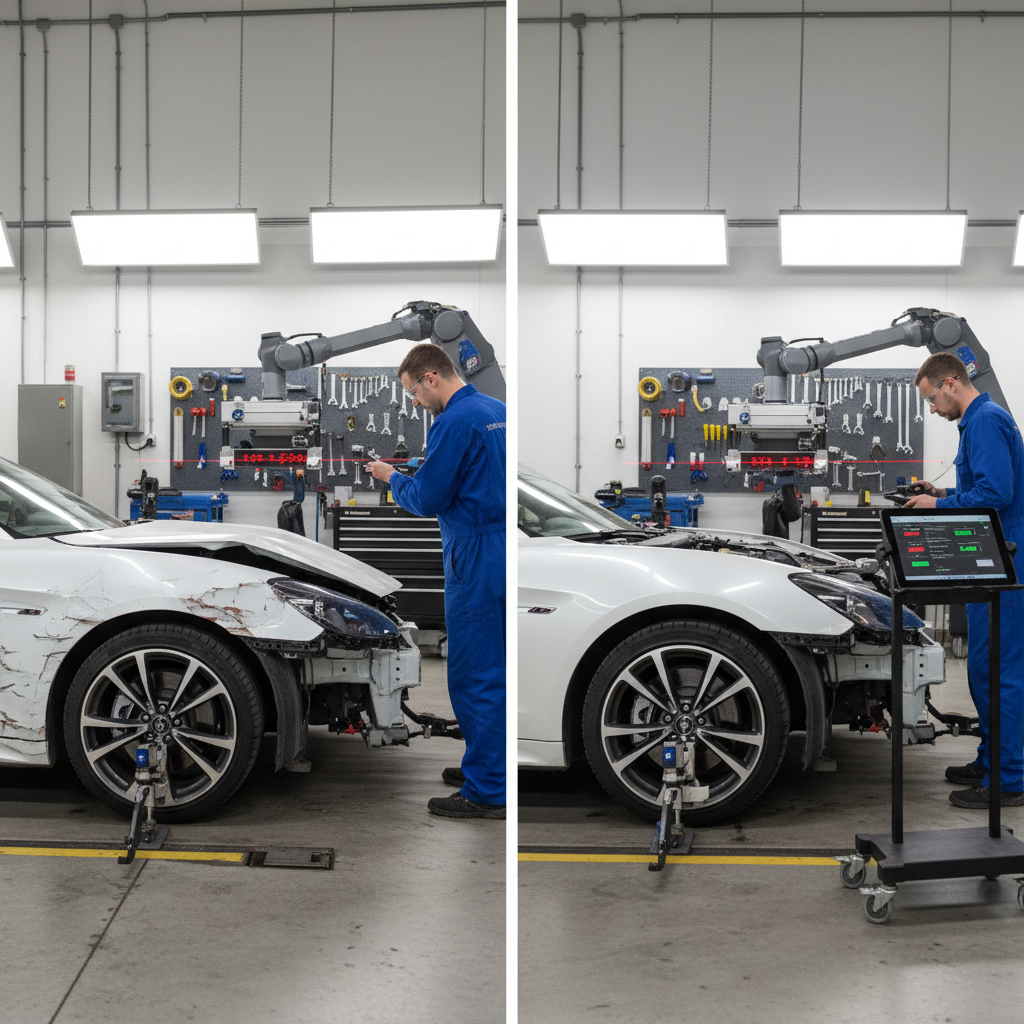
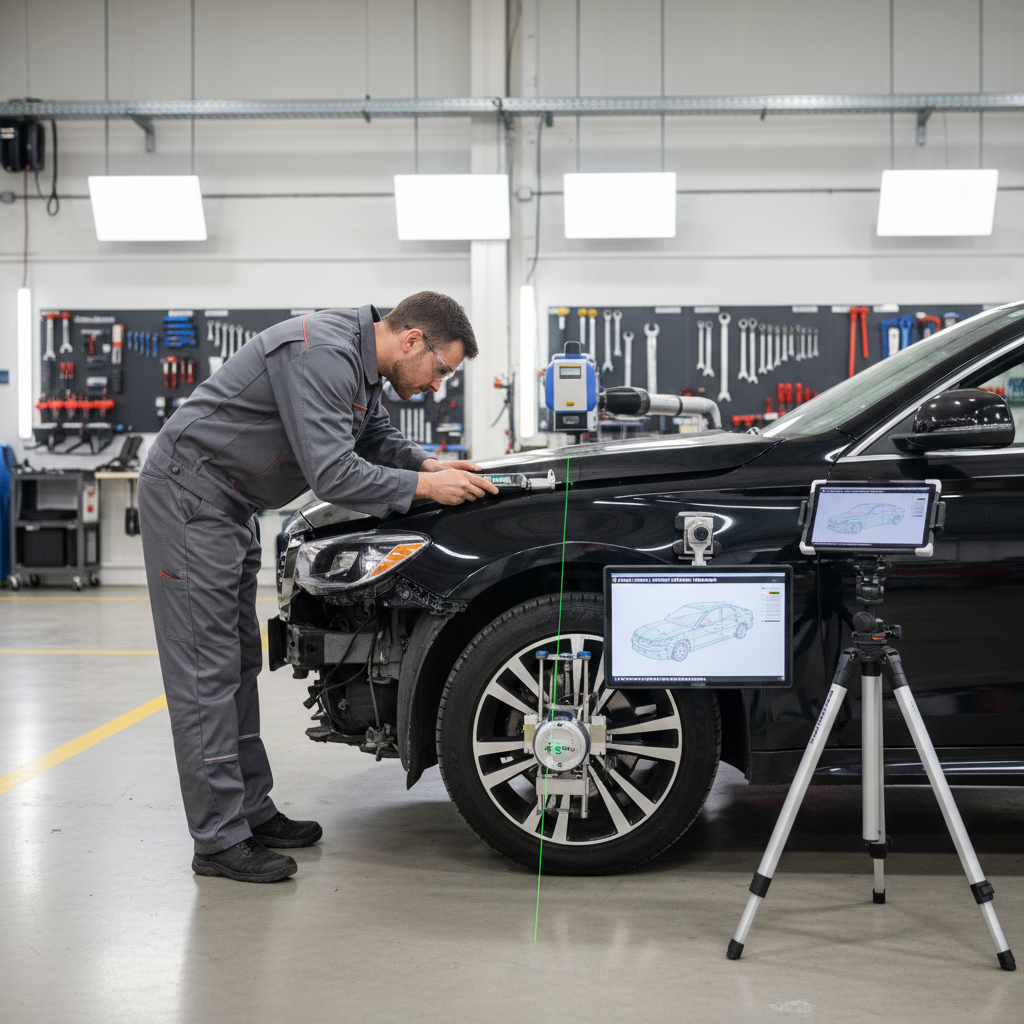
The work starts before anyone touches a wrench. A certified technician does a full visual inspection first, looking at suspension geometry, panel gaps, door alignment, and any structural components that took direct force. Then the vehicle goes onto a computerized measuring system. This is where hidden damage shows up. Measurements get compared against the manufacturer’s factory specifications for that exact make and model, not a generic baseline.
Honestly, a lot of shops skip this depth of assessment on smaller collisions. That’s a mistake we’ve seen cause problems down the road.
Step 2: Setting Up on the Frame Rack
Once the damage map is clear, the vehicle gets anchored onto a frame straightening rack using pinch weld clamps or structural mounting points. This setup matters more than most people realize. Poor anchoring can actually introduce new stress points into the frame while trying to correct the existing ones. The vehicle has to be completely stable before any pulling or straightening begins.
At Brad’s Deer Valley Collision, we’ve been doing this since 1985, and proper setup is something we never cut corners on.
Step 3: Hydraulic Pulling and Straightening
Technicians use hydraulic pulling towers to apply controlled, directional force to the damaged areas. The goal is to reverse the exact path the impact energy traveled through the frame. This isn’t guesswork. I-CAR-trained technicians follow specific pull sequences based on where the damage originated and how it spread through the structure.
Step 4: Continuous Measurement and Verification
Straightening and measuring happen in cycles, not all at once. After each pull, technicians re-measure against factory specs. They’re looking for tolerances measured in millimeters. Small numbers, big consequences.
Final verification includes a four-wheel alignment check to confirm the suspension geometry matches manufacturer specs. If your vehicle has advanced driver assistance systems, those sensors need recalibration after any structural repair.
Want to see what this process looks like for your vehicle? Contact us to schedule a full assessment, or visit our services page to learn more about what we offer.
5 Critical Mistakes That Happen When Frame Alignment Is Skipped or Rushed
Shortcuts cost more. That’s the simplest way to put it.
We’ve been fixing collision damage in Phoenix, AZ since 1985, and the most expensive repairs we see aren’t from the original accident. They’re from frame alignment after collision that was done poorly, or skipped entirely. Here’s what actually goes wrong.
-
Hidden Structural Damage Gets Ignored
A rushed inspection misses the damage you can’t see. Crumple zones, internal bracing, and secondary frame rails don’t always show obvious deformation. Without a full measurement analysis on a frame straightening bench, those compromised sections stay in your vehicle, quietly failing over time.
-
Weight Distribution Gets Thrown Off
Your vehicle is engineered to carry load across a very specific geometry. Even a small frame deviation changes how weight transfers during braking and cornering. Tires wear unevenly. Handling gets unpredictable. Drivers often blame the tires, but the frame is the real problem.
-
Safety Sensors Get Misaligned
This one doesn’t get enough attention. Modern vehicles use radar, cameras, and ultrasonic sensors mounted to structural components. If the frame is even slightly off, those sensors point in the wrong direction. Your automatic braking and lane assist systems may appear to work while delivering dangerously inaccurate readings. The NHTSA has documented how ADAS performance depends directly on precise component positioning.
-
Post-Repair Alignment Gets Skipped
Frame work without a follow-up wheel alignment is an incomplete job. Period. The two are connected, and doing one without the other leaves handling compromised.
-
Long-Term Durability Suffers
Stress concentrates at misaligned joints. Over months of Phoenix driving, heat cycles and road vibration accelerate fatigue in those weak spots, creating repair bills that dwarf what a proper frame alignment after collision would have cost.
Don’t let a low estimate from a shop cutting corners become your most expensive decision. Contact us for an honest assessment from technicians who won’t rush the work.
How to Verify Your Vehicle’s Frame Is Properly Aligned After Repair
Most drivers accept a repaired car back without asking a single question. That’s a mistake we see play out constantly in this business.
After frame alignment after collision work is completed, you have every right to verify the results before you drive off the lot. A reputable shop will welcome the scrutiny. One that gets defensive is showing you something important about how they operate.
What to Request Before You Leave
-
A printed alignment printout. Modern frame straightening equipment generates before-and-after measurement data. Ask for it. If the shop can’t produce one, the work may not have been done on a proper 3D measuring system.
-
Written documentation of any ADAS recalibration. If your vehicle has lane assist, automatic braking, or a backup camera, those systems need recalibration after frame work. Get confirmation in writing.
-
A copy of the repair order listing every procedure performed, including the specific frame straightening operations.
-
Warranty terms in writing. No written warranty is a red flag, full stop.
What to Check During the Test Drive
Drive it yourself before signing anything. The car should track straight on a flat road without you steering into it. Pulling consistently to one side signals a problem. You shouldn’t feel vibration through the steering wheel at highway speeds, and doors should close with the same resistance they had before the accident.
Contrary to popular advice, a quick parking lot loop isn’t enough. Take it on the freeway. Phoenix’s I-17 works fine for this.
If anything feels off, say something immediately. You can also visit Brad’s Deer Valley Collision for a second opinion from a shop that’s been doing this right since 1985.
Why Brad’s Deer Valley Collision Prioritizes Frame Precision Over Quick Fixes
We don’t do quick fixes. That’s a choice, not a limitation.
Since 1985, Brad’s Deer Valley Collision has built its reputation in Phoenix, AZ on doing frame alignment after collision the right way, every single time. That means no skipped measurements, no guesswork, and no cutting corners to get a car out the door faster. Our technicians hold I-CAR and ASE certifications, and we invest in advanced computerized measuring systems because your safety depends on accuracy, not speed.
A lot of shops will tell you your frame “looks good.” That’s not good enough. Structural alignment has to be verified with precise measurements against factory specs, documented, and confirmed before your vehicle leaves our facility. We follow that process on every repair, no exceptions.
Every frame repair we perform is backed by a written warranty. We hear customers tell us all the time that other shops quoted lower prices but couldn’t produce a written guarantee. Honestly, an estimate without a warranty isn’t worth the paper it’s printed on. Don’t accept verbal assurances on structural work.
We also handle ADAS recalibration after frame repairs, which many smaller shops in Phoenix skip entirely. If your vehicle has lane assist, automatic braking, or blind-spot monitoring, those systems need to be recalibrated after any structural correction. Skipping that step creates real safety exposure.
Learn more about our history and certifications, explore our full range of collision repair services, or contact us today to schedule your frame alignment assessment. We’ll give you straight answers and a written estimate you can count on.
Frequently Asked Questions
How do I know if my vehicle’s frame is misaligned after a collision?
There are a few things to watch for after an accident. Your vehicle might pull to one side while driving, your tires may show uneven wear, or your doors and body panels might not line up the way they used to. You might also notice the car feels loose or unstable in turns. That said, don’t rely on feel alone. Bring your vehicle into Brad’s Deer Valley Collision here in Phoenix, AZ, USA, and we’ll use precision equipment to check for frame alignment after collision damage you might not notice on your own.
Can frame alignment damage be detected in a visual inspection alone?
Honestly, no. A lot of frame damage hides underneath the vehicle where you’d never think to look. The human eye simply can’t catch misalignment that’s off by just a few millimeters, but those small deviations absolutely affect how your vehicle handles and wears over time. Our technicians use laser measurement systems and specialized alignment racks to find exactly what’s going on. If you’ve had a collision in Phoenix, AZ, USA, a professional assessment is the only way to know for sure what you’re dealing with.
How long does frame alignment typically take at a Phoenix collision repair shop?
It really depends on how much damage there is. A minor frame adjustment might only take a few hours, while more serious structural damage could mean your vehicle is with us for several days. We won’t give you a generic estimate over the phone because every collision is different. When you bring your vehicle to Brad’s Deer Valley Collision, we’ll do a full assessment and give you an honest, accurate turnaround time before any work begins. No surprises.
Will my insurance cover frame alignment after a collision?
Yes, in most cases it will. Frame alignment after collision repair is considered a necessary structural fix to bring your vehicle back to its pre-accident condition, and collision coverage is designed to handle exactly that. If you’re unsure about your policy, don’t stress about it. We handle insurance coordination directly at Brad’s Deer Valley Collision, so you’re not stuck making calls back and forth between us and your insurer. We’ll work through the claim process with you from start to finish.
What’s the difference between frame alignment and wheel alignment?
These are two separate things, and both matter after a collision. Frame alignment corrects the structural foundation of your vehicle, whether that’s a unibody or a traditional chassis. Wheel alignment adjusts the angles of your tires so they sit correctly on the road. Here’s the key thing: if your frame is still off, any wheel alignment done on top of it won’t be accurate. Frame alignment has to come first. At our shop in Phoenix, AZ, USA, we make sure the structure is right before anything else gets adjusted.
Get Your Frame Checked at Brad’s Deer Valley Collision
If you’ve been in a collision anywhere in Phoenix, AZ, USA, don’t wait to find out if your frame took a hit. A damaged frame affects how your car handles, how it protects you, and how safe you are every time you get behind the wheel. Our I-CAR certified technicians use precision alignment equipment to assess and restore your vehicle’s structural integrity the right way.
Stop by our shop in Deer Valley or give us a call today for a free frame alignment estimate. We’re ready to take a look and give you a straight answer about what your car actually needs.