Fleet Vehicle Damage Repair in Phoenix, AZ: Keeping Your Business on the Road
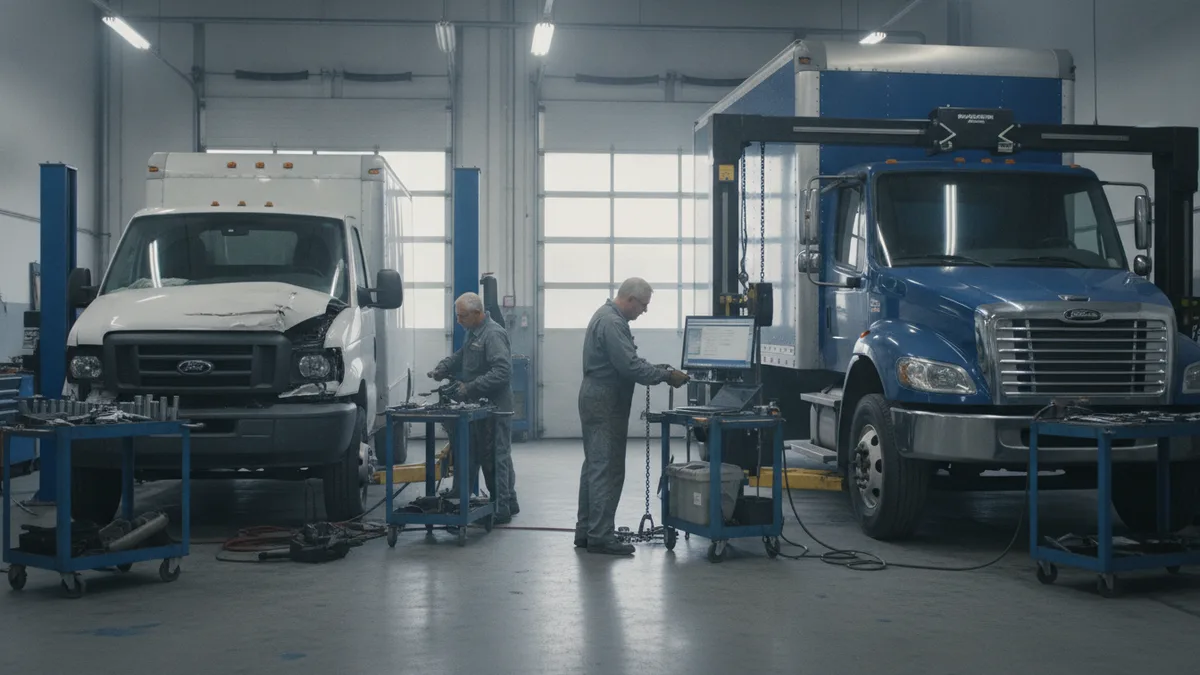
Fleet Vehicle Damage Repair in Phoenix, AZ: Keeping Your Business on the Road
Why Fleet Vehicle Damage Repair Demands a Specialized Approach
Fleet vehicle damage repair means restoring commercial trucks, vans, or company cars while keeping business operations moving, and it requires different scheduling, parts sourcing, and communication than a single personal vehicle repair. Brad’s Deer Valley Collision handles this type of work for businesses across Phoenix, AZ, USA, coordinating multiple vehicles at once so a fleet manager isn’t left juggling separate repair timelines. Brad’s Deer Valley Collision has been repairing vehicles since 1985.
Picture a landscaping company with three trucks running daily routes. One gets sideswiped in a parking lot. A shop that treats it like a one-off personal repair might quote a timeline that ignores the fact that two other trucks still need routine maintenance scheduled around it. Fleet work isn’t just collision repair scaled up; it involves managing multiple vehicles, multiple drivers, and often multiple insurance policies at the same time.
In our experience, shops that don’t regularly handle commercial accounts underestimate how much coordination this takes. Business owners researching fleet collision repair options for Phoenix businesses should ask specifically about capacity for multiple vehicles, not just general collision repair experience. The sections ahead cover downtime costs, damage patterns, and insurance claims specific to fleet operations.
The Hidden Cost of Fleet Downtime in Phoenix
Every day a fleet vehicle sits in a repair bay, it’s costing money somewhere. Missed deliveries. Rescheduled service calls. A driver sitting idle while a van waits on a part. Phoenix, AZ, USA businesses that rely on trucks, vans, or company cars often feel this pinch harder than they expect, especially during peak seasons when routes are already tight.
Downtime isn’t just about the repair itself.
It’s the customer who books a competitor because your technician couldn’t make the appointment. It’s the contract that gets flagged for a late delivery. It’s overtime pay for other drivers covering extra routes. These costs rarely show up on the repair invoice, but they show up somewhere on your books.
Speed matters, but it can’t come at the expense of quality. A rushed repair that fails an alignment check or leaves a bumper mount slightly off can put that vehicle right back in the shop weeks later, and now you’re paying for downtime twice. In our experience, fleet operators who chase the fastest estimate over the most thorough one often end up spending more over the life of the vehicle. That’s a tradeoff worth thinking through before signing off on any repair.
Fleet vehicle damage repair works best when the shop treats turnaround time as seriously as workmanship. That means realistic timelines communicated upfront, not optimistic guesses meant to win the job. It also means having the parts and equipment on hand to avoid the kind of delays that stretch a two-day repair into two weeks.
What Fleet Downtime Actually Affects
-
Route coverage and delivery schedules
-
Customer service commitments and response times
-
Driver scheduling and overtime costs
-
Vehicle resale value if repairs are rushed or incomplete
Phoenix’s growing commercial traffic means more fleet vehicles on the road and more exposure to collision risk. For local business owners, understanding the real cost of downtime is the first step toward choosing a repair partner who treats speed and quality as equally important. Anything less puts the business behind before the vehicle even leaves the lot.
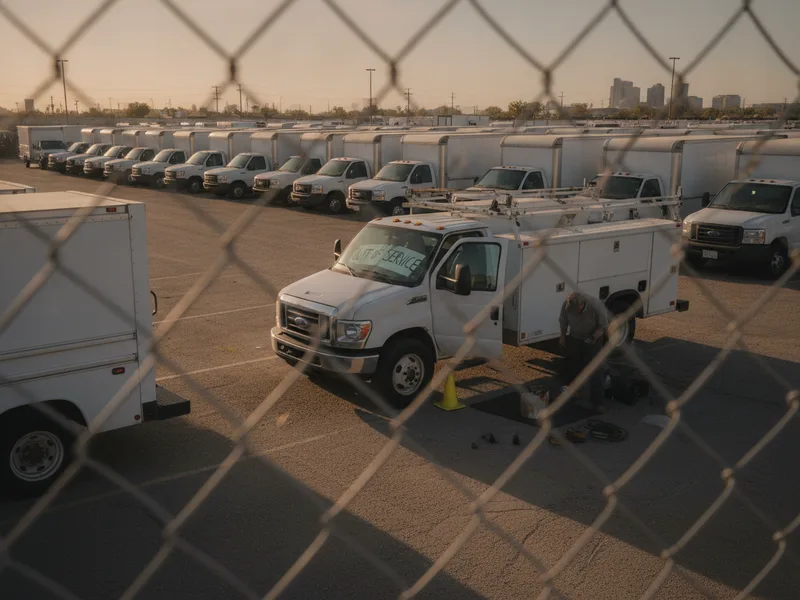
What Separates a Fleet-Ready Repair Shop From the Rest
Ask a shop how many fleet vehicles they’ve handled this month, and you’ll learn a lot from the pause before they answer. Fleet work exposes gaps fast. A shop that’s fine with one sedan at a time often struggles when three commercial vans show up needing coordinated repair and paint matching on a deadline.
Credentials matter here.
Look for I-CAR and ASE certifications, and don’t just take a shop’s word for it. Ask to see them. These certifications indicate that technicians have trained on current repair procedures, which change as vehicle materials and safety systems evolve. The I-CAR and ASE websites both let you verify credentials directly, and it’s a step worth taking before committing a whole fleet to one shop.
Equipment That Actually Matters
Frame alignment technology is another dividing line. Commercial vans and trucks carry different weight distributions and frame structures than passenger cars, and repairing them without proper alignment equipment can leave a vehicle handling incorrectly even after the bodywork looks clean. A shop equipped for fleet vehicle damage repair should have frame alignment systems calibrated for the range of vehicles in a typical Phoenix, AZ, USA commercial fleet, not just consumer sedans.
ADAS recalibration is the one most smaller shops skip. Modern vehicles, including a growing share of fleet trucks and vans, rely on cameras and sensors for lane departure warnings, automatic braking, and parking assistance. After collision repair, those systems often need recalibration to function as intended. In our experience, this step gets treated as optional by shops without the equipment, and that’s a mistake worth asking about directly before dropping off a vehicle.
Beyond equipment, fleet-ready shops operate differently day to day. They communicate proactively, often with photo updates and text notifications rather than making a fleet manager call in for status checks. They understand how to batch estimates for multiple vehicles without slowing down the paperwork. And they’re upfront about turnaround expectations instead of vague promises.
None of this replaces due diligence on your end. Get written estimates, ask about OEM versus aftermarket parts, and confirm warranty coverage before signing off on repairs. A shop confident in its work will answer these questions without hesitation.
Common Fleet Damage Scenarios and Repair Timelines
Not all fleet damage is created equal.
Some jobs take a couple of days. Others take weeks. Knowing the difference helps you plan routes, reassign drivers, and set realistic expectations with your own customers instead of guessing.
Rear-End Collisions
These are the most common calls we get from fleet managers in Phoenix, AZ, USA. Damage usually hits the bumper, trunk or tailgate, and sometimes the frame rail behind it. A straightforward bumper and taillight repair might wrap up in a few days. Add in frame damage or a hatch that won’t close right, and you’re looking at a longer stay while parts get ordered and alignment gets rechecked.
Sideswipe Damage
Sideswipes are deceptive. The visible dent might be minor, but the door, quarter panel, and sometimes the rocker panel underneath can all need attention. Repair time depends heavily on whether panels can be repaired or need full replacement. In our experience, shops that quote sideswipe jobs too fast are usually skipping the inspection of hidden structural components.
Curb Strikes and Frame Misalignment
Curb strikes look cosmetic from the outside but often bend suspension components or throw the frame out of alignment. This is one area where we push back on the assumption that a “quick look” tells the whole story. Frame alignment work requires measurement equipment, not a visual guess, and that step alone can add real time to the schedule.
ADAS Sensor Damage
Modern fleet vehicles are loaded with sensors for lane departure, collision warning, and parking assist. Even a minor bumper repair can knock a sensor out of calibration. Skipping recalibration is a mistake we see smaller shops make regularly, mostly because they don’t have the equipment for it. Recalibration adds time, but driving a fleet vehicle with a miscalibrated safety system carries its own risk.
Timelines shift based on parts availability, the extent of hidden damage, and whether OEM or aftermarket components are used. If you’re trying to figure out where a specific vehicle falls on that spectrum, our team can walk through it with you directly through our damage assessment and repair consultation process. A clear, honest timeline upfront beats a vague promise every time.
Insurance Coordination and Fleet Claim Management
Adjusters tend to treat a five-vehicle fender bender very differently than a single-car claim. More vehicles means more paperwork, more approvals, and more chances for a claim to stall somewhere between the estimate and the repair order. Fleet operators who’ve been through this once usually start asking better questions the second time around.
Fleet insurance claims involve moving parts that personal auto claims don’t. A single incident might touch multiple policies, multiple vehicles, and sometimes multiple drivers, each with their own statement to give. Deductibles can also work differently across a commercial policy than they do on a personal one, so it’s worth confirming those details directly with your insurance provider or agent before repairs begin.
Brad’s Deer Valley Collision works directly with insurance companies as part of our regular process, and we participate in direct repair programs that some carriers use to speed up approvals. That said, Phoenix, AZ, USA business owners should know they generally have the right to choose their own repair shop, regardless of which shop an insurer suggests first. Most guides gloss over this point, but in our experience it matters more for fleet accounts than for individual drivers, since a shop unfamiliar with commercial vehicles can slow a claim down without meaning to.
Good documentation moves a claim along faster than almost anything else. That means photographs of the damage, an accurate written estimate, and clear records for each vehicle involved if more than one was hit. We handle the estimate and documentation on our end, but we still recommend fleet managers keep their own file for each incident, including driver statements and photos taken at the scene.
None of this replaces advice from your insurance agent or a licensed claims professional, especially when deductible amounts or coverage limits are in question. Our role is to make the repair side of that process easier to manage, not to make coverage decisions on a business’s behalf.
Getting Your Fleet Back on Schedule: What to Expect
Here’s the process, plain and simple.
Intake starts with a walk-around inspection. We document every dent, scratch, and structural concern before anything gets touched. If you’re dropping off multiple vehicles, we recommend photographing each one yourself beforehand too. It protects you and it speeds up our paperwork.
Next comes assessment. Our technicians pull the vehicle apart enough to see what’s underneath the surface damage, because a bumper that looks like a quick fix sometimes hides frame issues. We write up a detailed estimate and walk you through it, no vague line items, no guessing games.
Once you approve the estimate, parts sourcing begins. This is where fleet work gets tricky. OEM parts for a specific commercial van trim can take longer to arrive than aftermarket alternatives, and we’ll talk through that tradeoff with you directly rather than deciding for you.
Repair and Communication
During the repair itself, you’ll get updates instead of silence. Text messages, photos, and calls at key milestones mean you’re not calling us to ask what’s going on. Most shops treat updates as optional. We don’t.
If your vehicle needs ADAS recalibration after a collision, that step gets built into the timeline upfront, not discovered at the last minute.
Hand-Off
Final inspection happens before you ever see the vehicle again. We check paint match, panel alignment, and function of anything that was repaired or replaced. Then we walk through the warranty coverage with you so there’s no confusion later.
For fleet operators managing multiple vehicles across Phoenix, AZ, USA, knowing what happens at each stage makes it easier to plan around the repair instead of just waiting on a phone call. That’s the goal: fewer surprises, more control over your schedule.
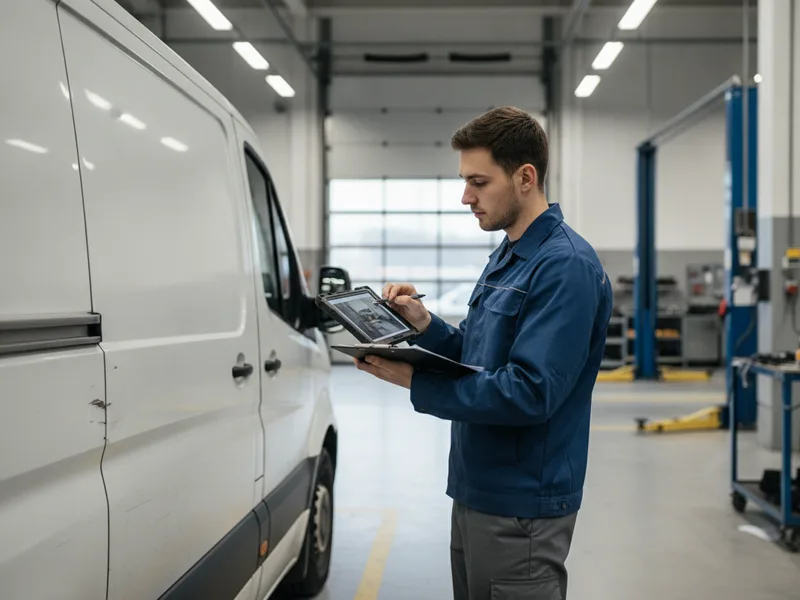
Why Phoenix Fleet Operators Choose Brad’s Deer Valley Collision
Fleet managers tend to notice the same thing after a few repair cycles: the shops that last are the ones that treat every vehicle like it matters to a paycheck, not just a bumper. That’s the standard we’ve worked from since 1985.
Four decades in Phoenix, AZ, USA teaches a shop things a brochure can’t. We’ve watched fleets grow from two trucks to twenty, and we’ve adjusted our scheduling and parts sourcing to match. Our technicians hold I-CAR and ASE certifications, and we’ve invested in ADAS recalibration equipment that a lot of smaller shops still skip, which matters more each year as commercial vehicles add more sensors and cameras. You can read more about our history and credentials on our background and certification details page.
Some fleet operators assume a bigger regional chain automatically means faster turnaround. In our experience, that’s not always true. Smaller, established shops with real fleet experience often communicate better and adapt faster than a corporate location juggling a rigid intake system.
What sets us apart isn’t one single thing. It’s the written warranty backing our work, the certifications we display rather than bury in a drawer, and a front counter that treats your time like it’s worth something. Walk-ins are welcome if you’d rather see the shop before committing a fleet to it.
If a company vehicle needs fleet vehicle damage repair, the sooner we take a look, the sooner you’ll have a realistic timeline instead of a guess. Contact Brad’s Deer Valley Collision to schedule a damage assessment for your fleet.
Frequently Asked Questions
How long does it typically take to repair a fleet vehicle?
Timelines depend a lot on what’s actually wrong with the vehicle. A minor fender or bumper repair might be done in 3 to 5 days, but anything involving the frame or structural parts can stretch to 2 or 3 weeks, sometimes longer depending on parts availability. Brad’s Deer Valley Collision gives fleet operators in Phoenix, AZ a realistic estimate upfront so you can plan around it instead of guessing.
Can I choose my own repair shop for fleet vehicle damage?
Yes, you can. Insurance companies might suggest a shop, but the decision on where your fleet vehicle damage repair happens is legally yours to make. Some fleet managers stick with shops in a direct repair program because it can speed up the claims paperwork, but you’re never required to use one. If you have questions about your specific policy rights, it’s worth checking with your insurance agent directly.
What certifications should a fleet repair shop have?
Check for I-CAR and ASE certifications first. These show that technicians have been trained on current repair standards and keep that training up as vehicles change. For fleets running newer vehicles with sensors and cameras, ADAS recalibration capability matters too, since those safety systems need to be checked and reset properly after collision repair work in Phoenix, AZ or anywhere else.
Do you offer loaner vehicles or shuttle service for fleet repairs?
We know downtime costs fleet operators money, so keeping vehicles moving matters. Give Brad’s Deer Valley Collision a call to talk through what’s available for your situation, whether that’s a loaner, a shuttle ride back to your Phoenix, AZ location, or an after-hours drop-off so your drivers aren’t waiting around. Availability can shift depending on scheduling, so it’s best to ask when you book your repair.
What warranty do you provide on fleet collision repairs?
A solid shop backs up its work with a written warranty covering both parts and labor, and that’s exactly what Brad’s Deer Valley Collision provides on every fleet repair. The specifics can vary by the type of repair and parts used, so we recommend asking about your particular warranty details when you come in for an estimate. Having that paperwork in hand gives fleet managers something concrete to point to down the road.
Get Your Fleet Back on the Road
Every day a work truck or van sits in the shop is a day it’s not making you money. Brad’s Deer Valley Collision handles fleet repair for businesses across Phoenix, AZ, USA, and we know how to work with your insurance while keeping you in the loop on realistic timelines. Stop by our shop for a damage assessment, or call us first if you’d rather talk through your fleet’s needs over the phone.
Ready to get started? Visit our fleet repair services page for Phoenix businesses to see how we approach multi-vehicle jobs and insurance coordination. And if you want to hear from other local businesses we’ve worked with, you can check out our reviews on Google before you decide.