Fleet Downtime Reduction in Phoenix, AZ: How Commercial Vehicle Body Repair Services Keep Your Business Moving
Fleet Downtime Reduction in Phoenix, AZ: How Commercial Vehicle Body Repair Services Keep Your Business Moving
Why Fleet Downtime Costs You More Than Repairs Alone
A damaged fleet vehicle sitting idle costs Phoenix, AZ, USA businesses far more than the collision repair invoice suggests. Every day a work van or delivery truck stays off the road, that business loses productivity, misses scheduled jobs, and risks disappointing customers who expected a timely arrival. Brad’s Deer Valley Collision built its fleet auto body repair process around getting vehicles back in service quickly, because for commercial operators, the clock matters as much as the dent.
Brad’s Deer Valley Collision has served Phoenix since 1985.
Picture a landscaping company with one damaged truck out of five. That truck represents twenty percent of daily capacity gone, routes reshuffled, and crews doubling up in vehicles that weren’t built for extra passengers. Multiply that across a week of parts delays or scheduling backlogs at a shop unfamiliar with commercial accounts, and the real cost shows up in canceled contracts, not the repair bill.
In our experience, most fleet managers focus on repair price alone. That’s a mistake. Turnaround time and communication usually matter more to the bottom line than shaving a few dollars off an estimate. Our fleet repair services for Phoenix businesses are structured around that reality, not just the dent in front of us.
Priority Scheduling and Coordinated Multi-Vehicle Repairs
A single damaged work truck is one problem. Three or four damaged vehicles from the same fleet is a scheduling puzzle, and most walk-in collision centers aren’t built to solve it. Standard shops book cars one at a time, in the order they arrive. That works fine for individual customers, but it leaves fleet managers waiting weeks as vehicles trickle through the queue instead of coming back online together.
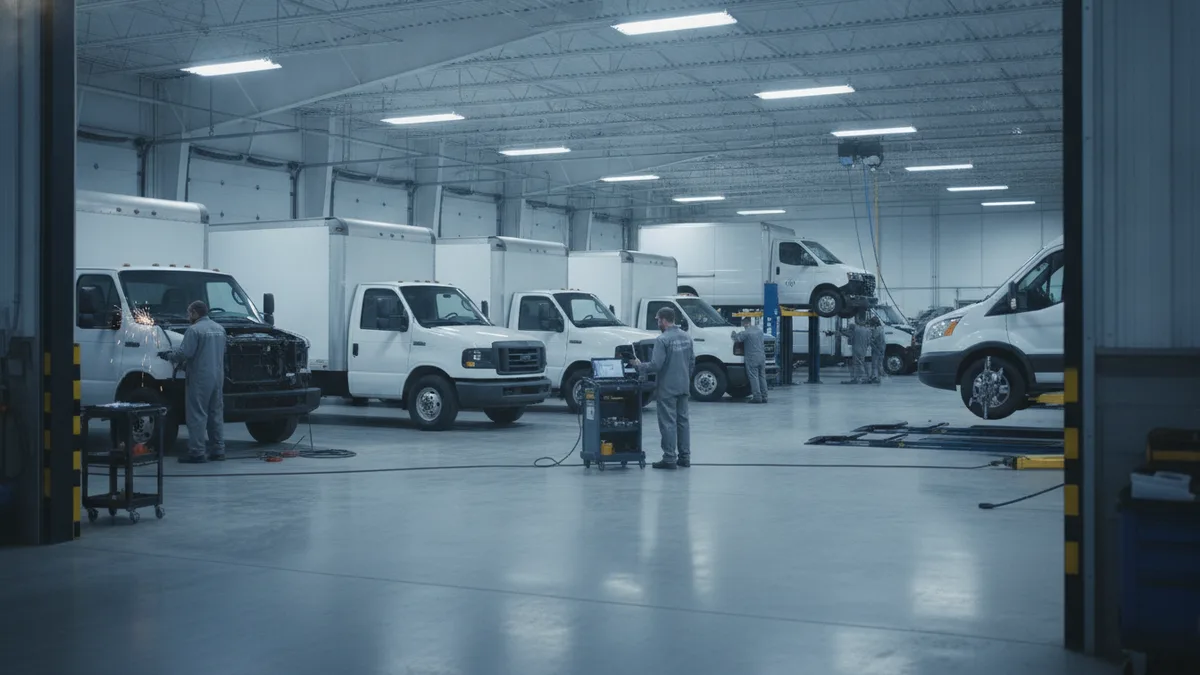
Fleet auto body repair works differently. Shops that handle commercial accounts regularly set aside dedicated appointment blocks so multiple vehicles from the same business can move through the shop in a coordinated sequence rather than competing with retail customers for the next open bay. Technicians can work on one vehicle while parts arrive for another, and estimates get written in batches instead of piecemeal. For a Phoenix, AZ, USA business running four or five vehicles, that kind of sequencing can mean the difference between losing one van for a stretch and losing the whole fleet’s capacity at once.
Here’s the part most fleet managers don’t ask about until it bites them: ADAS recalibration. Modern trucks and vans loaded with sensors and cameras often need recalibration after body work, and plenty of smaller shops skip it or don’t have the equipment. That’s a real gap. In our experience, fleet owners assume any shop that fixes bumpers can handle their newer vehicles, but that’s not always true.
Before committing a fleet to any shop, it’s worth confirming a few basics. Ask whether technicians carry I-CAR or ASE certification, and ask for it in writing along with the warranty terms. Get two or three written estimates for comparison, and clarify upfront whether repairs will use OEM or aftermarket parts, since that affects both cost and turnaround. A shop that won’t put an estimate or warranty in writing is a red flag, full stop.
Convenience matters too. Shuttle service, after-hours drop-off, and proactive text updates with photos keep a fleet office informed without someone having to call and check. Brad’s Deer Valley Collision has coordinated repair scheduling for Phoenix-area businesses since 1985, and that kind of long-running experience tends to show up in how smoothly multi-vehicle jobs actually move through the shop.
Direct Insurance Coordination and Faster Claims Processing
Fleet managers who’ve dealt with insurance claims a few times start noticing a pattern: the delay is rarely the repair itself. It’s the paperwork sitting on someone’s desk waiting for approval, or an adjuster requesting a second look at damage that was already documented. That gap between “estimate submitted” and “work authorized” is where fleet downtime quietly piles up.
Shops that participate in direct repair programs skip a lot of that back-and-forth. Because the insurer already has a working relationship with the shop, estimates move through the approval chain faster and there’s less need for a separate adjuster inspection before repairs can start. For a Phoenix, AZ, USA business running several vehicles under one commercial policy, that difference adds up across every claim filed over a year.
Accurate estimating matters just as much as the relationship itself. An estimate that misses hidden frame damage or underestimates parts needs almost always triggers a supplemental claim, which means another round of review and another delay before work can resume. In our experience, shops that slow down at the estimate stage actually finish jobs faster overall, because they’re not stopping mid-repair to request additional authorization.
Businesses also retain the right to choose their own repair shop regardless of which provider their insurer suggests first. That’s worth confirming directly with your insurance representative, since coverage terms and network requirements vary by policy.
Fleet vehicles rarely have the luxury of sitting around for a claims process to sort itself out. Setting up a fleet account ahead of time, before an accident happens, means the estimate and documentation process is already familiar when a vehicle does need repair. Phoenix businesses interested in that kind of setup can schedule a fleet account consultation to get priority scheduling and claims coordination in place before it’s needed.
What Sets Dedicated Fleet Shops Apart From Standard Collision Centers
Not every body shop is set up to handle fleet work. That’s not a knock on general collision centers, they do fine work on single vehicles. But a fleet account needs something different, and the gap shows up the moment a business brings in three or four vehicles at once.
A standard shop runs one repair bay at a time per vehicle, with one technician assigned start to finish. A dedicated fleet operation runs parallel workflows instead. Techs work different stages simultaneously across multiple vehicles: one gets frame measurement while another moves through paint prep, another sits in final inspection. That structure is what lets a shop turn around several fleet vehicles in roughly the same window a single vehicle would normally take.
Account Management Makes the Difference
General collision centers typically don’t assign a dedicated point of contact for repeat commercial customers. Fleet-focused shops do. That means one person who already knows your vehicle history, your preferred parts sourcing, and your documentation needs, instead of a fleet manager explaining the same account details to a different service writer every visit.
In our experience, this single point of contact matters more than most business owners expect going in. It cuts down on repeated phone calls and missed details, which is where a lot of avoidable delay actually happens.
Technology Gaps Are Real
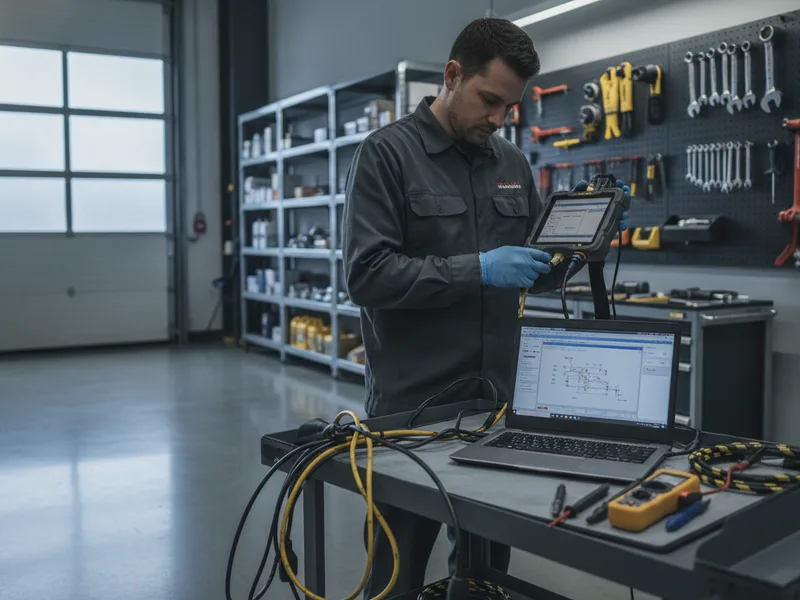
Here’s something worth saying plainly: plenty of smaller shops still skip ADAS recalibration, or they outsource it and add days to the timeline. Modern fleet vehicles, especially newer vans and trucks, often carry advanced driver assistance systems that need recalibration after body repair work. Skipping that step, or doing it inconsistently, isn’t a minor detail. It affects how safety systems perform on the road afterward.
A shop equipped to handle recalibration in-house keeps that process on the same timeline as the rest of the repair instead of adding a separate appointment somewhere else. For businesses running fleets in Phoenix, AZ, USA, that capability alone can be the difference between a vehicle back on the road and one sitting for an extra week waiting on a third-party appointment.
Ask any shop directly about their ADAS recalibration process and their I-CAR or ASE certifications before committing. It’s a fair question, and a shop confident in its capabilities should answer it without hesitation.
Planning Ahead: How Phoenix Businesses Protect Against Unexpected Fleet Damage
The businesses that handle fleet damage best are the ones who never had to think hard about it. They already knew who to call. Everyone else spends the first hour after an accident scrolling through search results, trying to figure out which shop can actually help, and that hour adds up fast when a vehicle is sitting on the shoulder of a Phoenix roadway.
Setting up a fleet account before anything happens changes the whole timeline. A pre-established relationship means a shop already has your vehicle specs, your insurance details, and your preferred contact on file. When damage occurs, someone makes one call instead of five.
A few steps make this easier to manage:
-
Open a fleet account with a shop that handles commercial vehicles regularly, not just occasionally.
-
Ask about pre-authorized estimate thresholds so minor repairs don’t stall while waiting on approval chains.
-
Keep a short vendor contact list (towing, glass, the collision shop) accessible to every driver, not just the office manager.
-
Confirm in advance how the shop communicates updates, whether that’s text, photos, or a direct line to a service advisor.
In our experience, a lot of fleet managers wait until they’re managing three vehicles down at once before they think about any of this. That’s the wrong time to be vetting a shop’s credentials or reading reviews for the first time. Brad’s Deer Valley Collision has built its reputation in Phoenix, AZ, USA since 1985, and businesses can review the shop’s background, certifications, and local history before they ever need a fleet repair. Setting that relationship up ahead of time doesn’t prevent accidents. It just means one less decision to make when a vehicle is already off the road.
The Real Cost of Choosing the Wrong Repair Partner
Here’s what actually happens when a Phoenix fleet manager picks a shop based on whoever answers the phone first.
The vehicle goes in, and then nothing. No timeline. No call back. Three days turn into three weeks because the shop is juggling walk-in customers ahead of a commercial account they don’t have a real system for managing. That’s not bad luck. That’s a structural problem with picking a general-purpose shop for fleet auto body repair work.
Watch for these warning signs before you sign off on a repair:
-
No written timeline. If a shop won’t put an estimated completion date on paper, they’re not managing your job, they’re guessing.
-
Vague warranty language. “We stand behind our work” isn’t a warranty. Ask for the specific terms in writing.
-
No fleet claim experience. Shops that mainly handle single-vehicle retail work often stumble on multi-vehicle documentation, and that stumbling shows up as delays in your claim, not theirs.
-
Missing equipment for commercial vehicles. Frame alignment and ADAS recalibration on a work van isn’t the same as on a sedan. Ask directly what equipment they use.
Most fleet managers assume any I-CAR certified shop can handle commercial volume. In our experience, that’s not always true. Certification tells you about repair quality; it doesn’t tell you whether a shop can coordinate five vehicles in the shop at once without losing track of paperwork.
Verify credentials. Ask about OEM versus aftermarket parts. Get two or three written estimates before committing. Brad’s Deer Valley Collision has handled Phoenix, AZ, USA collision repair since 1985, and walk-ins are always welcome if you want to see how a fleet-ready shop actually operates before damage happens.
Frequently Asked Questions
How quickly can a dedicated fleet repair shop get multiple damaged vehicles back on the road?
Fleet repair shops in Phoenix, AZ that specialize in this kind of work generally move faster than a typical body shop because they run several repairs at once and lock in insurance approvals ahead of time. Something like 30-50% faster turnaround is common, though your actual timeline depends on how bad the damage is and whether parts are sitting on a shelf or on backorder.
Do I have to use my insurance company’s recommended body shop for fleet damage?
No, you don’t. Phoenix fleet owners have the legal right to pick whatever repair shop they trust, no matter what list your insurer hands you. Going with a shop that already has direct repair program status and solid insurer relationships usually speeds up the claim, but the choice is always yours. If you’re unsure of your rights here, it’s worth a quick call to your insurance agent to confirm.
What should I do immediately after a multi-vehicle collision incident?
Take photos of every vehicle before anything gets moved, that’s step one. After that, call your fleet auto body repair shop to get on their schedule, report the incident to your insurance company, and grab any valuables left in the cabs. Looping in a fleet-focused shop early means they can walk you through the claim steps and hold repair slots while things are still fresh.
Can a standard collision center handle fleet repairs as well as a dedicated fleet shop?
A standard collision center in Phoenix can absolutely fix a single vehicle just fine. Where they tend to fall short is juggling five or ten vehicles at once; without dedicated scheduling systems and an account manager coordinating with your insurer, repairs stack up and communication gets messy. Shops built around fleet work handle that volume with a lot less back-and-forth on your end.
What certifications and technology should I look for in a fleet repair partner?
Look for technicians holding I-CAR and ASE certifications, plus a shop equipped with modern diagnostic scanners, frame alignment machines, and ADAS recalibration tools. Commercial vehicles often carry sensors and safety systems that a generic shop isn’t set up to test or recalibrate correctly. Asking to see these credentials during a shop visit is a reasonable step before committing your fleet’s repairs to anyone.
Get Your Fleet Back on the Road
A pileup or multi-vehicle incident can pull several trucks or vans out of service at once, and that kind of downtime adds up fast for any Phoenix business that depends on its vehicles. Brad’s Deer Valley Collision works with local fleet managers to get damage assessed quickly and repairs scheduled with as little disruption to daily routes as possible.
Stop by our shop or give us a call to talk through what happened and set up a fleet repair plan built around your business’s schedule. We can also walk you through what a dedicated fleet account looks like for companies operating in Phoenix, AZ, USA. Curious what other local business owners think of working with us? Check out our reviews on Google before you reach out.