
Fender Replacement vs. Repair in Phoenix, AZ: Cost, Timeline, and When to Choose Each
Fender Replacement vs. Repair in Phoenix, AZ: Cost, Timeline, and When to Choose Each
The Quick Answer: Repair or Replace Your Fender?
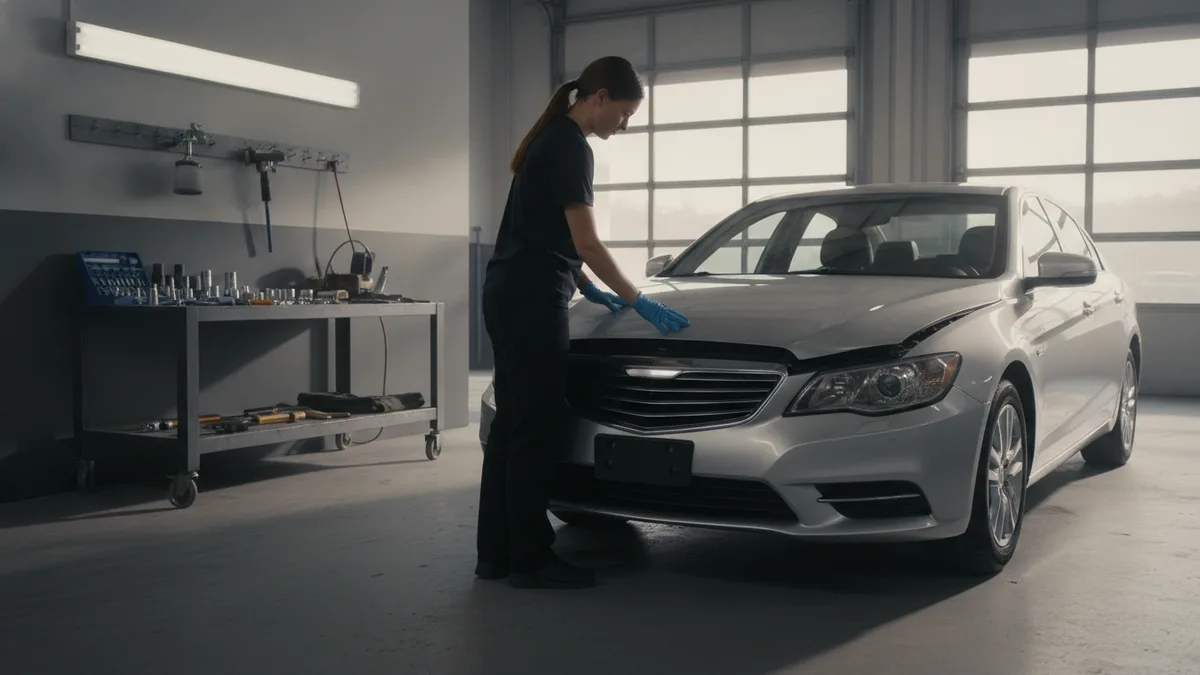
Fender repair typically makes sense when damage is limited to surface dents, minor creases, or scratches that haven’t compromised the metal’s structural integrity; replacement becomes the better call when there’s cracking, rust, misalignment, or damage extending into the frame or wheel well. At Brad’s Deer Valley Collision in Phoenix, AZ, USA, our technicians assess each fender individually rather than defaulting to one option, since the right choice depends on the vehicle, the damage, and how the fender sits against surrounding panels. Brad’s Deer Valley Collision has served Phoenix drivers since 1985.
Picture a Phoenix driver who backed into a curb near a shopping center and dented the front fender. If the paint hasn’t cracked and the metal flexes back into shape, repair is often the practical route. But if that same impact pushed the fender into the headlight housing or bent the mounting brackets, replacement usually saves you from recurring problems down the road. In our experience, some shops push replacement too quickly because it’s a simpler, faster job to bill, even when a skilled repair would hold up just fine. You can review the full range of fender repair and collision options through our collision and fender repair services page before deciding which path fits your situation.
Cost Comparison: Fender Repair vs. Replacement in Phoenix
Money talks. Here’s the straight version of what fender work actually costs in Phoenix, AZ, USA, without the vague ranges some shops throw out just to get you in the door.
Fender repair is almost always the cheaper path. A shop is paying for labor time, filler, and paint, not a new part. Minor dent repair with paintless dent techniques can land on the lower end of the spectrum, while a fender with a crease that needs filler, sanding, priming, and blending into the adjacent panel will cost more because of the extra labor hours involved. Paint work is usually the biggest labor line item on a repair job, especially when the technician has to blend the new paint into the door or hood so it doesn’t look patchy in Phoenix’s harsh sunlight.
Replacement costs more up front because you’re paying for the part itself on top of labor. Here’s where OEM versus aftermarket makes a real difference. An OEM fender straight from the manufacturer costs more but matches factory specs exactly. Aftermarket parts are cheaper and can work fine on older vehicles, but fit and metal gauge vary by manufacturer, and we’ve seen aftermarket panels that need extra labor just to line up correctly. That labor time eats into the savings you thought you were getting.
Labor rates in the Phoenix market vary shop to shop based on certifications, equipment, and overhead. A shop investing in ADAS recalibration equipment, which many newer vehicles require after any front-end body work, typically bills differently than a shop without that capability. If your fender houses a sensor for lane departure or parking assist, factor that recalibration into your total cost. It’s a step some smaller shops skip entirely, and that’s a mistake in our experience; skipping it can leave safety systems misaligned.
What Drives the Final Number
-
Paint matching: Metallic and pearl finishes take longer to blend and cost more than solid colors.
-
Frame alignment: If the impact pushed into the frame rail, alignment work adds significant cost beyond the fender itself.
-
Parts availability: OEM parts on backorder can extend cost and timeline together.
-
Hidden damage: What looks like a simple dent sometimes reveals cracked mounting brackets once the panel comes off.
Most reputable shops in Phoenix, AZ, USA will give you a written estimate before touching your car. We’d encourage getting two or three of those estimates for comparison. If a number seems unusually low with no explanation, that’s worth a second look before you commit.
When Repair Is Your Best Option
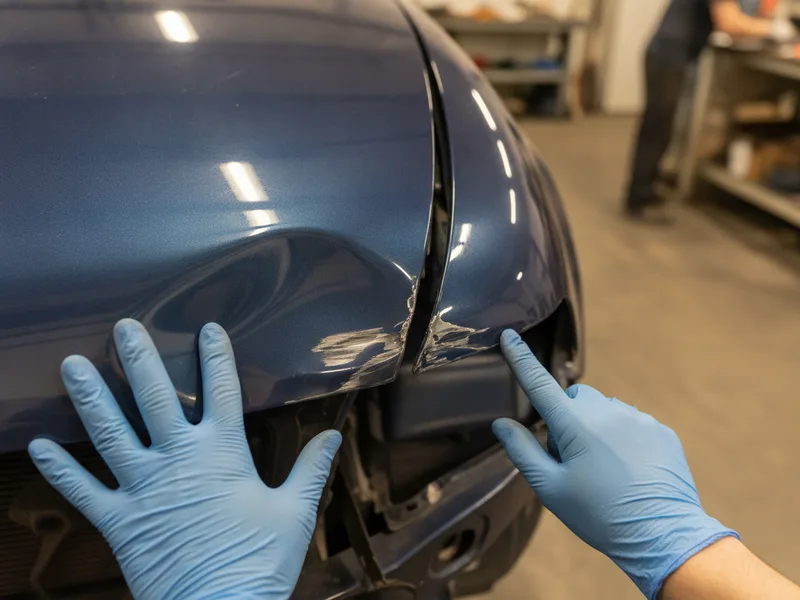
Most of the fenders that roll into our shop from Phoenix, AZ, USA drivers don’t need a new panel at all. They need someone who knows how to work metal back into shape. A shopping cart ding, a low-speed parking lot bump, a hailstorm crease along the top edge; these are the bread-and-butter jobs where repair holds up just as well as replacement, often better on the wallet.
Good Candidates for Repair
Repair makes sense when the damage stays on the surface and the fender’s structure underneath is still sound. Look for:
-
Small to medium dents without sharp creases
-
Minor dings from doors, carts, or debris
-
Surface scratches that haven’t cut through to bare metal
-
Panels that are still properly aligned with the door and hood gaps
If the metal flexes back without cracking and there’s no rust hiding underneath, a technician can usually restore it to a clean, paint-ready surface.
The Methods We Use
Paintless dent repair, or PDR, works well on shallow dents where the paint itself is undamaged. A technician accesses the back of the panel and massages the metal back to its original contour, no filler, no repaint needed in some cases. Traditional dent repair comes into play when paint has cracked or the dent is deeper. That involves careful metal shaping, followed by filler, priming, and color-matched paint work.
Done right, both methods last. We’ve seen plenty of PDR and traditional repairs still holding their shape years later with no bubbling, no cracking, no telltale ripple under the paint. The idea that repaired fenders are somehow “lesser” than new ones doesn’t match what we see on the lift. A properly repaired panel that retains its factory metal is often a stronger, more original piece of the car than a bolted-on aftermarket replacement.
Cost matters too. Repair almost always keeps labor and material costs lower than replacement, since there’s no new part to source or paint from scratch. For Phoenix drivers weighing their options, a repair-first approach is worth a serious look whenever the damage is limited and the fender’s bones are still good. A quick inspection can tell you which category your damage falls into, and that’s a conversation worth having before assuming the worst.
When Replacement Makes Sense
Some fenders are done. Not damaged, done.
Deep structural bending is the first sign. When a fender has been pushed back far enough to affect the wheel well, the headlight mounting, or the surrounding frame components, hammering it back into shape stops being a repair and starts being a gamble. Metal that’s been stretched past a certain point loses its memory. It won’t hold its form the way it did before the impact, no matter how skilled the technician is.
Rust and corrosion change the equation too. Phoenix, AZ, USA doesn’t deal with road salt the way colder climates do, but rust still shows up, usually from chipped paint that’s gone unaddressed for years or from previous bodywork that wasn’t sealed properly. Once corrosion has eaten into the metal, filling and sanding it just buries a problem that keeps spreading underneath the surface. That fender needs to come off.
Previous poor repairs are another red flag we see constantly. A fender that’s already been patched with heavy filler, mismatched paint, or hardware that doesn’t line up correctly is often not worth a second attempt at repair. In our experience, layering a new repair over an old bad one almost always costs more in labor than starting fresh with a new panel.
The Cost Crossover Point
Here’s the practical test. If a technician estimates that labor hours to straighten, fill, sand, and blend a damaged fender will approach what a replacement panel and paint job would run, replacement is usually the smarter move. You’re not just paying for the extra hours; you’re also accepting more risk that the repair won’t hold up as well over time.
A fender is salvageable if the metal is intact, the panel lines still fit, and there’s no rust hiding underneath. If any of those aren’t true, replacement tends to be the more economical choice in the long run, even though the upfront number looks bigger.
The only way to know for sure which category your fender falls into is to have it looked at in person. You can request a free damage assessment and fender repair estimate in Phoenix and get a straight answer before deciding anything.
Timeline: How Long Does Each Option Take?
Customers almost always ask about cost before they ask about time, but time is usually what matters more once the work is underway. A car sitting in a driveway with a cracked fender is a daily inconvenience, and Phoenix drivers who commute across the valley feel that pretty fast.
Repair is the quicker route in most cases. Once a technician has assessed the damage and ordered any small supporting parts, the actual metalwork on a dent or crease might take a day or two. Add paint blending and curing time, and a straightforward fender repair often wraps up within about a week, sometimes faster if the shop’s schedule allows it.
Replacement takes longer, and that’s mostly about parts, not labor. OEM fenders sometimes have to be ordered from a dealer or distributor, and depending on the vehicle’s make and model, that can add days to the front end of the job before any wrench even touches the car. Once the part arrives, installation, alignment, priming, painting, and curing add their own time on top of that.
What Affects the Wait in Phoenix, AZ, USA
-
Parts availability, especially for less common vehicle models
-
Paint matching complexity, particularly with metallic or pearl finishes
-
Shop workload and how far out the schedule is booked
-
Whether ADAS recalibration is needed after fender or bumper-adjacent work
That last point catches people off guard. Vehicles with sensors mounted near the fender area sometimes need recalibration after replacement, and that’s a step some smaller shops skip or aren’t equipped to handle. In our experience, that’s often the real difference between a “quick” repair and one that drags on for another week.
Ask for a written timeline estimate before work begins, and treat any quote without one as a red flag.
Parts, Warranty, and Long-Term Durability
Parts matter more than most people think. When a fender needs replacing, the shop is choosing between OEM (original equipment manufacturer) panels and aftermarket ones, and that choice affects fit, finish, and how the panel holds up over time.
OEM parts come from the automaker and match your vehicle’s original specs exactly. Aftermarket parts are made by third-party manufacturers and vary in quality; some are excellent, some are not. In our experience, aftermarket fenders on older or lower-value vehicles are usually a reasonable choice, but on newer vehicles with sensor housings, camera brackets, or tight panel gaps, OEM tends to save headaches down the road. We’ll walk you through both options and explain the tradeoffs rather than defaulting to whichever is cheaper.
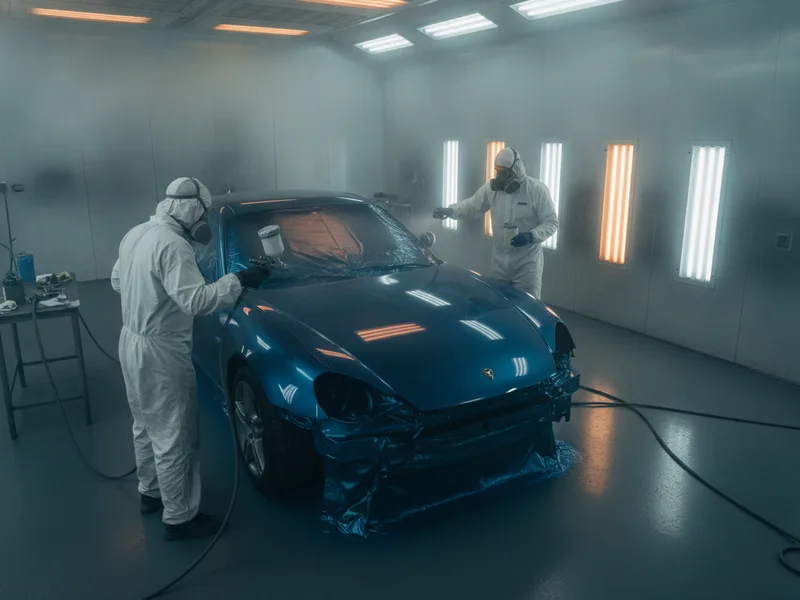
Phoenix heat is a real factor here. Intense sun exposure can accelerate clear coat breakdown and warp poorly bonded aftermarket plastic components faster than in milder climates. A repaired fender with properly matched paint and correct prep holds up fine under that sun. A rushed repaint job, or a panel installed with subpar adhesion, won’t age gracefully once summer temperatures climb.
Warranty coverage is where a lot of shops get vague. At Brad’s Deer Valley Collision, we back our work with a written warranty, and we’re upfront about what it covers, including paint match, panel fit, and workmanship. Ask any Phoenix, AZ, USA shop for warranty terms in writing before you commit. A shop that won’t put it on paper is a shop you should think twice about.
Rust isn’t the concern here that it is in colder states with road salt, but Phoenix has its own wear factors: dust, UV exposure, and heat cycling that stress paint and adhesives differently. Ask what primer and paint systems a shop uses. If you have questions about coverage terms or parts warranties beyond what we can answer, checking with your insurance provider or a consumer protection resource is a reasonable extra step.
Making Your Decision: Questions to Ask Your Phoenix Body Shop
Watch a handful of estimates get written and you’ll notice something: the shops that hedge, rush, or won’t put anything on paper are usually the ones cutting corners somewhere else too. A good estimate is a conversation, not a sales pitch.
Before committing to any Phoenix, AZ, USA shop, ask these questions directly.
-
What exactly is damaged, and why does that point to repair or replacement? A shop should be able to explain the reasoning, not just the recommendation.
-
Are your technicians I-CAR or ASE certified? Certifications matter more than a shop’s size or how flashy its lobby looks.
-
Will you use OEM or aftermarket parts, and can I choose? This affects fit, finish, and resale value down the road.
-
What’s covered under your warranty, and for how long? Get it in writing; verbal promises don’t hold up when something goes wrong later.
-
What’s the realistic turnaround time? Ask about current shop volume, not just a generic estimate.
-
Does this repair require ADAS recalibration? Plenty of smaller shops skip this step entirely, and it’s not something to overlook on newer vehicles.
-
Do you offer a loaner car, shuttle, or after-hours drop-off? Convenience matters when a car is out of commission for days.
It’s worth getting two or three written estimates before deciding anything. Read reviews, photograph existing damage before drop-off, and remember that insurance companies can’t force a driver into a specific shop; that choice is yours. Red flags include no written estimate, no warranty, or a bid that’s suspiciously low compared to everyone else’s.
Brad’s Deer Valley Collision has been answering these questions for Phoenix drivers since 1985, and our background in certified collision repair is available for anyone who wants to check before booking. Walk-ins are always welcome for a firsthand look.
Frequently Asked Questions
Can a bent fender always be repaired, or does it need to be replaced?
A bent fender doesn’t always need replacing. If the metal panel is dented but not creased, cracked, or torn, a repair technician can usually hammer, pull, and refinish it back to shape. Once you’re dealing with rust underneath, a botched repair from a previous shop, or damage that’s folded the metal sharply, replacement becomes the safer bet. The only way to know for sure is to have someone look at your specific vehicle in person.
How much does a fender replacement cost in Phoenix?
Fender replacement costs in Phoenix, AZ generally fall somewhere between $300 and $600 for the part itself, whether that’s OEM or a solid aftermarket option. Add labor and paint matching on top of that, and you’re often looking at another $200 to $400. These are example ranges, not quotes; your final number depends on the make and model, how tricky the paint color is to match, and the specific shop doing the work.
Will my insurance cover fender repair or replacement?
Most collision insurance policies do cover fender damage once you’ve met your deductible. Your insurance company might suggest a shop they work with often, but in Arizona you’re free to pick whichever collision repair shop you trust with your car. Brad’s Deer Valley Collision handles the back-and-forth with insurance adjusters directly, which takes some of the hassle off your plate. For anything specific to your policy or claim, it’s worth a quick call to your insurance agent to confirm coverage details.
How long does fender repair take versus fender replacement?
Fender repair jobs typically wrap up in about 2 to 5 days. Replacement takes a bit longer, often 3 to 7 days, since that includes fitting the new panel and letting the paint cure properly before the car goes back on the road. These are general timeframes and can shift depending on how busy a shop’s schedule is, how tough the paint match is, and whether there’s frame alignment work needed underneath.
Should I use OEM or aftermarket fender parts?
OEM fender parts come from the original manufacturer, so the fit and finish match what your car left the factory with, but that precision comes at a higher price. Aftermarket parts cost less and can work just fine when they come from a manufacturer with a good track record. At Brad’s Deer Valley Collision we use quality parts backed by warranty coverage, and we’re happy to walk through which option makes sense for your particular vehicle and budget when you bring it in.
Get a Straight Answer on Your Fender Damage
A dented or scraped fender doesn’t always tell you what it needs just by looking at it. Brad’s Deer Valley Collision will take a real look, walk you through what’s actually going on, and give you a written estimate so you know your options before you decide anything.
If you’re in Phoenix, AZ, USA and dealing with fender damage, stop by the shop or reach out to set up a free assessment. You can also browse our full range of collision and fender repair services to see how we handle jobs big and small.
Want to hear from folks who’ve already had work done? Check out our reviews on Google before you make the call.