
Fender Repair in Phoenix, AZ: Professional Solutions for Impact Damage and Restoration
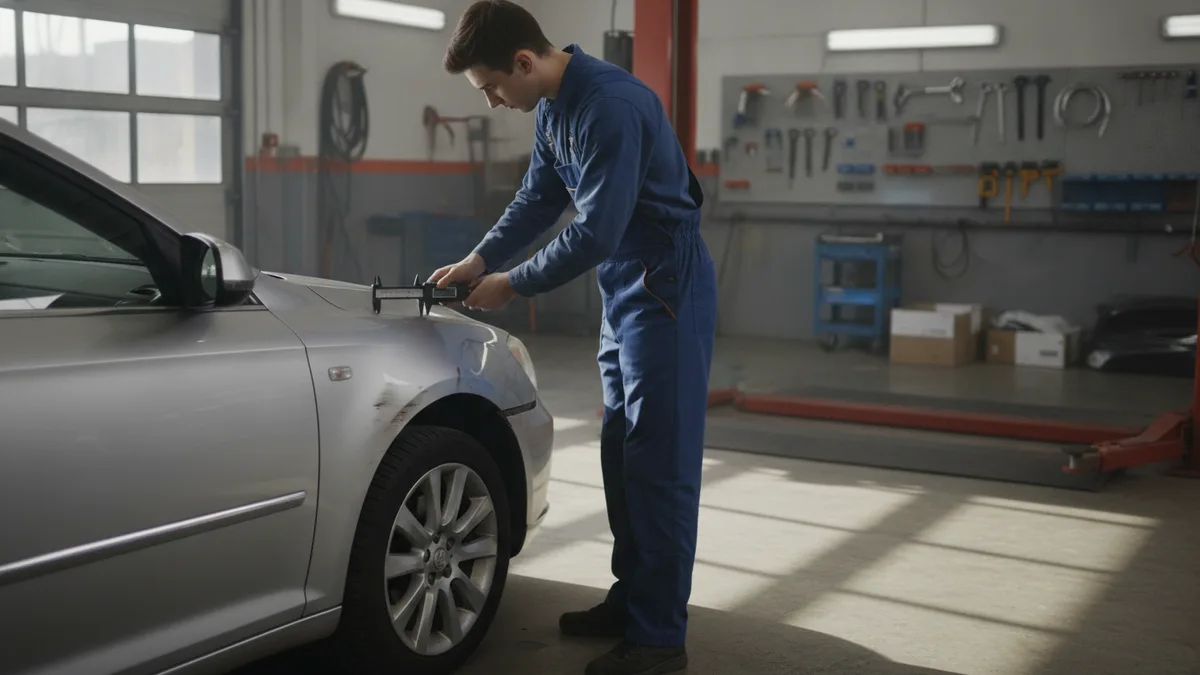
Fender Repair in Phoenix, AZ: Professional Solutions for Impact Damage and Restoration
Fender Repair vs. Replacement: When Each Option Makes Sense
Fender repair is the right call when damage is limited to dents, creases, or cracked plastic that hasn’t compromised the structural mounting points; replacement becomes necessary when the metal is torn, badly rusted, or bent in a way that affects panel alignment. Brad’s Deer Valley Collision has been making that determination for drivers in Phoenix, AZ, USA since 1985, and the decision always comes down to a hands-on inspection rather than a guess from a photo.
Picture a driver on the way to the store who clips a shopping cart corral, leaving a fist-sized dent above the wheel well with no paint break. That’s often a straightforward repair. Now picture someone who backs into a curb hard enough to fold the fender edge and knock the headlight bracket loose. That’s a different conversation entirely, and it usually points toward replacement.
What Actually Drives the Decision
A technician looks at three things: the depth and location of the damage, whether the metal has stretched or work-hardened, and whether anything behind the fender (brackets, liners, headlight housings) took a hit. Fenders are bolt-on panels on most vehicles, which makes them easier to swap than a welded structural piece. That said, in our experience, plenty of guides oversimplify this and suggest replacement is always safer. On real jobs, a well-repaired fender with proper metal finishing can hold up just as well and costs less, provided the damage hasn’t compromised the panel’s integrity.
Cost matters too, but it shouldn’t be the only factor. A repair estimate that’s dramatically lower than others is worth a second look; it may signal shortcuts on prep work or paint matching. Structural integrity always outranks price when the two are in conflict.
Rust is its own category. Phoenix’s dry climate keeps corrosion rates lower than in humid regions, but older vehicles or those with prior paint damage can still develop rust pockets that make repair less practical. A technician checking for hidden rust will often recommend replacement even when surface damage looks minor.
None of these calls should happen sight unseen. A proper assessment means eyes on the vehicle, not just a phone estimate. Drivers who want a closer look at how these evaluations work, along with the full range of collision and paint services available, can review the complete auto body services overview before scheduling a visit. Walk-ins are welcome at the Phoenix, AZ, USA location for anyone who’d rather get a firsthand look at their fender damage than guess over the phone.
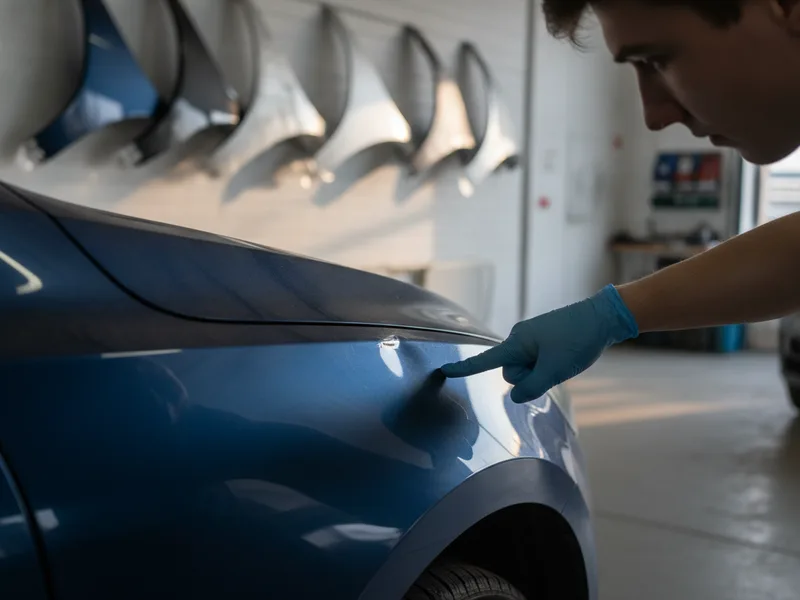
Impact Damage Assessment: What the Technician Looks For
A good fender repair starts long before any tools come out. Technicians at Brad’s Deer Valley Collision walk through a systematic check that goes well beyond the dent you can see.
First comes a visual inspection of the panel surface. Creases, cracked paint, and scraped clear coat tell part of the story, but they don’t tell the whole one. The technician runs a hand along the fender edge and behind the wheel well, feeling for ripples or tension in the metal that indicate the impact traveled further than the visible dent suggests.
Next is the mounting point check. Fenders bolt to the frame rail, the core support, and the door jamb area, and misalignment at any of these points changes the repair calculus. A gap that’s uneven from top to bottom, or a door that doesn’t close the way it used to, often points to structural movement rather than simple cosmetic damage.
Paint delamination gets its own look too. When paint separates from the substrate near an impact point, it usually means the metal flexed hard enough to break the bond. That’s a different problem than surface scratches, and it changes how the repair gets approached.
Technicians also check behind the fender liner for hidden bends, rust starting at seams, or wiring and hose damage that a surface glance would miss. In our experience, this is the step a lot of quick estimates skip, and it’s exactly where surprises show up later if it gets rushed.
Here’s a point worth mentioning: some guides suggest that any dent over a certain size automatically means replacement. On actual jobs, size alone rarely tells the full picture. A large, shallow dent on flat sheet metal can sometimes repair cleanly, while a smaller dent near a body line or seam might not.
Phoenix, AZ, USA drivers dealing with fresh impact damage are welcome to stop by for an in-person look. Seeing the damage firsthand, rather than guessing from photos, is what makes this kind of assessment worth something.
Common Fender Damage Types and Professional Repair Techniques
No two fenders come into the shop with the same story. A shopping cart ding looks nothing like impact damage from a parking lot fender bender, and the repair approach shifts accordingly. After decades of fender repair work in Phoenix, AZ, USA, our technicians at Brad’s Deer Valley Collision have learned to match technique to damage type rather than treating every dent the same way.
Dents and Surface Deformation
Simple dents without paint damage often respond well to paintless dent repair, where a technician massages the metal back into shape from behind the panel. But once paint has cracked or the metal has stretched, that approach won’t hold up. Traditional body filler and refinishing become necessary, and rushing this step is one of the more common shortcuts we see from lower-bid shops.
Creases and Bent Metal
Creases run deeper than dents. They involve metal that’s folded, not just pushed in, which changes how the panel handles stress going forward. Repairing a crease typically means pulling the metal with specialized tools, then checking the fender’s contour against factory specifications before any filler goes on. Skipping that alignment check is a mistake we catch often when re-repairing another shop’s work.
Rust and Corrosion Damage
Phoenix doesn’t deal with road salt, but rust still shows up, usually from chipped paint that’s gone unaddressed or moisture trapped behind a damaged panel. Once corrosion sets in, the affected metal has to be cut out and replaced rather than patched over. Painting over rust without addressing the underlying metal is a shortcut that tends to fail within a year or two.
Paint Failure and Finish Mismatch
Cracked, faded, or peeling paint around impact areas requires more than a quick touch-up. Getting a seamless match means accounting for how Arizona sun affects existing paint over time, not just matching the factory code. Our painters blend adjacent panels when needed so the repaired section doesn’t stand out under direct sunlight.
Every technique above assumes the underlying metal is sound. If a repair estimate seems unusually low, it’s worth asking exactly which of these methods the shop plans to use. Readers curious about our team’s background can review our background on decades of local repair experience before scheduling an assessment.
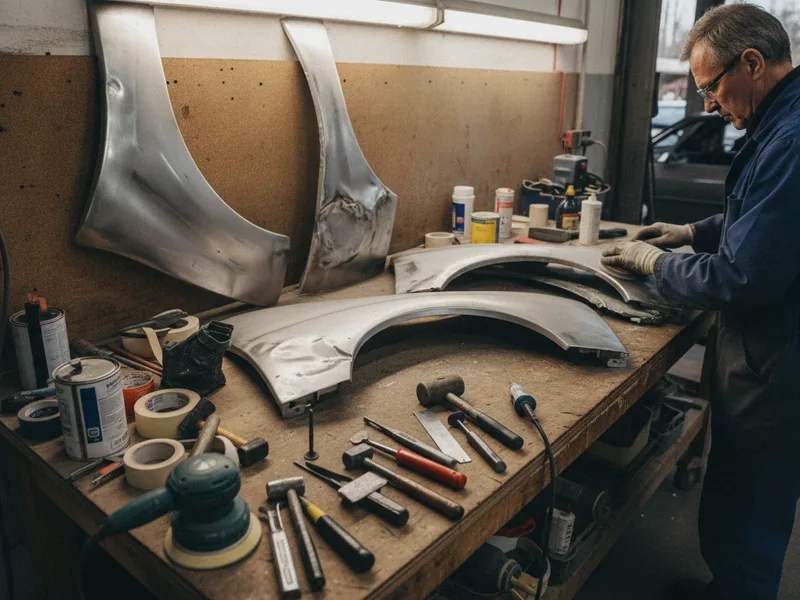
The Fender Repair Process: From Intake to Final Inspection
Most customers have no idea what happens between dropping off a damaged car and picking up a repaired one. Here’s the honest walkthrough.
When your vehicle arrives at Brad’s Deer Valley Collision, the first step is documentation. A technician photographs the damage from multiple angles and notes it against the written estimate. This matters more than people realize. Before you even hand over the keys, take your own photos of any existing dents, scratches, or interior wear, and remove valuables from the car. It protects you if there’s ever a question about what damage existed before repairs started.
Next comes teardown. The technician removes trim, lights, and fasteners to expose the full extent of the damage, which sometimes reveals issues the initial estimate didn’t catch. If that happens, we’ll call you with an updated estimate before touching anything further. No surprises on the final bill.
Metal work follows. Depending on the damage type covered in earlier sections, this might mean paintless dent removal, panel straightening, or filler application. Modern fenders often include sensors and brackets tied into driver assist systems, so recalibration gets scheduled here too. This is a step a lot of smaller shops skip or outsource, which we think is a mistake given how common ADAS-equipped vehicles have become on Phoenix roads.
Paint matching comes next. Arizona’s intense sun fades factory paint unevenly over time, so matching isn’t always as simple as pulling the code off the door jamb. Our painters blend and test before committing to the full panel.
Reassembly and a final inspection close things out. We check panel gaps, paint consistency, and (if applicable) that recalibrated sensors are functioning correctly before calling you.
Since 1985, we’ve handled this process for Phoenix, AZ, USA drivers who want a straight answer on timing and cost. We offer text updates with photos along the way, plus loaner or shuttle options for customers who can’t be without a car. Walk-ins are welcome if you’d rather have someone look at the damage in person before scheduling anything.
Insurance Claims and Fender Repair Estimates in Phoenix
One pattern shows up over and over at the front counter: drivers assume their insurance company gets to pick the shop. It doesn’t work that way. Arizona drivers have the right to choose their own repair shop regardless of which body shop an insurer suggests, and that choice matters more than most people realize when it comes to parts quality and workmanship.
Written estimates should spell out labor, materials, and whether parts are OEM or aftermarket. A vague verbal number isn’t an estimate; it’s a guess. Getting two or three written estimates before committing gives you something to compare, and it’s worth asking each shop directly about OEM versus aftermarket parts, warranty coverage, and expected turnaround time. If a shop won’t put the estimate in writing or won’t discuss warranty terms, treat that as a warning sign, along with bids that come in unusually low compared to everyone else.
Brad’s Deer Valley Collision has worked directly with insurance carriers on fender repair claims since 1985, handling documentation and communicating with adjusters so Phoenix, AZ, USA customers don’t have to manage that back-and-forth alone. That includes photo documentation, supplement requests when hidden damage turns up during teardown, and straightforward explanations of what’s covered.
Our opinion, based on a lot of these claims: shops that lean too hard on “insurance-approved” pricing sometimes cut corners on parts or skip recalibration steps that newer vehicles need after fender work, particularly ADAS-equipped models. We’d rather quote the repair the vehicle actually needs and walk you through why it costs what it does.
Before dropping the car off, photograph existing damage and remove valuables from the vehicle. If you have questions about a claim or want a written estimate started, our contact and appointment scheduling page is the fastest way to get one on the books. For general guidance on consumer rights during a claim, your state insurance department’s website is a useful reference.
Quality Standards: Certifications, Warranties, and What to Ask
Not every shop offering fender repair in Phoenix, AZ, USA operates at the same level. Before you sign anything, do a little homework. It’s the difference between a repair that holds up and one that comes back to bite you.
Start with certifications. I-CAR training and ASE certification tell you a technician has been tested on current repair standards, not just working off habit. Brad’s Deer Valley Collision displays these credentials openly, and any shop worth considering should be able to show you the same. If a shop hesitates to answer questions about who’s actually doing the work, take that as a signal.
Ask about warranty coverage in writing. A shop confident in its repairs will put that confidence on paper. Verbal promises don’t hold up when a paint match starts to fade or a panel edge doesn’t sit right six months later.
Get two or three written estimates before committing. Most guides stop there, but in our experience, the lowest bid deserves more scrutiny than the highest one. Unusually low estimates often mean aftermarket parts substituted without mention, corners cut on prep work, or labor rushed to turn the bay over faster. Ask directly whether the shop plans to use OEM or aftermarket parts, and what that choice means for fit and finish.
ADAS recalibration is another area worth asking about directly. Many newer vehicles have sensors mounted near the fender that require recalibration after repair work, and smaller shops sometimes skip this step or don’t have the equipment for it.
Red flags to watch for: no written estimate, no warranty offered, and turnaround times that sound too fast for the damage described. Photograph your vehicle before drop-off and remove valuables, standard practice at any collision shop.
Brad’s Deer Valley Collision has served Phoenix drivers since 1985. Stop by for a walk-in estimate, ask us about our certifications, and see the shop before you decide who touches your car.
Frequently Asked Questions
How long does fender repair typically take?
Fender repair timelines depend on how bad the damage is. A minor dent might be done in 2 to 3 days. A creased fender that needs more bodywork and paint can run 5 to 10 days once you factor in curing time for the paint. Shop workload matters too, so if a shop’s busy, it can push your timeline back. Get a written turnaround estimate before you drop the car off in Phoenix, AZ, so you know what to expect.
Is it cheaper to repair or replace a fender?
For most minor dents and creases, repairing the fender costs less than replacing it. Replacement starts making more sense when there’s structural damage, rust underneath, or the fender’s already been patched up before and won’t hold another repair well. A technician looking at the vehicle in person is really the only way to know which route makes financial sense for your specific damage.
Will my repaired fender match the rest of my car’s paint?
Yes, a properly repaired fender should match the rest of your car’s paint when a shop uses good color-matching equipment. Brad’s Deer Valley Collision uses precision paint-matching technology to get that blend right. That said, metallic and pearl finishes are trickier to match than solid colors because of how light hits the metal flakes. It’s worth asking about this specifically during your estimate so there are no surprises.
Can I choose my own body shop even if my insurance suggests another?
Yes, you can pick your own body shop in Phoenix, AZ, even if your insurance company points you toward a different one. Arizona law and most insurance policies give you that choice, and your insurer has to honor it. They may ask the shop to guarantee its work or stick to their estimate scope, so it’s smart to get that agreement in writing from your adjuster before repairs start. If you’re unsure of your rights under your specific policy, a quick call to your insurance agent or a consumer protection resource can clear that up.
What should I do immediately after fender damage occurs?
Start by taking clear photos of the fender damage from a few different angles before you clean anything up. If another car was involved, swap insurance information with the other driver and file a report. Before dropping your car off for repair, grab any personal items out of it. Then ask the shop for a written damage assessment and estimate before any work begins, so you know what’s being fixed and roughly what it’ll cost.
Get Your Fender Damage Checked Out
A dented or cracked fender rarely fixes itself, and the longer it sits, the harder it can be to tell if repair is still an option. Brad’s Deer Valley Collision offers a straightforward assessment so you know where things stand before you decide anything.
Stop by our Phoenix, AZ, USA shop or give us a call to talk through your fender repair and get a written estimate. If you’re working with an insurance claim, our technicians can walk you through the repair versus replacement question in plain terms; for anything involving your policy or claim, your insurance adjuster is the right person to confirm final coverage details. Take a look at our full collision repair services to see what else we handle, and feel free to check out our reviews on Google to see what our customers are saying.