
Fender Damage Assessment in Phoenix, AZ: Repair Solutions for Every Type of Impact
Fender Damage Assessment in Phoenix, AZ: Repair Solutions for Every Type of Impact
Why Professional Fender Assessment Matters More Than You Think
You’re pulling out of a parking spot at Desert Ridge Marketplace and hear that familiar crunch. You get out, look at the fender, and see what appears to be a small dent with a little paint scuffed off. It doesn’t look serious. You figure a quick fix will handle it. That assumption is where a lot of Phoenix drivers end up spending far more money than they expected.
Surface damage rarely tells the whole story.
A fender absorbs impact energy, but that energy doesn’t just disappear. It travels. Depending on the angle and speed of contact, force can transfer inward toward the inner fender liner, the mounting bracket, or in more significant hits, toward the strut tower itself. None of that shows up when you’re standing in a parking lot squinting at a crease.
There’s a common belief that minor fender repair is straightforward enough that any shop can assess it in two minutes and hand you an estimate. That’s genuinely bad advice. A proper assessment requires the vehicle to be in a controlled environment with good lighting, the right tools, and a technician who knows what to look for underneath the visible damage. At Brad’s Deer Valley Collision, we’ve been doing this work in Phoenix, AZ since 1985, and we still take every fender job through the same systematic inspection process, regardless of how minor it looks at first glance.
Paint is another area where untrained eyes miss things. The visible chip or scratch is obvious. What’s harder to spot is whether the clear coat has lifted along a wider boundary, or whether the underlying primer has been compromised in a way that will cause rust to develop in Phoenix’s intense heat and UV conditions. Our desert climate accelerates paint degradation once moisture gets beneath a compromised surface, and that process starts faster than most people realize.
Skipping a thorough assessment to save time almost always costs more later. Hidden misalignment, undetected liner damage, and compromised paint adhesion compound over months. A proper professional evaluation, like what you’ll get when you request an estimate with us, takes the guesswork out completely. It also gives you documentation that matters if an insurance claim is involved.
Good repair decisions start with honest, thorough assessment. Everything else follows from that.
Common Types of Fender Damage Phoenix Drivers Encounter
Not all fender damage is created equal. After nearly four decades of repairs here in Phoenix, AZ, our team at Brad’s Deer Valley Collision has seen every variation imaginable. Understanding what type of damage you’re dealing with is the first step toward getting the right fix at the right price.
Parking Lot Dings and Door Strike Dents
This is the most common call we get. Someone clips your fender pulling out of a tight spot, or a shopping cart rolls into your quarter panel in a crowded lot. The damage looks minor on the surface, often just a small crease or dimple. That’s exactly where a lot of drivers make a costly assumption. Small doesn’t always mean simple. Depending on the location and depth of the dent, the metal may have stretched, which changes your repair options significantly.
Scrapes and Paint Transfer
Concrete pillars in parking garages are responsible for more fender scrapes in Phoenix than most people realize. You’ll typically see a streak of paint transfer alongside a shallow gouge. The good news is that surface-level scrapes without metal deformation are strong candidates for minor fender repair rather than full panel replacement. The bad news is that untreated paint breaks down fast in Arizona’s heat, and bare metal exposed to our summer sun corrodes faster than you’d expect.
Low-Speed Collision Creases
Rear-end bumps at intersections along Camelback or side-impact contacts in heavy traffic leave a different kind of mark. These are sharper, more defined creases that often run across a larger area of the fender. The metal is displaced rather than just pushed in, and the crease can extend toward the wheel well or door edge in ways that aren’t obvious from a quick look. This type of damage almost always warrants a professional inspection before any repair decision is made.
High-Speed Impact Damage
Freeway collisions produce a different problem entirely. The fender may be visibly crushed, but the more serious concern is what’s behind it. Structural mounting points, the inner apron, and even the frame rail can absorb force that never shows up on the outer skin. We’ve seen vehicles come in looking like straightforward repairs that turned out to need significant structural work once the fender came off.
One opinion worth sharing: a lot of drivers focus too much on how the damage looks and not enough on how the impact happened. Speed and angle matter more than surface appearance when estimating the real scope of repairs. If you’re unsure what you’re dealing with, reach out to us for an honest assessment before committing to anything.
The Assessment Process: What Professionals Look For
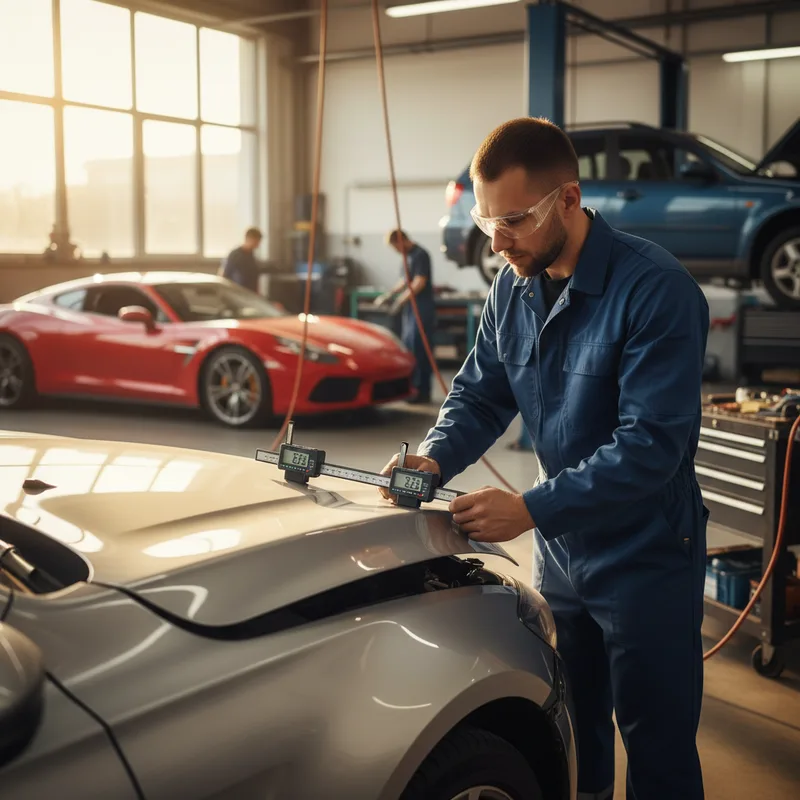
Most drivers assume a fender inspection takes five minutes. In reality, a proper assessment done by a certified technician is methodical, layered, and often turns up damage that wasn’t visible at the initial glance. That’s where the difference between a quality shop and a quick-fix operation becomes obvious.
At Brad’s Deer Valley Collision, our technicians follow a structured inspection sequence for every vehicle that comes through our Phoenix, AZ facility, whether it’s a substantial collision or what appears to be a straightforward minor fender repair. Here’s how that process actually works.
Visual and Surface Inspection
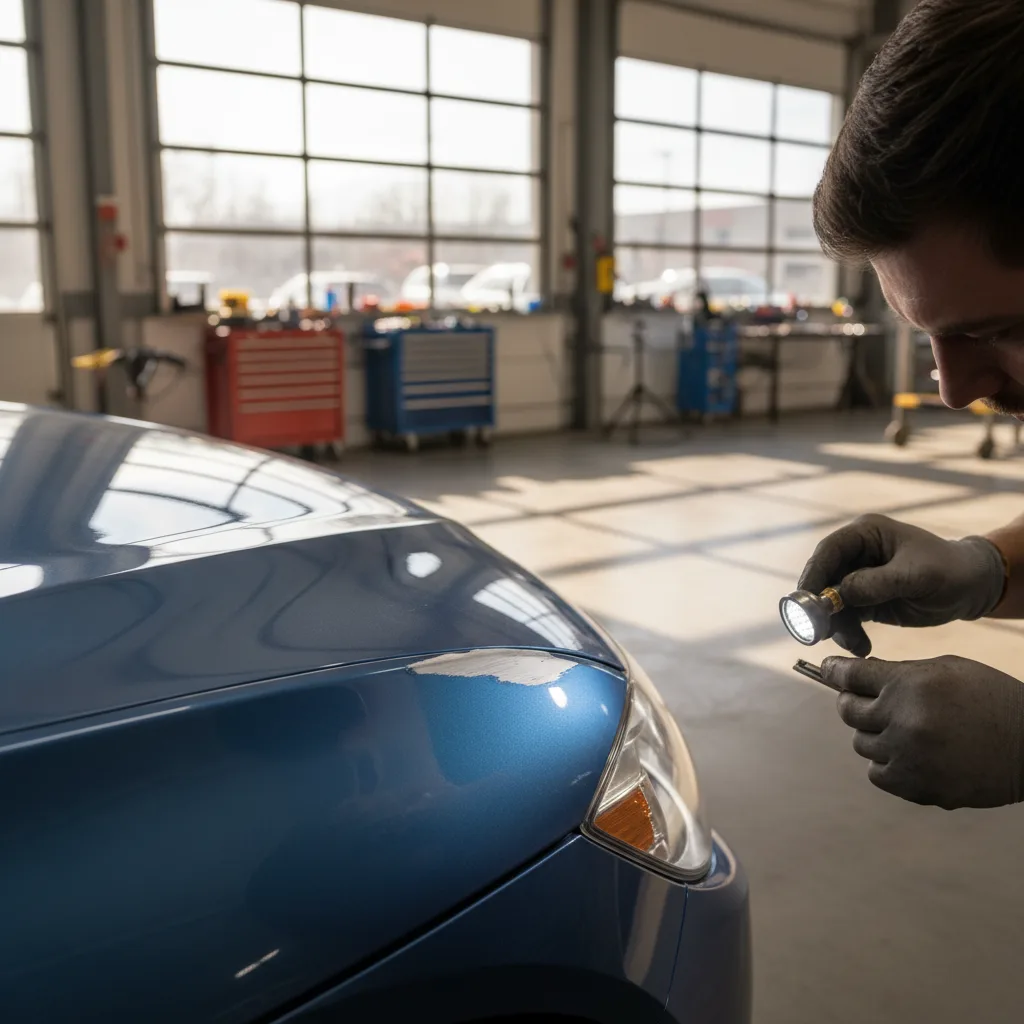
The inspection starts with the obvious. Technicians examine the fender’s outer surface under controlled lighting, looking at the paint film for cracking, delamination, or feathering at the edges of the impact zone. Paint tells a story. A small dent with clean paint around it usually means contained impact energy. Paint cracking outward from a dent often signals the force traveled further than the visible damage suggests.
Surface texture matters too. Orange peel, hazing, or uneven sheen around the damaged area can indicate prior repairs, which changes how a technician plans the current fix.
Structural Integrity Check
This is the step most DIY assessments skip entirely. Technicians check the fender mounting points, the apron, the inner splash shield, and the connection points to the A-pillar and front bumper support. A fender can look fine on the outside while its inner structure has crumpled or shifted.
Here’s a professional opinion that runs counter to what you’ll often read online: even low-speed impacts warrant a frame inspection. The belief that “it was just a parking lot tap” leads to missed damage more often than any other assumption we see walk through our doors. We’ve found bent aprons and shifted subframe components behind dents that many shops would have filled and painted without a second look. Our full range of services includes frame alignment checks precisely because fender damage and frame issues frequently overlap.
Safety System Proximity Review
Modern vehicles have sensors, cameras, and radar modules positioned near or behind the fender. Parking sensors, ADAS components, and blind-spot monitoring hardware can all be affected by fender impacts. A thorough assessment includes identifying these components and flagging them for post-repair recalibration.
Skipping this step is one of the most common mistakes in the industry. A vehicle that drives fine but has a miscalibrated lane-assist system is not fully repaired.
Documentation and Estimate
Every finding gets documented with photos and written notes before any work begins. This protects the customer and keeps the repair plan honest. No guessing, no surprises.
If you’re in Phoenix and want a thorough assessment you can trust, contact our team or stop by. Walk-ins are welcome, and our technicians are happy to walk you through what they find in real time. With over 40 years serving this community, we’ve earned that trust one honest inspection at a time.
Repair vs. Replacement: How Professionals Make the Call
This decision isn’t arbitrary. At Brad’s Deer Valley Collision, every fender goes through a deliberate evaluation before we recommend a path forward. The goal is always the same: restore your vehicle to pre-accident condition without spending money you don’t need to spend.
Several factors drive the repair-or-replace call.
When Repair Makes Sense
Minor fender repair is the right move when the damage is confined to the outer skin, the underlying structure is solid, and the metal hasn’t been stretched or torn. Surface dents, shallow creases, and minor paint scuffs typically fall into this category. Repair costs less, preserves original factory parts, and, done correctly, produces results that are indistinguishable from new.
One professional opinion worth sharing: a lot of drivers assume replacement always means better quality. It doesn’t. A skilled repair on intact metal can outlast a poorly fitted aftermarket panel. The craftsmanship matters more than the method.
When Replacement Is the Better Call
Replacement becomes necessary when the fender has sustained structural deformation, cracking along stress points, or damage that has compromised the wheel well or mounting brackets. Severely dented fenders where the metal has been pushed past its elastic limit won’t hold a repair cleanly. You’d be spending labor hours on a panel that’s fighting you the whole way.
Cost also factors in. If repair labor approaches or exceeds the cost of a quality replacement panel, replacement is the smarter investment for the customer. We run that comparison on every estimate.
The Parts Question
Replacement opens up another decision: OEM versus aftermarket. CAPA-certified aftermarket parts meet established quality standards and can be a reasonable option. OEM parts guarantee fit accuracy. We walk every Phoenix, AZ customer through both options with honest cost comparisons before any work begins.
You can review our full service menu to understand the complete range of what we handle, or request an estimate and let us show you exactly where your fender stands.
Hidden Damage: The Red Flag Phoenix Shops Often Miss
The dent you can see is rarely the whole story. After decades of fender repairs in Phoenix, AZ, one pattern shows up again and again: a job comes in looking like a straightforward minor fender repair, and once the panel comes off, there’s structural damage sitting right behind it.
Careless shops skip the deeper look. They pull the dent, match the paint, and hand you back the keys. That approach might hold up visually for a few weeks, but the underlying problems don’t disappear.
What Gets Missed Most Often
-
Frame rail damage: Even moderate side impacts can push force into the front or rear frame rails. If a technician doesn’t check beyond the fender itself, that deformation goes unaddressed.
-
Hood and door misalignment: A fender absorbs impact and transfers it to adjacent panels. Gaps that didn’t exist before the accident are a sign the damage traveled further than the fender.
-
ADAS sensor displacement: Many modern vehicles mount radar or camera components near the fender line. A hit that moves the fender even slightly can knock those sensors out of calibration without triggering a warning light immediately.
That last point is one most drivers don’t hear enough. Shops that lack recalibration equipment will complete the body work and return a vehicle with a compromised lane-assist or automatic braking system. The car looks fine. It isn’t.
Honestly, a lot of conventional advice tells drivers to get the cheapest estimate. We’d push back on that. An unusually low bid almost always means something is being skipped, and hidden damage is usually what gets cut first.
At Brad’s Deer Valley Collision, our technicians are trained to assess beyond the visible impact zone before any repair decision gets made. You can schedule an assessment and see exactly what that process looks like in person. According to IIHS research, ADAS failures after collisions are a growing safety concern that incomplete repairs directly contribute to.
Insurance Claims and Fender Repair Estimates in Phoenix
Know your rights before you make a single phone call to your insurer. In Arizona, you have the legal right to choose your own repair shop, regardless of which shop your insurance company recommends. Don’t let a claim adjuster steer you somewhere else.
At Brad’s Deer Valley Collision, we’ve worked directly with insurance companies since 1985, and we’ve seen how the process can go sideways when documentation is weak. That’s why we treat every written estimate as a legal record, not just a price quote. A vague or verbal estimate protects nobody, and any shop that won’t put specifics in writing is a shop worth avoiding.
Why the Estimate Details Actually Matter
A solid written estimate for a minor fender repair in Phoenix, AZ should clearly itemize labor hours, parts (and whether those parts are OEM or aftermarket), paint materials, and any anticipated supplemental damage. If the document is just a single-line total, push back. Hidden damage discovered mid-repair, something we covered in the previous section, can change scope significantly, and you need a paper trail that protects you when that happens.
Photograph everything before you drop off your vehicle. Every existing scratch, every pre-existing scuff. This protects you and it protects us.
How We Streamline the Process
Our team handles the documentation, communicates directly with your adjuster, and keeps you informed at every step. We participate in direct repair programs with several major carriers, which can reduce delays. If a supplement is needed after teardown reveals additional damage, we manage that conversation with the insurer so you’re not stuck in the middle.
One thing we’d push back on: the common advice to always accept the first repair estimate an insurer approves. Adjusters work from standardized rate sheets that don’t always reflect what quality repair actually costs in the Phoenix market. Getting a written estimate from us gives you accurate, local numbers to compare against. Learn more about our shop’s credentials and history, or review our full list of services before your appointment.
What to Expect: Timeline, Warranty, and Quality Assurance
Turnaround time is one of the most common things customers misread. A minor fender repair in Phoenix, AZ can often be completed in one to three days, but that window depends heavily on parts availability, paint cure time, and whether hidden damage surfaces during the repair. Any shop quoting a same-day turnaround on a painted fender repair deserves a follow-up question about their process.
Warranty coverage matters just as much as the repair itself. At Brad’s Deer Valley Collision, we back our work with a written warranty. Get that in writing. A verbal guarantee from a shop means nothing if the paint starts peeling six months later or a repaired panel begins to flex at the weld.
The final inspection step is one most customers never ask about. Certified shops follow a structured post-repair checklist: panel gaps, paint match under natural light, alignment verification, and for newer vehicles, ADAS recalibration confirmation. Skipping that last step is more common than the industry admits, and it creates real safety exposure.
Credentials tell you a lot before the work even starts. I-CAR and ASE certifications aren’t just wall decorations. They reflect ongoing training on current repair standards.
We’ve been doing this in Phoenix since 1985. Walk in, ask hard questions, and see our full service capabilities for yourself. Or request an estimate today and let’s take a look.
Frequently Asked Questions
Can a dented fender be repaired or does it need to be replaced?
In most cases, a dented fender can be repaired without replacing the whole panel. Here at Brad’s Deer Valley Collision in Phoenix, AZ, USA, our technicians take a close look at how deep the damage goes, whether the metal is creased, and how the paint held up. If the structure is still solid and the crease isn’t too severe, a repair is usually the smarter, more affordable call. We’ll always walk you through both options so you can decide what works best for your budget and your vehicle.
How long does a minor fender repair usually take?
A typical minor fender repair takes about 3 to 5 business days. A big part of that time is just letting the paint cure properly so it looks right and lasts. If your fender only has a small dent and doesn’t need repainting, we can sometimes get it done in 1 to 2 days. Repairs that involve any frame checks or structural work will take a bit longer. When you drop your vehicle off, we’ll give you a realistic timeline based on exactly what your car needs.
What’s the difference between OEM and aftermarket fenders?
OEM fenders come straight from your vehicle’s manufacturer, so you’re getting a part that’s built to fit your exact make and model. Aftermarket fenders are made by third-party companies. They’re usually less expensive, but the quality can vary quite a bit depending on the brand. At Brad’s Deer Valley Collision, we offer both options. We’ll explain the pros and cons for your specific situation so you’re not guessing. A lot of customers in Phoenix, AZ, USA prefer OEM for the guaranteed fit, but aftermarket can be a solid choice too.
Does my insurance cover fender repair, or do I need collision coverage?
It depends on what caused the damage. Collision coverage handles repairs from accidents, while comprehensive coverage takes care of things like hail or a falling object. Liability insurance only covers the other person’s vehicle, not yours. So if you’re only carrying liability, a minor fender repair would be out of pocket. Your best move is to pull up your policy or give your insurer a quick call to check your coverage limits and what your deductible looks like before you commit to any repairs.
How do I know if a fender repair estimate is fair?
The best way is to get 2 to 3 written estimates from certified shops. Compare the labor rates, whether they’re using OEM or aftermarket parts, and what kind of warranty they’re offering. Be cautious of quotes that seem unusually low. A complete estimate should include paint prep, materials, and a post-repair inspection. If you come visit us at Brad’s Deer Valley Collision in Phoenix, AZ, USA, we’re happy to break down every line on the estimate so you know exactly what you’re paying for on your minor fender repair.
Get Your Fender Repaired Right Here in Phoenix, AZ, USA
If your fender took a hit, bring it to the folks at Brad’s Deer Valley Collision who’ve been fixing Phoenix vehicles for over 40 years. We’ll give you a free, detailed evaluation and a written estimate so you know exactly what you’re dealing with before any work begins. See what our customers are saying on Google and then come see us yourself, because walk-ins are always welcome at our Deer Valley shop.
Call us today or stop by for a consultation and let’s get your vehicle looking the way it should.