Complete Guide to Collision Repair After an Accident in Phoenix, AZ
Complete Guide to Collision Repair After an Accident in Phoenix, AZ
The First 24 Hours: What to Do Right After Your Accident
You’re sitting at a red light on Camelback Road, the light turns green, and then it happens. The car behind you doesn’t stop in time. There’s a crunch, your heart jumps, and suddenly you’re dealing with something nobody plans for. What you do in the next few minutes and hours matters more than most people realize.
Stay calm. Check for injuries first.
If anyone is hurt, call 911 immediately. Even if the damage looks minor, get a police report. Here’s where I’ll push back on advice you’ll sometimes hear: don’t skip the police report just because the other driver seems cooperative. People’s stories change. Insurance adjusters want documentation. A report protects you from the moment it’s filed, and it’ll support your collision repair after accident claim down the line.
Once you’re safely out of traffic, start documenting everything. Phoenix drivers deal with everything from freeway merge accidents near the I-17 to parking lot fender benders at Desert Ridge Marketplace. The scene changes fast. Use your phone to photograph:
-
All vehicle damage from multiple angles
-
The other driver’s license plate, insurance card, and driver’s license
-
The surrounding area, including road conditions and traffic signals
-
Any visible injuries
Get witness contact information if anyone stopped. A name and phone number takes thirty seconds and can be worth a lot later.
Notify your insurance company the same day. You don’t have to accept their preferred shop recommendation. Under Arizona law, you have the right to choose your own repair facility. That’s something insurers don’t always volunteer upfront.
Before you drop the car off anywhere, photograph every inch of existing damage yourself. Remove valuables and personal items. These small steps prevent disputes later.
At Brad’s Deer Valley Collision, we’ve been helping Phoenix drivers recover from accidents since 1985. When you’re ready to talk next steps, reach out to our team for a straightforward estimate and honest guidance.
Initial Assessment and Damage Inspection at Brad’s Deer Valley
Most people think a collision repair estimate is just a quick walk-around and a number on a sheet of paper. It’s not. Not if it’s done right.
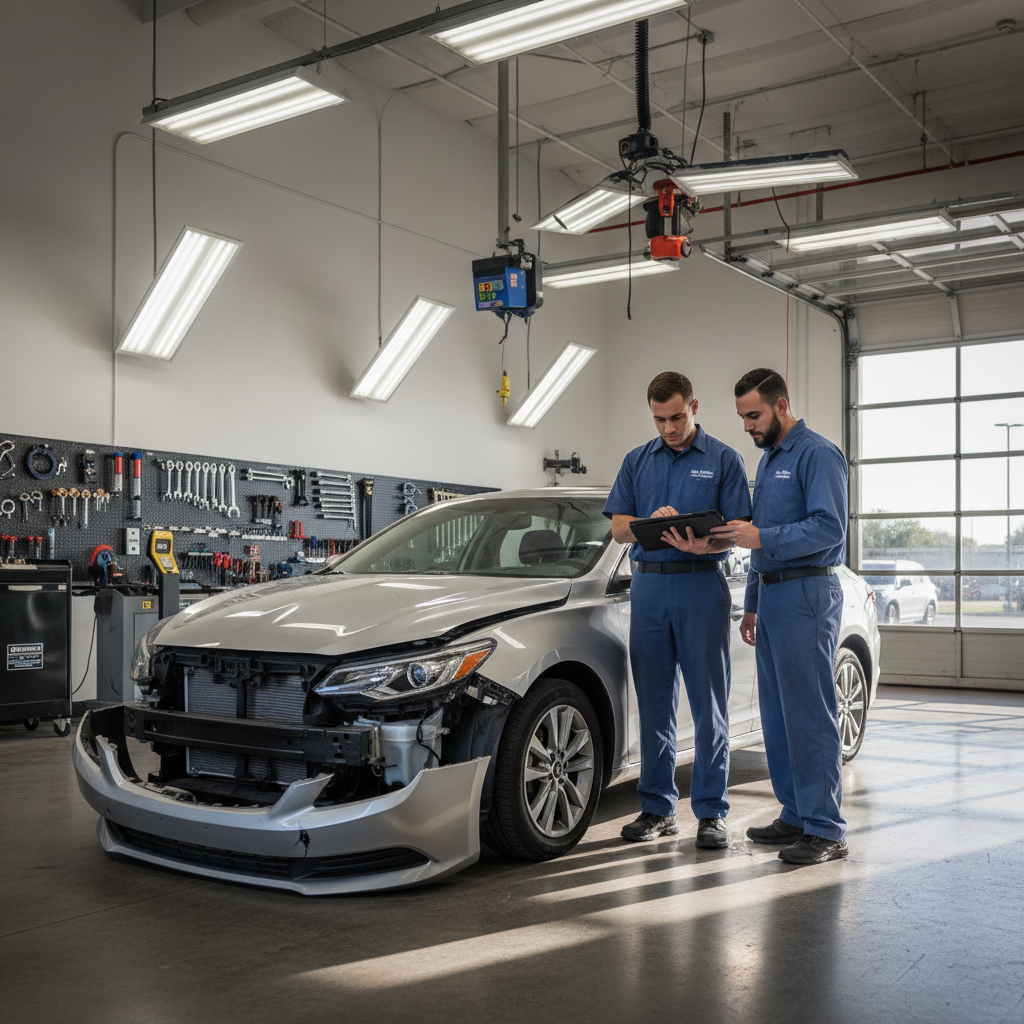
At Brad’s Deer Valley Collision, the initial inspection is where the real work begins. When you bring your vehicle to our Phoenix shop, our certified technicians start with a full visual assessment of every panel, seam, and surface that took impact. That includes the obvious stuff you can see, and the damage hiding underneath it.
What We’re Actually Looking For
Surface damage tells part of the story. A crumpled fender or cracked bumper is easy to spot. What’s harder to catch is what that impact did to the frame behind it. We check frame alignment using precision measuring equipment because even a quarter-inch deviation can throw off your suspension, your tire wear, and your vehicle’s ability to protect you in a future collision.
Here’s what our inspection covers:
-
Frame and structural integrity, including hidden crumple zones that absorb energy during impact
-
Paint condition across adjacent panels, not just the damaged area
-
Mechanical and electrical components that may have shifted or cracked
-
ADAS systems like lane assist, backup cameras, and automatic braking sensors that can fall out of calibration after even a minor hit
That last point is one most shops still overlook. We disagree with the idea that ADAS recalibration is optional after a collision. If those systems aren’t recalibrated properly, they may give you false confidence or fail when you need them most. You can read more about how advanced driver assistance systems work from the Insurance Institute for Highway Safety.
Why a Written Estimate Matters
A verbal quote protects nobody. After inspection, we provide a detailed written estimate that breaks down labor, parts, and projected timeline. This document is your benchmark for the entire repair. It’s also what keeps your insurance claim honest and organized.
We’ve been doing collision repair after accident situations in Phoenix, AZ since 1985, and the shops that earn trust are the ones that show their work upfront. Learn more about our full range of collision repair services or request an estimate today.
How Insurance Claims Work: Brad’s Deer Valley’s Direct Repair Partnership
One pattern we see constantly: people walk in after an accident already stressed because their insurance company told them where to go. Here’s what most drivers don’t know. You have the right to choose your own repair shop in Arizona. Full stop. Nobody can legally force you into a shop you didn’t pick.
At Brad’s Deer Valley Collision, we’ve been working directly with insurance companies since 1985. We participate in direct repair programs (DRP), which means we have established relationships with major insurers and handle adjuster communication on your behalf. You shouldn’t have to spend your afternoons on hold explaining damage to someone who hasn’t seen your car.
What the Estimate Process Actually Looks Like
After our initial inspection, we prepare a detailed written estimate and submit it directly to your insurer. If our assessment uncovers additional hidden damage during disassembly (and it often does), we document everything and go back to the adjuster with a supplement. That back-and-forth is normal. It’s part of doing collision repair after an accident correctly, not a sign that something went wrong.
We handle the paperwork. You stay informed.
A lot of shops tell customers to just “let the insurance handle it.” We disagree with that approach. You should understand what’s being approved, what parts are being used (OEM versus aftermarket), and what the timeline looks like. Our team walks you through each stage so there are no surprises at pickup.
-
We communicate directly with adjusters and supplement as needed
-
We document all damage with photos before any work begins
-
We explain OEM versus aftermarket part options clearly
Ready to get started? Contact us here to request an estimate or ask about working with your specific insurer. You can also learn more about our shop’s history and certifications on our About page.
The Repair Process Breakdown: From Disassembly to Final Inspection
Most people drop off their car and hope for the best. We think you deserve to know exactly what’s happening to your vehicle at every stage.
Here’s how collision repair after an accident actually works at Brad’s Deer Valley Collision, from the moment your car comes in to the moment you drive it home.
Disassembly
This is where the real picture emerges. We remove panels, trim, and components to expose what the initial inspection might not have caught. Hidden damage behind a bumper cover or inside a wheel well is common in Phoenix traffic accidents, and you simply can’t find it without taking things apart. The estimate sometimes changes at this stage. That’s not a surprise tactic. That’s honest work.
Frame and Structural Repair
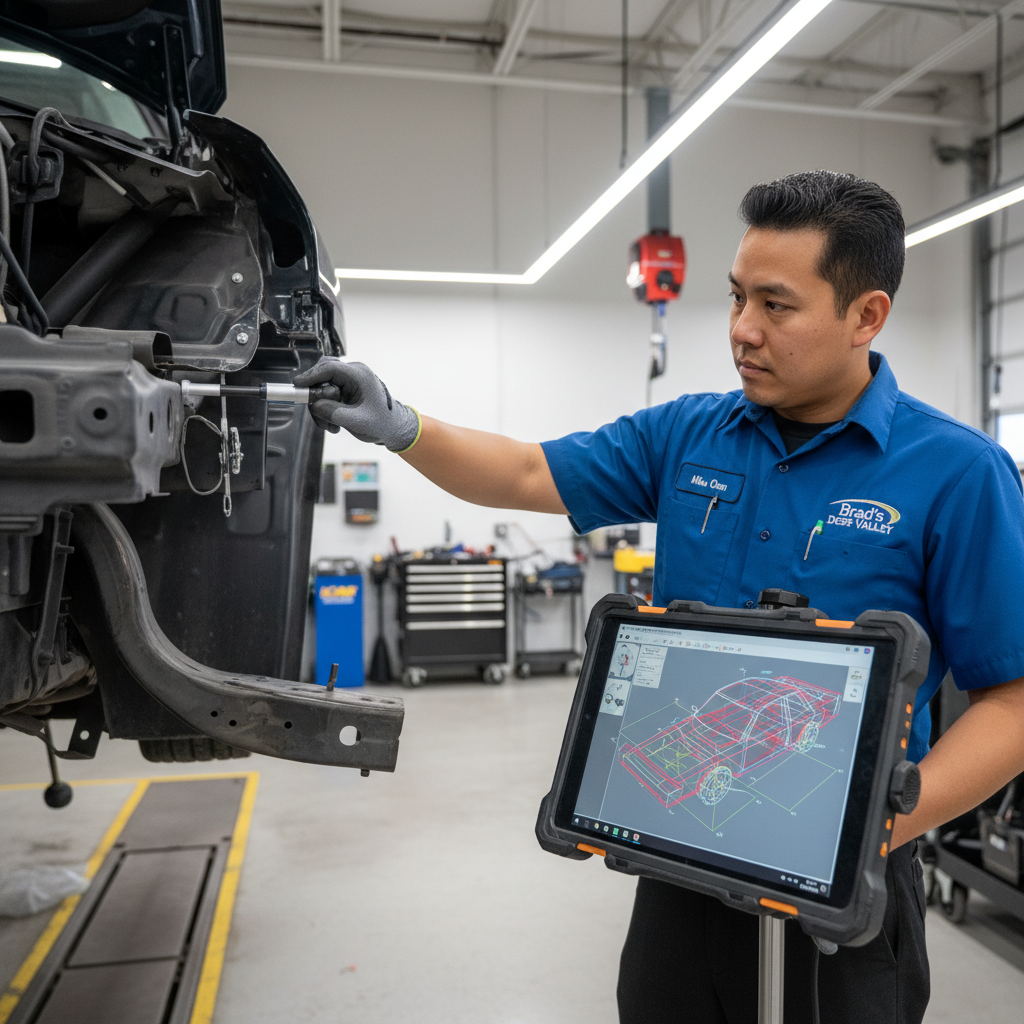
If there’s frame damage, we address it before anything else. Using computerized measuring equipment, our technicians restore your vehicle’s structure to factory specifications. Skipping this step and moving straight to cosmetic repairs is a mistake we see other shops make. A car that looks good but sits crooked is not a repaired car.
Surface Preparation
Don’t underestimate this step. Proper surface prep, including sanding, cleaning, and priming, is what separates a paint job that lasts from one that peels in six months. Phoenix’s heat and UV intensity are brutal on improperly prepped surfaces. We take our time here because cutting corners on prep shows up fast in the Arizona sun.
Panel Repair or Replacement
Not every damaged panel needs to be replaced. Dent repair, reshaping, and crack repair are often the right call, both for cost and for preserving your vehicle’s original structure. When replacement is necessary, we’ll walk you through the OEM versus aftermarket parts decision so you’re never in the dark.
Paint Matching and Application
Our paint matching technology reads your vehicle’s existing finish and replicates it exactly. The goal is simple. You shouldn’t be able to tell where the repair ends and the original paint begins. Our certified painters apply primer, base coat, and clear coat in a climate-controlled environment to get that right.
Reassembly and ADAS Recalibration
Everything goes back together, and then we do something many shops overlook entirely. We recalibrate your vehicle’s advanced driver assistance systems, including lane assist and automatic braking. If those systems aren’t recalibrated after a collision, they won’t perform correctly.
Final Multi-Point Inspection
Before you get your keys back, we run a thorough inspection covering fit, finish, alignment, and systems function. Contact us if you have questions about any stage of the process. We’re always happy to walk you through it.
Common Mistakes Phoenix Shops Make—And How We Avoid Them
After nearly four decades doing collision repair after accident damage in Phoenix, AZ, you start recognizing the same shortcuts that come back to haunt vehicle owners months down the road.
Some shops skip it entirely. Surface preparation gets treated like an afterthought at a lot of body shops, and that decision catches up fast. Without proper cleaning, sanding, and priming, paint adhesion fails. You’ll see bubbling, peeling, or color mismatch within a year. Our painters won’t touch a panel that hasn’t been prepped correctly, full stop.
Missing Hidden Frame Damage
This one is genuinely dangerous. A vehicle can look fine after a moderate collision and still have structural damage that only shows up on a frame measuring system. Shops that skip computerized frame analysis are guessing. We don’t guess. Every repair we take on goes through a full structural inspection before any bodywork begins. You can see the full scope of what we check on our services page.
Ignoring ADAS Recalibration
Here’s where a lot of shops fall behind, and honestly, it’s a bigger problem than most drivers realize. Modern vehicles rely on cameras, radar sensors, and lane-assist systems that must be recalibrated after any significant repair. The National Highway Traffic Safety Administration has been clear about how critical these systems are to driver safety. A shop that replaces your bumper without recalibrating the forward collision sensor has left your car less safe than before the accident.
We invested in ADAS recalibration equipment specifically because smaller shops weren’t doing it. That’s not a complaint. It’s an opportunity to protect our customers better.
Poor Communication Is Its Own Problem
Bad communication isn’t just annoying. It’s a sign of disorganization that usually affects the repair itself. We send updates throughout the process so you’re never left wondering.
We’ve been earning trust in Phoenix since 1985. Our story and certifications reflect that commitment. Ready to talk? Reach out and get an estimate.
Warranty, Timeline, and What You Need to Know Before Drop-Off
Ask the right questions before you hand over your keys.
Every shop handling collision repair after an accident should give you a written warranty without hesitation. If they hedge or say “we stand behind our work” without putting it in writing, walk away. At Brad’s Deer Valley Collision, we back our repairs with a solid written warranty because that’s the only kind that actually protects you.
Questions to Ask Before You Commit
-
What does the warranty cover, and for how long?
-
Will you use OEM or aftermarket parts? (Ask this directly.)
-
What’s a realistic turnaround estimate for my specific damage?
-
Do you offer a loaner vehicle or shuttle service?
On turnaround time, be skeptical of unusually fast promises. Proper collision repair in Phoenix, AZ takes the time it takes. Rushing structural work or skipping cure time on paint to hit an arbitrary deadline creates problems that show up three months later.
Before You Drop Off Your Vehicle
Two things you should always do. First, photograph your entire vehicle, including every existing scratch or ding that predates the accident. Second, remove any valuables and personal items from the car.
You can learn more about our full range of services or visit our About page to see our certifications and history dating back to 1985. Ready to get started? Contact us for a written estimate today.
Frequently Asked Questions
How long does collision repair typically take in Phoenix?
It really depends on how much damage your vehicle has. Minor fender or bumper repairs usually take 3 to 7 days. If there’s moderate frame damage involved, you’re looking at 1 to 2 weeks. Major structural work can run 3 weeks or more. At Brad’s Deer Valley Collision in Phoenix, AZ, USA, we give you a realistic timeline during your initial estimate and keep you in the loop as the repair progresses. We don’t like surprises any more than you do.
Can I choose Brad’s Deer Valley even if my insurance company recommends another shop?
Absolutely. Arizona law gives you the right to choose your own repair shop after a collision repair after accident situation. Your insurer cannot force you to use their preferred provider. As long as the estimate is fair, they’ll still cover the repair. Brad’s Deer Valley works directly with all major insurance companies as a trusted repair partner, so the process stays smooth for you. Stop by our shop and we’ll help coordinate everything with your insurer from the start.
What is ADAS recalibration and why does it matter after a collision?
ADAS stands for Advanced Driver Assistance Systems. These are the features in your vehicle like lane-keeping assist, automatic emergency braking, and blind-spot monitoring. Even a minor front-end impact can knock the sensors that run these systems out of alignment, which creates real safety hazards on the road. At Brad’s Deer Valley, we recalibrate these systems after every relevant collision repair after accident. A lot of smaller shops skip this step entirely, which we think is a serious problem.
Should I use OEM or aftermarket parts for my collision repair?
OEM parts (Original Equipment Manufacturer) are made to your vehicle’s exact specs, so the fit and durability are guaranteed. Aftermarket parts cost less but can vary in quality and fit. Neither choice is automatically wrong. It depends on your vehicle, your budget, and your insurance policy’s parts preferences. When you come in to Brad’s Deer Valley Collision here in Phoenix, AZ, USA, we walk you through both options in plain language during your estimate so you can make a decision that actually makes sense for your situation.
What warranty does Brad’s Deer Valley provide on collision repairs?
We back our work with a written warranty on all collision repairs. The specific details vary depending on the type of repair, but we don’t leave you guessing. Before you approve any estimate, ask to see the warranty terms in writing. If a shop refuses to put that in writing, that’s a red flag you shouldn’t ignore. At Brad’s Deer Valley, you’ll have the warranty documentation in hand before we start any work. We think that’s just the right way to do business.
Get Your Vehicle Back on the Road the Right Way
If you’ve been in an accident anywhere in Phoenix, AZ, USA, we’re ready to help you figure out exactly what your car needs and how we’ll fix it. Stop by our Deer Valley location or give us a call and we’ll set you up with a free, detailed written estimate from technicians who’ve been doing this for over 40 years.
We’ll walk you through every step of the repair process so you always know what’s happening with your vehicle. Call Brad’s Deer Valley Collision today and let’s get you taken care of.