
Bumper Replacement vs. Repair in Phoenix, AZ: Making the Smart Financial Choice
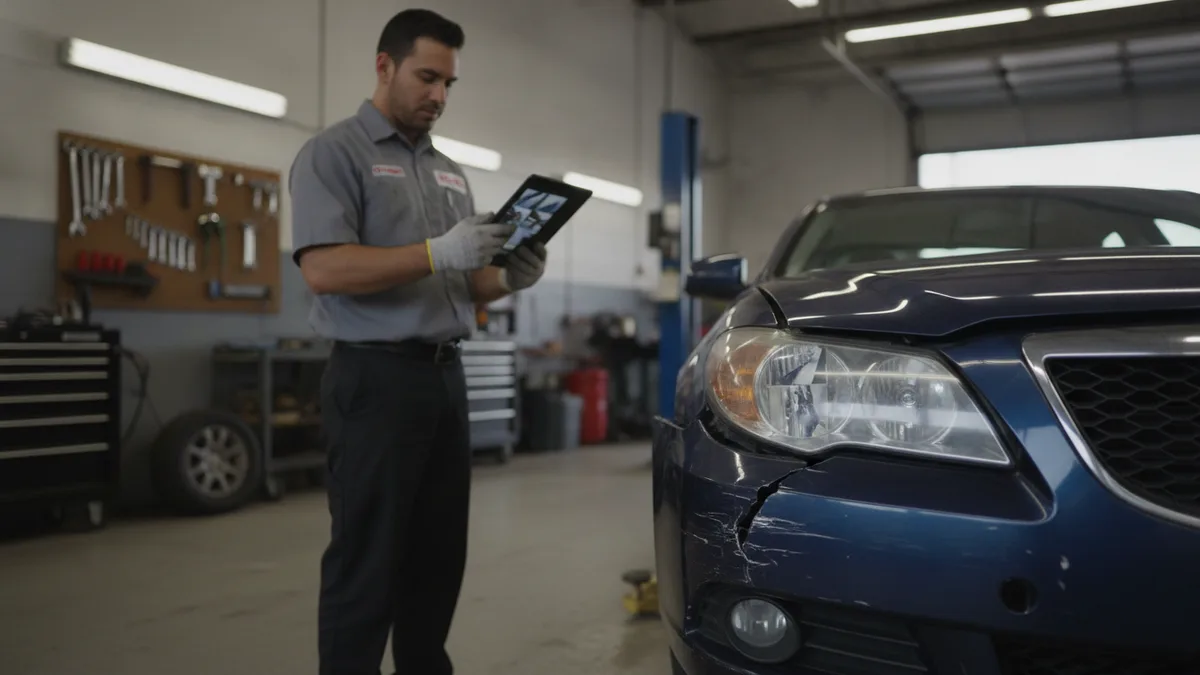
Bumper Replacement vs. Repair in Phoenix, AZ: Making the Smart Financial Choice
Repair vs. Replacement: The Quick Answer
Bumper repair usually makes sense when the damage is limited to scratches, small cracks, or minor dents on plastic that hasn’t warped, while replacement becomes the smarter option when there’s structural damage, broken mounting brackets, or misalignment that could affect safety systems. Brad’s Deer Valley Collision has been assessing this exact tradeoff for drivers in Phoenix, AZ, USA since 1985, and the right call almost always comes down to what’s underneath the surface, not just what you can see.
Picture a driver in Phoenix, AZ, USA who backs into a parking barrier and cracks the rear bumper cover. If the impact absorber and mounting points are intact, repair often restores both appearance and function. But if that same impact pushed the bumper into the trunk latch or bent the reinforcement bar, replacement is the only path that holds up over time. In our experience, shops that push repair on every job just to save the customer money end up costing them more in comebacks. A proper visual and hands-on inspection settles it fast. For a fuller picture of what’s involved in either path, Brad’s Deer Valley Collision’s full collision and bumper repair services page breaks down the process.
Assessing Bumper Damage: What Matters Most
Not all bumper damage is created equal. A technician looking at your car isn’t just eyeballing the dent. They’re checking several specific factors that determine whether repair is realistic or replacement is the safer call.
Impact Location
Where the damage sits matters as much as how bad it looks. A scrape near the edge of the bumper cover is a different animal than an impact directly over a mounting point or sensor housing. Many newer vehicles have parking sensors, cameras, or ADAS components built into the bumper fascia. Damage in those zones often pushes the decision toward replacement, since disturbing that hardware can affect calibration.
Structural Compromise
Here’s where things get serious. If the impact absorber or reinforcement bar behind the plastic cover took damage, that’s a structural issue, not a cosmetic one. Plastic bumper repair works well for surface-level cracks and dents. It doesn’t work when the underlying support system is bent, cracked, or pushed out of position. In our experience, shops that skip checking behind the cover are the ones handing out repair estimates that turn into replacement bills a week later.
Paint and Material Condition
Paint depth tells its own story. Deep gouges that expose bare plastic or primer usually need more than a touch-up. Crack repair can address hairline fractures, but once a crack runs more than a few inches or branches in multiple directions, the material has lost integrity. Age matters too. Bumpers that have already been repaired once, or that show sun-related brittleness common in Phoenix, AZ, USA, don’t always hold up to a second round of patching.
Mounting Brackets and Alignment
Broken clips or brackets sound minor. They’re not. A bumper that sits crooked or has gaps on one side usually points to bracket failure, and those parts are often more fragile than the bumper cover itself.
Weighing all this is exactly why the bumper replacement vs repair decision shouldn’t be made from a phone photo. A trained eye needs to look at the panel from the front, the back, and underneath. If you’re in Phoenix, AZ, USA and want a straight answer, bringing the vehicle in for a hands-on inspection gives you a far more accurate picture than any online estimate tool. Walk-ins are welcome, and there’s no obligation to move forward with any particular option based on that first look.
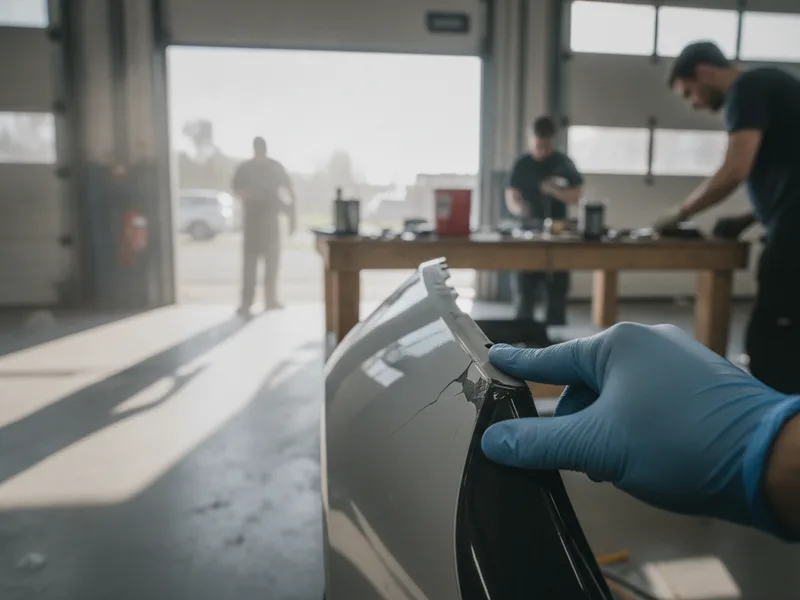
Cost Breakdown: Repair vs. Replacement in Phoenix
Every estimator on our team has seen the same pattern play out. A customer comes in expecting a full replacement quote, and the actual bill for a repair ends up far less painful than they braced for. Cost is usually the deciding factor once safety and structural questions are settled, so it’s worth breaking down where the money actually goes.
What Repair Typically Involves
Repair costs are driven by labor hours, filler materials, and paint work. A technician has to sand the damaged plastic, apply flexible filler designed for bumper covers, reshape the panel, then blend and clear-coat the repair so it matches the surrounding finish. Paint matching is often the biggest line item on a repair invoice, especially on vehicles with metallic or pearl finishes common on newer Phoenix, AZ, USA vehicles. Labor time varies with how much surface prep the damage requires, so two bumpers with similar-looking scuffs can still land at different price points.
What Replacement Typically Involves
Replacement costs hinge on the part itself and what’s installed alongside it. OEM (original equipment manufacturer) bumper covers cost more than aftermarket versions, but they’re built to the exact fit and thickness specifications of the original part. Aftermarket parts can save money upfront; in our experience, though, fit issues sometimes show up during installation, adding labor time that eats into those initial savings. Installation labor also covers removing sensors, brackets, and trim, then recalibrating any parking sensors or camera systems mounted in the bumper, which is a step that’s easy to underestimate on newer vehicles.
How Insurance Changes the Math
Deductibles play a big role in whether repair or replacement makes more financial sense out of pocket. A driver with a higher deductible may lean toward repair even when replacement is technically preferable, simply because the difference in cost is coming straight from their pocket. Direct repair program relationships between insurers and shops can also speed up approval and reduce paperwork, though drivers always retain the right to choose their own shop regardless of what an insurer suggests. It’s worth confirming deductible amounts and coverage details directly with your insurance provider before authorizing any work, since policies vary widely.
Getting two or three written estimates helps clarify where a specific vehicle falls on this spectrum. Our team at Brad’s Deer Valley Collision’s background and credentials has been assessing this kind of damage since 1985, and that history shapes how we quote repair versus replacement. We’d rather walk a customer through both options honestly than push the pricier one by default.
Durability and Safety: Why Material Matters
Most bumpers on the road today are thermoplastic, not metal. That surprises people. The plastic cover sits over a foam energy absorber and a reinforcement bar, and each layer reacts differently to damage and to repair work.
Plastic flexes. That’s the point. A minor impact can push it out and let it pop back close to its original shape, which is why some scuffs and small cracks respond well to heat welding and reinforcement techniques. But plastic has a memory limit. Once it’s been stretched or stressed past a certain point, it loses some of its ability to flex the same way again. A repair on overstressed plastic might look fine in the shop and still crack along the same stress line a year later, especially with Phoenix, AZ, USA heat cycles pushing panels through constant expansion and contraction.
Heat is a bigger factor here than most drivers realize. Plastic that’s already thin from a repair, or that’s been repaired with the wrong filler, tends to soften and shift faster in extreme summer temperatures. We’ve seen touch-up repairs hold up fine in mild climates that don’t last as long here.
Metal reinforcement bars behave differently. Once bent, they generally don’t return to factory spec, even after straightening attempts. That matters because the reinforcement bar is what’s designed to manage crash energy in a secondary impact. In our experience, a bent bar behind a repaired cover is one of the more overlooked safety issues in this industry; the outside looks acceptable while the structural piece behind it is compromised.
There’s also the sensor question. Bumpers on many newer vehicles house parking sensors, cameras, or radar units tied to driver assistance systems. Replacing or repairing around these components without proper recalibration can leave those systems reading incorrectly. Any shop handling this work should have ADAS recalibration capability, not just bumper repair skill.
If a vehicle has active safety systems built into the bumper, it’s worth asking a qualified technician directly whether repair or replacement better preserves how those systems perform.
Insurance and Warranty Considerations
Adjusters lean toward repair almost every time. That’s not a conspiracy; it’s math. A repaired bumper costs less to close out on their end, so the initial estimate a Phoenix policyholder receives often assumes repair unless the damage clearly rules it out. If your technician is recommending replacement and the insurance estimate still says repair, that gap is worth questioning before any work starts.
Direct repair programs (DRPs) add another layer. These are arrangements where an insurer pre-approves certain shops, streamlining paperwork and speeding up claim turnaround. They can be convenient, but Arizona drivers have the legal right to choose their own repair shop regardless of what an insurer suggests or which shops sit inside their DRP network. We’d encourage anyone unsure of this to check with their state’s insurance department or a licensed insurance professional, since coverage details and consumer protections vary by policy.
Warranty coverage differs sharply between the two options too. A quality repair should carry a written warranty on the labor and materials used. Replacement, especially with OEM parts, typically comes with manufacturer backing on top of the shop’s own warranty. Aftermarket parts can lower the upfront cost but sometimes carry a shorter or more limited warranty, so it’s worth asking directly what’s covered and for how long before signing off.
Get everything in writing. That includes the estimate, the parts source (OEM or aftermarket), and the warranty terms. A verbal promise doesn’t hold up if something goes wrong six months later. Vehicle owners in Phoenix, AZ, USA who want a second opinion or a documented estimate before filing with their insurer can request a free consultation and written estimate through our team, and we’re glad to walk through what the paperwork should actually say.
The Brad’s Deer Valley Approach: Honest Assessment, Long-Term Value
We’ve been fixing bumpers in Phoenix since 1985. That kind of run doesn’t happen by talking people into work they don’t need.
Our process is simple. We look at the damage, tell you what we see, and give you a straight answer on repair versus replacement. If a repair will hold up and pass a proper inspection, that’s what we recommend. If the damage points to structural compromise or a safety system that needs recalibration, we’ll say so, even when a repair quote would be the easier sell.
Our technicians hold I-CAR and ASE certifications, and we’ve invested in ADAS recalibration equipment that a lot of smaller shops in the area still don’t have. That matters more than people realize once a bumper repair touches a sensor mount.
We back our work with a written warranty, and we’re upfront about turnaround time before you commit to anything. Walk-ins are welcome if you want a second look at an estimate, and our shop offers loaner and shuttle options so a bumper repair doesn’t stall your whole week.
Get a written estimate before deciding anything; it’s the one habit that protects you no matter which shop you choose.
Frequently Asked Questions
How do I know if my bumper can be repaired or needs to be replaced?
A lot of it comes down to how deep and how wide the damage goes. Minor surface dents, small cracks under about 6 inches, and scraped paint usually repair just fine. If you’re looking at deep structural cracks, damage that’s messed with sensors or the frame behind the bumper, or a crack that runs across more than half the panel, replacement is the safer call. Bring your vehicle by our Phoenix shop and we’ll take a look in person before giving you a real answer.
Will my insurance cover bumper repair or replacement?
If you carry collision coverage, yes, your policy should cover bumper repair or replacement, though what you owe out of pocket depends on your deductible and the type of damage. Your insurer will usually base the repair-or-replace decision on cost estimates from the shop. One thing a lot of Phoenix drivers don’t realize: you’re allowed to pick any certified shop you want, you’re never locked into your insurer’s preferred list. Check your specific policy details with your agent to be sure.
Is an aftermarket bumper cheaper than an OEM replacement?
Aftermarket bumpers do tend to run cheaper than OEM parts, sometimes by a noticeable margin, but fit and finish can vary from panel to panel. OEM bumpers are made to match your vehicle’s exact specs, so alignment and paint match come out right every time. Which one you get often isn’t fully up to you though. Your insurance claim usually dictates the part type, though some policies let you upgrade to OEM at your own added cost.
How long does bumper repair vs. replacement take in Phoenix?
Repairs generally take a few days, mostly because of paint drying and curing time in our Arizona heat. Replacement takes a bit longer since it involves ordering the part, especially with OEM bumpers, plus alignment work once it’s installed. Timelines shift depending on parts availability and how busy the shop’s schedule is that week. We offer loaner cars and shuttle service at Brad’s Deer Valley Collision so being without your car isn’t as much of a headache.
What warranty should I expect after bumper repair or replacement?
A shop that stands behind its work should give you something in writing, typically covering paint, labor, and materials for several years. At Brad’s Deer Valley Collision, we put our warranty terms in writing before any work starts, so you know exactly what’s covered. If a shop won’t give you a written warranty, that’s worth thinking twice about. It’s always smart to read the terms carefully and ask questions before you sign off on repairs.
Get a Straight Answer on Your Bumper
A cracked bumper doesn’t always mean a full replacement, and a scuffed one doesn’t always mean it’s fine either. Brad’s Deer Valley Collision will take a look, tell you honestly whether repair or replacement makes more sense, and put it in writing so you’re not guessing.
Stop by our shop in Phoenix, AZ, USA for a free assessment, or give us a call to ask questions first. You can also browse our full range of collision and bumper repair services to see what we handle beyond bumpers. Curious what other drivers thought of working with us? Check out our reviews on Google before you decide.