Auto Body Paint Shop Technology in Phoenix, AZ: How Advanced Paint Matching Ensures Invisible Repairs
Auto Body Paint Shop Technology in Phoenix, AZ: How Advanced Paint Matching Ensures Invisible Repairs
How Modern Paint Matching Technology Delivers Invisible Repairs
Advanced paint matching uses spectrophotometer readings, digital color databases, and computer-calibrated mixing to reproduce a vehicle’s factory finish so precisely that a repaired panel blends into the surrounding paint without a visible line. Brad’s Deer Valley Collision applies this process to every auto body painting job in Phoenix, AZ, USA, where intense sun and heat make color accuracy harder to achieve than in milder climates. The shop has served Phoenix drivers since 1985.
Picture a driver with a scraped rear quarter panel after a parking lot mishap. Twenty years ago, a painter might have mixed color by eye, checked it against a faded swatch, and hoped for the best. That approach often left a faint mismatch visible in direct sunlight, exactly the kind of harsh light Phoenix cars sit in most of the year.
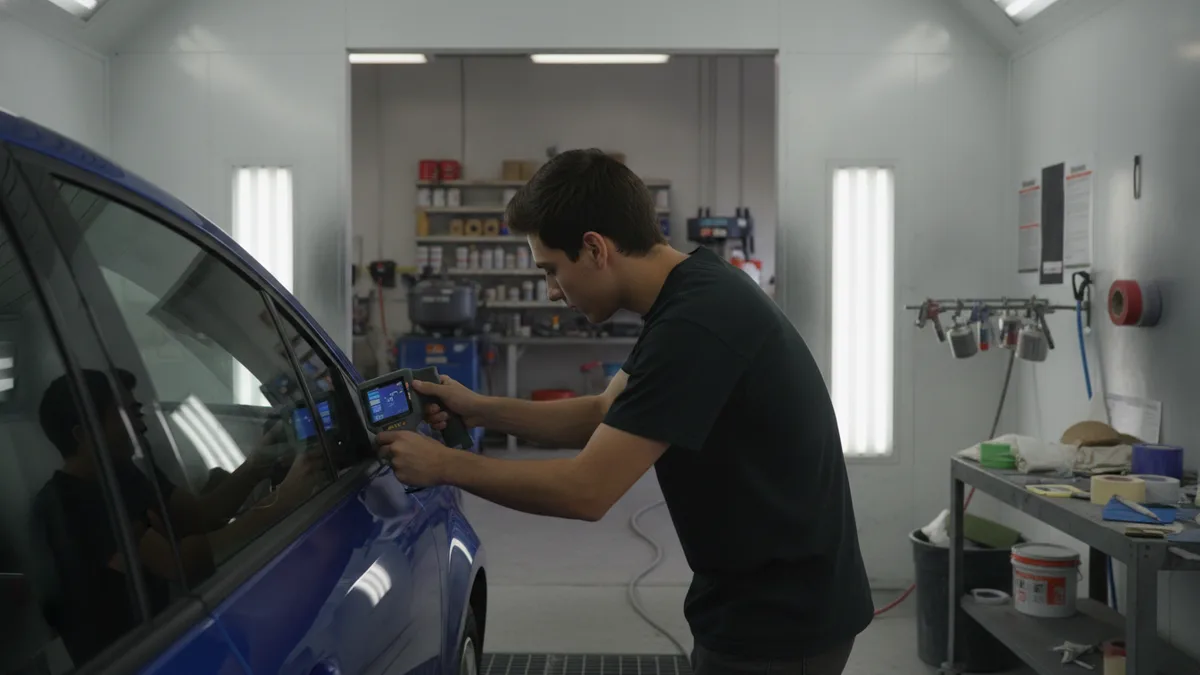
Spectrophotometry changes that equation. The device reads the exact pigment composition of the existing paint, accounting for fade and oxidation, then cross-references that data against manufacturer formulas to produce a custom mix rather than a generic shade off a chart. In our experience, this step matters more than the paint booth or the spray gun; get the formula wrong and no amount of technique fixes it. Drivers who want to see how this fits into a larger repair, including bumper work, frame alignment, or dent removal, can review the full auto body painting services Brad’s Deer Valley Collision offers before scheduling an estimate.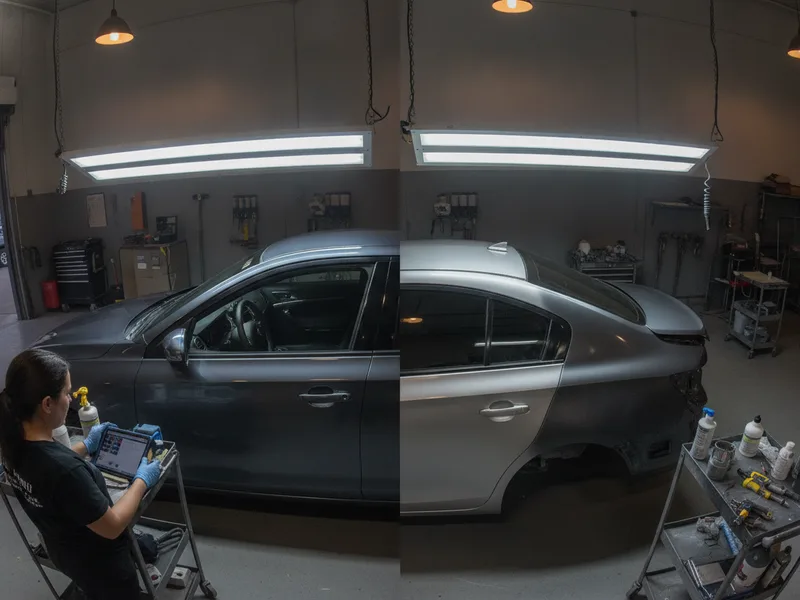
The Core Technology: Spectrophotometry and Color Matching Systems
Your eye is a decent tool. It’s not a good enough tool for matching paint.
Human vision changes depending on light, mood, and even what you ate for breakfast. Two people can look at the same panel and disagree on whether it matches. That’s why every real auto body paint shop relies on a spectrophotometer instead of a painter’s judgment alone.
How the Device Actually Works
A spectrophotometer reads light. Specifically, it measures how a painted surface reflects light across the visible spectrum, capturing data points a human eye simply can’t process. The device takes multiple readings from different angles because modern automotive paint, especially metallics and pearls, shifts appearance depending on viewing angle. This is called angle-dependent color, and it’s the reason a paint chip that looked perfect in the store can look off once it’s on the car.
Once the readings are captured, the data gets compared against a manufacturer’s color library. That library holds the original formula used on your vehicle when it left the factory. From there, the system generates a starting recipe: the ratios of tint that should, in theory, reproduce that factory color.
Why “Should” Matters
Paint ages. Sun exposure fades a finish over years, and no two vehicles age identically. A 2015 sedan that’s spent a decade under the Arizona sun won’t match its own factory code anymore; it’s shifted. This is where the spectrophotometer earns its keep. It reads the actual current color of the panel next to the repair, not just the factory number, and adjusts the formula accordingly.
In our experience, shops that skip this step and trust the paint code alone end up with a “close enough” repair that’s obviously off in direct sunlight. Customers notice. They may not know why, but they’ll say the car “doesn’t look right.”
The final step is a physical spray-out card, a test panel mixed and sprayed under the same conditions as the actual repair. Technicians compare it against the vehicle in natural light before committing to the full panel. Skipping this check is one of the more common shortcuts we see in the trade, and it’s rarely worth the risk.
For vehicle owners researching repair standards, the National Highway Traffic Safety Administration publishes general information on collision repair quality at nhtsa.gov. It’s worth a look if you want context beyond what any single shop tells you.
Why Phoenix’s Climate Demands Precision Paint Matching
Cars parked outside in Phoenix for a few years almost never wear the same shade of paint they left the factory with. That’s the pattern we see daily on vehicles rolling into our shop. Intense UV exposure breaks down clear coat and pigment over time, causing factory paint to fade unevenly across hoods, roofs, and trunk lids. A fresh coat of “matched” paint applied without accounting for that fade will often look too bright or too dark next to the surrounding panels.
Temperature swings add another layer. Phoenix summers can push surface temperatures well above ambient air temperature, and that heat affects how paint cures and how color reads once it’s dry. A shade mixed and sprayed on a mild morning can look different by afternoon if the booth conditions and cure process aren’t controlled carefully.
This is where spectrophotometer readings matter more than in milder climates. Precision matching has to account for sun-faded panels, not just the factory formula. Skipping that step is a common reason repairs end up visible under Phoenix sunlight.
Common Paint Matching Mistakes That Leave Repairs Visible
Bad paint matches don’t happen by accident. They happen because shops cut corners somewhere in the process.
Here’s what we see most often when a customer brings us a car that another shop repaired.
- Eyeballing the color instead of measuring it. Some shops skip the spectrophotometer entirely and mix paint based on a swatch book or memory. The result is a panel that looks close under shop lighting but shifts noticeably in daylight.
- Ignoring metallic and pearl complexity. Metallic and pearl finishes contain reflective particles that change how light bounces off the surface depending on the angle. A shop that doesn’t test the mix at multiple viewing angles often produces a repair that matches straight on but looks off from the side.
- Treating faded paint like factory-fresh paint. A car that’s spent years under the Phoenix sun rarely matches its original paint code anymore. Shops that mix strictly to code, without adjusting for sun fade, end up with a repair that’s technically correct and visually wrong.
- Rushing or skipping surface prep. Paint needs a clean, properly sanded, and primed surface to bond and lay evenly. Skipping steps here shows up later as texture differences, uneven sheen, or peeling.
- Cutting the cure time short. Paint needs a set amount of time under controlled conditions to cure fully. Pulling a car out early to save time can leave the clear coat soft, which affects gloss and durability down the road.
Every one of these mistakes traces back to the same root cause: rushing. A shop trying to turn cars around faster than the process allows will eventually produce a visible repair, even with good equipment sitting in the bay.
We’ve built our process around avoiding these shortcuts, and our background and certifications as an auto body paint shop reflect decades of learning what not to do. Customers evaluating any collision repair shop in Phoenix, AZ, USA should ask directly how a shop handles color testing, prep time, and cure schedules before signing off on repairs.
What to Expect During the Paint Matching and Repainting Process
Customers often assume paint work happens in one step. It doesn’t. Every repair that leaves our shop looking factory-fresh passes through several distinct stages, and skipping any one of them is usually where visible repairs come from.
Assessment and Color Reading
We start by inspecting the damaged panel and the surrounding area, since paint fade rarely stops at the repair zone. A spectrophotometer reading comes next, capturing the vehicle’s actual current color rather than what the factory code says it should be. In Phoenix, AZ, USA, those two numbers are often different because of sun exposure over the years.
Formulation and Test Spraying
The spectrophotometer data feeds into paint-mixing software that generates a formula. Our painters then spray a test card and compare it against the vehicle in natural light before committing to the full panel. Some shops skip this step to save time. We don’t recommend that shortcut; a few extra minutes here can prevent redoing an entire panel later.
Surface Preparation
Paint only looks as good as the surface underneath it. Sanding, priming, and cleaning the panel properly takes longer than most customers expect, but rushed prep is one of the most common reasons a repaint fails months down the road.
Application in a Controlled Environment
Spraying happens in a filtered, temperature-controlled booth. This matters more in Phoenix than in milder climates, since dust, heat, and humidity swings can all affect how paint lays down and cures.
Curing and Quality Assurance
Curing times vary by product and conditions, so we don’t rush a car out the door before the finish has properly set. Once cured, we inspect the panel under multiple lighting conditions, indoor, shaded, and direct sun, since a match that looks perfect indoors can reveal itself outdoors if it wasn’t done right.
Every stage builds on the one before it. Our certified painters and calibrated equipment exist to make each step repeatable rather than left to guesswork. Customers who walk into our Phoenix, AZ, USA location are welcome to ask questions about where their vehicle stands in this process at any point, and we’re glad to walk through it in person.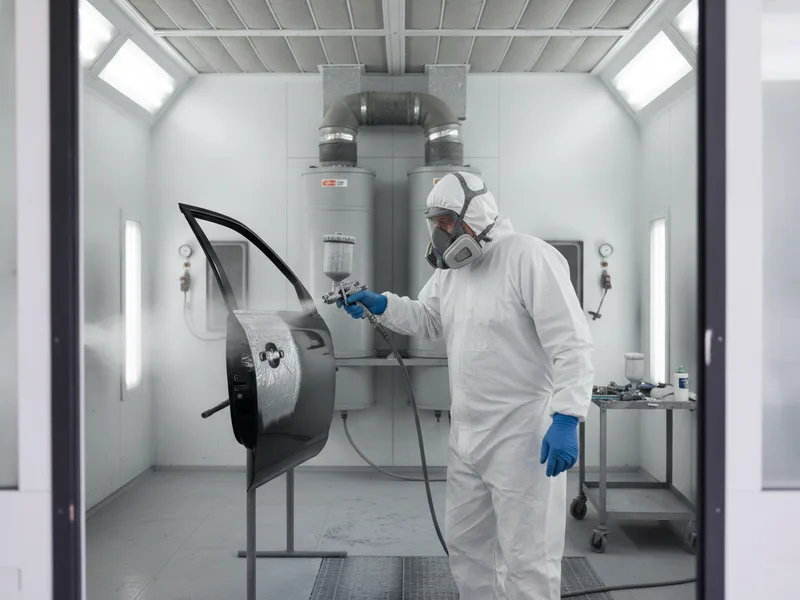
Insurance Claims and Paint Repairs: What Customers Should Know
Insurance covers paint repair the same way it covers body work, but the scope matters. A vague estimate that just says “blend panel” can leave out the labor and materials needed for proper color matching, blend panels, or clear coat work. That gap shows up later as a mismatched repair nobody wants to fix twice.
Get it in writing. Any estimate should spell out exactly which panels get painted, whether adjacent panels need blending, and what materials are involved. If a shop won’t put that on paper, that’s a red flag worth taking seriously.
Here’s something a lot of customers don’t realize: you get to choose your own repair shop. Your insurer can recommend a shop, but the decision is yours. Brad’s Deer Valley Collision participates in direct repair programs with several insurers, which usually means faster estimate approval and less back-and-forth paperwork on your end.
We handle documentation directly with adjusters whenever possible. That doesn’t replace reading your own policy, though. Coverage details vary by insurer and by plan, so check with your insurance provider about specifics before assuming what’s included.
Why Brad’s Deer Valley Collision Stands Out for Paint Work in Phoenix
Walk our shop floor on any given day and you’ll see two things working together: a spectrophotometer pulling color data off a fender, and a painter with decades of muscle memory adjusting the mix by hand. Neither works well alone. We’ve watched shops buy expensive equipment and still turn out flat, lifeless finishes because nobody on staff knew how to read the numbers against real light.
Brad’s Deer Valley Collision has been repairing cars in Phoenix, AZ, USA since 1985. That kind of tenure teaches you which shortcuts actually cost customers money down the road. Our painters hold I-CAR and ASE certifications, and we display them because customers should ask to see them, not just take a shop’s word for it. We also back our paint work with a written warranty, something every reputable auto body paint shop ought to offer without hesitation.
Convenience matters too. Loaner vehicles, shuttle service, after-hours drop-off, and text updates with photos keep customers informed instead of guessing what’s happening to their car. Most guides tell people to just compare price quotes, but in our experience, shops that communicate poorly during the repair usually cut corners on the paint booth as well.
If you’re weighing estimates or just want to see our process firsthand, our request a free repair estimate page makes it simple to start a conversation.
Frequently Asked Questions
Can a body shop really match my car’s original paint color?
Yes, and it’s more precise than most people expect. Shops use spectrophotometry technology that reads your vehicle’s existing finish, picking up on metallic content, pearl coat layers, and color undertones that the human eye just can’t catch. Brad’s Deer Valley Collision uses this kind of matching technology on vehicles brought in throughout Phoenix, AZ, aiming for a finish that blends in with the factory paint rather than standing out against it.
How long does paint matching and a full repaint take?
A minor scratch with a spot repair might only need a day or two. A full-panel repaint usually runs 3 to 5 business days once you factor in prep, matching, application, and cure time. These are general ranges, not guarantees; actual timing depends on the damage and how busy the shop is. Brad’s Deer Valley Collision gives customers a realistic estimate up front and sends text updates with photos so there’s no guessing about where the car stands.
What’s the difference between OEM paint and aftermarket paint?
OEM paint is made to the exact factory formulation your vehicle originally came with. Aftermarket paint is a third-party alternative, and it can vary in durability, color accuracy, and warranty terms depending on the brand and supplier. Which one makes sense for your car often depends on your insurance policy and how long you plan to keep the vehicle. Brad’s Deer Valley Collision can walk Phoenix customers through what their insurer allows and which option tends to hold up better over time.
Will my repair look perfect under all lighting conditions?
A well-matched repair should hold up under daylight, indoor lighting, and direct sun, though “perfect” is a high bar and results can vary slightly by vehicle and paint type. Paint-matching booths use standardized LED lighting so techs can check color accuracy before the car ever leaves the shop, and spectrophotometer readings help account for the way color can shift under different light sources. Brad’s Deer Valley Collision inspects finished work under multiple lighting setups as part of its quality check before handing the keys back.
Does insurance cover the full cost of paint matching and repainting?
Insurance often covers paint work tied to a collision claim, but how much gets covered depends on your specific policy, your deductible, and how the damage happened. It’s worth reviewing your policy details or asking your adjuster directly, since coverage isn’t identical across insurers. Brad’s Deer Valley Collision works with insurance companies on behalf of Phoenix customers and provides estimates meant to help the claims process go smoothly, though final coverage decisions rest with the insurer.
Get Your Paint Match Right the First Time
Mismatched paint is one of the fastest ways to spot a repair, and it’s one of the easiest problems to avoid with the right shop. If your vehicle needs bodywork or a full color match after a collision, Brad’s Deer Valley Collision in Phoenix, AZ, USA can walk you through what the process actually involves before any work begins.
Stop by the shop or give us a call to get a detailed written estimate; there’s no pressure and no guesswork involved. You can also browse our full auto body painting and collision repair services to see how we approach each job. Curious what other Phoenix drivers think of our work? Feel free to check out our reviews on Google before you decide.