Auto Body Paint Matching in Phoenix, AZ: Achieving Professional Color Accuracy
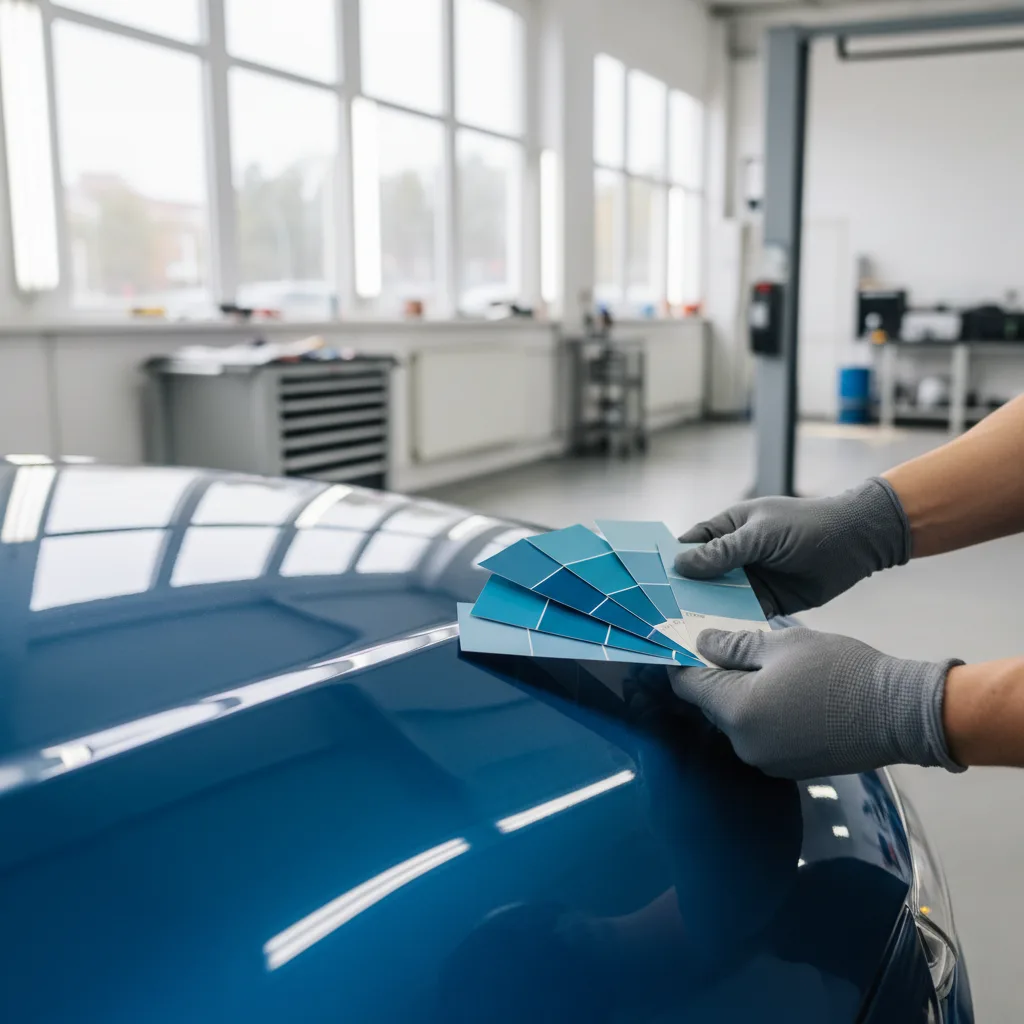
Auto Body Paint Matching in Phoenix, AZ: Achieving Professional Color Accuracy
Why Paint Matching Matters More Than You Think
Picture this: you pick up your car after a rear bumper repair, pull into the sunlight at Desert Ridge Marketplace, and immediately notice the repaired panel is half a shade lighter than the rest of your vehicle. The repair itself is solid. But the color is off, and now you can’t unsee it.
That’s the reality of poor auto body paint matching, and it happens more often than it should.
Color discrepancies don’t need to be dramatic to be obvious. Even a five-degree shift in hue under direct Phoenix sunlight, which is intense and unforgiving at 300-plus days of sun per year, exposes mismatched panels instantly. The human eye picks up on subtle tonal differences between adjacent surfaces, especially on dark colors like navy, black, and charcoal.
Some shops will tell you that a close enough match is fine for minor repairs. We disagree. Your vehicle’s finish is continuous, and any panel that reads differently from its neighbor signals an incomplete job. It affects resale value, and frankly, it’s a sign that the shop skipped critical prep steps or relied on outdated color-matching tools.
The consequences of lazy paint matching go beyond appearance. Mismatched touch-up paint that wasn’t properly blended can peel at the edges, trap moisture, and accelerate rust, which is less common in Phoenix, AZ but still a real risk near AC condensation points and door jambs.
At Brad’s Deer Valley Collision, we’ve been doing this since 1985. Precision color work isn’t an add-on for us; it’s built into every repair we touch. You can explore our full range of services or contact us to schedule an assessment and see the difference experience makes.
Advanced Paint Matching Technologies at Brad’s Deer Valley Collision
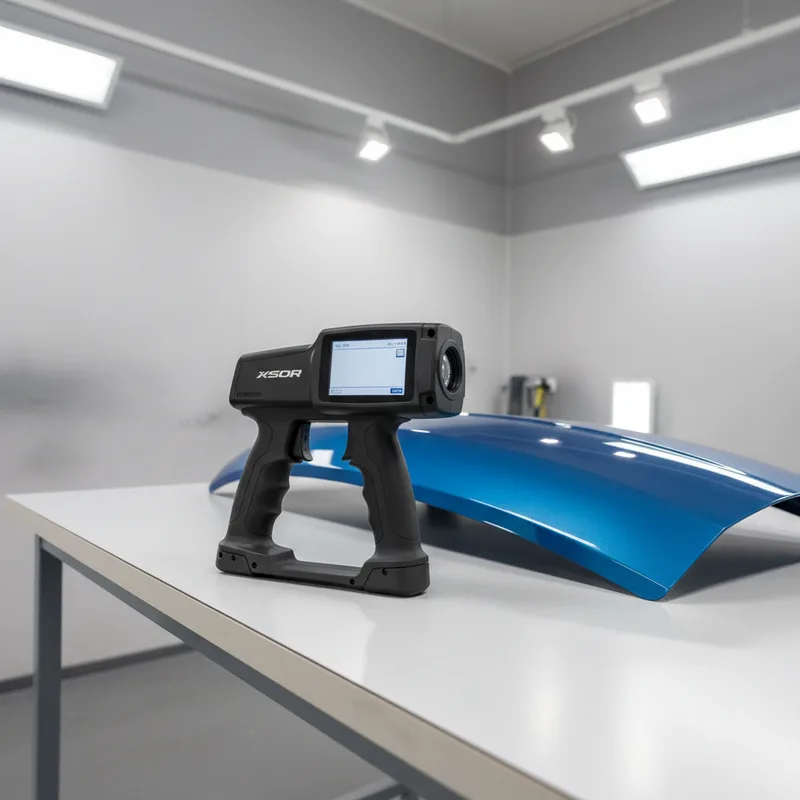
Color matching used to mean a painter eyeballing a chip card and hoping for the best. That approach still exists at some shops, and it shows. At Brad’s Deer Valley Collision, we use a spectrophotometer to take the guesswork out of auto body paint matching completely.
Here’s what that instrument actually does. A spectrophotometer reads the light reflected off your vehicle’s existing paint at multiple angles, measuring wavelengths your eye simply cannot distinguish. It captures the exact color data, including how the finish shifts under different lighting conditions. That information feeds directly into our computerized mixing system, which formulates a blend matched to your specific car, not just your car’s make and model.
Why the Paint Code Alone Isn’t Enough
Most customers assume the factory paint code printed on their door jamb sticker settles the question. It doesn’t. Manufacturers use the same code across thousands of vehicles, and paint shifts as it ages, bakes under the Phoenix, AZ sun, and oxidizes over time. Two cars with identical codes sitting next to each other outdoors can look noticeably different after a few Arizona summers. A spectrophotometer accounts for that real-world color drift. A paint code lookup does not.
This is where we’d push back on the common advice to “just match the code.” That guidance made sense twenty years ago. Today, it produces repairs that look fine indoors and fail in sunlight, which is exactly the scenario we described near Desert Ridge Marketplace in the opening of this article.
Equipment Is Only Half the Answer
Technology doesn’t replace training. Our painters are I-CAR trained and have spent years developing the judgment to verify what the spectrophotometer recommves before a single drop of paint goes on a panel. They read test sprays, they check blends under multiple light sources, and they adjust formulas when the data and the real-world result don’t line up perfectly.
That combination of calibrated equipment and experienced hands is what separates a professional paint job from one that needs to be redone in six months.
We’ve been doing this work since 1985, and the tools have changed dramatically over that time. What hasn’t changed is the standard we hold ourselves to. You can learn more about our certifications and shop history on our About page, or review the full range of services we provide at our services page. If you’d like us to take a spectrophotometer reading on your vehicle, contact us to schedule a free estimate.
The Paint Matching Process: From Assessment to Application
Most people assume the hardest part is spraying the paint. It isn’t. The hardest part is everything that happens before the gun ever comes out.
At Brad’s Deer Valley Collision, our technicians start every auto body paint matching job with a thorough visual and physical inspection of the damaged area. That means checking panel edges, reading the existing clear coat condition, and identifying any prior repairs that might affect how new paint bonds or blends. A panel that’s been repainted before behaves differently than factory-original finish, and missing that detail early causes problems at the end.
Surface Preparation
Surface prep is where a lot of shops cut corners, and it’s where quality is won or lost. We sand the repair area down to a clean, uniform surface, feathering the edges to eliminate ridges that would show through the topcoat. Any bare metal gets a proper primer application, not just a light scuff and a spray. Skipping this step is one of the most common mistakes we see when customers come to us after a repair done elsewhere didn’t hold up.
The body filler stage, if needed, gets the same attention. We block-sand until the panel contour matches the surrounding geometry. You can’t fix a wavy panel with paint, no matter how precise your color formula is.
Color Formula and Mixing
Once the surface is ready, we pull the vehicle’s paint code and cross-reference it with the spectrophotometer readings we covered in the previous section. Phoenix, AZ’s intense UV exposure means factory paint often shifts noticeably over time, so we adjust the formula to match the current color of your vehicle, not just what the factory originally sprayed.
Our painters mix the formula in-house, which gives us control other shops don’t have when they’re ordering pre-mixed product.
Application and Blending
Application isn’t just about coverage. Technique, distance, overlap pattern, and flash time between coats all affect the final appearance. We blend into adjacent panels when necessary to prevent any visible line between repaired and original surfaces.
Clear coat goes on last, followed by a polishing process that brings the sheen to factory spec.
The full picture of what we do is on our services page. If you want to talk through your specific repair, reach out and schedule an estimate. We’re easy to get to, and walk-ins are welcome.
Common Paint Matching Mistakes to Avoid
Bad paint work is easy to spot. The fix itself might be perfect, but a color that’s even slightly off will catch sunlight in all the wrong ways. Here’s what separates a shop that gets it right from one that cuts corners.
-
Skipping surface prep. This is the biggest one. Paint applied over contaminants, scratches, or uneven primer will never bond correctly. The color might look fine indoors, but it’ll peel, fade, or show texture mismatches within months. Proper auto body paint matching starts with the surface, not the spray gun.
-
Relying only on the paint code. Most customers assume the factory code is all you need. It isn’t. Paint codes account for the original formula, not for how that color has aged on your specific vehicle. A good painter reads the actual car, not just the sticker.
-
Rushing the color mix. Spectrophotometer readings are useless if the technician doesn’t take time to evaluate the data and test the blend. Speed is the enemy of accuracy here.
-
Skipping the blend and feather. Spot painting a panel without blending into adjacent panels almost always produces a visible line. Blending takes more time and material, which is why some shops skip it.
-
No quality check in natural light. Indoor lighting lies. Any shop doing professional auto body paint matching in Phoenix, AZ should verify color accuracy in direct daylight before signing off.
If a shop can’t explain its prep process or skips a written color verification step, that’s a red flag. Contact us before you commit to a repair you might regret.
Scratch Repair and Panel Repainting: When Paint Matching Is Essential
Not every paint job is the same challenge. A keyed door panel on a three-year-old silver sedan is a completely different problem than a bumper scuff on a brand-new white truck. The complexity of auto body paint matching changes depending on what got damaged, where it sits on the vehicle, and how far the color has already drifted from the factory spec.
Minor scratches that haven’t broken through the primer are the simplest cases. A trained painter can blend touch-up work into the surrounding clear coat without respraying the full panel. But here’s where a lot of shops mislead customers: they treat shallow scratches as quick fixes and skip blending entirely. That shortcut almost always produces a visible repair line, especially under direct Arizona sunlight.
Single-panel repairs are where auto body paint matching really earns its keep. Hoods, doors, and fenders are large, highly visible surfaces. Even a slight color variance across a single panel will catch light differently and stand out. At Brad’s Deer Valley Collision, we respray the full panel rather than spot-paint, then blend into adjacent panels when the color calls for it.
Multi-panel blending is necessary more often than people expect. Older vehicles with significant paint fade, metallics, or tri-coat finishes frequently require blending two or three panels to achieve a seamless result. Skipping this step to save time is one of the more common mistakes we see from shops prioritizing speed over quality.
Full repaints are a different category altogether. Complete color changes or whole-vehicle refinishing require consistent application across every surface, and surface prep becomes even more critical. There’s no adjacent original paint to blend into, so the mix has to be exact from the start.
Turnaround time varies accordingly. A single-panel repair in Phoenix, AZ might take one to two days. Multi-panel blending jobs often run three to four. A full repaint can take a week or more depending on condition.
If you’re unsure what your repair actually requires, reach out to us for a free estimate and we’ll give you a straight answer based on what we see, not what’s fastest.
Why Phoenix Drivers Trust Brad’s for Paint Perfection
We’ve been doing this since 1985. That’s four decades of auto body paint matching work in Phoenix, AZ, through every paint technology shift the industry has seen. We didn’t survive that long by cutting corners on color.
Our I-CAR certified technicians use spectrophotometric scanning, not guesswork, and we back every paint job with a written warranty. You’ll find shops that offer lower bids, but a vague estimate with no warranty attached isn’t a deal. It’s a risk you shouldn’t take.
Reputation matters here. Phoenix drivers from Scottsdale to Chandler come to our Deer Valley location because they’ve seen the results on their neighbors’ cars. That’s the kind of referral no ad budget buys.
Walk-ins are welcome. If you’re unsure whether your repaired panel is blending correctly or you need a full range of collision and painting services, stop by and talk to us directly. No appointment necessary to get eyes on your vehicle.
Ready to get a straight answer on your paint repair? Contact Brad’s Deer Valley Collision and schedule your free estimate today.
Frequently Asked Questions
How long does professional paint matching typically take?
The actual color matching process usually takes a few hours, but the full repair is a different story. Surface prep, primer application, paint application, and curing can take anywhere from 24 to 72 hours total. The timeline depends on how much damage we’re working with and Phoenix, AZ’s weather conditions on any given day. When you bring your vehicle into Brad’s Deer Valley Collision for an initial inspection, we’ll give you a straightforward time estimate so you’re not left guessing.
Can all vehicle paint colors be perfectly matched?
The short answer is yes, in almost every case. We use modern spectrophotometer technology that matches roughly 99% of factory colors with very high precision. Older vehicles or specialty finishes like pearl, metallic, or tri-coat paints can be trickier and may require additional blending work. Our team has handled all kinds of auto body paint matching challenges right here in Phoenix, AZ, so even the more demanding finishes aren’t a problem for us.
What’s the difference between OEM and aftermarket paint?
OEM paint comes directly from your vehicle’s manufacturer, which means it’s formulated to match your car’s original color and hold up the same way over time. Aftermarket paint costs less but can vary slightly in color tone and long-term durability. At Brad’s Deer Valley Collision, we use high-quality products and we’ll walk you through both options during your estimate so you can make an informed decision. There’s no pressure either way.
Will a repaired and repainted panel be as durable as the original?
Yes, absolutely. When certified technicians follow proper prep and curing procedures, the finished result is just as tough as the factory finish. Our auto body paint matching work here in Phoenix, AZ is backed by a solid warranty, and we don’t cut corners on the process. Good prep work is what separates a repair that lasts years from one that starts peeling or fading. You can count on our work holding up the same way your original paint did.
Does my insurance cover paint matching as part of the repair?
Yes, paint matching is considered a standard part of any collision repair job, and it’s covered under comprehensive and collision insurance policies. You don’t have to fight for it. Brad’s Deer Valley Collision works directly with insurance companies and handles all the documentation on your behalf. We’ve built a solid reputation as a trusted repair provider in Phoenix, AZ, and we make sure your claim covers professional auto body paint matching from start to finish.
Get a Free Paint Estimate at Brad’s Deer Valley Collision in Phoenix, AZ
If your vehicle needs auto body painting and you want it done right the first time, we’re here to help. Our certified technicians take pride in precise color matching and quality finishes that hold up in the Phoenix, AZ, USA heat and sun. See what our customers are saying on Google and find out why so many Phoenix drivers trust Brad’s Deer Valley Collision with their vehicles.
Stop by anytime for a walk-in appointment, or give us a call to talk through your repair needs with someone who actually knows paint. Schedule your free estimate today and let’s get your car looking its best again.