ASE and I-CAR Certifications in Phoenix, AZ: Why Credentials Matter for Your Best Auto Body Shop
ASE and I-CAR Certifications in Phoenix, AZ: Why Credentials Matter for Your Best Auto Body Shop
What ASE and I-CAR Certifications Actually Mean
ASE and I-CAR certifications are third-party verified proof that a technician passed standardized exams and keeps up with ongoing training in specific repair skills. For customers researching the best auto body shop in Phoenix, AZ, USA, these credentials matter because they separate shops that can document their skill level from shops that simply say “trust us.” Brad’s Deer Valley Collision has held these standards since 1985.
Say you’re comparing three collision repair shops after a rear-end accident on your morning commute. Two of them mention certifications on their website. One doesn’t say anything about training at all. That gap tells you something, and it’s worth pausing on before you sign a repair authorization.
ASE: Automotive Service Excellence
ASE certification comes from the National Institute for Automotive Service Excellence, an independent nonprofit that tests technicians across specific categories like collision repair, painting and refinishing, and structural analysis. Passing requires a written exam plus documented hands-on experience. Certifications expire and technicians have to retest, so an ASE credential reflects current skill, not something earned once and forgotten.
I-CAR: Inter-Industry Conference on Auto Collision Repair
I-CAR training is built specifically around collision repair, and it goes deeper into the technical side than most people expect. Technicians work through courses on structural repair, welding, and increasingly on ADAS recalibration (the sensors and cameras behind lane-assist and automatic braking systems). A shop with I-CAR Gold Class recognition has met requirements around staff training across multiple roles, not just one certified technician on the payroll.
Here’s where we’d push back on a common assumption. A lot of advice online treats “certified” as a single checkbox, as if any certification is interchangeable with any other. In our experience working on vehicles across Phoenix, AZ, USA, the specific certification matters. A technician certified in mechanical repair isn’t the same as one certified in structural collision work or ADAS calibration. Ask which certifications apply to your repair, not just whether the shop has “certifications” in general.
None of this is decoration. Frame alignment, bumper replacement, and paint matching all involve procedures that ASE and I-CAR training specifically address. You can review the range of collision and auto body services that call for this training on our full auto body repair services overview. If you’re unsure whether a certification applies to your specific repair, it’s reasonable to ask the shop directly before you commit.
Why Credentials Matter When Choosing Your Auto Body Shop
Modern vehicles are computers on wheels. A car built even five years ago likely has sensors, cameras, and driver-assist systems woven into the bumper, windshield, and frame rails. Repair one of those components without the right training, and you can end up with a car that looks fine but doesn’t function the way the manufacturer designed it to.
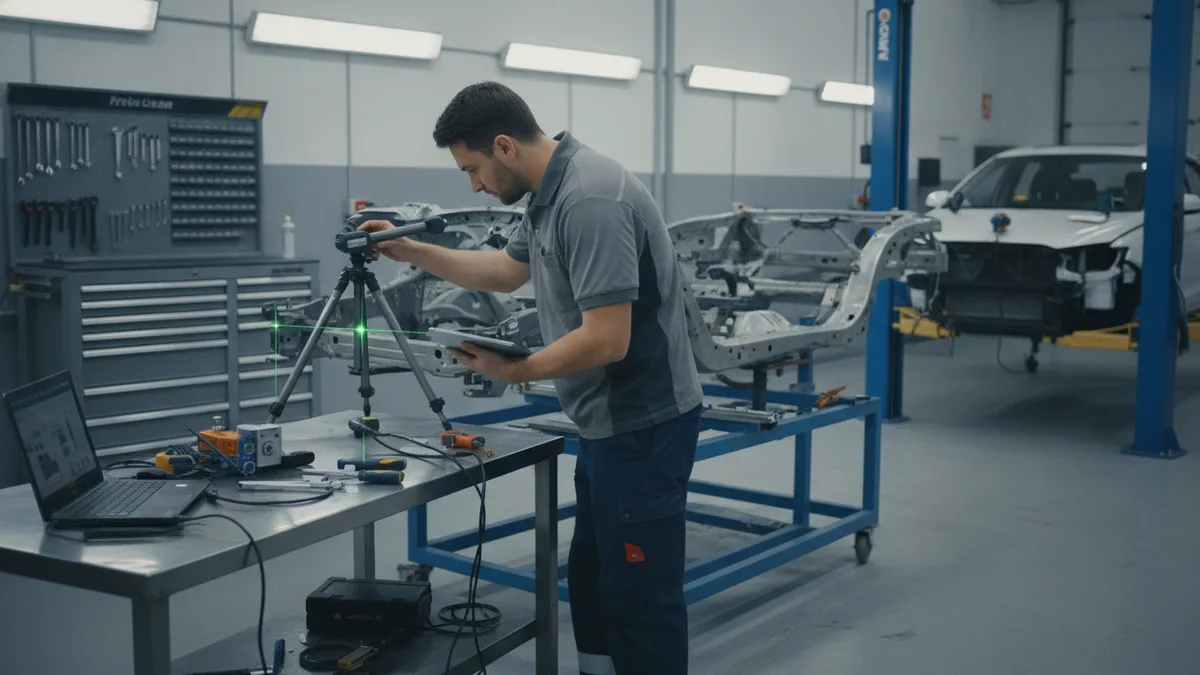
Frame alignment is a good example. Get the measurements off by a small margin, and the vehicle can pull to one side, wear tires unevenly, or fail to protect occupants the way it’s supposed to in a future collision. This isn’t something you can eyeball. It requires calibrated equipment and a technician who actually understands the tolerances involved, which is exactly what I-CAR structural training verifies.
ADAS recalibration is where we see the biggest gap between shops. Many smaller operations skip this step entirely, either because they don’t have the equipment or don’t realize a bumper or windshield replacement can throw off a car’s cameras and sensors. A shop without ADAS capability might hand back a vehicle with a lane-departure or collision-warning system that no longer works correctly. That’s a real risk, and it’s worth asking directly whether a shop performs this recalibration in-house or sends it out.
Uncertified shops aren’t necessarily dishonest. In our experience, most just haven’t invested in the training or equipment that newer vehicles demand. The problem is that undertrained repairs often look fine on the surface while hiding issues underneath, like a frame that’s slightly out of spec or a weld that doesn’t meet OEM strength requirements. Those mistakes tend to surface later, sometimes as rework, sometimes as safety concerns down the road.
Certified technicians reduce that risk in a few concrete ways:
-
They follow OEM repair procedures instead of guessing or improvising
-
They use calibrated tools for frame and structural work
-
They understand which parts require ADAS recalibration after replacement
-
They document repairs in a way that supports warranty claims and insurance review
Here’s a perspective that might go against common advice: a low estimate isn’t automatically a red flag by itself, but a low estimate paired with no mention of ADAS calibration or frame measurement usually is. Ask directly what’s included.
For Phoenix, AZ, USA drivers comparing options, credentials are a practical filter, not just a marketing detail. A shop that invests in ASE and I-CAR training is also generally the kind of shop that invests in the equipment those certifications require. That combination is a reasonable, tangible signal when you’re trying to identify the best auto body shop for a repair that involves structural or safety systems. If you’re unsure what your vehicle’s repair actually requires, a qualified technician can walk you through the specifics before work begins.
Common Certification Questions Phoenix Customers Ask
After decades of estimates and drop-offs, we hear the same handful of questions from customers standing at the front counter. That’s a good sign. It means people are paying attention before they hand over their keys.
Are certifications legally required? No. Arizona doesn’t mandate ASE or I-CAR credentials to operate a body shop. That’s exactly why the credential matters as a voluntary signal of training, not a legal checkbox.
Do certifications affect insurance coverage? Not directly, but many insurers maintain direct repair programs that favor certified shops because the paperwork and repair quality tend to hold up better under review. Customers still have the right to choose their own shop regardless of what an insurer suggests. It’s worth confirming that right with your insurance provider directly, since policy language can vary.
Can a shop just say they’re certified without proof? Unfortunately, yes. A sign in the window doesn’t verify anything. Ask to see current certificates, or check technician credentials through ASE’s official lookup and I-CAR’s training records.
How often do technicians renew? ASE certifications typically require periodic retesting, and I-CAR training updates as repair procedures and vehicle technology change. A shop that hasn’t updated its training in years may be working from outdated procedures on newer vehicles.
Here’s our take, based on years of watching shops open and close around Phoenix: a shop’s willingness to answer these questions matters more than the answer itself. You can read more about our approach to staffing and professional standards on our company history and credentials page. Anyone claiming to run the best auto body shop in Phoenix, AZ, USA should welcome the scrutiny, not dodge it.
Red Flags: What to Watch for in Uncertified or Under-Certified Shops
Some warning signs show up before you even get an estimate.
Ask a shop about its certifications and watch how the answer comes out. A tech or manager who actually holds I-CAR training will name the specific programs and show you paperwork without hesitation. Vague responses like “our guys are all trained” or a quick change of subject usually mean there’s nothing current to point to. In our experience, hesitation on this one question tells you more than a dozen online reviews.
No written warranty is another one we’d flag immediately. A shop confident in its repairs will put that confidence on paper. Verbal promises don’t hold up if something goes wrong six months later, and reputable shops in Phoenix, AZ, USA generally understand that.
Watch out for estimates that come in noticeably lower than the two or three others you’ve collected. Cutting corners on materials, skipping ADAS recalibration, or using aftermarket parts without disclosing it are common ways shops shave costs. A bid that’s dramatically lower than everyone else’s deserves a direct question about what’s included and what’s not.
ADAS recalibration capability matters more each year as newer vehicles pack in cameras and sensors. Plenty of smaller shops still don’t have the equipment or training for it, and some won’t bring it up unless you ask directly. Skipping recalibration on a vehicle that needs it is a real safety concern, so this is worth confirming with the shop, and if you have doubts, a qualified professional can verify what your specific vehicle requires.
Finally, notice how a shop responds when you ask for references or past customer examples. Reluctance or excuses are a signal. Established shops with a long track record, including ones that have served Phoenix, AZ, USA for decades, usually have no problem pointing you toward reviews or past work.
None of these signs guarantee a bad outcome on their own. Together, they paint a pattern worth paying attention to before you sign anything.
Brad’s Deer Valley Collision: Certified Excellence in Phoenix Since 1985
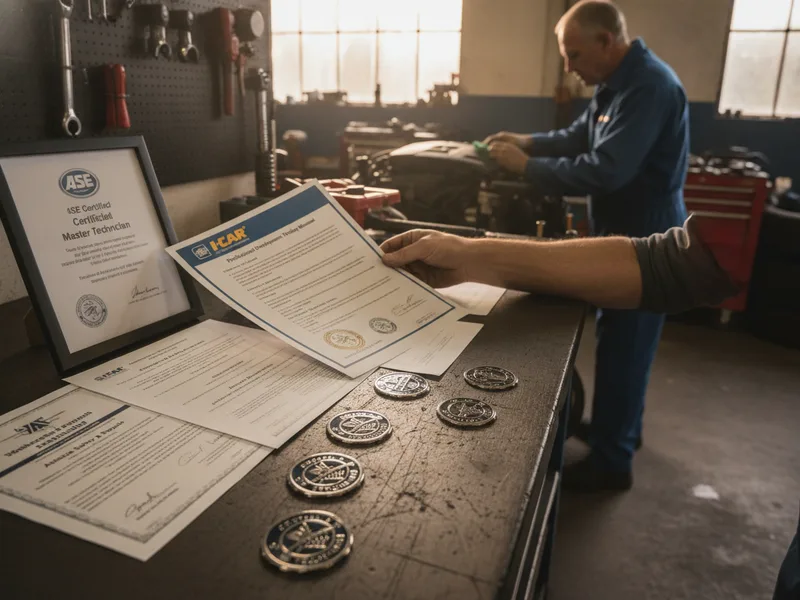
Walk into a lot of body shops and you’ll see certificates buried in a back office or stuffed in a drawer somewhere. That’s backwards. Our I-CAR and ASE credentials hang where customers actually stand, at the front counter, because we want people to ask about them.
Our technicians hold ASE certifications across collision repair disciplines and keep current with I-CAR training as vehicle technology changes. We’ve invested in equipment for ADAS recalibration work, the sensor and camera calibration that a growing share of vehicles now require after collision repair. Most smaller shops skip this equipment entirely and send that work elsewhere, which adds time and complexity for the customer. We handle it in-house.
Since 1985, we’ve repaired vehicles for Phoenix, AZ, USA drivers and local fleets, and that kind of track record only holds up if the work behind it is consistent. Credentials matter here, but so does what happens once you’ve hired us: written estimates, honest conversations about OEM versus aftermarket parts, and a warranty you can actually read without a law degree.
We also try to make the experience less painful than the accident itself. That means loaner vehicles when available, shuttle service, and text updates with photos so you’re not calling the shop every other day wondering what’s happening with your car. Some shops treat communication as an afterthought. In our experience, that’s exactly where a lot of customer frustration starts, not with the repair quality itself but with silence during the wait.
If you’re comparing shops in Phoenix, AZ, USA and want to see certifications in person, ask questions, or get a written estimate started, our team at schedule your collision repair consultation page can set up a time that works for you. Walk-ins are welcome too. For general reference on the certification standards we maintain, the ASE website outlines what each credential requires and how technicians renew them.
How to Verify a Shop’s Certifications Before You Commit
Don’t take a shop’s word for it.
ASE runs a public technician lookup on its website, and it’s the fastest way to confirm someone actually passed the exams they claim. You can search by name or shop location and see which certifications are current. Check it out at the ASE website before you sign anything.
I-CAR works a little differently. There’s no single public search tool for individual technicians, so the right move is to ask the shop directly for course completion records or a Gold Class recognition certificate. A shop that’s genuinely invested in training will have this paperwork ready, not buried somewhere they have to go dig for it. If they hesitate or get vague, that tells you something on its own.
A few questions worth asking at the counter:
-
Which specific I-CAR courses have your technicians completed, and for what repair categories?
-
Are those certifications current, or do they need renewal soon?
-
Do you have ASE-certified technicians on staff, and in which specialties (body repair, painting, mechanical)?
-
Can I see documentation, not just a verbal confirmation?
Most advice columns tell drivers to just “ask if the shop is certified” and move on. In our experience, that question alone doesn’t tell you much, because plenty of shops will say yes without specifying what they’re actually certified in. Ask for the specialization, not just the label.
Combine this with reading reviews and collecting two or three written estimates before you decide. Phoenix, AZ, USA has a lot of collision repair options, and a few extra minutes of research up front tends to save headaches later. If you’re weighing your rights during an insurance claim or unsure about coverage terms, a licensed insurance professional can walk you through the specifics that apply to your policy.
Frequently Asked Questions
Is an ASE or I-CAR certified technician required by law in Arizona?
Arizona doesn’t have a law requiring collision technicians to hold ASE or I-CAR certifications. That said, these credentials show a technician has been tested on real repair skills and current procedures. A lot of insurance companies favor shops with certified staff, and Phoenix, AZ customers looking for the best auto body shop often use certifications as a quick way to judge quality before they ever set foot in the door.
How long do ASE and I-CAR certifications last, and how often do technicians renew?
ASE certifications are good for five years, then technicians have to retest or log continuing education hours to keep them active. I-CAR works a bit differently; renewal timing depends on the specific program, but it’s usually every year or two through additional training. At Brad’s Deer Valley Collision, we keep everyone’s certifications current so our team stays sharp on newer repair methods and vehicle technology.
Will my insurance company deny a claim if I choose an uncertified body shop?
Choosing an uncertified shop won’t get your claim denied outright. Insurance companies generally have to honor your choice of repair shop under Arizona law, though it’s always smart to confirm the specifics with your own insurance agent or a legal professional if you have questions about your policy. Some insurers may flag an uncertified shop as higher risk, or push you toward their preferred network, but a certified shop tends to move through the claims process with fewer back-and-forth disputes over repair quality.
What is the difference between ASE and I-CAR certifications?
ASE certifications cover a wide range of automotive systems, things like engines, brakes, electrical work, and collision repair basics. I-CAR digs specifically into collision repair: structural damage, welding procedures, and calibrating newer safety tech like ADAS sensors after a crash. A well-rounded body shop usually has technicians holding I-CAR credentials at minimum, with ASE certifications adding another layer of technical know-how on top.
Can I ask to see a technician’s certifications before I leave my car at the shop?
Yes, and you should feel free to ask. Shops that take pride in their work will show you certifications without hesitation and introduce you to the people actually fixing your car. If you visit a shop in Phoenix, AZ and get vague answers or pushback when you ask about credentials, that’s worth paying attention to before you commit your vehicle to their care.
Get Your Collision Repair Handled by Certified Technicians
A dented bumper or a bent frame doesn’t have to turn into months of guesswork. Our ASE and I-CAR certified team has spent over 40 years fixing cars right here in Phoenix, AZ, USA, and we’re glad to walk you through what your vehicle actually needs.
Stop by our shop for a free estimate, or take a look at our full lineup of collision and auto body repair services to see how frame alignment and other specialized work get done. For an unbiased read on what customers experience, check out our reviews on Google.
If your insurance situation is complicated, it’s worth confirming coverage details with your provider before repairs begin; we’re happy to answer questions about the process on our end.