ADAS Recalibration in Phoenix, AZ: Why Frame Alignment Shops Must Offer This Advanced Safety Technology
ADAS Recalibration in Phoenix, AZ: Why Frame Alignment Shops Must Offer This Advanced Safety Technology
What Is ADAS Recalibration and Why Your Phoenix Auto Body Shop Must Offer It
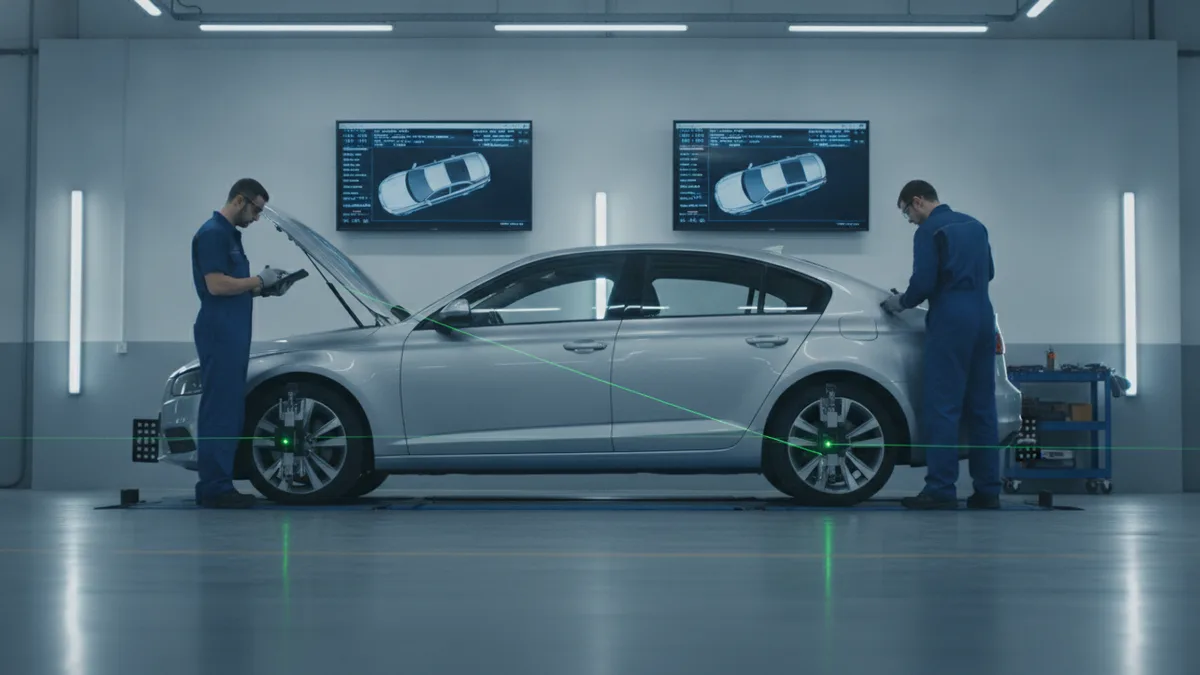
ADAS recalibration is the process of resetting a vehicle’s cameras, radar, and sensors so they read the road correctly after collision repair or frame alignment work. Brad’s Deer Valley Collision provides this service for Phoenix, AZ, USA drivers because modern safety systems only function properly when they’re aligned to exact factory specifications. Skipping it can leave features like lane assist or automatic braking misreading their surroundings.
Most cars built in the last several years come equipped with advanced driver assistance systems, commonly called ADAS. These include forward collision warning, adaptive cruise control, blind spot monitoring, and automatic emergency braking. Each system depends on cameras and sensors mounted in specific spots: the windshield, front and rear bumpers, side mirrors, and sometimes the grille. When a vehicle gets hit hard enough to need frame alignment, those mounting points can shift by fractions of an inch. That’s enough to throw off a camera’s field of view or a radar sensor’s angle.
Here’s a scenario we see often in Phoenix. A driver gets rear-ended on a surface street, the bumper and rear sensor housing take the impact, and the frame shifts slightly out of square. The car looks fine and drives fine on a test lap around the block. But the automatic braking system, if left uncalibrated, might not trigger at the right distance the next time traffic stops short. That’s a real risk, not a hypothetical one, and it’s why recalibration has to happen alongside structural repair, not as an afterthought.
Brad’s Deer Valley Collision has operated in Phoenix since 1985, and in that time we’ve watched vehicle technology change faster than most shops can keep up with.
In our experience, plenty of body shops still treat ADAS recalibration as optional or outsource it entirely, which adds time and uncertainty to a repair that should be handled in-house. We think that approach shortchanges customers who just want their car back the way it was before the accident, sensors included. Our full collision and frame repair services page outlines how recalibration fits alongside our structural work. If you’re comparing shops, it’s worth asking directly whether recalibration happens on-site and whether it’s included in the estimate.
How Collision Damage Affects ADAS Sensors and Alignment Systems
Here’s the thing most people don’t realize: your car’s frame is the reference point for everything else.
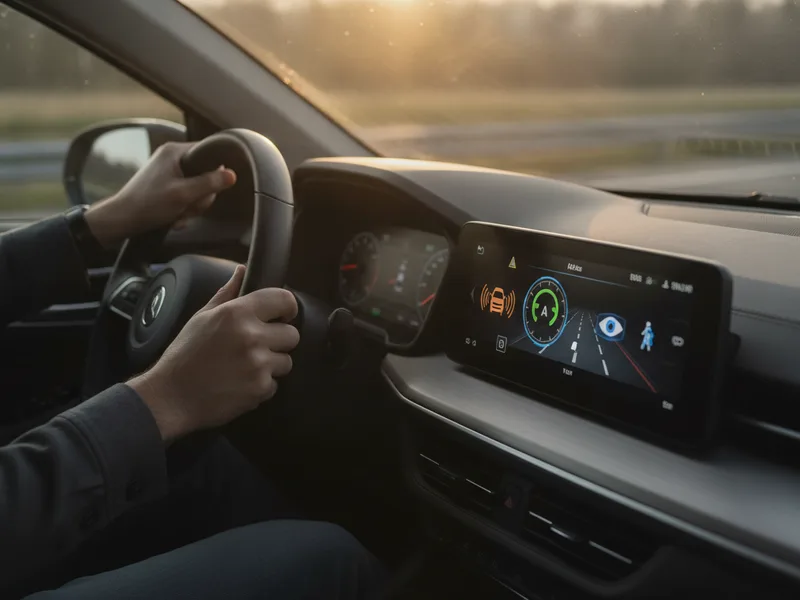
Every camera, radar unit, and sensor on a modern vehicle gets mounted at a specific angle relative to the frame. When a collision bends or shifts that frame, even slightly, it changes the angle those sensors are pointing. The sensor itself might be physically fine. It just isn’t looking at the road the way the manufacturer intended anymore.
Think about where these components actually live on the car. Forward-facing cameras usually sit near the rearview mirror, reading lane markings and traffic signs. Radar units are often tucked behind the front bumper or grille, watching for objects ahead for adaptive cruise control and automatic braking. Some vehicles add corner radar near the rear bumper for blind-spot monitoring. Lidar, when present, tends to sit up top or integrated into the front fascia. Every one of these locations depends on the surrounding body panels and structure staying exactly where the automaker put them.
A frame alignment job pulls that structure back into spec, but if the sensors aren’t recalibrated afterward, they’re still calibrated to the old, damaged geometry. We’ve seen bumpers that looked perfectly straight after a repair, yet the radar behind them was still reading three degrees off. That’s enough to make an emergency braking system react late or not react at all.
Small numbers matter here more than most drivers expect. An alignment error of even half a degree on a windshield-mounted camera can translate into a lane-departure warning that misjudges where the car actually sits in its lane by a noticeable margin at highway speed. Radar misalignment works the same way. The farther out the sensor is trying to detect something, the more a tiny angle error snowballs into real distance.
For Phoenix, AZ, USA drivers logging highway miles on wide arterial roads and freeways daily, that margin isn’t trivial. Any body shop doing frame alignment work without addressing sensor calibration afterward is leaving half the job undone, in our experience, even if the panel gaps look flawless.
The Risks of Skipping ADAS Recalibration After Frame Alignment Work
We see it more often than we’d like: a car comes back to the shop weeks after frame alignment work, and the owner swears the safety system is “acting weird.” Nine times out of ten, the sensors were never recalibrated after the repair. The car drives fine on the surface. Underneath, the cameras and radar are aimed at angles the manufacturer never intended.
Skip that step, and the failures show up in ways Phoenix drivers will recognize fast.
-
False alerts. Forward collision warnings triggering on I-17 or the Loop 101 when there’s no car in front, or worse, staying silent when there is one.
-
Delayed collision warnings. A half-second lag in freeway stop-and-go traffic can be the difference between a tap and a real hit.
-
Adaptive cruise control failures. Systems that surge, brake unexpectedly, or drop out entirely on long Phoenix commutes.
-
Lane-keeping shutdowns. Cameras misreading painted lines on surface streets, causing the system to disable itself without warning.
-
Unintended acceleration events. Rare, but documented in cases where radar units read the road surface incorrectly after a repair.
None of these are hypothetical. They’re the direct result of sensors that got bumped out of spec during a collision and never got reset afterward. A shop can do excellent bodywork and still leave a car unsafe if the recalibration step gets skipped.
In our experience, most drivers assume that if the car “feels normal,” the safety systems must be fine. That assumption doesn’t hold up. ADAS problems are often invisible until the exact moment you need the system to work, usually in a split-second situation on the road.
Brad’s Deer Valley Collision has built its reputation since 1985 on catching these gaps before a car leaves the lot. You can review our certifications and history on our about page detailing our credentials. If a system behaves oddly after any repair, a qualified technician should inspect it before you rely on it in traffic.
What to Expect During ADAS Recalibration at a Phoenix Auto Body Shop
Curious what actually happens once your car goes into the bay? Here’s the walkthrough we give customers at the counter, minus the jargon.
Before any wrench touches your vehicle, we run a pre-repair scan. This pulls fault codes and documents how the ADAS systems were behaving before we started, which matters if there was existing sensor damage from the collision itself. Skipping this step is one of those shortcuts that looks fine until an insurer or a second technician asks for records that don’t exist.
Once the frame alignment work is finished and the vehicle is back to factory specifications, we move into calibration. There are two main types.
-
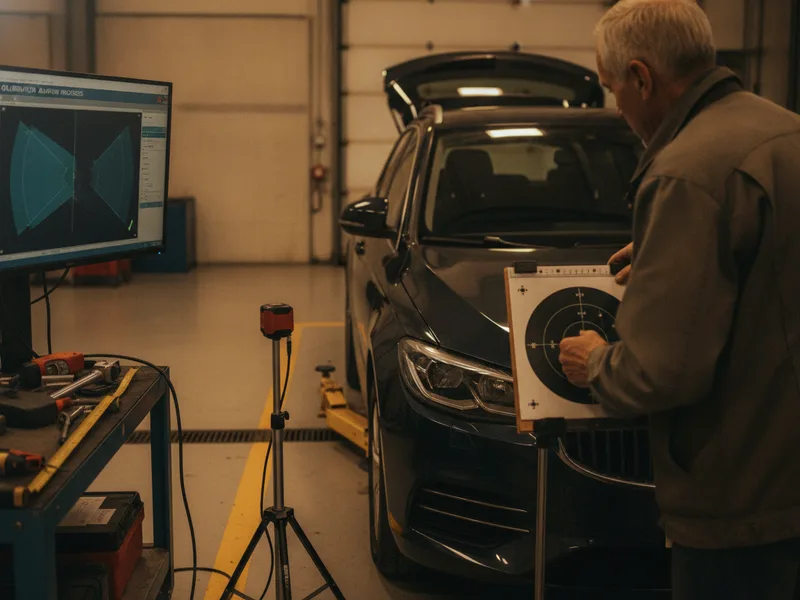
Static calibration uses target boards, mats, and precise measurements set up in a controlled space. The vehicle stays parked while a scan tool talks to the camera or sensor and walks it through a recalibration sequence.
-
Dynamic calibration requires actually driving the vehicle at certain speeds, often on specific road types, while the scan tool monitors the system in real time.
Some vehicles need both. Manufacturer specs dictate which method applies, and honestly, this is where a lot of smaller shops fall short. They own a scan tool but not the target boards, or they’ve got the equipment but not a technician who’s been trained on the sequence for a given make.
After calibration, we don’t just call it done. Final validation testing confirms the sensors are reading correctly, cameras are aimed within tolerance, and warning lights that popped up during the pre-scan have cleared. We document this with a post-repair report your insurer can review if needed.
Turnaround Time
Timelines vary quite a bit depending on the vehicle and how many systems need attention. A car with a single forward-facing camera might move through calibration faster than one with radar, lane-keep cameras, and parking sensors all needing separate attention. We’ll give you a realistic estimate once we know what your vehicle requires, rather than a generic number that doesn’t hold up.
If you’re dropping a vehicle off at our Phoenix, AZ, USA location, feel free to ask what equipment we’re using and why. We’d rather explain the process than have a customer wonder what’s happening behind the scenes. For anything related to your specific safety systems or a manufacturer recall notice, it’s also worth checking with your dealership or a qualified technician to confirm what your vehicle’s ADAS setup requires.
Does Your Phoenix Auto Body Shop Have ADAS Recalibration Capability? Here’s What to Ask
Most drivers only think to ask about ADAS recalibration after a shop mentions it first. That’s backward. We’ve had customers tell us their previous shop never brought it up at all, and the vehicle went home with a lane-keep system that was never checked. A few pointed questions before you sign anything can save a lot of frustration later.
Certifications and Training
Ask whether technicians hold I-CAR training specific to ADAS systems, not just general collision repair certification. ASE credentials matter too, but ADAS work requires its own specialized coursework. A shop that can’t name its certifications, or gets vague when you press for details, probably hasn’t invested in this equipment yet.
Equipment and Diagnostic Access
Find out if the shop owns OEM-specific diagnostic tools or relies on aftermarket scan tools that may not cover every make. Ask directly whether they perform static calibration (stationary, using targets), dynamic calibration (a supervised test drive), or both, since many vehicles require one or the other depending on the manufacturer.
Questions Worth Asking Before You Commit
-
Do you perform ADAS recalibration in-house, or is it sublet to another facility?
-
What’s your process for confirming a successful calibration before the car leaves the lot?
-
Is recalibration work covered under your written warranty?
-
Can you show documentation of pre- and post-repair scans?
-
How does frame alignment work factor into your recalibration process?
Written warranty coverage on recalibration is worth asking about directly. In our experience, some shops warranty the frame alignment but stay quiet on whether recalibration is included, and that gap can leave a customer covering a second visit out of pocket.
Get two or three estimates if you’re unsure. Compare not just price but what each shop actually includes. Phoenix, AZ, USA has plenty of body shops, but not all of them have made the investment in ADAS technology, and that gap won’t show up on a windshield sticker. If you want a straight answer about our equipment and process, reach out through our page for scheduling a repair estimate and ask us the same questions listed above.
Why Brad’s Deer Valley Collision Invests in ADAS Recalibration for Phoenix Customers
Since 1985, we’ve watched this business change more than most people realize. Frame alignment used to be about pulling metal back into spec and calling it done. Now the job includes making sure every camera and sensor bolted to that frame reads the road correctly again. We built our shop around that reality instead of ignoring it.
Our technicians hold I-CAR and ASE certifications, and we keep that documentation visible at the front counter because customers deserve to see it, not just hear about it. We also invest in the scan tools and calibration equipment that smaller shops often skip. That’s not a knock on every small operation in Phoenix, AZ, USA, but equipment costs money, and cutting that corner shows up later in ways drivers don’t expect.
We handle the insurance side too. Our team works directly with adjusters, documents pre- and post-repair scans, and writes up estimates that account for recalibration, not just body work. Customers have the right to choose their own repair shop regardless of what an insurer suggests, and we think that choice matters.
Walk-ins are welcome. Stop by, ask about our warranty, look at our certifications, and get a written estimate before you commit to anyone. If a shop hesitates to answer straightforward questions, that’s worth noticing.
Frame alignment done right protects the car’s structure. Recalibration protects everything the car sees. We handle both under one roof because Phoenix drivers deserve a vehicle that works the way it did before the accident, not close enough.
Frequently Asked Questions
How much does ADAS recalibration cost in Phoenix?
Pricing depends on your vehicle’s make and model and how many sensors need to be recalibrated after frame alignment work. In Phoenix, AZ, USA, costs typically fall somewhere between $400 and $1,200. Static calibration done in the shop tends to cost less than dynamic calibration, which involves road testing more complex systems. Brad’s Deer Valley Collision gives you a written estimate once the diagnosis is complete, so get that in writing before any work starts.
Can I drive my vehicle home after frame alignment if ADAS recalibration wasn’t done?
You can physically drive it, but that doesn’t mean it’s a good idea. If your ADAS sensors are out of alignment, features like automatic braking or lane departure warnings might not work the way they’re supposed to. Modern cars lean on these systems for a lot of the safety net drivers assume is there. Before you leave the shop, confirm the recalibration has been completed and checked, not just promised.
Will my insurance cover ADAS recalibration costs?
Most insurance companies in Phoenix, AZ, USA will cover ADAS recalibration when it’s part of a collision claim and shows up as necessary on the repair estimate. Brad’s Deer Valley Collision works directly with insurance adjusters and builds ADAS diagnostics and recalibration into the full repair estimate from the start. That tends to make the claims process smoother, though coverage details still depend on your specific policy, so it’s worth a quick call to your insurer to confirm.
How long does ADAS recalibration take after frame alignment?
Static recalibration, done right in the shop, usually takes around 1 to 2 hours. Dynamic recalibration, which requires actual road driving, can run 2 to 4 hours depending on how complex your vehicle’s systems are. Shop workload and the extent of the frame damage also factor in. Brad’s Deer Valley Collision gives you a realistic timeframe during the estimate and sends updates with texts or photos as the work moves along.
What vehicle models in Phoenix require ADAS recalibration after collision repair?
Generally speaking, most vehicles from 2015 or newer have some form of ADAS, whether that’s lane-keeping assist, adaptive cruise control, automatic emergency braking, or blind-spot monitoring. Luxury and midsize models tend to carry the most systems, but it’s not limited to those categories. An OEM diagnostic scan at the time of repair is the only real way to know which systems your specific vehicle has and whether recalibration applies. Brad’s Deer Valley Collision runs this scan as a standard part of the initial assessment for vehicles brought in for frame alignment in Phoenix, AZ, USA.
Get Your Frame Checked the Right Way
A frame that’s even slightly out of alignment can affect handling and put uneven wear on tires long after the collision is behind you. Brad’s Deer Valley Collision uses laser-guided measuring equipment and certified technicians to check your vehicle’s structure and recalibrate ADAS systems that depend on precise alignment. If you’re in Phoenix, AZ, USA and want a second opinion or a full estimate, our team can walk you through what your vehicle needs and why.
Stop by the shop or give us a call to schedule an inspection; we work directly with most insurance companies and can set you up with a loaner car while repairs are underway. For a fuller picture of what we handle, from structural repair to safety system recalibration, visit our collision repair and frame alignment services page. And if you’d like to hear from people we’ve already helped, feel free to check out our reviews on Google. As with any repair involving vehicle safety systems, it’s worth confirming details with a qualified technician before deciding on next steps.