Final Inspection and Pickup at a Phoenix, AZ Collision Repair Shop: Paperwork to Review Before You Drive Away
Final Inspection and Pickup at a Phoenix, AZ Collision Repair Shop: Paperwork to Review Before You Drive Away
What Paperwork Should You Review at Final Inspection in Phoenix?
At final inspection, review the repair invoice, any photos of the completed work, the parts records, and the warranty documents, and compare each one against your written estimate before signing the pickup form. That holds at any Phoenix shop, including Brad’s Deer Valley Collision, which has been fixing Phoenix drivers’ vehicles since 1985. Signing is the last chance to catch a gap.
Picture a driver walking in to collect a repaired bumper and noticing the invoice lists a part the estimate never mentioned. Once the form is signed, that question gets harder to raise.
Each document answers a different question: what was done, what was used, and what is covered afterward.
If the repair involved more than one job, the collision, frame, and paint services may each leave their own line items to check.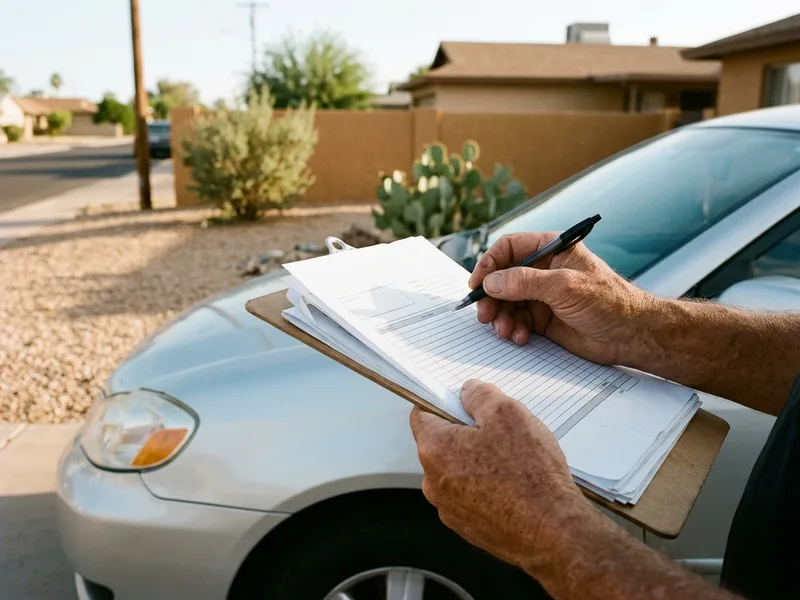
How Does the Repair Invoice Match the Original Estimate?
Line up the two documents side by side and work down them in the same order. Every category on the estimate should have a home on the invoice.
The categories to compare
- Labor hours: body, frame, and refinish labor should be listed separately, so a change in one is easy to spot.
- Parts: each part should be named, with a note on whether it’s OEM or aftermarket, matching what was agreed.
- Paint and materials: these should appear as their own lines.
- Sublet work: anything done outside the building, such as ADAS recalibration if the shop sends it out, should be itemized.
- Supplements: hidden damage often turns up once panels come off, and each added item should trace back to an approved supplement.
Short answer: nothing should be new without a paper trail.
A clear invoice shows the original estimate figures next to the final ones, or at least references them. If it’s a single lump sum, ask for the itemized version, and ask the shop to explain any line you don’t follow before you sign.
A good invoice is one you can read without a translator. If a line doesn’t make sense to you, it shouldn’t be a mystery at pickup.
When a number has changed, ask three things. Which supplement covers it? When was it approved, and by whom? Does the insurer’s paperwork show the same amount? If you filed a claim, compare the shop’s invoice against what your insurer approved, since the two should tell the same story.
Which Photos and Parts Records Confirm the Work Was Done?
A photo of a finished bumper tells you little if nobody can say which car it belongs to or which side it shows. Useful records name the vehicle and the panel, and they show the work from more than one angle.
Completed-work photos should cover each repaired panel and area: the full panel straight on, a view along the body line, and a close shot of the edges and seams. Labels or captions should tie each image to a line on the invoice.
What the parts records should show
Parts records identify whether each component is OEM, aftermarket, or recycled. Match every part listed there to the same part on the invoice and the estimate.
Common mistakes
- Skipping the parts section because the invoice total looks right.
- Accepting photos with no labels or dates.
- Reviewing images of only one angle per panel.
- Waiting until after pickup to ask for missing records.
If a photo or record is missing, ask the collision repair shop for it in writing before you sign.
What Should the Warranty Document Spell Out Before You Sign?
A warranty you can’t read is a warranty you can’t use. Ask for the written document before pickup, not after a problem shows up.
Any collision repair shop’s warranty should answer four questions on paper:
- Who is covered. Does it follow the original owner only, or pass to a new owner if you sell the vehicle?
- How long it runs. Look for a clear term, and check whether paint, panels, and mechanical or structural work carry different lengths.
- What keeps it valid. Some warranties ask for specific care or a return visit. If conditions exist, they should be written down.
- How to start a claim. You should see who to contact, in what form, and what records to bring.
Also read the exclusions. A warranty with no stated limits is rare, and a vague one is hard to enforce.
Whatever shop you use, read the exact wording you’re given and ask about anything unclear. A missing warranty is one of the red flags worth taking seriously, so staple a copy to your invoice and keep both together.
What Should You Check Before Signing the Pickup Form?
Pickup day goes fastest when the keys are already in someone’s hand, and that’s exactly when small issues get skipped. Slow the handoff down. A signed form closes the conversation, so finish your review first.
- Invoice total. Match it to your written estimate and ask about any line that changed.
- Photos and parts records. Confirm you have copies that name your vehicle and each repaired panel.
- Warranty papers. Make sure the written document is in your hands, not promised for later.
- Daylight walk-around. Look at the car outside in daylight and check paint color, panel gaps, and the repaired area from several angles.
Keep every document together in one folder, paper or digital. If something looks off, raise it before you sign. You can also contact the shop with questions ahead of pickup.
For anything involving your insurance coverage or legal rights, confirm the details with a qualified professional.
Frequently Asked Questions
Can I choose my own shop if my insurance company recommends a different one?
Yes, you can choose your own collision repair shop in Phoenix, even when your insurer suggests another. Compare written estimates from each, and ask your insurer to address any concerns it has with the shop you picked.
What should I do if I notice a problem after I drive the car home?
Contact Brad’s Deer Valley Collision promptly if something looks or feels off after pickup. Keep your invoice and photos handy, and describe the vehicle’s condition clearly. The warranty document explains how to report a concern.
Should I get two or three written estimates before choosing a shop?
Getting two or three written estimates from Phoenix collision repair shops helps you spot unusually low bids and missing line items. Check certifications, reviews, and turnaround time too, not just the price at the bottom.
How do I ask about OEM versus aftermarket parts before the repair starts?
Ask Brad’s Deer Valley Collision which parts are planned, how OEM and aftermarket parts differ in fit and finish, and whether the invoice will name the part source. Confirm any change to the plan in writing.
Questions About Your Invoice or Warranty Papers? Ask Before You Sign
Reading through a collision repair invoice, the photos, and the warranty paperwork can raise a few questions. If you’re working with Brad’s Deer Valley Collision in Phoenix, ask about anything that looks unclear before you sign.
You can contact the shop or review the collision repair, frame, bumper, and painting services to see what the final paperwork covers. You can also read Brad’s Deer Valley Collision’s Google reviews to see what other Phoenix drivers have said.