
Front Bumper Replacement Cost in Phoenix, AZ: Budget Planning After a Collision
Front Bumper Replacement Cost in Phoenix, AZ: Budget Planning After a Collision
What Does a Front Bumper Replacement Cost in Phoenix?
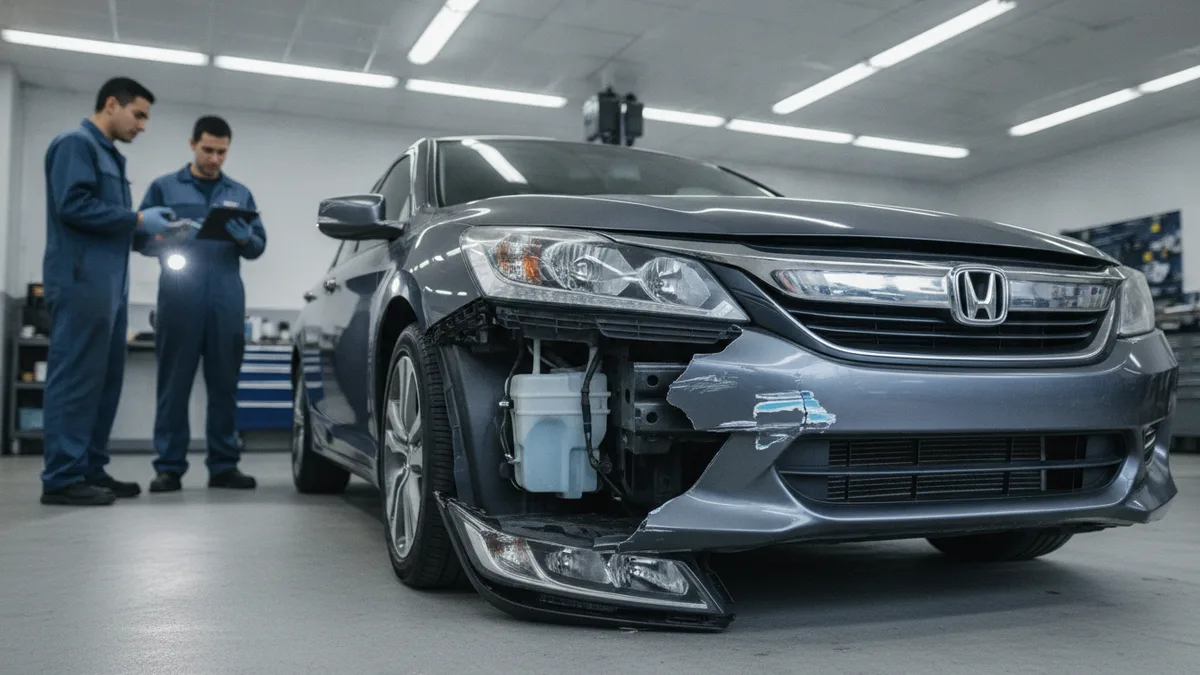
Front bumper replacement cost in Phoenix, AZ, USA depends on your vehicle’s make and model, whether you choose OEM or aftermarket parts, and how much labor and paint matching the repair requires. Brad’s Deer Valley Collision provides written estimates for Phoenix drivers so they know what to expect before any work begins. There isn’t one flat number that applies to every vehicle or every collision.
Say a Phoenix commuter clips a curb on a tight turn near a shopping center parking lot and cracks the plastic bumper cover. That’s a very different repair job than a full-speed collision that bends the bumper reinforcement bar and damages sensor housings underneath. Brad’s Deer Valley Collision has been repairing bumpers and full collision damage in Phoenix, AZ, USA since 1985. That kind of history matters when you’re trying to budget accurately, because a shop with decades of local experience has seen nearly every bumper scenario the desert roads can produce.
In our experience, drivers often lowball their own repair costs because they’re picturing a simple cover swap, not accounting for hidden bracket damage or sensor recalibration. Before you assume the worst (or the best), it helps to review Brad’s Deer Valley Collision’s full range of bumper repair and collision services to see what a proper assessment actually involves.
Breaking Down the Cost: Parts, Labor, and Paint Matching
Three things drive your bill.
Parts, labor, and paint. Once you understand how each one works, the final number on your estimate stops feeling random.
Parts: The Biggest Variable
The bumper cover itself is usually the smallest part of the cost. What adds up fast is everything behind it: brackets, energy absorbers, sensors for parking assist, fog light housings, and sometimes a grille or reinforcement bar. Modern vehicles pack a lot of hardware into that front section, and newer models with adaptive cruise control or collision-warning sensors need extra parts and calibration work. In our experience, customers are often surprised that the plastic cover is cheap compared to the sensors hiding behind it.
Labor: Time Behind the Wheel of a Wrench
Labor rates at body shops across Phoenix, AZ, USA vary based on the shop’s overhead, certifications, and equipment. A straightforward bumper swap on an older sedan takes less time than a replacement involving sensor recalibration or structural bracket repair. Technicians bill by the hour, and the quoted labor time reflects removal of the damaged bumper, fitting the new one, reinstalling hardware, and making sure everything lines up correctly. Rushed labor is where problems start; a bumper that isn’t seated right can cause wind noise or panel gaps down the road.
Paint Matching: Where Skill Shows
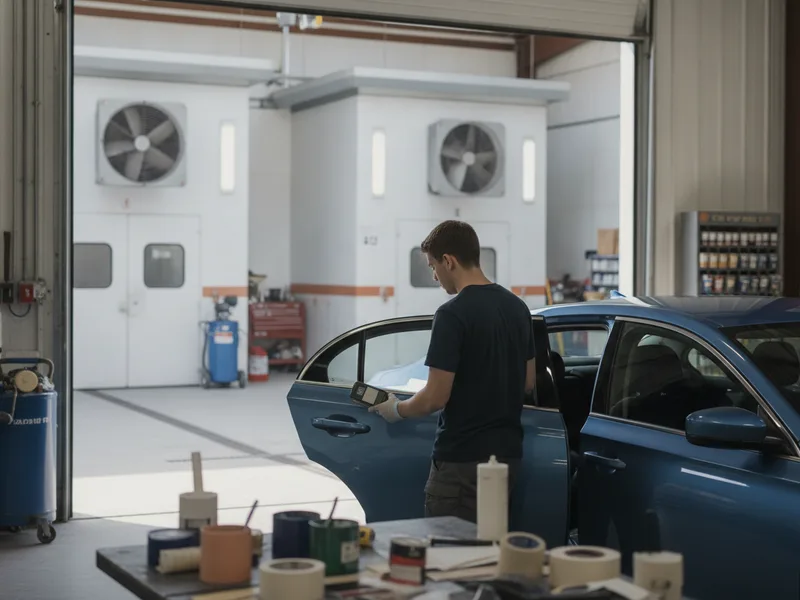
Paint is often underestimated. Getting a factory-accurate match isn’t just spraying color on plastic. It involves blending into adjacent panels, applying clear coat, and curing time in a controlled booth. Metallic and pearl finishes are harder to match than solid colors, and that difficulty shows up in the price. Shops using proper paint-matching technology tend to charge more, but the payoff is a bumper that doesn’t look like an obvious repair once it’s back on the road.
Most written estimates in Phoenix, AZ, USA break these three categories out separately. That’s a good sign. If a shop gives you one lump number with no breakdown, ask for the details before agreeing to anything.
-
Parts: bumper cover, brackets, sensors, absorbers, and related hardware
-
Labor: removal, installation, alignment, and sensor calibration if needed
-
Paint: blending, clear coat, and booth curing time
For general reference on how repair pricing structures work, the Federal Trade Commission’s guide on auto repairs is a useful starting point, though every shop and every vehicle is different. Anyone unsure about a quote should ask a qualified technician to walk through it line by line before signing off.
Factors That Influence Your Final Bumper Replacement Bill
Two customers can drive off our lot with the same make and model, both needing a front bumper replacement, and walk away with estimates that differ by a wide margin. We see it every week. The bumper cover is only the visible part of the story; what’s underneath often decides the real number.
Vehicle make and model matter first. A bumper cover for a common sedan costs less to source and paint than one for a newer truck or an import with a more complex fascia design. Phoenix, AZ, USA has a heavy mix of both, so we quote based on what’s actually on the lift, not a generic average.
What’s Hiding Behind the Cover
Structural damage behind the bumper changes everything. If the impact absorber, mounting brackets, or radiator support took a hit, the job shifts from a bumper repair into frame-level work. We’ve had estimates double once we pulled the cover and found bent brackets nobody could see from the outside.
Sensors and Technology
Modern bumpers aren’t just plastic. Parking sensors, camera housings, and radar units for adaptive cruise control are often built into or mounted behind the cover. Each one adds parts cost and labor time to remove, transfer, and reinstall correctly.
ADAS Recalibration
If your vehicle has forward collision warning or lane assist, a front bumper replacement usually requires ADAS recalibration afterward. This step needs specific equipment and trained technicians; skipping it, or having it done poorly, can leave safety systems reading the road incorrectly. In our experience, this is the line item most first-time estimate shoppers don’t expect, and it’s one we won’t cut corners on.
Insurer Parts Requirements
Some insurance policies specify aftermarket parts by default, while others allow OEM under certain conditions. That distinction alone can move your out-of-pocket cost significantly. It’s worth confirming your specific coverage terms with your insurance provider or a licensed agent before work begins, since policy language varies.
OEM vs. Aftermarket Bumpers: Cost and Quality Trade-Offs
Here’s the honest breakdown. OEM means Original Equipment Manufacturer, the exact bumper cover your vehicle came with from the factory. Aftermarket parts are made by third-party manufacturers to fit the same vehicle, usually at a lower price point. Both options affect your front bumper replacement cost, and both come with trade-offs worth understanding before you sign off on a repair.
OEM parts typically cost more. They’re built to the manufacturer’s exact specifications, so fitment, panel gaps, and mounting points tend to line up correctly the first time. Aftermarket parts can save money upfront, but quality varies a lot between suppliers. Some fit almost as well as OEM. Others need extra labor to adjust, which can eat into the savings you thought you were getting.
Insurance companies often push for aftermarket parts because they’re cheaper for the insurer to cover. That’s their call to make on cost, but it’s not the only factor that should drive your decision. In our experience, aftermarket is a reasonable choice on older vehicles or budget-conscious repairs, but on newer models with sensors and cameras built into the bumper, OEM parts tend to reduce fitment headaches and callback visits.
Warranty coverage differs too. OEM parts usually carry a manufacturer warranty, while aftermarket warranties depend entirely on the supplier. Ask your shop directly what’s covered and for how long.
Vehicle owners in Phoenix, AZ, USA have the right to request OEM parts even if their insurer initially suggests aftermarket alternatives. It’s worth raising that conversation early, before repairs begin. If you’re weighing your options and want a straight answer on what makes sense for your vehicle, our team can walk through it with you. You can request a written estimate for repairs through our contact page and ask specifically about OEM versus aftermarket pricing for your situation.
Insurance Coverage and What You’ll Actually Pay Out of Pocket
We notice a pattern almost every week. A customer walks in expecting to pay the full front bumper replacement cost, then finds out their collision coverage handles most of it once the deductible is met. If your policy includes collision coverage, your insurer typically pays for the repair minus your deductible, which might run anywhere from a few hundred dollars to over a thousand depending on your plan. That deductible, not the total repair bill, is usually what you owe at pickup.
Here’s something many Phoenix, AZ, USA drivers don’t realize. You have the right to choose your own repair shop, regardless of which shop your insurance company recommends. Brad’s Deer Valley Collision has worked directly with insurance adjusters since 1985, submitting detailed written estimates and photo documentation to keep claims moving.
Claims stall for a few common reasons. Missing photos of pre-existing damage, incomplete estimates, or disagreements over OEM versus aftermarket parts can all slow things down. We also flag when ADAS recalibration is needed, since sensors built into modern bumpers sometimes get left off initial insurance estimates entirely, a gap that can surprise customers later if it’s not caught upfront.
Before you drop your car off, photograph existing damage and remove valuables from the vehicle. It’s a small step, but it protects you if there’s ever a dispute. For questions specific to your policy, your insurance agent is the right person to confirm coverage details and deductible amounts.
Getting an Accurate Estimate: What to Expect and Red Flags
Get everything in writing. Verbal quotes over the phone are a starting point, not a number you can budget around.
A real estimate breaks down parts, labor hours, and paint work as separate line items. It should specify OEM or aftermarket parts, list the shop’s certifications (I-CAR, ASE), and include a turnaround estimate. If a shop hands you a single lump sum with no breakdown, ask questions before you sign anything.
Red Flags Worth Walking Away From
-
No written estimate, just a verbal number scribbled on a business card
-
No warranty on parts or labor
-
A bid that’s noticeably lower than two or three other quotes for the same scope of work
-
Vague answers about whether parts are OEM or aftermarket
-
Pressure to sign before you’ve had time to compare
That last point matters. In our experience, the shops pushing hardest for a same-day signature are usually the ones with the least confidence in their own pricing.
We tell customers to get two or three written estimates before committing to any front bumper replacement cost in Phoenix, AZ, USA. It’s not about distrust; it’s about comparing apples to apples. A bid that’s dramatically lower often means aftermarket parts, shortcuts on paint prep, or no ADAS recalibration, and that gap tends to show up later as a comeback repair. Most guides say the cheapest quote wins. On real jobs, we’ve seen that logic cost people more once hidden problems surface down the road.
Why Brad’s Deer Valley Collision Delivers Transparent Pricing
Shops that dodge specifics on a written estimate usually have a reason for it. We’ve built our process around the opposite habit: showing you the parts, labor, and paint breakdown before any work starts, so the front bumper replacement cost never turns into a surprise on pickup day.
Our team holds I-CAR and ASE certifications, and we invest in ADAS recalibration equipment that plenty of smaller shops skip. That matters more each year, since so many Phoenix-area vehicles now have sensors built into the bumper assembly. Skipping recalibration to save a step isn’t something we’re willing to do, even when a customer’s in a hurry.
You can read more about our background, credentials, and approach to customer service on our shop history and certifications page. We’ve been fixing bumpers and full collision damage in Phoenix, AZ, USA since 1985, long enough to know what a fair estimate looks like and what a warranty should actually cover.
Stop by our shop for a walk-in look at your vehicle, or reach out for a free estimate. We’ll walk you through the numbers in plain language, no pressure attached.
Frequently Asked Questions
Can I use an aftermarket bumper to save money on my Phoenix collision repair?
Yes, aftermarket bumpers are a common way Phoenix drivers cut down on front bumper replacement cost. They typically run 20 to 40 percent less than OEM parts and fit most vehicles just fine. That said, insurers sometimes push for OEM parts on newer or luxury vehicles, and aftermarket bumpers usually come with a shorter warranty. Ask about fit and warranty terms before you sign off on anything.
How long does a front bumper replacement take at a Phoenix body shop?
A straightforward bumper swap with basic paint matching usually takes 3 to 5 days at a Phoenix shop. If there’s frame damage, sensor work, or ADAS recalibration involved, plan on 1 to 2 weeks instead. The exact timeline depends on how bad the damage is, whether parts are in stock locally, and how busy the shop happens to be that week.
Will my insurance cover the full cost of front bumper replacement?
If you’re using collision coverage, your insurer pays for the repair and you’re responsible for your deductible, so your out-of-pocket front bumper replacement cost equals whatever that deductible is. When the accident is someone else’s fault and you file against their liability policy, their insurance covers the repair, though you may still owe your own deductible if you choose a shop outside their preferred network. It’s worth double-checking your specific policy details with your agent, since coverage terms vary.
What is ADAS recalibration and why does it add to bumper replacement cost?
ADAS recalibration is the process of realigning the cameras and sensors behind your front bumper, the ones that run adaptive cruise control, lane-keeping assist, and collision warning systems. A collision or even a routine bumper swap can knock these out of alignment, and driving around with miscalibrated sensors is a real safety concern. Not every Phoenix shop has the equipment to do this work, and when it’s needed, it typically adds somewhere in the range of $300 to $800 to the job.
Should I get multiple estimates before choosing a body shop in Phoenix?
Getting 2 to 3 written estimates before committing to a Phoenix body shop is a smart move. It lets you compare pricing, parts options, and warranty coverage side by side. Be cautious of any shop that won’t put an estimate in writing or quotes a price that seems too good to be true. Brad’s Deer Valley Collision has been repairing cars in Phoenix for over 40 years and offers free, detailed estimates you can take your time reviewing before you decide.
Get a Straight Answer on Your Bumper Repair
A cracked or dented bumper doesn’t have to mean a guessing game on cost. Bring your car by Brad’s Deer Valley Collision in Phoenix, AZ, USA, and our certified technicians will look it over and put together a written quote you can actually understand, no surprise line items, no pressure to decide on the spot.
If you’re weighing an insurance claim against paying out of pocket, we’ll walk through the factors that affect price so you can make the call that fits your situation; for questions specific to your policy, your insurance adjuster is the right person to confirm coverage details with. Stop by our shop or visit our full range of collision repair services to see what else we handle beyond bumpers. Curious what other Phoenix drivers think of our work? Check out our reviews on Google.