
Scratch Repair and Repainting in Phoenix, AZ: Restoring Your Vehicle’s Finish
Scratch Repair and Repainting in Phoenix, AZ: Restoring Your Vehicle’s Finish
Understanding Paint Scratches: Types and Severity
You pull into a Desert Ridge Marketplace parking lot, come back to your car, and there it is: a fresh scratch running across your driver’s side door. It looks shallow, maybe just a scuff. You run your fingernail across it and feel a slight groove. Now you’re wondering whether this is a ten-minute fix or a full panel repaint job.
That question has a real answer, but it depends entirely on how deep the damage actually goes.
Most vehicle finishes are built in layers. From the outside in, you have the clear coat, the color coat, the primer, and the bare metal. Each layer that gets breached changes what scratch repair and repainting requires. A lot of people assume any scratch that doesn’t expose metal is minor. That’s not quite right. Clear coat damage left untreated in Phoenix’s intense UV exposure can oxidize and peel faster than you’d expect, turning a surface-level scuff into a larger repair down the road.
The Three Main Scratch Categories
-
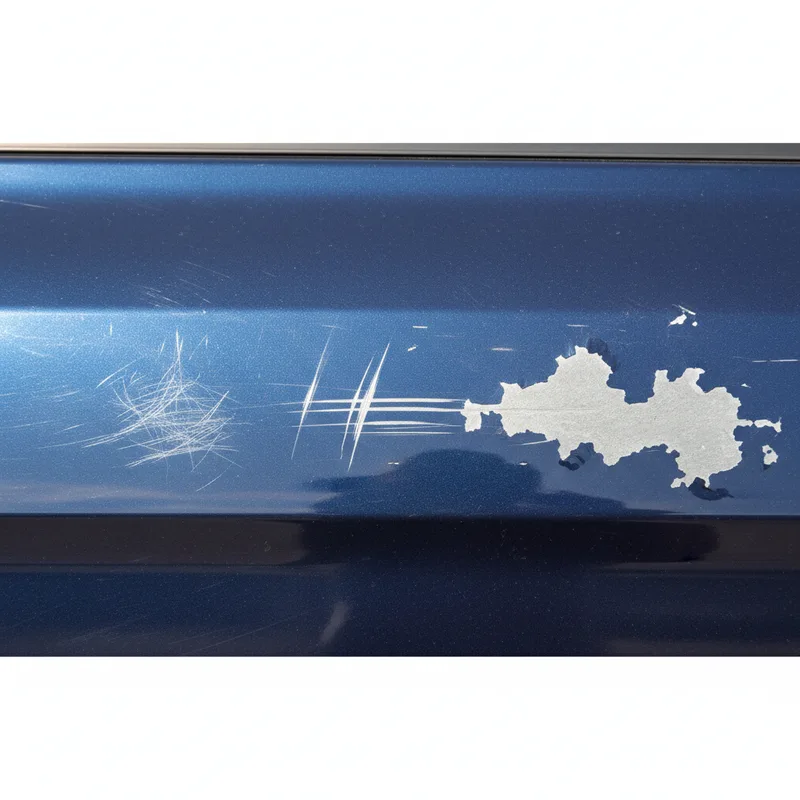
Clear coat scratches: The most common type. These haven’t reached the color layer and often appear white or hazy. Light polishing can address them in many cases.
-
Paint scratches: These cut through the color coat. You’ll see the primer or a different-colored layer beneath. Professional blending and repainting is typically required.
-
Deep gouges: These reach bare metal or plastic substrate. Without proper treatment, rust or corrosion starts immediately, especially in the monsoon humidity Phoenix gets each summer.
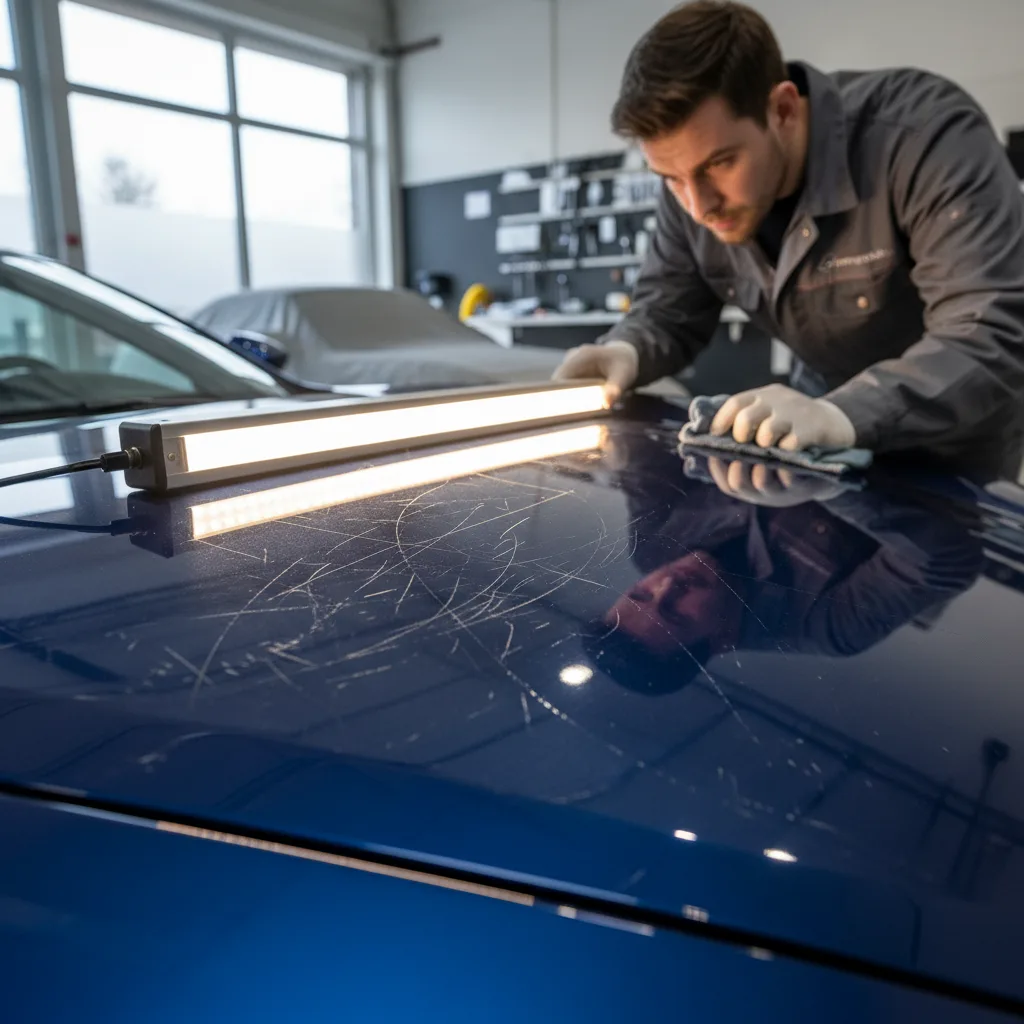
Here’s the professional opinion most shops won’t share upfront: a visual inspection alone isn’t enough. Lighting angle, paint color, and panel contour can all hide the true depth. A proper assessment means examining the scratch under controlled lighting, sometimes with a paint depth gauge.
At Brad’s Deer Valley Collision, we’ve been doing this work in Phoenix since 1985. We’ve seen thousands of scratches that looked minor from the driveway and turned out to need real attention. Getting an accurate read from the start is what keeps a small repair from becoming an expensive one. You can contact us for a walk-in assessment any time.
Why Professional Assessment Saves Time and Money
A scratch that looks minor can hide a lot. That’s the part most car owners don’t realize until they’ve already paid for a repair that didn’t hold up.
At Brad’s Deer Valley Collision, every scratch repair and repainting job starts with a proper diagnostic, not a quick glance and a quote. Our technicians use raking light inspection, which angles a focused light source across the panel surface to reveal texture breaks invisible under normal lighting. We also use digital depth gauges to measure exactly how far a scratch has penetrated the paint system. Those two steps together tell us whether we’re dealing with a clear coat scuff, a color layer cut, or damage that’s reached bare metal or primer.
Why does that distinction matter so much? Because the repair process changes completely depending on depth. A clear coat scratch can often be compounded and polished. A scratch reaching bare metal requires proper prep, primer, color coat, and a protective clear. If a shop skips accurate depth measurement and treats a deep scratch like a surface scuff, the repair will fail, usually within a season of Phoenix heat and UV exposure.
Honestly, the “get a few estimates and pick the cheapest” advice doesn’t hold up here. A low estimate often means someone skipped the diagnostic step. You’re not comparing the same repair.
Proper assessment also catches secondary issues, like paint lifting at the scratch edges or corrosion already starting on an older vehicle. Finding those early saves a lot of money later.
Our team has been doing this in Phoenix, AZ since 1985, and we’re I-CAR and ASE certified. Walk-ins are welcome. Contact us to schedule a free assessment before any work begins.
The Scratch Repair and Repainting Process: Step by Step
Every shortcut taken during prep work shows up eventually. That’s the part most car owners don’t see until the repaired panel starts peeling six months later. At Brad’s Deer Valley Collision, scratch repair and repainting follows a deliberate sequence that doesn’t bend based on schedule pressure.
Surface Preparation Comes First
The panel gets cleaned thoroughly, removing road grime, wax residue, and any contaminants that would prevent primer adhesion. If the scratch has broken through to bare metal, that area is feathered out with progressively finer sandpaper to create a smooth transition between damaged and undamaged paint. Skipping this step is one of the most common reasons DIY repairs fail. The edge between old and new paint needs to be gradual, not abrupt.
If rust has started forming, it gets treated before anything else goes on. Phoenix’s heat doesn’t stop rust once it starts, and painting over it just traps the problem underneath.
Priming and Filling
Primer does more than fill scratches. It seals bare metal, improves adhesion for the base coat, and gives the painter a uniform surface to work with. Deeper scratches may need a body filler application before priming, shaped carefully so the panel contour stays accurate. Rushing through this stage is where a lot of budget shops cut corners, and the results are paint that looks fine in the bay but shows waves and low spots in direct sunlight.
Once primer is applied, it’s blocked by hand to confirm the surface is truly flat before any color goes on.
Base Coat and Clear Coat Application
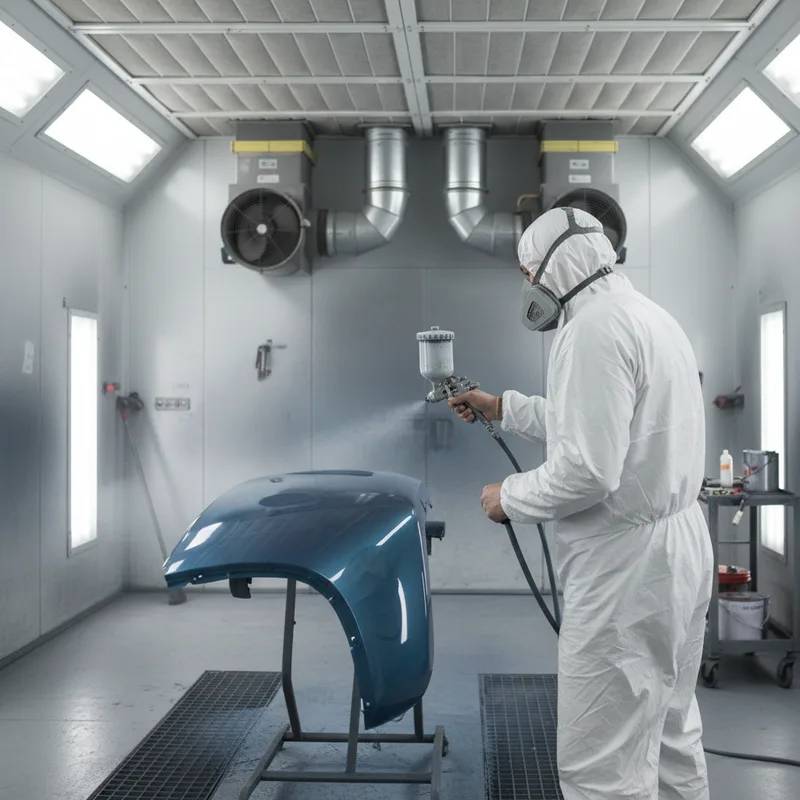
The base coat carries the color. It’s applied in thin, even passes rather than one heavy coat, which reduces the risk of runs and helps the paint lay flat. Our auto body painting process uses professional-grade refinish systems engineered specifically for collision repair, not off-the-shelf rattle cans.
Clear coat follows. It’s what gives paint its gloss and protects the color underneath from UV exposure, which is a real concern in Phoenix, AZ. Multiple clear coat layers get applied with flash time in between so each layer cures properly before the next one goes on.
Polishing and Final Inspection
After curing, the repair is color-sanded and machine polished to blend the new finish into the surrounding paint. This is where a skilled painter earns their pay. The repair should be invisible under normal lighting.
Want to see what this looks like in person? Stop by or reach out to schedule a free estimate. We’ve been doing this in Phoenix since 1985, and we’re happy to walk you through every step before any work begins.
Paint Matching Technology: Achieving a Seamless Finish
Color matching is where a lot of shops quietly fail their customers. The repair looks fine in the dim light of the shop, but under Phoenix sunlight, you can see exactly where the painted panel ends and the original finish begins. That visible line is the result of guesswork, and it’s avoidable.
At Brad’s Deer Valley Collision, we use spectrophotometric color scanning to take the guesswork out of the equation entirely. A spectrophotometer reads your vehicle’s actual surface at a molecular level, measuring how light interacts with the existing paint. It accounts for fading from UV exposure, subtle shifts in metallic flake orientation, and the natural aging that happens to every vehicle’s finish over time. The data goes directly into our mixing system, producing a formula calibrated to your car’s current color, not just the factory color code from ten years ago.
That distinction matters more than most people realize.
A lot of shops still rely primarily on color codes from the manufacturer’s records. That approach works reasonably well on newer vehicles, but it gets less reliable the older the car is. Phoenix’s intense UV index accelerates paint oxidation faster than in most other climates, which means a five-year-old vehicle here can show color drift that would take eight or nine years to develop somewhere with less sun exposure. Matching to the code alone, without scanning the actual surface, often produces a result that looks slightly off in direct light.
The scanning process itself is quick. Our technicians take multiple readings from an undamaged area of the same panel or an adjacent panel, then cross-reference those readings to build an accurate blend formula. For complex finishes, including tri-coat pearl and high-metallic colors, we may do test panels before committing to the full application.
Proper scratch repair and repainting in Phoenix, AZ requires color matching technology that accounts for local environmental conditions, not just a formula pulled from a binder. You can read more about our full capabilities on our services page, or learn about the certifications and experience behind our work on the about page.
If you want to see what accurate color matching actually looks like before committing, come in for a free estimate. Walk-ins are welcome.
Common Scratch Repair Mistakes That Cost You Later
The repairs that fail rarely fail at the finish line. They fail during prep work, and customers don’t find out until months later when paint starts lifting at the edges or a color mismatch shows up bright and obvious under direct Phoenix sun.
Here are the mistakes worth knowing before you hand over your keys.
Skipping or Rushing Surface Preparation
This is the most common one. Proper scratch repair and repainting requires thorough cleaning, degreasing, and sanding before any primer touches the panel. Shops under time pressure sometimes cut this short. What you get is adhesion failure, usually within a year. Ask any shop directly how they prep the bare metal before priming. A vague answer is a red flag.
Leaving Out the Primer Coat
Primer isn’t optional. It seals the substrate, prevents rust from creeping under the topcoat, and gives the color layer something to bond to. Some quick-fix operations skip it to save time. The repair looks fine initially, then peels. No written warranty is usually your first warning that corners are being cut.
Using the Wrong Paint Specs
Paint codes matter, but so does the formula type, the application method, and the number of coats. Using the right color code with the wrong formula still produces a mismatch. PPG Refinish and other industry suppliers publish spec sheets for a reason. Shops that ignore them create panels that look off within a season.
Insufficient Clear Coat Protection
Clear coat isn’t just shine. It’s the barrier that protects the color layer from UV exposure, and Phoenix has no shortage of that. Thin or improperly cured clear coat oxidizes faster than the surrounding factory finish, leaving a dull patch exactly where the repair was done.
If you’re evaluating shops in Phoenix, AZ, check their certifications and repair standards before committing. You can also request a written estimate and ask specifically how they handle each of these steps.
Why Brad’s Deer Valley Collision Is Your Best Choice in Phoenix
We’ve been doing this since 1985. That’s four decades of scratch repair and repainting work on Phoenix vehicles, through every season this desert throws at paint finishes.
Our technicians hold I-CAR and ASE certifications, and we invest in the kind of equipment that smaller shops skip, including ADAS recalibration tools that most operations in Phoenix don’t own. If your vehicle has lane-assist or automatic braking, those systems need verification after any significant bodywork. We handle that in-house.
Every repair comes with a written warranty. Not a verbal promise. A document.
A lot of shops talk about customer service without backing it up. We keep you updated with text messages and photos throughout the repair, so you’re never left wondering. Loaner vehicles and convenient drop-off options are available because your schedule matters.
You’re welcome to walk in for an assessment. No appointment required. We’re located here in Phoenix and have built our reputation with neighbors from Scottsdale to Chandler, one honest repair at a time.
Check out our full auto body services, learn more about our history and credentials, or contact us today for a free estimate.
Frequently Asked Questions
How much does scratch repair and repainting cost in Phoenix?
The cost really depends on how deep the scratch is, which panel is affected, and what type of paint your vehicle has. Light clear coat scratches typically run somewhere between $150 and $400. If the damage goes through multiple layers and requires primer plus a full panel repaint, you’re looking at $800 to $1,500 or more.
At Brad’s Deer Valley Collision, we provide free written estimates before any work begins, so there are no surprises. Depending on your policy and deductible, your insurance may cover part or all of the scratch repair and repainting cost. Stop by the shop and we’ll walk you through the numbers.
Can you match my car’s original paint color exactly?
Yes, and we take color matching seriously. Brad’s uses advanced spectrophotometer technology that scans your vehicle’s factory finish and accounts for age, UV exposure, and metallic flake variations. That digital reading tells us exactly what formula to mix so the repaired area blends seamlessly with the surrounding paint. You won’t see a visible line where the new paint starts. This matters both for how the car looks and for maintaining its resale value here in Phoenix, AZ, USA, where the sun can really alter a finish over time.
How long does scratch repair and repainting take?
A simple clear coat scratch can often be ready within one to two business days. If the damage requires primer, base coat, and clear coat, the full process typically takes three to five business days depending on shop workload at the time. We’ll give you a specific turnaround estimate when you come in for your initial consultation. Brad’s also offers loaner vehicles so you’re not stuck without transportation while your car is in the shop. We know that’s a real concern for customers in the Phoenix, AZ, USA area with busy schedules.
Will my repaired paint match in sunlight or does it still look blended?
When scratch repair and repainting is done right, the repair should be invisible under any lighting condition, whether that’s direct Phoenix sunlight, shade, or artificial light at night. Modern paint matching technology combined with proper application technique is what makes that possible. If you pick up your vehicle and notice a blending line or color difference in any light, bring it back. Brad’s stands behind our work with a written warranty, and we don’t consider the job finished until it looks right to you.
Does your warranty cover scratches that reappear after repair?
Brad’s Deer Valley Collision backs all scratch repair and repainting work with a written warranty that covers paint defects, peeling, and adhesion failure for a specified period. If the paint fails due to something on our end, we’ll make it right. The warranty doesn’t cover new damage from accidents or issues caused by improper vehicle care, such as harsh chemicals or abrasive washing. When you pick up your vehicle, ask us about the specific warranty terms and we’ll explain exactly what’s covered and for how long.
Get a Free Estimate from Brad’s Deer Valley Collision in Phoenix, AZ, USA
Stop letting that scratch or paint damage bother you. Bring your vehicle to our shop in Deer Valley and we’ll take a close look, walk you through your options, and give you a fixed price before any work begins. Phoenix drivers have trusted us since 1985, and you can see what our customers are saying on Google before you even walk through the door.
Call us today or stop by the shop. We’re ready to help you get your car looking right again.