
How to File an Auto Body Insurance Claim in Phoenix, AZ: Complete Process Guide

How to File an Auto Body Insurance Claim in Phoenix, AZ: Complete Process Guide
Why You Need to Act Fast: The Critical First Hours After an Accident
You’re sitting at a red light on Tatum Boulevard, someone rear-ends you, and your brain immediately goes blank. It happens constantly in Phoenix, AZ traffic. What you do in the next 30 minutes directly shapes how smoothly your insurance claim moves forward, and how much money stays in your pocket.
First things first: make sure everyone is safe. Move vehicles out of active traffic if you can do so safely. Arizona law requires you to report any accident involving injury, death, or property damage exceeding $2,000 to the Arizona Department of Transportation. If there’s any injury at all, call 911 immediately. A police report isn’t just a formality; it’s one of the most important documents you’ll have when you start figuring out how to file an auto body insurance claim.
Document Everything Before You Move
Pull out your phone and photograph everything. Get wide shots, close-ups, license plates, VINs visible through windshields, road conditions, and any skid marks. Photograph the other driver’s insurance card and license rather than just writing down numbers. People make transcription errors under stress.
Collect contact information from any witnesses. Bystander accounts carry real weight when liability is disputed.
A lot of common advice tells drivers to “stay calm and exchange info.” That’s fine as far as it goes, but most guides completely underestimate how much your documentation quality at the scene will affect your repair estimate and claim payout weeks later. Insurers look for gaps. Don’t give them any.
Notify your insurance company the same day. Most policies have prompt reporting requirements, and delays can genuinely complicate your claim in ways that are hard to undo later.
Phoenix drivers deal with intense sun glare, monsoon-season road hazards, and heavy freeway interchange traffic year-round. Accidents here happen fast. The shops and insurers processing claims in this market move quickly too, so you need to be ready from the moment the collision happens.
If you’re unsure what steps come next, reach out to Brad’s Deer Valley Collision directly. We’ve been helping Phoenix drivers navigate this process since 1985, and we’re glad to walk you through it.
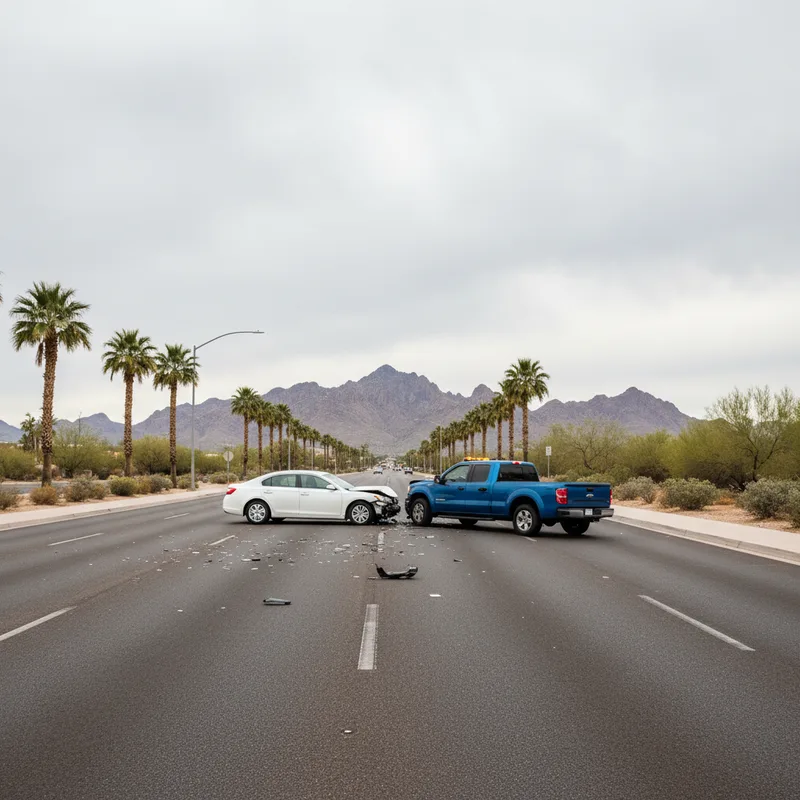
Essential Documentation You’ll Need to File Your Claim
Get this part wrong and your claim slows to a crawl. Insurance adjusters deal with incomplete submissions every day, and yours goes to the bottom of the pile when key documents are missing. Before you call your insurer, pull these together.
At the Scene
-
Police report number and responding officer’s name. If Phoenix PD responded, get the report number on the spot. You can retrieve the full report through the Phoenix Police Department’s online portal.
-
Photos of all vehicle damage. Shoot from multiple angles. Get wide shots showing both vehicles in position, then close-ups of every impact point. Don’t skip the undercarriage if you can safely access it.
-
Other driver’s information. Full name, license number, insurance company, policy number, and plate number. A quick phone photo of their insurance card works.
-
Witness contact information. Names and phone numbers. Witnesses disappear fast, so grab this before anyone drives away.
From Your Records
-
Your insurance policy number and declarations page. Know your deductible before you call. It avoids surprises later.
-
Vehicle registration and title information. Your adjuster will ask for the VIN; it’s on your registration and visible through the windshield.
-
Medical documentation if injuries occurred. Even minor treatment records matter for bodily injury claims.
Here’s a professional opinion that might surprise you: most Phoenix drivers over-document the other vehicle and under-document their own. Photograph every inch of your car before it moves, including pre-existing scratches or dents that have nothing to do with this accident. That protects you from disputes about what damage is new.
Keep everything in one folder, physical or digital. A single email thread with all attachments beats a scattered collection of texts and screenshots when an adjuster is reviewing your file.
If you’re unsure whether your documentation is complete, bring your vehicle to us. Our team has been helping Phoenix, AZ drivers navigate the claim process since 1985, and we can spot gaps before they cause delays. You’re welcome to stop in, no appointment needed for a quick review. Reach out here if you’d prefer to call ahead.
Knowing how to file an auto body insurance claim starts with having the right paperwork. The repair process moves faster when your documentation is tight from day one.
The Step-by-Step Insurance Claim Filing Process in Arizona
Most drivers overthink this part. The actual filing process has a clear sequence, and once you’ve seen it a few times, it stops feeling overwhelming.
Step 1: Notify Your Insurer Promptly
Call your insurance company as soon as you’re somewhere safe and calm. Most carriers have 24-hour claims lines, and Arizona insurers generally expect notification within a reasonable window after the accident. Delaying that call gives adjusters a reason to ask questions you don’t want to answer later. Give them the facts: date, location, what happened, and the other driver’s information if another vehicle was involved.
You’ll receive a claim number. Write it down and keep it somewhere easy to access. Every conversation you have from this point forward should reference that number.
Step 2: The Adjuster Contact
Your insurer will assign a claims adjuster. That adjuster’s job is to evaluate the damage and determine the payout amount. Some adjusters work for your insurance company directly; others are independent contractors. Either way, their initial estimate isn’t always the final word, and plenty of Phoenix drivers don’t realize they can push back if the assessment feels off.
Under Arizona Department of Insurance guidelines, insurers are required to acknowledge a claim within 10 working days and complete their investigation within 30 days when reasonably possible. If your adjuster is dragging their feet, you can reference those timelines directly.
Step 3: Get Your Repair Estimate
Here’s where most people accept the first number they’re handed. Don’t. Get a written estimate from an independent shop you trust before agreeing to anything. At Brad’s Deer Valley Collision, we’ve been providing accurate, documented collision repair estimates to Phoenix, AZ drivers since 1985, and we see adjuster estimates that miss hidden frame damage or ADAS recalibration needs on a regular basis.
A written estimate protects you. It gives you something concrete to compare against the adjuster’s figure and a starting point if there’s a dispute.
Step 4: Negotiate if Needed
Settlements are negotiable. If the adjuster’s offer doesn’t cover documented repair costs from a reputable shop, say so. Bring your written estimate. Bring photos. Reference the repair line items. Adjusters expect some back-and-forth, and a well-documented counteroffer usually gets a fair response.
Step 5: Authorize Repairs and Confirm Coverage
Once you’ve agreed on a settlement figure, get confirmation in writing before authorizing any repair work. Our team at Brad’s has handled this coordination with insurers hundreds of times and can help you read the fine print before you sign anything. Reach out to us if you want a second set of eyes on what your insurer has proposed.
Your Right to Choose Your Own Repair Shop (And Why Brad’s Makes Sense)
Your insurer does not get to pick your shop. Full stop.
Arizona law gives you the right to choose any licensed collision repair facility after an accident, regardless of what your insurance company recommends. Adjusters sometimes push drivers toward their “preferred” or “approved” network shops, and a lot of Phoenix drivers assume that’s mandatory. It isn’t. That recommendation is a suggestion, not a requirement, and you’re under no obligation to follow it.
The Truth About “Approved” Shop Networks
Here’s a professional opinion that might surprise you: the term “approved shop” doesn’t automatically mean better work. It often means the shop has agreed to process claims quickly at rates the insurer prefers. That arrangement can work fine, but it’s designed around the insurance company’s workflow, not your vehicle’s specific repair needs. Shops in those networks sometimes face pressure to move cars through fast, which is exactly when hidden frame damage or ADAS recalibration gets skipped.
When you learn how to file an auto body insurance claim correctly, choosing your own shop is part of that process, not an afterthought.
Why Brad’s Deer Valley Collision Works for Phoenix Drivers
Brad’s has been repairing vehicles in Phoenix, AZ since 1985. That’s decades of direct insurance coordination with virtually every major carrier. Our team handles the documentation, supplements, and adjuster communication so you don’t have to manage it yourself. We’re also I-CAR and ASE certified, which matters when your insurer reviews the repair scope.
We work directly with insurance companies and provide accurate, written estimates backed by a full range of collision repair services. You keep the rights; we handle the logistics.
If you’ve already started a claim or just need answers, contact us directly. Walk-ins are welcome.
Common Insurance Claim Mistakes Phoenix Drivers Make
Most claim delays aren’t caused by complicated coverage disputes. They’re caused by small, avoidable errors that compound on each other.
Accepting the First Estimate Without Question
A quick estimate from an insurer-recommended shop isn’t always in your interest. Adjusters sometimes write estimates based on aftermarket or recycled parts rather than OEM components. Ask directly what parts are specified, and get that answer in writing before you approve anything. Drivers across Phoenix, AZ who skip this step often discover mid-repair that their vehicle won’t be restored to factory spec.
Missing Hidden Damage
Photos taken at the scene capture surface damage. They don’t capture bent frame rails or compromised structural welds. This is where a lot of drivers get hurt financially. If hidden damage surfaces after your claim closes, getting supplemental coverage approved is a much slower process. A thorough damage assessment before you finalize anything protects you from that situation.
Assuming OEM and Aftermarket Parts Are Equivalent
They’re not always equivalent, and the difference matters more on newer vehicles with integrated safety systems. Aftermarket parts can affect ADAS recalibration, and that has real safety consequences. Arizona doesn’t require insurers to use OEM parts by default, so you have to request it explicitly.
Not Following Up on Claim Status
Don’t assume no news is good news. Adjusters carry high caseloads, and your file can stall without a single notification. Call every few business days until you have a confirmed repair authorization.
One opinion worth sharing: a lot of commonly repeated advice tells drivers to “just trust the process.” That’s too passive. Learning how to file an auto body insurance claim properly means staying engaged at every step. Reach out to Brad’s Deer Valley Collision if you’re unsure where your claim stands. We’ve been helping Phoenix drivers navigate this since 1985.
How Brad’s Deer Valley Collision Handles Your Insurance Claim From Start to Finish
We’ve been doing this since 1985. That’s a long time to work alongside Phoenix, AZ drivers, adjusters, and insurance carriers, and we’ve learned exactly where the process breaks down for customers who don’t have a shop in their corner.
When you bring your vehicle to us, the insurance claim process doesn’t rest entirely on your shoulders anymore.
Accurate Estimates That Hold Up
The first thing we do is a thorough damage assessment, not a quick visual pass. Our full range of collision repair services includes frame inspection and structural evaluation, which matters because hidden damage routinely gets missed by drive-by estimates. If your insurer’s initial payout doesn’t cover what we find once the vehicle is disassembled, we communicate that directly to the adjuster. You don’t have to make that call yourself.
We also document everything. Photos, written estimates, parts specifications. That paperwork is what protects your claim when a supplement is needed.
Direct Communication With Your Insurer
Most customers are surprised to learn how much back-and-forth happens between a shop and an insurance company during a typical repair. We handle that communication directly. We participate in direct repair programs with several major carriers, which speeds up approvals without compromising the quality of your repair. Our I-CAR and ASE certifications carry weight in those conversations, too. Adjusters take certified shops seriously.
One opinion worth sharing: a lot of industry advice tells drivers to accept insurer-recommended shops for faster service. We disagree. Speed shouldn’t cost you repair quality or warranty protection. A slightly longer authorization process at a certified shop is almost always worth it.
Warranty Coverage You Can Count On
Every repair we complete comes with a written warranty. That’s not a handshake promise; it’s a document you leave with. If something related to our work comes up later, you have recourse.
If you’re trying to figure out how to file an auto body insurance claim in Phoenix, AZ and want a shop that handles the complexity rather than handing it back to you, reach out to us directly or stop by. Walk-ins are welcome, and we’ll start with an honest assessment of your damage and your options.
Frequently Asked Questions
How quickly do I need to file an insurance claim after an accident in Phoenix?
Most Arizona insurers want to hear from you within 24 to 72 hours of an accident. The sooner you call, the better. Waiting too long can complicate your claim or give the insurer a reason to push back on coverage. If you’re figuring out how to file an auto body insurance claim in Phoenix, AZ, USA, your first call should be to your insurance company, not days later. Check your specific policy for exact deadlines since they do vary by carrier.
Can I choose my own collision repair shop in Arizona, or does my insurer pick it?
You have the right to choose your own shop. Arizona law protects that, and your insurer cannot force you to use one of their recommended facilities. If you bring your vehicle to Brad’s Deer Valley Collision and our estimate is competitive, most insurers will approve it through their direct repair program. Don’t let an insurance representative pressure you into a shop you didn’t choose. It’s your car and your call.
What’s the difference between OEM and aftermarket parts on my insurance estimate?
OEM parts come directly from your vehicle’s manufacturer, so you’re getting an exact fit. Aftermarket parts are made by third-party companies and typically cost less, but the quality can vary. Your policy may only cover aftermarket parts depending on your coverage level and vehicle age. When you’re working through how to file an auto body insurance claim in Phoenix, AZ, USA, ask your adjuster upfront which parts are approved. Our team at Brad’s Deer Valley Collision can walk you through what’s on your estimate and what it means for your repair.
How long does the insurance claim process typically take in Phoenix?
Most claims wrap up within two to four weeks, but that timeline depends on a few things: how complex the damage is, how backed up your adjuster is, and how long the actual repairs take. Working with a shop that communicates proactively with your insurer makes a real difference. At Brad’s Deer Valley Collision, we stay in contact with adjusters throughout the process so things don’t stall out waiting on approvals or additional documentation.
What happens if my insurance adjuster’s estimate is lower than the repair shop’s estimate?
This comes up more than you’d think, and it’s not a dead end. Ask our team for a detailed written breakdown explaining exactly where the difference is. In many cases, the adjuster missed hidden damage or didn’t account for current parts pricing. Brad’s Deer Valley Collision will negotiate directly with your adjuster or request a re-inspection to work through the gap. You shouldn’t have to settle for a repair that doesn’t fully address the damage to your vehicle.
Let Brad’s Deer Valley Collision Handle Your Insurance Claim
We’ve been helping Phoenix, AZ, USA drivers navigate the insurance process since 1985, and we know how stressful it can be after an accident. Stop by our shop or give us a call today for a free, detailed collision repair estimate, and we’ll take care of the back-and-forth with your insurance company so you don’t have to. Check out what our customers are saying on Google and see why so many Arizona drivers trust us when it matters most.
Call us now or visit us in person. We’re ready to get you back on the road.