Frame Repair and Alignment in Phoenix, AZ: Restoring Structural Integrity After a Collision
Frame Repair and Alignment in Phoenix, AZ: Restoring Structural Integrity After a Collision
Why Frame Damage Is More Serious Than It Looks
A Phoenix driver pulls into a parking lot off Camelback Mountain Road, gets clipped by a reversing SUV, and walks away thinking the dent on the quarter panel is the whole story. The car drives fine. Nothing warning lights up. The damage looks cosmetic. So they skip the structural inspection and book a basic dent repair instead.
That’s a mistake that shows up later, sometimes months later, when the tires wear unevenly, the car pulls left on the I-17, or the doors start binding in their frames.
Frame damage hides well.
Your vehicle’s frame isn’t just the skeleton holding everything together. It’s the engineered foundation that determines how your car handles a turn, absorbs impact energy in a second collision, and keeps your doors, roof, and crumple zones working exactly as designed. A bend or twist of even a few millimeters can throw the entire geometry off in ways that aren’t obvious until something goes wrong at the worst possible time.
Most people underestimate how much collision force transfers into the frame during what feels like a moderate impact. At 25 mph, the kinetic energy involved is significant enough to push structural components out of factory tolerances without cracking anything visible. The vehicle can look repaired on the outside while carrying hidden misalignment that compromises handling and safety system performance.
Here’s the part many drivers don’t hear often enough: modern vehicles are designed with advanced driver assistance systems that depend entirely on the frame sitting in precise alignment. Lane departure warnings, automatic emergency braking, and adaptive cruise control all rely on sensors mounted to specific structural points. If those points have shifted even slightly, the calibration is off, and the system either misfires or fails to respond when you actually need it.
Resale value takes a hit too. A vehicle history report showing unrepaired or improperly repaired frame damage can reduce trade-in value substantially, and savvy buyers in Phoenix’s used car market know how to spot it.
At Brad’s Deer Valley Collision, we’ve been doing frame repair in Phoenix, AZ since 1985. We’ve seen what deferred structural repairs cost drivers down the road. If you’ve been in a collision and haven’t had a full structural inspection, reach out to us before assuming you’re in the clear.
How Professionals Assess Frame Damage in Phoenix
Most drivers assume a clean visual inspection tells the whole story. It doesn’t. A vehicle’s frame can be significantly compromised without a single obvious bend visible to the naked eye. That’s exactly why the diagnostic process matters as much as the repair itself.
At Brad’s Deer Valley Collision, every potential frame repair job starts with a methodical, multi-step assessment, not a quick look-over. We’ve been doing this in Phoenix since 1985, and the cars we see today are structurally far more complex than what came through our doors in the early years. You can’t shortcut the inspection process and expect accurate results.
Visual Inspection: The Starting Point, Not the Finish Line
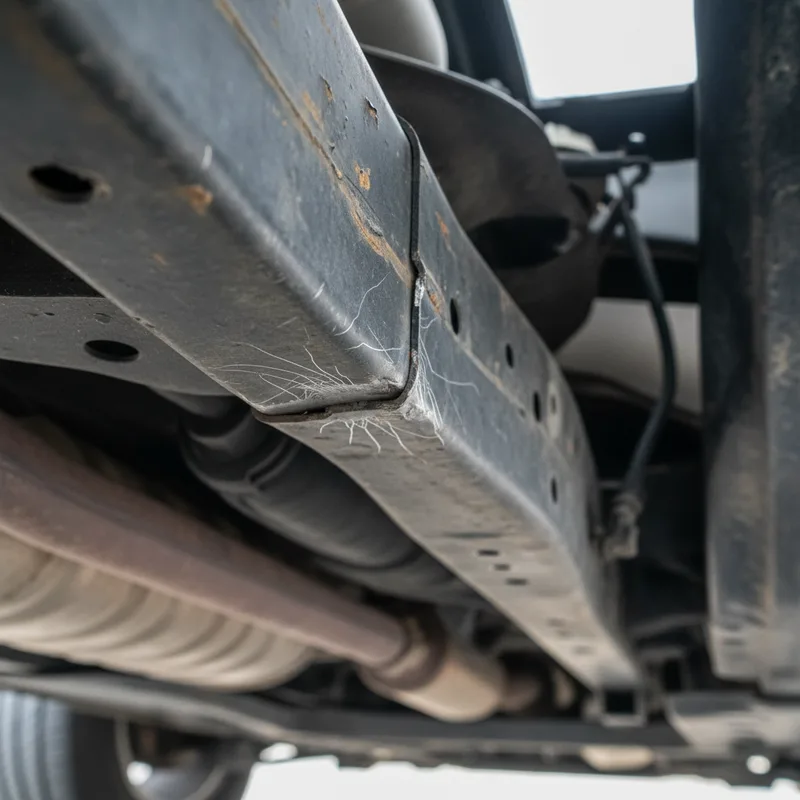
The first step is a hands-on visual check. Technicians look for uneven panel gaps, doors or hoods that don’t close flush, misaligned body lines, and visible bends or crumple zones in the engine bay or undercarriage. Suspension components that look “off” are another red flag. These visible signs point us toward where deeper damage is likely hiding.
Here’s a professional opinion worth hearing: a lot of shops stop too soon. If a vehicle looks mostly straight and drives without an obvious pull, some technicians call it close enough. That’s a mistake. Hidden structural displacement can be just a few millimeters, which is invisible without proper equipment but still enough to compromise how the vehicle handles a second collision.
Computerized Measuring Systems
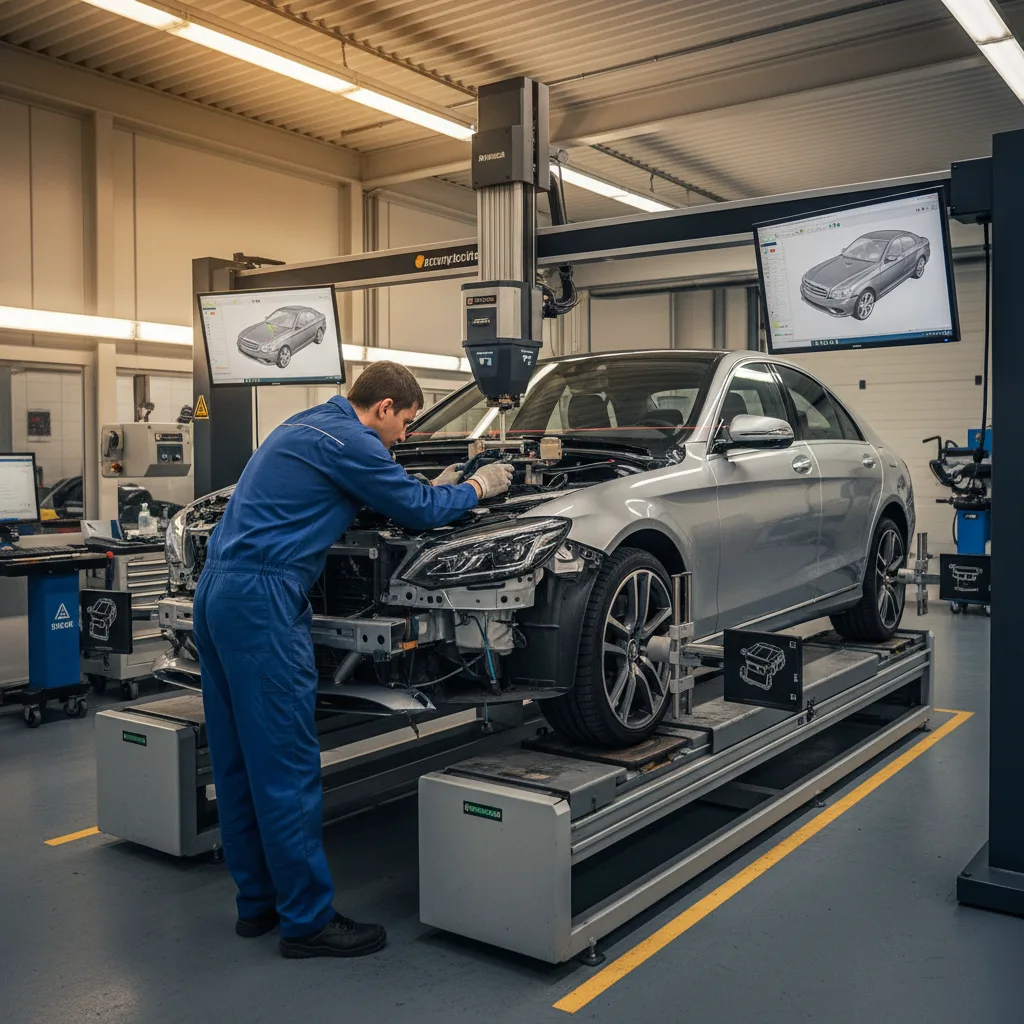
This is where precision takes over from visual judgment. We use computerized frame measuring equipment that maps the vehicle’s actual dimensions against the manufacturer’s factory specifications. Every measurement point, front to rear, gets compared to the original blueprint for that exact make and model.
The data doesn’t lie. Even slight deviations from factory tolerances show up clearly, which lets our technicians identify exactly which sections of the frame were displaced and by how much. That information drives the entire frame repair plan. Without it, any alignment work done afterward is essentially guesswork.
Identifying Hidden Damage
Collision energy travels. A front-end impact in Phoenix traffic doesn’t just damage the front rails; it can push force back through the firewall and into the floor structure. We check all load paths, not just the point of impact.
Suspension mounting points, subframe connections, and strut towers all get inspected for stress fractures or deformation. These areas are easy to miss if a technician is only focused on the obvious damage zone.
If you’ve been in a collision and have any doubt about your vehicle’s structural condition, contact our team to schedule a proper inspection. You can also read what other Phoenix drivers have experienced when they brought their vehicles to us for assessment.
The Frame Repair Process: From Assessment to Alignment
Most of the real work in frame repair happens before anyone picks up a torch or pulls on a hydraulic ram. Technicians who rush that part almost always miss something.
Once the full diagnostic is complete and the damage map is drawn up, the repair sequence follows a deliberate order. At Brad’s Deer Valley Collision, our process is built around factory specifications, not guesswork. Here’s what actually happens from the moment a vehicle enters our frame bay to the moment it rolls back out.
Straightening the Frame
The vehicle gets mounted to a frame straightening bench, which locks it down at specific manufacturer-designated points. This matters because pulling a frame from the wrong anchor location can create new damage while correcting old damage. Hydraulic pulling towers and chains apply controlled, measured force to the affected areas, working in stages rather than all at once.
Rushing the pull is a mistake. Metal has memory. Applying too much force too quickly can cause stress fractures in areas that looked undamaged on initial inspection. Slow, incremental pulls with continuous measurement checks are the correct method, even if they take longer.
Welding and Structural Reinforcement
Some damaged sections can be straightened back to spec. Others can’t. When metal has been stretched, cracked, or permanently deformed, the compromised section has to be cut out and replaced with new structural material. This is where welding quality becomes critical.
Improper welds on a structural frame are a serious safety issue. Weak or incomplete welds can fail in a subsequent collision, even a minor one. Our technicians follow I-CAR welding standards, which specify weld type, bead size, and penetration depth for each section of the vehicle’s structure. That certification isn’t just a wall decoration. It directly affects how your repaired frame performs under real stress.
The Alignment Phase
Frame repair without a post-repair alignment check is incomplete work. Full stop.
After straightening and any structural welding, the vehicle goes through a four-wheel alignment to verify that the suspension geometry, steering angles, and wheel positioning are all within manufacturer tolerances. The frame straightening bench provides real-time measurement during the pull, but the alignment rack confirms everything once the vehicle is under its own weight and configuration.
Phoenix driving conditions add a layer of urgency to this step. Sustained heat affects tire pressure and rubber hardness, which means a vehicle that’s even slightly out of alignment will show wear problems faster here than it would in a cooler climate. Getting the alignment right the first time protects the repair investment.
This process, done correctly, takes time. Customers who want their vehicle back in 24 hours after significant frame damage should understand that speed and structural integrity don’t usually coexist. We’ve been doing this work in Phoenix since 1985, and we’ve never found a shortcut worth taking on a structural repair.
Questions about what the process looks like for your specific vehicle? Contact us directly or stop by the shop. Walk-ins are welcome.
Common Frame Repair Mistakes to Avoid
Not every shop that advertises frame repair actually does it well. Some of the worst outcomes we’ve seen at Brad’s Deer Valley Collision came from vehicles that had already been “repaired” somewhere else. Knowing what can go wrong helps you ask better questions before handing over your keys.
Skipping the Full Diagnostic
Plenty of shops fix what’s visible and call it done. That’s a problem. Frame damage travels. A hit on the front corner can shift load points all the way to the rear rail, and a repair that only addresses the obvious bend will leave hidden stress fractures untouched. The Insurance Institute for Highway Safety consistently finds that structural compromise affects crash protection long after visible damage is repaired.
Rushing the Pull Without Measuring
Pulling a frame without continuous measurement is guesswork. Technicians need real-time data from a three-dimensional measuring system throughout the entire pull process, not just a check at the start and end. Skipping mid-process measurements is one of the most common shortcuts, and it produces frames that look corrected but don’t meet manufacturer tolerances.
Neglecting Post-Repair Alignment and ADAS Recalibration
This one surprises people. A lot of shops complete the frame repair and send the car out without a full four-wheel alignment. That’s backwards. The alignment is how you verify the repair actually worked. Equally important, modern vehicles depend on Advanced Driver Assistance Systems that require recalibration after any structural work. Lane departure, automatic braking, adaptive cruise control, all of it ties back to sensor positioning. If those systems aren’t recalibrated, they can give false readings or fail entirely.
Our team handles both steps on every job. See our certifications and full approach here, or contact us to ask about a specific repair concern.
Why Precision Alignment Matters for Safety and Performance
Technicians see it constantly: a vehicle comes in after frame repair with the structure corrected, but nobody checked the alignment afterward. The owner drives away thinking the job is done. Within a few weeks, the tires are wearing unevenly on one edge, the steering pulls to the right, and fuel economy has quietly dropped.
Alignment isn’t just about straight driving. It’s the final confirmation that your frame repair actually worked.
When a frame takes impact, the geometry that holds your wheels in their correct positions shifts. Camber, caster, and toe angles all depend on the frame sitting exactly where the manufacturer designed it to sit. Even a small deviation, one that wouldn’t show up visually, changes how each tire contacts the pavement. The tire wears faster on one side, grip decreases, and the car handles differently in ways that are easy to dismiss as “just how this vehicle drives.”
Fuel efficiency takes a hit too. Misaligned wheels create rolling resistance the drivetrain has to fight constantly. On Phoenix roads, where drivers are logging real miles daily between Deer Valley, Desert Ridge, and Tempe, that inefficiency adds up faster than most people realize.
Here’s where a lot of shops get it wrong: they treat alignment as optional after frame work, something to recommend but not require. That’s bad practice. Alignment is mandatory after any structural repair. The two procedures are directly connected, and skipping the second one undermines the first.
Modern vehicles add another layer to this. Cameras and sensors tied to lane departure warnings, automatic emergency braking, and adaptive cruise control are calibrated to specific geometric reference points on the vehicle. If alignment is off after frame repair, those advanced driver assistance systems can misread road conditions, even if they appear to be functioning normally.
At Brad’s Deer Valley Collision, we’ve been doing this work in Phoenix since 1985, and alignment verification has always been part of our post-repair process. Contact us to schedule an inspection if you have any concerns about your vehicle’s handling after a collision.
Choosing the Right Frame Repair Shop in Phoenix
Not all shops are equal. That’s especially true with frame repair, where cutting corners has real safety consequences that don’t show up until months later on the highway.
Here’s what to actually look for when choosing a body shop in Phoenix, AZ.
Check Certifications Before Anything Else
Ask whether the shop holds I-CAR and ASE certifications. These aren’t just wall decorations. I-CAR Gold Class certification, in particular, requires ongoing training, which means technicians are current on repair procedures for modern vehicle structures. Many shops in the Phoenix area have neither. That’s a problem when your vehicle has a unibody or high-strength steel frame that requires specific repair protocols.
At Brad’s Deer Valley Collision, we’ve maintained those certifications since long before they were standard practice. We’ve been doing this since 1985, and the training never stops.
Ask Specifically About Technology
A shop’s equipment tells you more than their pitch does. Frame repair requires computerized measuring systems that compare your vehicle’s actual dimensions against factory specs. If a shop can’t describe their measuring process in specific terms, that’s a red flag.
ADAS recalibration is the other question most drivers forget to ask. If your vehicle has lane-keeping assist, automatic emergency braking, or adaptive cruise control, those sensors need recalibration after frame work. Most smaller shops either skip this step or outsource it. Find out before you commit.
Get a Written Estimate and a Written Warranty
Get it in writing. Both the estimate and the warranty. Any shop unwilling to put their warranty in writing doesn’t actually stand behind the repair. A verbal promise isn’t worth much when a problem surfaces six months later.
A common piece of advice tells drivers to always get three estimates and pick the middle one. We’d push back on that. Price alone is a poor guide for frame repair. A suspiciously low bid usually means skipped steps or aftermarket parts used where OEM components belong. Focus on certifications, technology, and warranty terms first.
Your Right to Choose Your Shop
Your insurance company may steer you toward a preferred shop. You have the right to choose your own. That’s true in Arizona, and it’s worth knowing before someone pressures you otherwise.
We work directly with all major insurers and handle the documentation from estimate through final inspection. See the full range of services we provide, read what our customers have said, then contact us to schedule your inspection. Walk-ins are welcome at our Phoenix location.
Frequently Asked Questions
How do I know if my vehicle has frame damage?
There are some common signs you can watch for: uneven gaps between body panels, doors or the hood that don’t close quite right, tires wearing unevenly, or the car pulling to one side while you’re driving. Sometimes you can spot visible creases or bends along the frame rails under the vehicle. That said, the only way to know for sure is to have a professional inspection done using precision measuring equipment. If you’re in Phoenix, AZ, USA and something feels off after a collision, bring your vehicle into Brad’s Deer Valley Collision and we’ll take a close look.
Can frame damage be repaired, or does my car need to be totaled?
In most cases, frame damage can be repaired. We use specialized straightening equipment and proven techniques to bring your vehicle’s structure back to factory specifications. Whether repair makes financial sense depends on how extensive the damage is and what the repair cost looks like compared to your vehicle’s value. We’ll give you an honest assessment after we inspect it. Our goal with every frame repair job in Phoenix, AZ, USA is to give you a straight answer so you can make an informed decision.
How long does frame repair and alignment take?
It really depends on the damage. A straightforward frame straightening job might take a few days, while more complex structural repairs can run one to two weeks or longer, especially if parts need to be ordered. We know your time matters, so after we do the initial inspection at our shop, we’ll give you a realistic timeline upfront. We don’t want you guessing about when you’ll get your car back. Brad’s Deer Valley Collision will keep you updated throughout the entire frame repair process.
Why is post-repair alignment so important?
Once the frame is straightened, alignment is what confirms everything is square and back to factory geometry. If alignment gets skipped or done incorrectly, you’ll end up with premature tire wear, the car handling poorly, and safety systems like your lane assist or stability control not working as they should. Your fuel efficiency can take a hit too. Alignment isn’t just a formality. It’s a critical final step in any proper frame repair, and we don’t cut corners on it here in Phoenix, AZ, USA.
Does my insurance cover frame repair?
Yes, if you have collision coverage, frame damage is typically covered under your policy. The process doesn’t have to be stressful either. At Brad’s Deer Valley Collision, we work directly with insurance companies and help manage the claim process on your behalf. You’ll want to make sure your insurer receives a detailed written estimate, and we handle that too. If you’ve been in an accident anywhere in Phoenix, AZ, USA and you’re not sure where to start, just give us a call and we’ll walk you through it.
Get Your Frame Inspected by a Team Phoenix Drivers Trust
If you’re worried about frame damage after a collision, bring your vehicle to Brad’s Deer Valley Collision in Phoenix, AZ, USA and we’ll give you a thorough inspection and a written estimate at no charge. We work directly with your insurance company to make the whole process as straightforward as possible, so you’re not left navigating it alone. See what our customers are saying on Google and then give us a call or stop by our Phoenix location. We’re ready to help you get back on the road safely.