Frame Damage After Accident in Phoenix, AZ: Assessment, Repair, and Alignment
Frame Damage After Accident in Phoenix, AZ: Assessment, Repair, and Alignment
What Frame Damage Is and Why It Matters After an Accident
You’re driving home on the I-17, someone rear-ends you at a light near Desert Ridge Marketplace, and the impact looks minor. There’s a crumpled bumper, maybe a bent trunk lid. The car still drives. You assume it’s cosmetic. That assumption is one of the most expensive mistakes a Phoenix driver can make.
Frame damage after an accident doesn’t always announce itself. The vehicle’s structural skeleton, whether it’s a traditional ladder frame or a modern unibody, can absorb and redirect collision forces in ways that aren’t visible from the outside. A hit at the right angle can twist a unibody chassis, compress a crumple zone unevenly, or buckle a rail that sits completely hidden beneath your vehicle’s body panels.
Here’s what the frame actually does: it holds every major system in alignment. Suspension geometry, steering components, engine mounts, and safety systems all depend on the frame sitting at its designed specifications. When those specs are off, even by a fraction of an inch, you get uneven tire wear, a car that pulls to one side, and, more critically, a vehicle that won’t absorb a second impact the way it was engineered to.
Resale value takes a hit too. A Carfax report that flags structural damage can reduce a vehicle’s market value significantly, and buyers in Phoenix are savvy about it. That’s a financial consequence that follows you long after the repairs are done.
A lot of drivers believe that if the car drives straight and there are no warning lights, the frame is fine. That’s not a reliable test. Some frame distortion only becomes apparent under load, during a sharp turn, or when a technician puts the vehicle on a measurement system and pulls actual numbers.
Frame damage after an accident is a structural and safety issue, not just a cosmetic one. At Brad’s Deer Valley Collision, we’ve been doing this work in Phoenix since 1985, and we’ve seen straightforward-looking impacts hide serious structural compromise. Our I-CAR and ASE certified team has the equipment and the experience to find what a visual inspection misses.
Getting a proper assessment isn’t optional. It’s the first step toward knowing what you’re actually dealing with. You can review our full range of services or contact us directly to schedule an evaluation.
How to Spot Frame Damage: Signs and Symptoms
Most drivers won’t catch frame damage after an accident by glancing at the car in a parking lot. That’s the problem. The signs are often subtle, and some only show up once you’re back on the road.
Here’s what to watch for.
Visual Clues You Can Check Yourself
Walk around the vehicle and look at the gaps between body panels. Doors, hood, trunk lid, and fenders should all have consistent spacing. If one gap looks wider or narrower than the opposite side, the underlying structure may have shifted. That’s not a cosmetic quirk. It’s geometry telling you something moved.
-
Doors or windows that suddenly don’t close flush
-
Visible bends, creases, or ripples in the rocker panels or wheel wells
-
Tires that sit unevenly in the wheel wells
-
Rust appearing at unusual spots, which can indicate crumpled metal trapping moisture
Get low and look under the vehicle if you can. Bent crossmembers or twisted rail sections are sometimes visible without any equipment at all.
How the Car Feels While Driving
Pay attention. A vehicle with frame damage after an accident often drives differently, even when it looks fine on the surface.
-
Pulling to one side on a straight, flat road is one of the most common complaints we hear at our Phoenix, AZ shop.
-
Unusual vibration through the steering wheel or floorboard, especially at highway speed.
-
The rear end feels loose or the car seems to track crooked, like the front and rear aren’t traveling in the same line.
-
Tires wearing unevenly after recent service is another indicator most people overlook.
Honestly, a lot of drivers chalk these symptoms up to needing an alignment or new tires. That’s a mistake. Alignment work on a damaged frame is a temporary fix at best. The root cause needs to be addressed first.
If anything on this list sounds familiar, don’t wait. Schedule an assessment with our team and get a clear answer before the problem compounds.
The Frame Assessment Process at Brad’s Deer Valley Collision
A lot of shops eyeball frame damage after an accident and call it done. That’s a mistake we’ve never been willing to make.
At Brad’s Deer Valley Collision, the assessment process starts before anyone touches a wrench. Our technicians document everything first, photographing the vehicle from multiple angles and noting any pre-existing conditions. That baseline matters, both for accuracy and for your insurance claim.
Computerized Measuring Systems
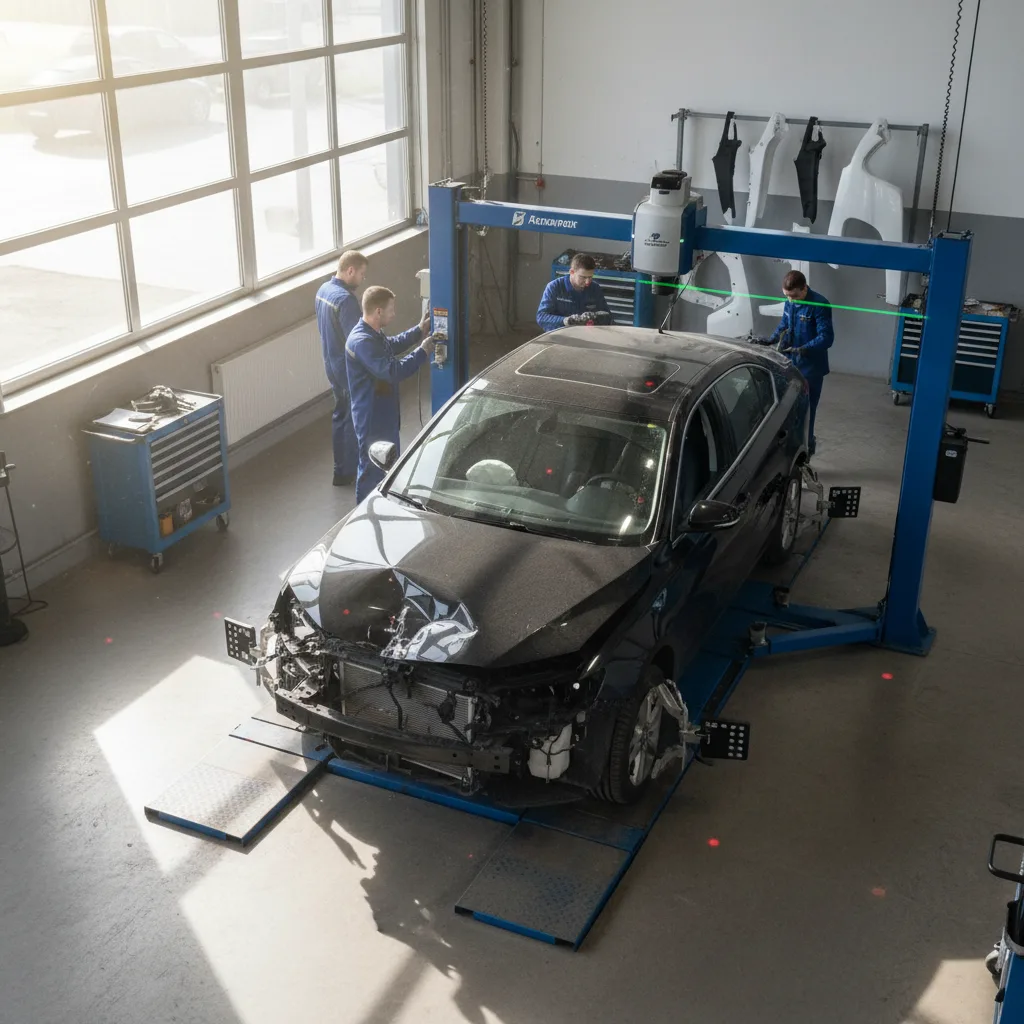
Modern frame assessment depends on precision. We use computerized measuring equipment that maps your vehicle’s actual dimensions against manufacturer specifications to the millimeter. This isn’t optional equipment for a serious shop; it’s the only way to know what you’re actually dealing with.
The system plots measurement points across the vehicle’s structure and flags any deviation from factory tolerances. A quarter-inch misalignment that looks minor on a visual inspection can translate to serious handling problems, uneven tire wear, and compromised safety systems down the road. The computer catches what the naked eye misses.
Why Visual Inspection Alone Isn’t Enough
Here’s a professional opinion that some shops won’t tell you: visual inspection should be a starting point, not a conclusion. We’ve pulled vehicles into our Phoenix facility that looked structurally fine and found significant frame distortion only after putting them on the measuring system. The inverse happens too, where visible body damage turns out to be surface-level with no structural compromise underneath.
You need the data. Opinions without measurements aren’t assessments; they’re guesses.
What the Full Inspection Covers
Our technicians don’t stop at the obvious impact zone. Frame damage after an accident often travels through the vehicle’s structure in ways that aren’t intuitive. A front-end collision, for example, can transfer load stress to the firewall, floor rails, or rear subframe.
The full assessment includes:
-
Structural measuring at all four corners and the centerline
-
Inspection of suspension mounting points and subframe condition
-
Evaluation of the firewall and rocker panels for crumple or buckling
-
Documentation of all findings in a written estimate for your records and insurer
We’ve been doing this work in Phoenix since 1985. That kind of experience changes how you look at a damaged car. Our I-CAR and ASE certified team brings that background to every vehicle that comes through the door.
If your vehicle was in a recent collision, don’t wait to find out what you’re dealing with. You can schedule a frame damage assessment with us directly, or stop by. Walk-ins are welcome.
Frame Repair vs. Frame Replacement: When Each Is the Right Choice
Not every frame damage after accident situation requires a full replacement. That’s a misconception that costs people money and, sometimes, leads them to total a car that was perfectly fixable. The right call depends on the type of damage, the frame’s construction, and whether the metal can be safely returned to factory spec.
When Repair Is the Right Call
Most frame damage after an accident falls into the repairable category. Bent, twisted, or compressed sections of a unibody frame can often be restored using a computerized measuring system and a frame straightening machine. If the metal hasn’t cracked, buckled severely, or been compromised at a critical load point, hydraulic equipment pulls the frame back into alignment with precise, measurable accuracy.
Repair is typically faster and less expensive. Depending on the extent of the damage, turnaround at our Phoenix, AZ shop can range from a few days to about a week. The cost is generally a fraction of what replacement would run, and the structural result, done correctly, meets OEM safety standards.
When Replacement Becomes Necessary
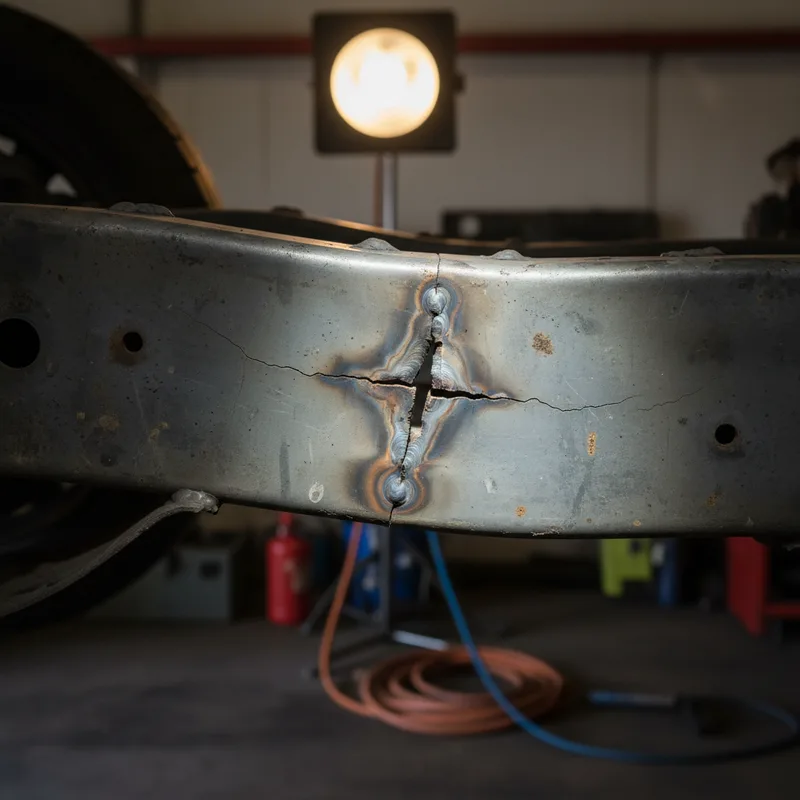
Some damage simply can’t be fixed by straightening. If a frame section has cracked through, collapsed beyond its elastic limit, or been damaged in the same area more than once, the metal loses its ability to absorb impact the way it was designed to. At that point, trying to repair it puts the next occupant at risk.
-
Cracked or fractured frame rails that can’t be welded to spec
-
Damage concentrated at a structural node or crumple zone
-
Repeated impacts in the same location on an older vehicle
-
Deformation that exceeds the frame’s designed repair tolerance
Replacement sections are available for many vehicles, and a shop with the right equipment can weld them in cleanly. We’ve done it plenty of times since 1985, and our I-CAR and ASE certified technicians know where to draw that line honestly.
Here’s an opinion you won’t hear everywhere: the shops that push replacement too quickly are often the ones without the equipment to do a proper repair. A well-straightened frame is safe. Don’t let anyone tell you otherwise without showing you the measurements. You can review our full frame repair capabilities or contact us to schedule an honest assessment.
Common Frame Damage Mistakes to Avoid
Shops cut corners in predictable ways. After nearly four decades working frame damage after accident cases in Phoenix, AZ, we’ve seen the same failures repeat themselves, and they almost always come down to rushing the job.
Skipping Surface Prep
Before any straightening or welding happens, damaged metal needs proper preparation. Shops that skip this step end up with repairs that look fine initially but corrode, crack, or shift under stress. It’s a shortcut that costs the customer later.
Missing Hidden Damage
This one bothers us most. A tech pulls a bent rail back to spec and calls it done, without checking secondary stress points that absorbed energy during the collision. Suspension mounts, firewall bracing, and unibody attachment points can all carry damage that never shows up in a visual scan. A thorough frame assessment uses measuring systems, not just trained eyes.
Skipping Post-Repair Alignment
Plenty of shops fix the frame and send the car out without a full four-wheel alignment check. That’s a mistake. Even minor frame corrections shift suspension geometry. If alignment isn’t verified after the repair, the driver ends up with uneven tire wear, pulling, and handling that feels slightly off. Most won’t connect it back to the repair.
Failing to Recalibrate Safety Systems
Modern vehicles have advanced driver assistance systems that depend on precise sensor positioning. Frame work changes that geometry. Shops that don’t recalibrate lane departure warnings, automatic braking, and collision sensors after a structural repair are leaving drivers with systems that appear functional but aren’t calibrated correctly. That’s not a minor oversight.
If you’re unsure whether a shop covers all of this, ask directly before you commit. We’re happy to walk you through our process before you ever drop off your vehicle.
Why Frame Alignment and ADAS Recalibration Are Non-Negotiable
Frame repair without alignment is an incomplete repair. Full stop.
We see this mistake more than we’d like to admit in the Phoenix, AZ area. A shop straightens the frame, hands the keys back, and considers the job done. But if the wheels aren’t realigned to factory specifications after that work, the vehicle will track crooked, wear tires unevenly, and handle unpredictably. The frame may be straight. The car still isn’t safe.
Post-repair alignment isn’t a bonus step. It’s how you verify the frame work actually did what it was supposed to do. Our technicians run a full four-wheel alignment check after every frame repair to confirm the geometry matches manufacturer tolerances. If the numbers are off, we go back and find out why before the car leaves our shop.
The ADAS Problem Most Shops Ignore
Modern vehicles carry a lot of technology that the average driver never thinks about until it stops working. Lane departure warnings, automatic emergency braking, blind spot monitoring, adaptive cruise control. These systems rely on cameras, radar sensors, and ultrasonic modules that are calibrated to very precise angles. Any frame damage after accident can shift those mounting points, even slightly, and throw the entire system out of spec.
Here’s where we disagree with how some shops talk about this: recalibration isn’t only needed after a sensor replacement. It’s needed any time structural geometry changes. A straightened frame changes geometry. That’s enough.
Skipping recalibration doesn’t just risk a warning light on your dash. It risks a lane assist system that doesn’t trigger correctly, or an automatic braking system that reacts a half-second too late. According to the National Highway Traffic Safety Administration, ADAS features significantly reduce crash rates when functioning properly.
At Brad’s Deer Valley Collision, we’ve invested in the equipment to handle recalibration in-house. Since 1985, the technology has changed dramatically. Our commitment to keeping up with it hasn’t. Contact us to schedule your assessment.
Your Next Steps: Getting a Frame Damage Estimate in Phoenix
Most people wait too long after an accident to get a frame assessment. By the time they notice the car pulling or the doors fitting wrong, the damage has already been telling that story for weeks.
Don’t overthink the first step. Contact us to schedule your estimate and we’ll walk through everything together. No obligation, no pressure.
Before you visit, take photos of all visible damage and note any handling changes you’ve felt since the collision. That information helps our technicians connect symptoms to specific structural areas during the initial inspection.
Questions Worth Asking Any Shop
-
Do you provide a written estimate with line-item detail?
-
What warranty covers the frame repair?
-
Will you recalibrate the ADAS systems after alignment?
-
Do you use I-CAR-qualified technicians?
We’ve handled frame damage after accident cases in Phoenix, AZ since 1985. Our background and certifications are there to review before you ever pull into our lot. Walk-ins are welcome, and our full service menu covers everything your vehicle may need after a collision.
Frequently Asked Questions
How do I know if my vehicle has frame damage after an accident?
There are some signs you can look for yourself. Uneven gaps between panels, doors or a trunk that don’t close right, or your car pulling to one side while driving can all point to frame damage after an accident. Visible cracks in structural components are a red flag too.
That said, the only way to know for sure is a professional inspection using laser alignment equipment. Hidden structural damage is common, and the eye can miss it entirely. Bring your vehicle into Brad’s Deer Valley Collision in Phoenix, AZ, USA and we’ll give you a definitive answer.
Is frame damage covered by insurance in Phoenix?
In most cases, yes. If the accident wasn’t your fault, the at-fault driver’s collision coverage typically handles frame damage repairs. If you were at fault, your own collision coverage kicks in. Here in Phoenix, AZ, USA, the claims process can feel overwhelming, but you don’t have to deal with it alone. Brad’s Deer Valley Collision works directly with insurance companies and handles the claim on your behalf, so you can focus on getting back on the road.
How long does frame repair and alignment take?
It really depends on how bad the damage is. A straightforward frame straightening job usually takes about 3 to 5 days. If the frame damage after your accident is more severe and requires parts replacement or complex structural work, you’re looking at closer to two weeks or more. We know that’s a wide range, so after our initial assessment at the shop, we’ll give you a realistic turnaround estimate specific to your vehicle. No guesswork.
What’s the difference between OEM and aftermarket frame parts?
OEM parts (original equipment manufacturer) are made to match your vehicle’s exact factory specifications and come with a full warranty. They’re the closest thing to what your car had from day one. Aftermarket parts cost less but can vary when it comes to fit and long-term durability. Neither choice is automatically wrong, it really depends on your vehicle, your budget, and your goals. We recommend talking through both options with us during your estimate consultation so you can make an informed decision.
Can frame damage affect my vehicle’s resale value?
Yes, and it’s something a lot of Phoenix, AZ, USA drivers don’t think about until they’re ready to sell. Frame damage after an accident that wasn’t repaired properly will significantly drop your vehicle’s resale value. Arizona law also requires you to disclose known structural damage to future buyers, so there’s a legal side to this too. Professional repair backed by documentation, a warranty, and proper alignment protects your investment and keeps you transparent with any future buyer.
Get Your Frame Inspected at Brad’s Deer Valley Collision in Phoenix, AZ, USA
Frame damage isn’t something you want to ignore. It affects how your vehicle handles, how safe it is in a future collision, and what it’s worth when you go to sell it. At Brad’s Deer Valley Collision, we’ll give you a thorough frame damage assessment and a written estimate so you know exactly where things stand, and we’ll walk you through the repair process and any insurance claims every step of the way.
Call us today or stop by our shop in Deer Valley to schedule your inspection. You can also see what our customers are saying on Google and find out why Phoenix drivers trust us to get their vehicles back to pre-accident condition.