
Vehicle Frame Damage Assessment in Phoenix, AZ: Is Frame Damage Repairable
Vehicle Frame Damage Assessment in Phoenix, AZ: Is Frame Damage Repairable
What Frame Damage Means and Why It Matters
A driver pulls into our shop on a Tuesday morning after getting rear-ended on I-17 near Deer Valley Road. The bumper looks rough, but the car drives fine. She’s convinced it’s cosmetic. Our technician puts it on the alignment rack, and the rear frame rail is bent two inches out of spec. The car felt fine because frame damage often does, at first.
That’s the part most people miss.
Frame damage isn’t just about how your vehicle looks. It’s about how your vehicle behaves in the next accident. Modern vehicles, whether unibody sedans or body-on-frame trucks, rely on their structural integrity to absorb and redirect crash energy away from the occupant compartment. When that structure is compromised, even subtly, the vehicle can’t do its job in a collision. Safety systems like lane assist and automatic emergency braking also depend on precise sensor positioning that proper frame geometry maintains.
There’s a common assumption that if a vehicle drives straight and the airbags didn’t deploy, the frame is fine. That assumption leads people to skip a professional assessment entirely. We’d push back on that. Unibody vehicles especially can sustain significant structural deformation without any obvious handling symptoms, particularly after moderate-speed rear impacts or diagonal hits. Phoenix roads, with constant highway traffic on the I-10, Loop 101, and surface streets around Desert Ridge Marketplace, produce exactly these kinds of collisions every week.
So, is frame damage repairable? The honest answer is: it depends entirely on the type and severity of the damage, and you can’t know which category you’re in without a proper inspection. That word “repairable” carries real weight here. Minor bends in specific frame sections can be corrected with the right equipment. Crumple zones that have fully collapsed, twisted rails, or damage to critical structural nodes are a different matter.
Frame damage also has a direct impact on resale value. A vehicle with a disclosed frame repair history typically loses 30% or more of its market value, according to CARFAX. That’s a financial reality worth factoring in from the start.
At Brad’s Deer Valley Collision, we’ve been assessing structural damage for Phoenix drivers since 1985. Getting the diagnosis right is where everything begins.
How Phoenix Auto Body Experts Assess Frame Damage
Most drivers assume a visual inspection tells the whole story. It doesn’t. What you can see with your eyes accounts for maybe a third of what’s actually going on with a damaged frame.
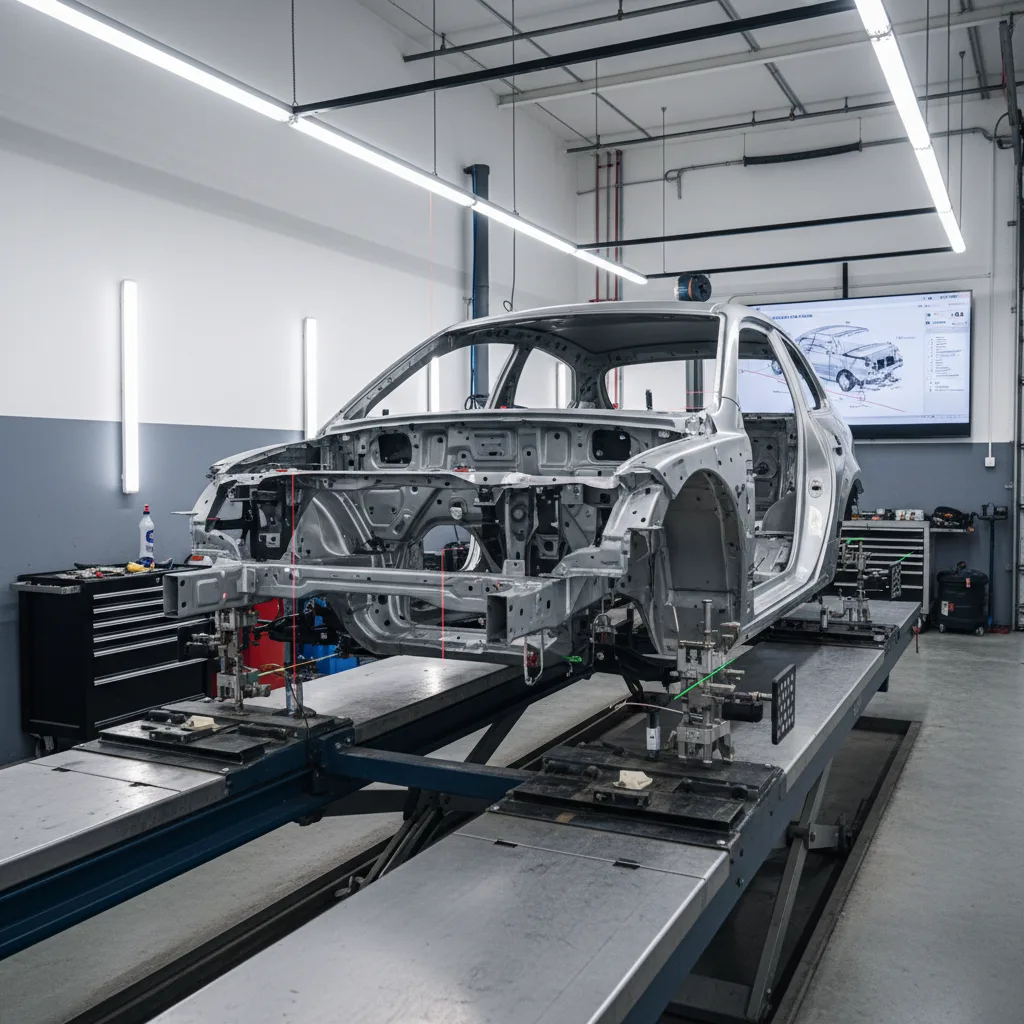
At Brad’s Deer Valley Collision, the assessment process starts at the lift rack, not the parking lot. Once your vehicle is up and secure, a certified technician works through a structured inspection that combines hands-on evaluation with precision measurement technology. We’ve been doing this since 1985, and the diagnostic process has only gotten more detailed as vehicles have gotten more complex.
Visual Inspection First
The technician looks for obvious deformation: bent rails, buckled metal, cracked welds, and misaligned body panels. Gaps that don’t match up on both sides of the vehicle are a reliable early indicator that something structural shifted. So are doors that don’t close cleanly or a hood that sits crooked. These aren’t cosmetic problems.
Laser and Electronic Measuring Systems
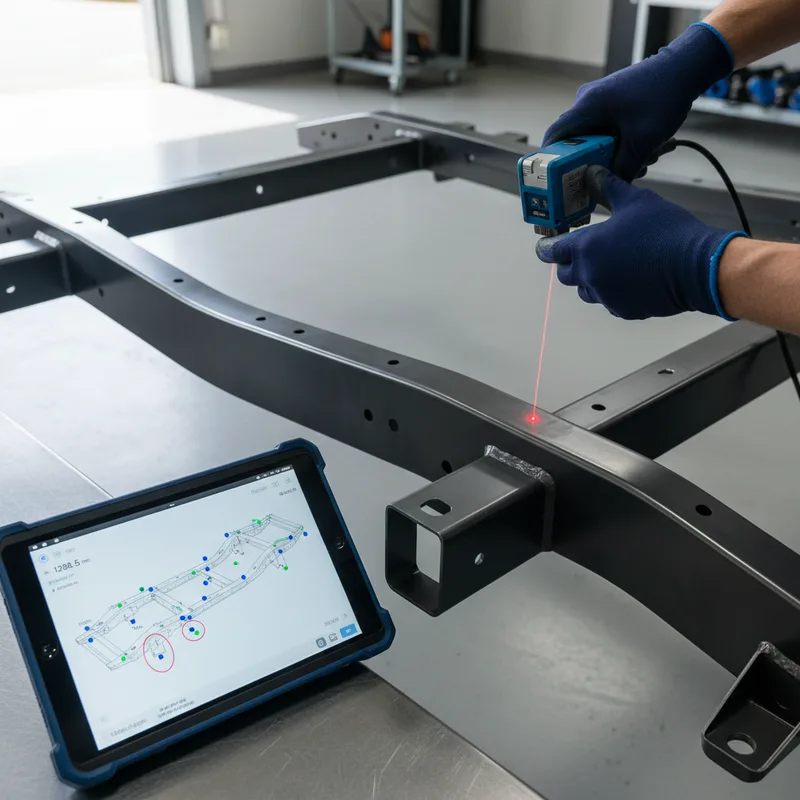
This is where the real data comes in. Our shop uses computerized frame measuring equipment that compares your vehicle’s actual dimensions against manufacturer specifications. The system maps dozens of measurement points across the frame simultaneously, flagging deviations that are invisible to the naked eye.
A lot of shops in Phoenix rely on older pull-and-eyeball methods. Honest opinion: that’s not enough for modern unibody vehicles. A vehicle can look straight but measure 12mm off at a critical control point, and that misalignment will affect handling, tire wear, and crash performance down the road. The laser system eliminates guesswork.
Hidden Damage and Safety System Checks
Collision energy travels. A rear impact doesn’t stay in the rear. Our technicians trace the force path through the structure, checking areas that didn’t make direct contact with the other vehicle. This is where missed frame damage typically hides, and it’s a common diagnostic failure at shops that move too fast.
Modern vehicles also have ADAS systems, things like automatic braking and lane assist, that depend on precise structural geometry. If the frame shifted, those sensors may be out of calibration. We check for that during assessment, not after the repair is finished.
The full diagnostic picture is what actually answers whether frame damage is repairable on your specific vehicle. Measurement data, force path analysis, and safety system status together give you an honest answer, not a guess.
If you’re in Phoenix and want a thorough, data-backed frame assessment, contact our team to schedule time with one of our I-CAR and ASE certified technicians.
Minor vs. Severe Frame Damage: What’s the Difference
After nearly four decades of doing this work in Phoenix, AZ, one pattern shows up constantly: drivers underestimate minor damage and overestimate severe damage in equal measure. Both mistakes lead to bad decisions.
Frame damage isn’t binary. It sits on a spectrum, and where your vehicle lands on that spectrum determines whether the question is frame damage repairable has a straightforward yes or a complicated one.
Minor Frame Damage
Minor damage typically involves isolated bending or crumpling in a single section of the frame, most often a rail end or apron. The vehicle’s core structural geometry stays intact. A trained technician can pull and reshape the metal back to factory spec using a hydraulic frame straightening system, then confirm correction with computerized measuring. This type of damage is repairable without question, and the vehicle can return to safe, pre-accident condition.
-
Bent or kinked frame rail end (front or rear)
-
Minor apron or strut tower displacement
-
Isolated crumple zone compression with no cascading damage
Moderate Frame Damage
Here’s where a lot of shops get it wrong. Moderate damage often looks like minor damage from the outside. It may involve multiple sections, stress fractures in welds, or secondary bending that didn’t show up until the vehicle went on the rack. Honest assessment matters more here than anywhere else. Moderate damage is still repairable in many cases, but it requires more labor, precision, and sometimes sectioning techniques that not every shop has the equipment to handle properly.
Severe Frame Damage
Severe damage involves the rocker panels, firewall, floor pan, or roof pillars. These are load-bearing structures that absorb crash energy and protect occupants. When multiple critical zones are compromised simultaneously, repair costs often exceed the vehicle’s value, and some damage configurations simply can’t be restored to factory safety tolerances.
The threshold between repairable and totaled isn’t always obvious. That’s why professional assessment from certified technicians, like the I-CAR and ASE credentialed team at Brad’s Deer Valley Collision, matters before any conclusions are drawn.
Repairable Frame Damage: Common Types and Solutions
Most frame damage is repairable. That’s a fact a lot of drivers don’t hear clearly enough after an accident, partly because shops don’t always take time to explain what the assessment actually found. So let’s get specific about what can be fixed and how.
Rail Damage
Frame rails take the brunt of frontal and rear collisions. A bent or slightly buckled rail is one of the most common repairs we handle at Brad’s Deer Valley Collision. Using a frame straightening system and hydraulic pulling equipment, technicians can restore rail geometry to within factory tolerances. The key word there is tolerances. A rail pulled back to spec and verified with precise measuring data is structurally sound. A rail “eyeballed” into place is not. There’s a meaningful difference, and it’s one reason you should always ask how post-repair measurements are documented.
Corner Panel Crumples
Corner impacts, the kind you get from being T-boned or clipping a barrier, tend to crumple the frame in a localized zone. That’s actually by design. Modern vehicles have engineered crush zones that absorb energy before it reaches the passenger cabin. When those zones compress, they can often be replaced with factory sectioning procedures rather than full frame replacement. Not every shop handles sectioning correctly. In our experience since 1985, improper sectioning is one of the more common ways a “repaired” vehicle ends up with alignment and handling problems six months later.
Hinge Pillar Issues
Hinge pillar damage affects how your doors open, close, and seal. It’s fixable in many cases, but the repair demands precision. A pillar that’s even slightly out of position will cause door gaps, wind noise, and water leaks. More critically, it can compromise how the vehicle performs in a subsequent collision. Proper repair involves pulling the pillar back to OEM specifications and confirming the geometry with measurement data before anything else moves forward.
Post-Repair Verification Is Non-Negotiable
Straightening the frame is only part of the job. Every repaired vehicle needs a full post-repair alignment check to confirm the suspension geometry is correct. Vehicles with advanced driver assistance systems also need ADAS recalibration after any structural repair. Skipping that step is a mistake, regardless of how clean the frame looks on the rack.
If you’re trying to answer is frame damage repairable for your specific vehicle, the answer depends on what was damaged and how the repair is executed. Schedule an assessment with our Phoenix, AZ team and we’ll give you a written evaluation, not a verbal guess.
When Frame Damage Is Beyond Repair: Red Flags and Total Loss
Some vehicles come in and the answer is clear before we even run full measurements. The damage pattern tells the story.
Not every frame can be saved, and drivers in Phoenix, AZ deserve a straight answer on that. The question of is frame damage repairable has a real limit, and that limit comes down to two things: structural integrity and financial reality.
Structural Red Flags That Rule Out Repair
Multiple-point damage is the clearest warning sign. When a collision bends the frame in three or more locations, restoring precise geometry becomes nearly impossible. You might pull one section back into spec and introduce stress somewhere else. Cracked frame rails fall into the same category. A bend can often be corrected; a crack in a load-bearing rail means the metal has already failed at a molecular level.
Compromised crumple zones are another hard stop. Those zones are engineered to absorb energy in a specific sequence during a crash. Once they’ve been crushed and repaired once, they don’t perform the same way twice. Attempting a second repair on an already-restored crumple zone is a safety problem, not just a quality one.
How Insurance Defines “Totaled”
Insurers typically declare a total loss when repair costs exceed a percentage of the vehicle’s actual cash value, though that threshold varies by state and policy. In Arizona, that number often lands around 70 to 80 percent. A vehicle can also become effectively uninsurable after severe structural damage, even if repairs were completed, because future claims may be denied based on pre-existing structural compromise.
One thing we’d push back on: don’t let an insurance adjuster’s total loss determination be the only opinion you get. An independent assessment from a certified shop matters. Our team at Brad’s Deer Valley Collision has been doing this work since 1985, and we give you an honest read, not a convenient one. Reach out before you sign anything.
The Repair Process: What Happens After Damage Assessment
Assessment confirmed the frame is repairable. Now the real work begins.
Most drivers assume straightening the frame is the bulk of the job. It’s actually one step in a longer sequence, and skipping or rushing any part of that sequence is where shops get into trouble. At Brad’s Deer Valley Collision, we follow a disciplined workflow because the order of operations genuinely matters for safety and long-term performance.
Frame Straightening and Structural Correction
The vehicle goes onto a frame straightening rack where hydraulic pulling equipment applies controlled force to restore the damaged sections to factory specifications. Our technicians work from precise three-dimensional measurements taken during assessment, not from visual guesswork. Every pull is checked against OEM tolerances. If the numbers don’t match, we keep working.
Sectional welding follows when a portion of the frame has damage that straightening alone can’t fully address. This requires clean cuts, properly fitted replacement sections, and welds that meet structural standards. A quick weld laid over compromised metal doesn’t hold. We see the results of that approach come through our doors more often than we’d like.
Why Post-Repair Alignment Is Non-Negotiable
Here’s where a lot of shops cut corners, and honestly, it’s the mistake with the worst consequences. After frame work is complete, the vehicle needs a full four-wheel alignment. The frame geometry directly affects how the suspension sits, how the wheels track, and how the car handles under load on Phoenix roads. Skipping alignment after frame repair is a safety issue, not just a comfort issue.
ADAS recalibration is equally important for newer vehicles. Lane departure systems, automatic emergency braking, and adaptive cruise control all rely on sensors calibrated to specific vehicle geometry. Frame repair changes that geometry. Those systems need to be recalibrated before the vehicle goes back on the road.
Paint Prep and Final Inspection
Surface preparation before painting gets less attention than it deserves. Poor prep leads to peeling and corrosion down the road. We treat every repaired surface properly before any primer or paint goes on.
If you’re still asking is frame damage repairable for your specific vehicle, the answer depends on a thorough assessment followed by this kind of disciplined repair process. Contact us to schedule your evaluation with our certified technicians in Phoenix, AZ.
Getting a Frame Damage Assessment in Phoenix: What to Expect at Brad’s Deer Valley Collision
Drivers often show up expecting a quick look and a number. That’s not how a real assessment works, and any shop that gives you one in ten minutes isn’t doing the job correctly.
At Brad’s Deer Valley Collision, we’ve been doing this work in Phoenix, AZ since 1985. That’s decades of reading frame damage on vehicles ranging from daily commuters to commercial fleet units. Our technicians hold I-CAR and ASE certifications, and we use computerized measuring systems to pull accurate data before any repair conversation starts. Opinion without data isn’t a diagnosis. It’s a guess.
Here’s what actually happens when you bring your vehicle to us.
First, we do a complete visual walk-around and document existing damage with photos. Then the vehicle goes on our alignment rack for precise three-dimensional measurement. We compare those readings against manufacturer specifications for your exact make and model. If hidden structural damage exists, this process finds it. The eye misses things the rack doesn’t.
After measurement, you get a written estimate that details exactly what was found and what the repair involves. We’re direct about the answer to is frame damage repairable in your specific case. If it is, we explain the method and timeline. If it isn’t, we tell you that clearly rather than taking your money on a repair that won’t hold.
We also handle the insurance side. If you’re filing a claim, we work directly with your provider and document everything needed to support accurate coverage. You have the right to choose your own shop regardless of what your insurer suggests. A lot of Phoenix drivers don’t realize that.
Walk-ins are welcome. If you want to schedule or ask questions first, our team is reachable through the contact page. You can also browse our full list of services to understand the complete scope of what we handle.
Bring the vehicle in. We’ll give you a straight answer.
Frequently Asked Questions
Is frame damage always visible after a collision?
Not at all. A lot of frame damage hides behind bumpers, underneath the vehicle, or inside the frame rails where you’d never spot it just by looking. This is one of the most common surprises we see here at Brad’s Deer Valley Collision in Phoenix, AZ, USA. Without professional diagnostic equipment and a trained technician doing a proper assessment, hidden damage gets missed entirely. Many customers come in thinking everything looks fine and discover during the formal estimate that there’s more going on beneath the surface.
Can a bent frame be straightened back to factory specifications?
Yes, and this is actually one of the questions we get most often when customers ask us “is frame damage repairable?” Modern frame straightening equipment can bring most bent frames back to original factory geometry within millimeters of tolerance. That said, the outcome depends on how severe the damage is, whether the frame is steel or aluminum, and the skill of the technician doing the work. Post-repair measurement and alignment verification aren’t optional steps. They’re required every single time to confirm the repair was done right.
What happens if frame damage isn’t repaired properly?
A poor frame repair causes a chain reaction of problems. You’ll likely see misaligned suspension, uneven tire wear, steering that pulls, and braking issues. Beyond that, your vehicle’s crash protection is compromised, which is a serious safety concern. Modern vehicles also rely on frame-mounted sensors for systems like lane assist and automatic emergency braking. If the frame isn’t restored correctly, those systems won’t work as designed. Cutting corners on frame repair isn’t just about performance. It’s a safety issue for everyone in the vehicle.
How do insurance companies determine if a frame is totaled?
Insurers use a total loss threshold, typically somewhere between 70 and 80 percent of the vehicle’s actual cash value, though this varies by state. Here in Phoenix, AZ, USA, we work with insurance adjusters regularly and see this calculation applied often. When frame damage affects multiple structural areas, the foundational sections of the vehicle, or critical safety zones, repair costs tend to exceed that threshold quickly. Once that happens, the insurer will declare the vehicle a total loss rather than approve repairs.
Will a vehicle with repaired frame damage be safe to drive?
Yes, absolutely, as long as the repair is done by certified technicians following proper procedures from start to finish. The question of “is frame damage repairable” really comes down to who’s doing the work and how. At Brad’s Deer Valley Collision, every step matters. That includes straightening, welding, paint restoration, and sensor recalibration. A repair that skips any of those steps leaves you with a vehicle that isn’t truly safe. Choosing an I-CAR certified shop gives you confidence that the work meets industry standards. Stop by our Phoenix, AZ, USA shop and we’ll walk you through the entire process.
Get Your Frame Inspected by Brad’s Deer Valley Collision in Phoenix, AZ
If you’re dealing with frame damage, you deserve a straight answer about what it’s going to take to fix it right. Our I-CAR certified technicians use advanced diagnostic equipment to assess the damage and give you a detailed written estimate with no guesswork involved. Stop by our Phoenix, AZ location or give us a call today to schedule your free frame inspection, and see what our customers are saying about us on Google before you come in.
Call us now or visit Brad’s Deer Valley Collision in Phoenix to schedule your free frame damage assessment.