Plastic Bumper Repair in Phoenix, AZ: Expert Solutions for Modern Vehicle Damage
Plastic Bumper Repair in Phoenix, AZ: Expert Solutions for Modern Vehicle Damage
Why Plastic Bumpers Require Specialized Repair Techniques
You pull into a parking lot off Camelback Mountain Road, and someone has clipped your rear bumper. There’s a crack running about four inches along the lower fascia, and one corner is pushed in. It looks minor. You figure any body shop can pop it back out. That assumption costs a lot of Phoenix drivers money, and sometimes their safety.
Modern bumpers aren’t simple metal shells. They’re engineered systems.
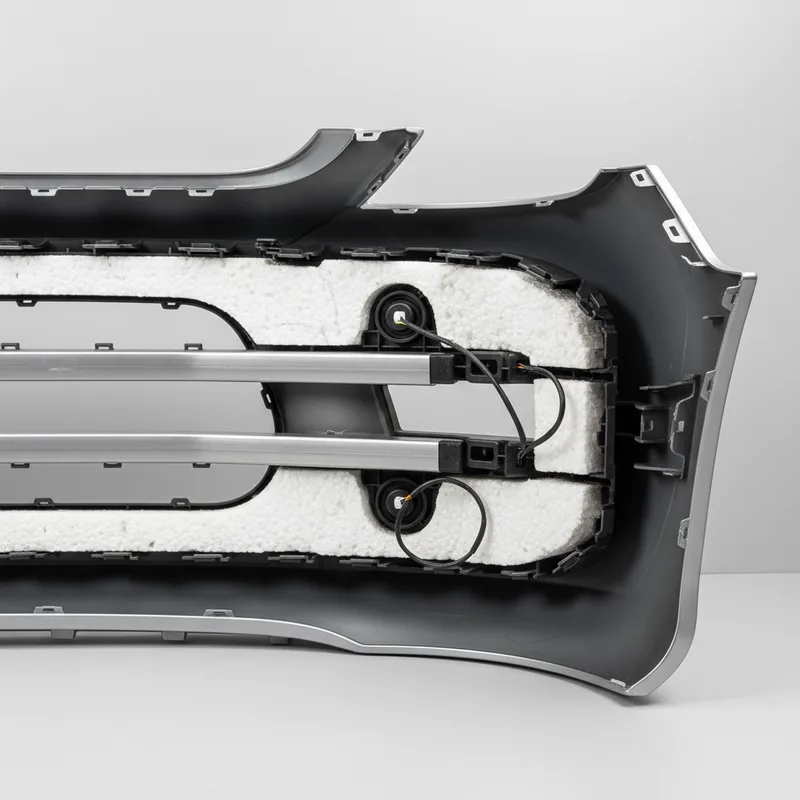
The outer fascia you see is typically made from thermoplastic olefin, polypropylene, or a blend of similar flexible polymers. Behind that sits a foam energy absorber, and behind the foam sits a rigid reinforcement bar bolted to the vehicle’s frame. These three layers work together to manage collision forces, protecting both the vehicle’s structure and the people inside it. Treat the fascia alone and ignore the rest, and you haven’t actually fixed the problem.
Here’s a professional opinion that runs against popular thinking: a lot of people assume plastic bumper damage is simpler to repair than metal damage. In practice, plastic repair demands more preparation, not less. Metal responds predictably to heat and reshaping. Plastic has memory. Different polymer blends flex, shrink, and bond differently, and using the wrong filler or adhesive on the wrong substrate creates a repair that looks fine for sixty days and then splits open on a Phoenix summer afternoon when temperatures hit 115 degrees.
The I-CAR organization, which sets technical training standards for the collision repair industry, identifies plastic substrate identification as a foundational skill precisely because skipping this step leads to failed repairs. It’s not optional knowledge. It’s the starting point for doing the job correctly.
There’s also the matter of safety systems. Many bumper assemblies now house radar sensors, parking cameras, and components tied to automatic emergency braking. Improper plastic bumper repair that shifts sensor alignment even slightly can compromise how those systems perform. That’s a real consequence, not a sales pitch.
At Brad’s Deer Valley Collision, we’ve been handling collision repairs in Phoenix, AZ since 1985. We’ve seen what happens when shops rush this process. Proper plastic bumper repair starts with identifying the material, assessing all three layers of the bumper system, and choosing repair methods matched to that specific vehicle. Everything else follows from there.
Common Types of Plastic Bumper Damage and Assessment
Not all bumper damage is the same. That sounds obvious, but you’d be surprised how many Phoenix drivers assume a cracked bumper is just a cracked bumper. The type of damage, where it sits, and how deep it goes all determine whether you’re looking at a straightforward plastic bumper repair or a full replacement.
The Damage We See Most Often
Here’s what comes through our shop on a regular basis:
-
Surface scratches and scuffs from parking lot scrapes, curb rubs, or shopping cart impacts. These are usually cosmetic and don’t compromise the bumper’s structural integrity.
-
Cracks and splits from low-speed collisions or hard impacts. A clean crack that hasn’t spread can often be repaired with the right adhesive and reinforcement techniques.
-
Deep gouges that remove chunks of the fascia material. These require filling and reshaping before paint can even be considered.
-
Corner crushes where the plastic has folded inward. This is common in angled parking lot hits and can hide underlying bracket or foam damage.
-
Delamination where the paint and clear coat separate from the plastic. Phoenix’s heat accelerates this, especially on older bumpers that weren’t prepped correctly the first time around.
How a Technician Actually Assesses the Damage
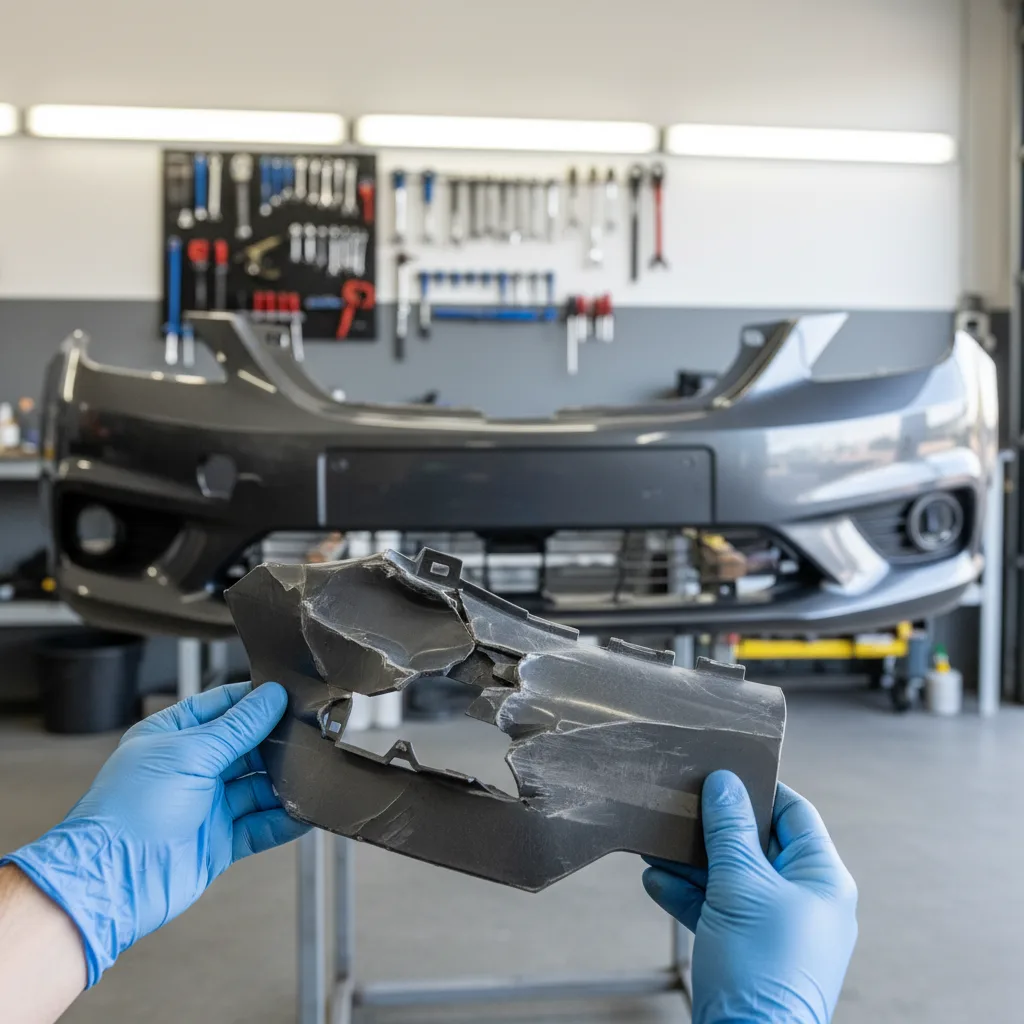
Good assessment takes more than a two-second glance. A technician needs to remove the bumper cover to inspect the foam energy absorber and the steel or aluminum reinforcement bar behind it. Many shops skip this step. That’s a mistake that leads to failed repairs down the road.
The plastic type also matters. Most modern vehicles use thermoplastic olefin or polypropylene, both of which respond differently to heat and adhesives. Misidentify the material and your repair won’t hold.
Repair versus replace? Our honest take is that most shops lean toward replacement too quickly because it’s faster. A skilled technician can save a bumper that others would toss. Visit our services page to see the full range of what we handle, or contact us to schedule an assessment.
The Plastic Bumper Repair Process: From Assessment to Paint Matching
Every technician learns this early: the visible damage is rarely the whole story. What looks like a straightforward crack on the surface often hides stress fractures, warped mounting tabs, or deformed substrate underneath. That’s why a proper plastic bumper repair in Phoenix, AZ starts with a methodical assessment before anyone picks up a tool.
Step 1: Full Damage Assessment
The bumper comes off the vehicle. That’s non-negotiable. Inspecting a bumper while it’s still mounted to the car means missing damage on the back side, including broken clips, cracked reinforcement bars, and stress lines that run opposite to the visible impact point. We check the fascia, the foam energy absorber, and the bumper beam before making any repair decisions.
Step 2: Surface Preparation
Skipping surface prep is probably the single most common mistake made by shops that rush jobs. The repair area gets cleaned, degreased, and scuffed to give the filler something to grip. Any paint, wax, or contamination left on the surface will cause adhesion failure down the road. That’s not a risk worth taking on a Phoenix vehicle that sees intense UV exposure year-round.
Step 3: Reshaping and Structural Repair
For flexible bumper plastics like TPO and polypropylene, heat reforming is often used to reshape deformed sections back to their original contour. A heat gun or hot air welder brings the material to a workable temperature, and the technician molds it by hand or with forming tools. For cracks, a plastic welder fuses the break from the back side first to restore structural integrity before any cosmetic work begins on the front.
Step 4: Filler Application and Sanding
Flexible filler (not standard body filler) gets applied over the repaired area. Rigid filler cracks when the bumper flexes. The filler is blocked and sanded through progressive grits until the surface is straight and smooth. This stage is tedious, but cutting corners here shows up immediately once paint hits the panel.
Step 5: Paint Matching with Spectrophotometry
Here’s where a lot of shops still rely on guesswork. We don’t. A spectrophotometer reads the exact color wavelength of your vehicle’s existing paint, accounting for fade and oxidation that naturally occurs in the Arizona sun. The tool generates a formula that matches your car as it looks today, not just how it looked when it left the factory. That distinction matters enormously on vehicles that have spent years under the Phoenix heat.
The result, when the process is done right, is a repair you genuinely can’t see. Our customers have noticed the difference, and so will you. Reach out to schedule your assessment and see the process firsthand.
Critical Post-Repair Steps Most Shops Overlook
Most shops stop at paint. That’s a problem.
A finished paint job looks like the end of the process, but it’s actually the beginning of the final phase. Skipping what comes next is where a lot of Phoenix auto body shops quietly cut corners, and where customers end up disappointed three months down the road.
Sensor Recalibration Isn’t Optional
Modern bumpers aren’t just cosmetic panels. They house backup cameras, parking sensors, blind-spot monitors, and sometimes automatic braking components. Remove and reinstall a bumper without recalibrating those systems, and you may drive away with a backup camera that’s slightly off-angle or a parking sensor that triggers at the wrong distance. We’ve seen it more than once. NHTSA research on advanced driver assistance systems makes clear how much these technologies depend on precise positioning. Any proper plastic bumper repair in Phoenix should include this step without exception.
Bumper Alignment and Curing Time
Alignment verification matters too. A bumper that’s even slightly off-center creates uneven panel gaps, which most drivers eventually notice even if they can’t name what looks wrong. We check fitment against the adjacent body panels before considering a job complete.
Adhesive curing time is another one people underestimate. Rushing a repaired panel back into service before the bonding agent has fully set compromises everything the technician just did. Some shops hand keys back the same afternoon. Honestly, that’s too fast in many cases.
Final Inspection at Brad’s
At Brad’s Deer Valley Collision, every completed repair goes through a structured quality control inspection before the vehicle leaves our facility. Paint finish, sensor function, alignment, and hardware are all reviewed. You can read what actual customers say about that process on our reviews page.
Done right, these final steps are what separate a repair that lasts from one that just looks good on pickup day.
OEM vs. Aftermarket Bumper Parts: What Phoenix Drivers Should Know
Here’s a pattern we see constantly: a customer comes in assuming cheaper parts automatically mean a worse repair. That’s not always true, but it’s not always false either. The answer depends on your vehicle, your insurance coverage, and how long you plan to keep the car.
Parts matter.
OEM (Original Equipment Manufacturer) parts are made by your vehicle’s manufacturer to exact factory specifications. They fit precisely, finish cleanly, and typically carry better warranty coverage. For newer vehicles or cars with complex advanced driver assistance systems, OEM bumper components are usually the right call because mounting tolerances directly affect sensor alignment.
Aftermarket parts are produced by third-party manufacturers. Quality varies widely across brands. Some aftermarket bumper components are perfectly acceptable for older vehicles or lower-impact repairs. Others fit poorly, finish inconsistently, and can create headaches during plastic bumper repair and refinishing. Knowing the difference between a reliable aftermarket supplier and a bargain-bin one takes experience.
Our honest opinion: insurance companies push aftermarket parts because they’re cheaper. That’s their right. But it’s your right to ask questions and push back if the fit or quality doesn’t meet your standards. Phoenix drivers don’t have to accept whatever a claims adjuster defaults to.
At Brad’s Deer Valley Collision, we’ve been guiding customers through these decisions since 1985. We’ll tell you clearly when OEM is worth the cost difference and when a quality aftermarket option makes practical sense. You can learn more about how we approach repairs on our about page or contact us to discuss your specific situation directly.
Insurance Claims and Plastic Bumper Repair in Phoenix
Know your rights. Arizona law gives you the right to choose your own repair shop, full stop. Your insurer can recommend a preferred shop, but they cannot force you to use one. That distinction matters more than most drivers realize.
We’ve seen customers come in after settling for an insurer-directed shop, only to discover the plastic bumper repair was done with substandard materials or mismatched paint. By then, the claim is closed and the options are limited. Don’t let that happen to you.
How We Work Directly With Your Insurance Company
Brad’s Deer Valley Collision works directly with insurance providers across Phoenix. We handle the documentation, the back-and-forth communication, and the supplemental claims that come up when hidden damage gets uncovered mid-repair. That last part is where a lot of shops stumble. A written estimate based on surface inspection alone will almost always miss something. We account for that upfront so you’re not hit with surprise costs or delays.
Get a written estimate before agreeing to anything. That’s non-negotiable. Any shop unwilling to put the full scope of work in writing is one you should walk away from, regardless of how low the number sounds.
What a Proper Estimate Actually Covers
A thorough bumper repair estimate should include labor, materials, paint matching, any necessary ADAS recalibration, and a clear warranty statement. If you’re seeing a single line item with a dollar figure and nothing else, that estimate isn’t protecting you.
We also encourage customers to photograph all existing damage before dropping off the vehicle. It protects everyone and keeps the process honest. You can read what our customers say about that experience on our customer reviews page.
Ready to get started? Contact us and we’ll walk you through the estimate and insurance process from the first call.
Why Brad’s Deer Valley Collision Delivers Superior Plastic Bumper Repairs
Shops that cut corners on plastic bumper repair usually don’t advertise that fact. You find out later, when the paint starts separating or the bumper fits just slightly off. We’ve watched this pattern repeat for decades, and it’s exactly why we built our process around doing the job right the first time.
Since 1985, Brad’s Deer Valley Collision has been repairing vehicles for Phoenix drivers with the same standard every time. Our technicians hold I-CAR and ASE certifications, which means they’re trained on modern materials, current repair methods, and the safety systems built into today’s vehicles. Most people assume any shop can handle a bumper. That assumption gets expensive.
Modern bumpers frequently house radar sensors, cameras, and parking assist hardware. Recalibrating those systems after a repair isn’t optional. We have the equipment and the trained technicians to handle ADAS recalibration in-house, which a lot of smaller Phoenix shops simply can’t offer.
Paint matching matters too. Our state-of-the-art paint matching technology ensures your repaired bumper blends with your vehicle’s existing finish, not close to it. Exact.
Every repair we complete comes with a comprehensive written warranty. Not a verbal assurance. A document you can actually reference. We’d strongly encourage any Phoenix driver to walk away from any shop that won’t put their warranty in writing.
We also know your time is valuable. Loaner vehicles, shuttle service, and clear communication throughout the process are things we take seriously. Our customers consistently mention this as one of the biggest differences they notice.
Ready to get your bumper repaired properly? Contact us today to schedule your free estimate or visit us directly. You can also review our full range of auto body services here.
Frequently Asked Questions
Can a cracked plastic bumper always be repaired, or do I need replacement?
Not every crack means you need a full replacement. Minor cracks, scuffs, and dents can usually be fixed using heat-forming techniques and specialized adhesives. We handle a lot of plastic bumper repair here in Phoenix, AZ, USA, and most of what comes through our shop can be saved without swapping the whole bumper.
That said, deep structural cracks, damage around sensor mounts, or anything affecting your fuel door alignment typically calls for a replacement. At Brad’s Deer Valley Collision, we do a thorough inspection before recommending anything, and we’ll always point you toward the option that saves you money without cutting corners on durability.
How long does plastic bumper repair take at a Phoenix body shop?
For straightforward repairs like a small dent or surface scratch, you’re typically looking at 2 to 5 days. That covers surface prep, filling, sanding, and enough time for the paint to fully cure. More involved repairs with structural damage, or jobs that require a full bumper replacement, can run 5 to 10 days.
We give you a realistic timeline before we start, not an optimistic guess. And if you need to stay mobile while your car’s in the shop, we offer loaner vehicles so you’re not stuck waiting around.
Will my insurance cover plastic bumper repair in Arizona?
In most cases, yes. Comprehensive and collision coverage typically covers bumper damage, whether or not you were at fault. Your deductible will apply, and the details depend on your specific policy. Brad’s Deer Valley Collision works directly with insurance companies to handle claims, put together accurate estimates, and help you get the most out of your coverage.
One thing a lot of people don’t realize: you have the legal right to choose your own repair shop in Arizona. Your insurer might suggest somewhere else, but that’s not your only option. You can bring your car to us.
What’s the difference between OEM and aftermarket bumpers, and which should I choose?
OEM bumpers are made by your vehicle’s manufacturer, so fitment is guaranteed and quality is consistent. They cost more, but you know exactly what you’re getting. Aftermarket bumpers are less expensive, though they sometimes need extra adjustment to line up perfectly with the rest of your vehicle.
The right choice depends on your budget, your car’s value, and what your insurance will cover. Many policies only cover aftermarket parts when the repair cost exceeds the OEM price. We’ll walk you through the trade-offs at our Phoenix, AZ, USA shop so you can make a confident decision on your plastic bumper repair.
How do modern paint-matching systems ensure my repaired bumper matches my car’s original color?
We use spectrophotometry technology, which scans your vehicle’s paint to measure the exact color, metallic flake content, and undertones. It’s a big step up from older mixing methods that relied mostly on guesswork and color codes. The result is a match that’s invisible to the eye, even in direct Phoenix, AZ, USA sunlight where color inconsistencies are easy to spot.
The system also accounts for how your car’s finish has aged and weathered over time, so the repaired area doesn’t look newer or shinier than the rest of the vehicle. Your plastic bumper repair will blend in, not stand out.
Get Your Free Bumper Repair Estimate at Brad’s Deer Valley Collision
If your bumper has seen better days, we’re here to help. Our certified technicians at Brad’s Deer Valley Collision in Phoenix, AZ, USA use advanced repair techniques and premium materials to bring your vehicle back to its original condition, and we work with all insurance companies to keep the process as simple as possible for you.
Stop by the shop or give us a call today to get your free estimate, and see what our customers are saying about us on Google before you come in.
Call Brad’s Deer Valley Collision now and let’s get your bumper looking right again.