Car Collision Body Work in Phoenix, AZ: Complete Repair Guide From Minor Damage to Major Structural Issues
Car Collision Body Work in Phoenix, AZ: Complete Repair Guide From Minor Damage to Major Structural Issues
What Qualifies as Car Collision Body Work?
Picture this: you’re pulling out of a Desert Ridge Marketplace parking lot, you get clipped by another driver, and you walk around to assess the damage. The bumper’s scuffed, the fender’s pushed in slightly, and you’re not sure if anything deeper got bent. That’s exactly where most Phoenix drivers find themselves — staring at visible damage and wondering what they’re actually dealing with underneath.
Car collision body work covers a much wider spectrum than most people assume. It’s not just dents and scratches.
At the cosmetic end, you’re looking at surface-level issues: paint chips, minor scratches, small dents that didn’t compromise any structural components. These are real repairs that affect your vehicle’s appearance and resale value, but they don’t raise safety concerns. A good technician can often address these without disassembly.
Move up the severity scale and you hit what shops call structural damage. This is where collision repair gets serious. A hard enough impact, even one that looks modest from the outside, can bend the unibody frame, misalign suspension components, or compromise crumple zones designed to protect you in a future accident. Plenty of drivers underestimate this. A car that “drives fine” after a collision isn’t necessarily safe, and that’s a misconception worth correcting directly.
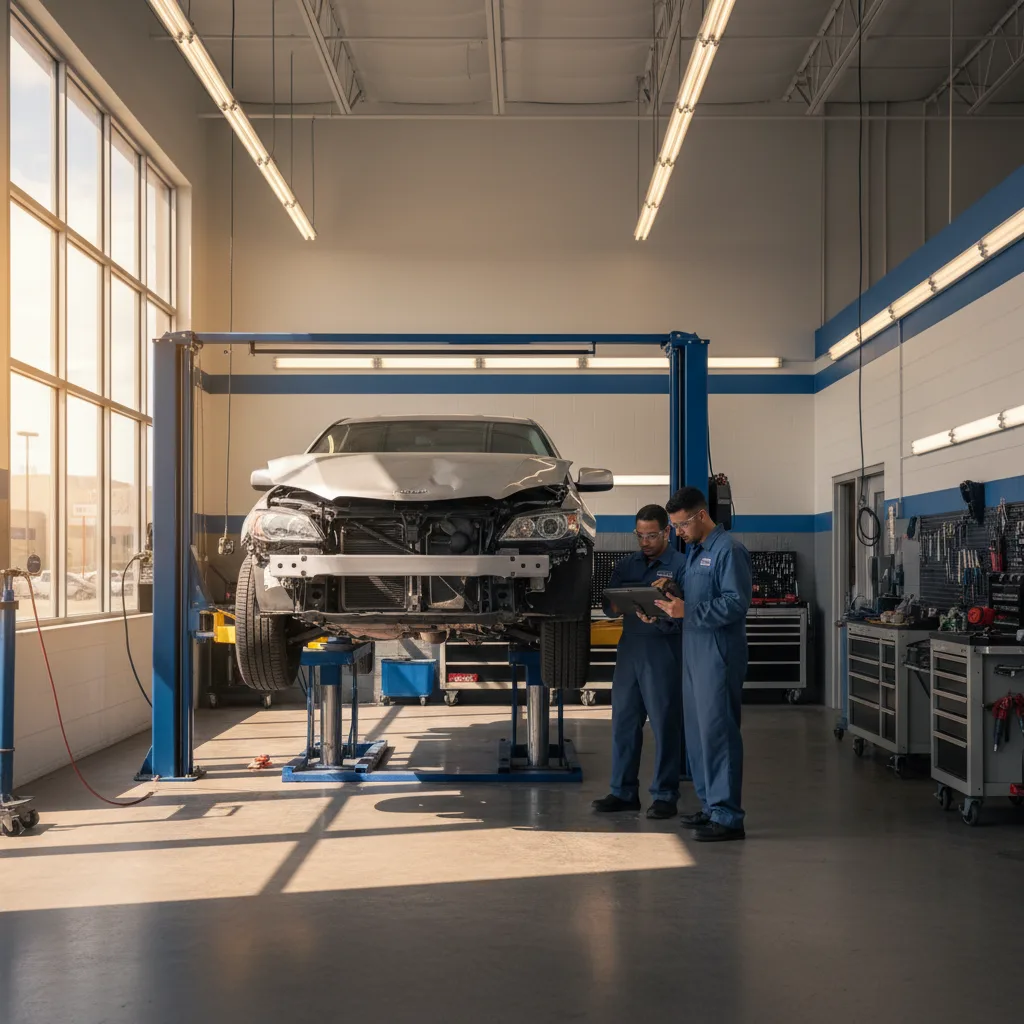
Here’s what most people don’t realize: proper car collision body work always starts with a thorough damage assessment before any physical repair begins. Skipping that step, or rushing it, is how hidden frame damage gets missed and causes problems months down the road.
The full range of services involved in collision repair includes:
-
Cosmetic repairs: dent removal, scratch repair, bumper repair
-
Panel replacement and realignment
-
Frame and structural straightening
-
Safety system recalibration (lane assist, automatic braking)
-
Paint matching and finishing
At Brad’s Deer Valley Collision, we’ve handled every point on that list since 1985. If you’re unsure where your damage falls, reach out for an estimate before assuming it’s minor. You might be surprised what a trained eye finds.
The Collision Damage Assessment Process
Most people assume the visible damage is the whole story. It rarely is.
Before any car collision body work begins at our Phoenix, AZ shop, we run a thorough assessment that goes well beyond what you can see from the outside. That process is what separates a proper repair from one that fails six months down the road. We’ve been doing this since 1985, and the number of vehicles that come in with “minor” damage hiding something much deeper never stops being surprising.
Visual Inspection: The Starting Point, Not the Finish Line
The first pass is visual. Technicians walk the entire vehicle, not just the impact zone, checking panel gaps, door alignment, trim fit, and glass seals. A door that doesn’t close cleanly after a rear-end hit often points to something structural. These early observations guide where to look next.
Frame and Alignment Checks
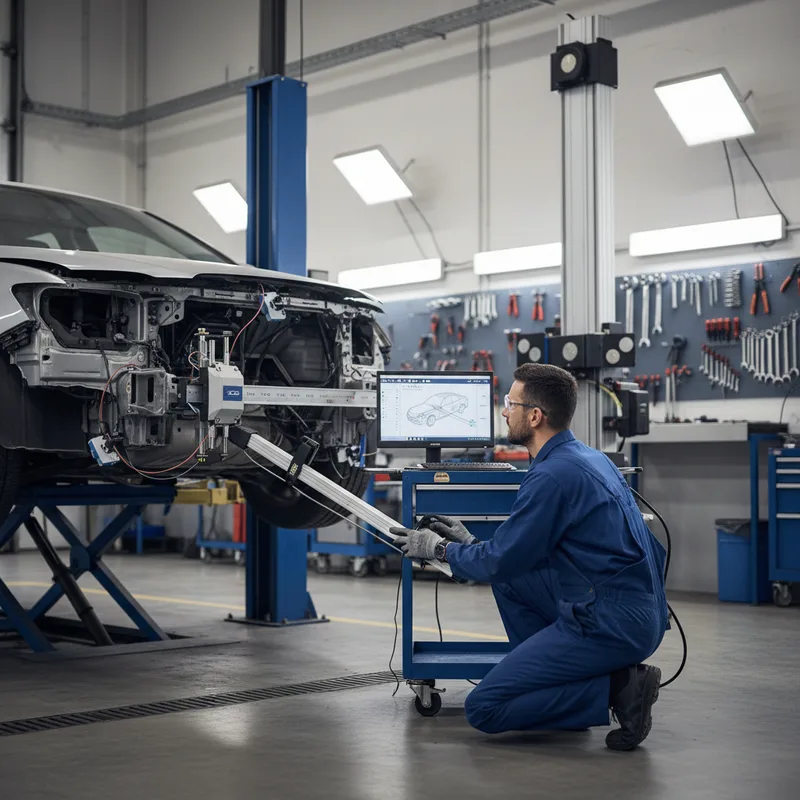
This is where most shops either earn their reputation or lose it. We use computerized frame measurement equipment to check your vehicle’s structure against manufacturer specs. Even a small deviation in frame geometry can affect how your car handles on the freeway, how your tires wear, and whether your airbags deploy correctly in a future accident.
Here’s a professional opinion that some shops won’t volunteer: a post-repair alignment check alone is not sufficient. Alignment addresses your wheels. Frame measurement addresses your vehicle’s actual structural geometry. They’re related, but they’re not the same thing, and skipping the latter is one of the most common mistakes in collision repair.
Hidden Damage Detection
Bumpers on modern vehicles absorb a lot of impact before showing obvious deformation. The energy transfer goes somewhere, often into the impact absorbers, radiator support, or firewall. We disassemble the affected area to inspect components that don’t show damage until they’re removed. The Insurance Institute for Highway Safety has documented how low-speed impacts can cause significant hidden structural damage, which is exactly why this step matters.
ADAS components also get checked. If your vehicle has lane-keep assist, automatic emergency braking, or adaptive cruise control, sensors tied to those systems may need recalibration after any meaningful collision.
You can request a detailed estimate before committing to anything. We put everything in writing, always. No guesswork, no surprises.
Minor vs. Major Collision Repairs: What’s the Difference?
Every week, we see cars come in where the owner genuinely can’t tell whether they’re looking at a $400 repair or a $4,000 one. That gap matters. Understanding where your vehicle falls on that spectrum helps you budget realistically, ask better questions, and avoid surprises when the estimate lands.
Here’s a practical breakdown of what separates minor car collision body work from major structural repairs in Phoenix, AZ.
Minor Collision Repairs
Minor damage covers the cosmetic and surface-level stuff. Think scuffed bumpers, small dents, scratched paint, cracked taillights, or a fender that took a low-speed hit. The sheet metal may be bent or creased, but the underlying structure isn’t compromised.
-
Typical repairs: Bumper repair or replacement, dent removal, scratch repair, touch-up painting
-
Timeframe: Usually 1 to 3 days
-
Cost range: Generally $300 to $1,500 depending on parts and paint matching
-
Complexity: Low to moderate. Skilled work, but no specialized frame equipment required
A lot of shops rush minor repairs. That’s actually where quality gaps show up most. Poor prep work before painting, skipped priming steps, or mismatched paint are common issues we see on vehicles that were “fixed” elsewhere. Minor repairs done right take time.
Major Collision Repairs
Major damage is a different category entirely. This includes frame damage, unibody deformation, damage to suspension mounting points, or any impact that shifted the vehicle’s structural geometry. These repairs require frame measuring equipment, computerized alignment systems, and certified technicians who understand how modern vehicle structures are engineered to absorb crash energy.
-
Typical repairs: Frame straightening, unibody repair, structural panel replacement, full collision restoration
-
Timeframe: Typically 1 to 3 weeks, sometimes longer for extensive damage
-
Cost range: $1,500 to $10,000 or more depending on severity
-
Complexity: High. ADAS recalibration is often required after structural work
One opinion worth stating plainly: a lot of general advice tells drivers that any repair under $1,000 isn’t worth filing an insurance claim for. That math doesn’t always hold in Phoenix, where even moderate parking lot hits can hide frame stress that only shows up on a measuring system.
Not sure which category your vehicle falls into? Contact us for a written estimate. Our team at Brad’s Deer Valley Collision has been assessing collision damage in Phoenix since 1985, and we’ll give you a straight answer backed by I-CAR and ASE certifications.
Frame Alignment and Structural Repair in Phoenix
Frame damage is the repair category most people underestimate. You can have a car that looks completely normal from the outside and still be driving something that handles unpredictably, wears tires unevenly, or fails to protect you the way it was designed to in a second collision.
This is where car collision body work gets technical fast.
What Frame Damage Actually Looks Like
Modern vehicles use two main structural designs: traditional body-on-frame construction and unibody construction. Most passenger cars and crossovers on Phoenix roads today are unibody, meaning the frame and body are a single welded structure. When that structure takes a hit, the damage doesn’t stay in one spot. It distributes across the chassis in ways that aren’t visible to the naked eye.
We use computerized measuring systems to map a vehicle’s actual dimensions against manufacturer specifications. If a measurement is off by even a few millimeters, that tells us where the energy from the impact traveled. A rear-end collision that crinkled your trunk lid may have also pushed your rear rails forward slightly. That kind of displacement has real consequences for suspension geometry and steering response.
Why Alignment After Frame Repair Isn’t Optional
Here’s where I’ll push back on something you’ll hear occasionally: the idea that a visual inspection is enough to confirm structural integrity. It isn’t. Period. A technician eyeballing frame rails is not the same as a laser or camera-based measuring system confirming that everything sits within spec.
After any frame correction, a full four-wheel alignment is required. The repair changes how the suspension geometry interacts with the road. Skip alignment, and you’re setting up the customer for premature tire wear, pulling, and handling problems they’ll blame on something else entirely.
One more thing that gets missed at too many shops: ADAS recalibration. If your vehicle has lane departure warning, automatic emergency braking, or adaptive cruise control, those systems rely on cameras and sensors that are calibrated to your vehicle’s specific geometry. Frame correction changes that geometry. Recalibration isn’t a bonus service; it’s part of completing the repair correctly. The NHTSA has documented how improperly calibrated ADAS systems create real safety risks.
Structural Repair vs. Cosmetic Body Work
Cosmetic repairs fix what you see. Structural repairs fix what keeps you safe. They require different equipment, different training, and a different level of accountability. At Brad’s Deer Valley Collision, we’ve been handling both in Phoenix since 1985, and our I-CAR and ASE certified team treats every frame job with the documentation and precision it demands.
If you suspect structural damage, contact us before driving the vehicle further. Some damage compounds with every mile.
Why Paint Matching and Finishing Matter
Paint tells on a bad repair. Walk around any vehicle that went through a cut-rate paint job and you’ll spot it fast: slightly off color on the repaired panel, texture that doesn’t match the adjacent doors, or an orange-peel finish where the original surface is smooth. Customers sometimes don’t notice it on pickup day, but they notice it six months later when they’re trying to sell.
Color matching is harder than most people expect. Even if you have the factory color code, that code describes the paint the manufacturer used when the vehicle was new. Over time, UV exposure fades the surrounding panels. A skilled painter doesn’t just mix to the code; they adjust the formula to account for how the original finish has aged.
This is where a lot of DIY attempts fall apart. Spray cans and off-the-shelf touch-up products can’t replicate the layering process a professional uses. There’s a basecoat, a clearcoat, and often an intermediate step depending on the paint type. Each layer needs proper flash time and the right application conditions. Phoenix heat adds another variable: ambient temperatures affect how paint flows and cures.
At Brad’s Deer Valley Collision, we use computerized paint mixing systems that analyze the vehicle’s existing finish and generate a precise formula. Combined with our full range of auto body services, that technology produces results that hold up under direct Arizona sun. Our painters have been refining this craft since we opened in 1985.
Here’s the professional opinion that often surprises customers: a flawless paint match matters more for resale than most mechanical repairs. Buyers and appraisers judge visible finish condition immediately. Any car collision body work that ends with a mismatched panel will cost you at trade-in, often more than the original repair savings were worth.
Insurance Claims, Estimates, and What You Should Know
Your insurer does not get to choose your shop. Full stop. Many drivers don’t realize this, but you have the legal right to take your vehicle to any licensed repair facility in Phoenix, AZ, regardless of what your insurance company recommends or which shops are on their “preferred” list. Preferred programs often benefit the insurer more than you.
Here’s where most people lose money or get a bad repair: they let urgency drive the decision. After an accident, the pressure to get your car back fast can push you toward the first estimate you receive. Get at least two or three written estimates before you commit. Written is the key word. Any shop that quotes you verbally and hesitates to put it on paper is a red flag worth taking seriously.
What a Solid Estimate Should Include
A proper estimate for car collision body work covers labor hours, parts costs (and whether those parts are OEM or aftermarket), paint materials, and any sublet work. Ask specifically about I-CAR or ASE certifications when you visit. Shops that display these credentials have invested in ongoing training, which directly affects repair quality. At Brad’s Deer Valley Collision, we’ve held those certifications since well before most competing shops in the area were even open.
One opinion worth sharing: we think the common advice to “always go with the lowest bid” is genuinely bad guidance for collision repair. A low number usually means cut-rate parts, skipped labor steps, or both. The repair that saves you $300 upfront can cost you significantly more if alignment wasn’t checked or ADAS sensors weren’t recalibrated after structural work.
Before You Drop Off Your Car
-
Photograph all existing damage from multiple angles
-
Remove personal valuables and any important documents
-
Confirm the shop provides a written warranty on repairs
-
Ask about turnaround time in writing, not just verbally
If you want to walk through an estimate with someone who’ll give you straight answers, contact us directly or stop by. We welcome walk-ins. You can also read what other Phoenix customers have said about working with our team before you decide.
Choosing the Right Body Shop for Your Collision Repair in Phoenix
Most drivers pick a body shop the same way they pick a restaurant when they’re starving: they go with whatever’s closest and has decent reviews. That approach works fine for tacos. For car collision body work, it can cost you thousands in hidden problems down the road.
Start with credentials you can verify. I-CAR and ASE certifications aren’t just wall decorations. They tell you the technicians working on your vehicle completed training on current repair methods, including the ADAS recalibration procedures that most smaller shops in Phoenix, AZ still don’t have the equipment to perform. Ask to see those certifications before you commit to anything.
Get a written estimate. Always. A shop that quotes you verbally and asks you to trust them is giving you a red flag, not a courtesy. That estimate should itemize parts, labor, and any sublet work. While you’re at it, ask whether those parts are OEM or aftermarket. It matters more than most shops will volunteer.
What Separates a Good Shop from a Great One
Warranty coverage is where shops quietly separate themselves. A shop confident in its work will back that work in writing, covering both parts and labor. If the warranty conversation makes someone uncomfortable, that tells you something.
Communication is underrated. You shouldn’t have to chase down updates on your own car. Shops that send text updates or photos during the repair process aren’t just being friendly. They’re showing you they have an organized operation. Loaner vehicles and shuttle service matter too, especially in a spread-out metro like Phoenix where being without a car for several days is a real problem.
Technology capabilities are worth asking about directly. Shops that can handle structural frame repair, paint matching with spectrophotometer technology, and ADAS recalibration in-house will get your vehicle back to factory spec. Shops that outsource those steps introduce more room for error and longer turnaround times.
Read the reviews, but read them critically. Look for patterns in how a shop handles problems, not just how they perform when everything goes smoothly. Our customer reviews reflect decades of that kind of consistent work.
Brad’s Deer Valley Collision has been doing this in Phoenix, AZ since 1985. Our full range of services covers everything from minor cosmetic damage to major structural repair. You can contact us for an estimate or stop by directly. Walk-ins are welcome, and we’ll give you a straight answer about what your vehicle actually needs. Learn more about who we are and why Phoenix drivers have trusted us for four decades.
Frequently Asked Questions
How long does collision body work typically take in Phoenix?
The timeline really depends on how bad the damage is. For minor car collision body work like a dented fender or a cracked bumper, you’re usually looking at 3 to 7 days. If your vehicle has serious structural or frame damage, that can stretch to 2 to 4 weeks, especially if we’re waiting on parts or doing complex alignment work.
At Brad’s Deer Valley Collision here in Phoenix, AZ, USA, we give you an accurate estimate upfront and keep you updated throughout the process so you’re never left guessing where your vehicle stands.
What’s the difference between OEM and aftermarket parts for collision repair?
OEM parts are made by your vehicle’s original manufacturer, so they fit exactly as intended and usually carry better warranties. Aftermarket parts come from third-party suppliers and can be more affordable, but the fit and quality vary quite a bit depending on the brand.
Before you sign any estimate, ask the shop which type of parts they plan to use and why. It’s a fair question and any reputable shop should answer it without hesitation. At Brad’s, we’re upfront about this from the start.
Should I choose my own body shop or use my insurance company’s recommendation?
You absolutely have the right to choose your own collision repair shop in Phoenix, AZ, USA. Your insurer may point you toward their preferred network, but that doesn’t mean you’re locked in. The choice is yours.
Brad’s Deer Valley Collision is a Direct Repair Program (DRP) partner with major insurance companies, which means we work directly with your insurer to handle the paperwork and streamline your claim. You get the convenience of a smooth claims process without giving up your say in where your car gets repaired.
What certifications should a collision repair shop have?
The two you really want to see are I-CAR (Inter-Industry Conference on Auto Collision Repair) and ASE (Automotive Service Excellence) certifications. These show that the technicians working on your vehicle have met recognized training standards and that the shop invests in staying current with repair techniques and equipment.
At Brad’s Deer Valley Collision, we hold these certifications and we don’t hide them. You can see them when you come into our shop. Not every place doing car collision body work in Phoenix, AZ, USA can say the same, and that difference matters.
What happens if my vehicle needs hidden frame damage repair?
Hidden frame and structural damage is more common than people expect, and it doesn’t always show up until a technician does a thorough diagnostic inspection. We use modern frame alignment technology to find any misalignment before we start putting things back together.
If we discover additional damage during the process, we contact you before doing anything extra. No surprise charges, no moving forward without your approval. Reputable shops doing car collision body work in Phoenix, AZ, USA handle it that way, and that’s exactly how we operate at Brad’s Deer Valley Collision.
Get Your Frame Repair Estimate at Brad’s Deer Valley Collision in Phoenix, AZ, USA
If you’ve been in a collision, don’t wait on getting your vehicle properly assessed. Our certified technicians at Brad’s Deer Valley Collision will check every angle of the damage, visible and hidden, and give you honest, transparent pricing with no surprises. We work directly with insurance companies and even offer shuttle service to make the whole process easier on you.
Call us today, stop by the shop, or see what our customers are saying on Google before you come in. We’re ready to help you get back on the road the right way.