Auto Body Paint Shop Standards in Phoenix, AZ: Achieving Showroom-Quality Results
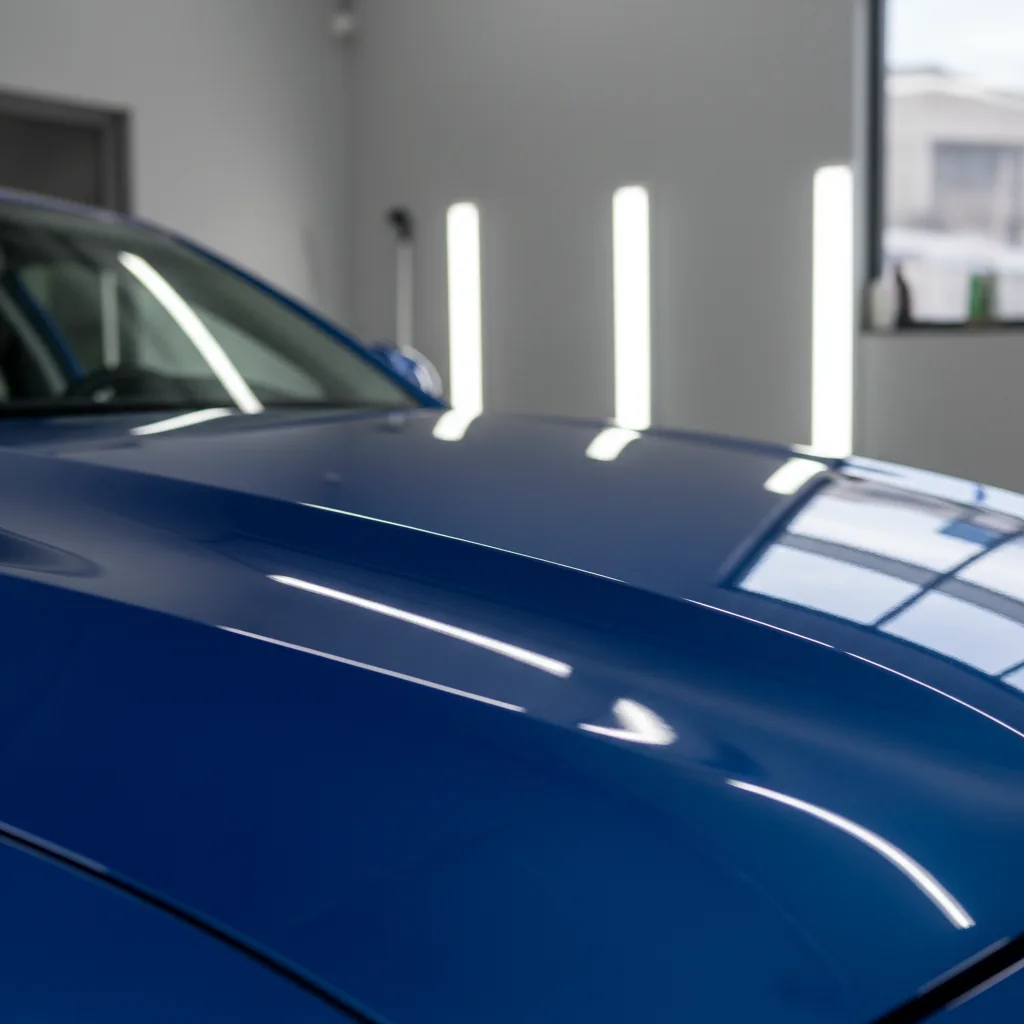
Auto Body Paint Shop Standards in Phoenix, AZ: Achieving Showroom-Quality Results
What Separates Professional Paint Shops from DIY and Budget Work
You’re driving down Camelback Road and a rock kicks up from the truck in front of you, leaving a deep chip on your hood that goes right through to bare metal. By the next morning, in Phoenix’s dry desert heat, that exposed metal is already starting to oxidize. You grab a touch-up pen from the auto parts store, dab it on, and it looks worse than the chip did. Sound familiar?
That’s a story we hear constantly at our shop, and it illustrates something real: paint repair looks simple from the outside and is genuinely complex on the inside.
Most people underestimate what a qualified auto body paint shop actually does. It’s not just spraying color on metal. A professional shop controls dozens of variables simultaneously, including surface temperature, humidity, primer adhesion, paint viscosity, and clear coat thickness. Miss any one of them and you’ll see it. Maybe not the day you pick up the car, but within six months, you’ll notice peeling, fading, or a color that drifts noticeably away from the panels you didn’t repaint.
Budget shops cut corners on prep. That’s where most of the damage happens.
There’s a common belief that a lower estimate means you’re being smart with your money. Honestly, that’s backwards thinking for paint work. A suspiciously low bid almost always means reduced labor time on surface preparation, cheaper materials, or both. In Phoenix’s intense UV environment, a paint job done with substandard materials won’t last two summers.
Professional shops also carry certifications that matter. I-CAR Gold Class training, for example, signals that technicians are trained to current industry standards, not practices from ten years ago. You can learn more about the credentials and history behind Brad’s Deer Valley Collision, which has been serving Phoenix, AZ drivers since 1985.
Choosing the right shop isn’t just about aesthetics. It’s about protecting a significant financial asset. Reach out to us if you want an honest assessment of what your vehicle actually needs.
Paint Matching Technology: The Heart of Showroom-Quality Results
Color matching is harder than it looks. Most people assume a painter just pulls up the factory color code, mixes the paint, and sprays it on. That would be simple. Reality is a lot more complicated, especially with the vehicle finishes manufacturers have been producing over the last decade.
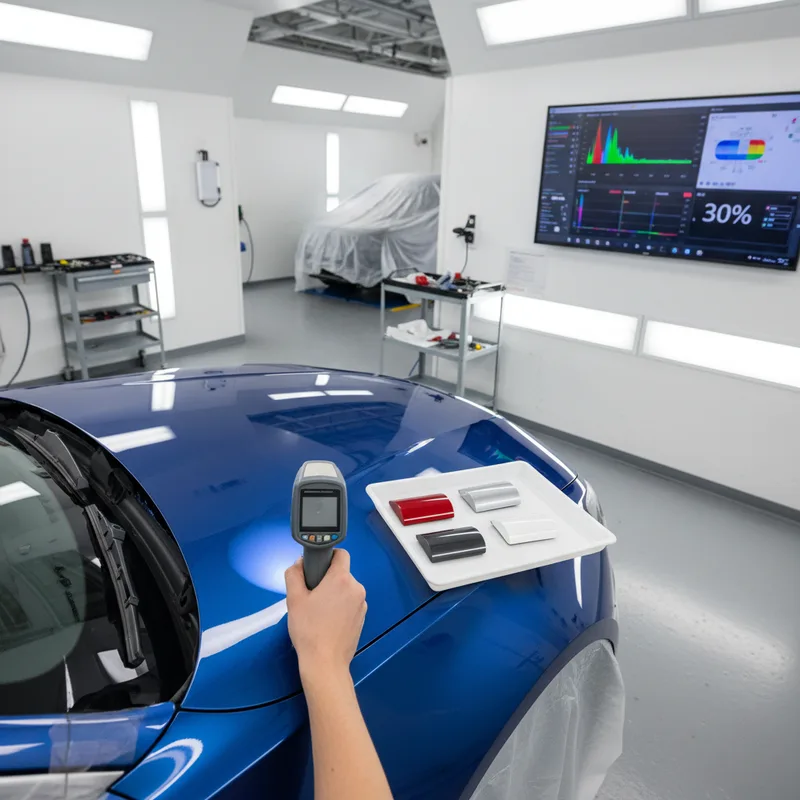
At a professional auto body paint shop, the process starts with a device called a spectrophotometer. This tool reads the exact wavelengths of light reflecting off your vehicle’s existing paint and generates a precise color profile. That profile accounts for variables you’d never catch by eye, things like pigment density, metallic flake orientation, and how the color shifts under different lighting conditions. No guesswork. Just data.
Why Color Codes Alone Aren’t Enough
Here’s something the industry doesn’t talk about enough: the factory color code on your vehicle’s door jamb sticker is a starting point, not a finish line. Paint fades. Phoenix’s intense UV exposure accelerates that process faster than almost anywhere else in the country. A car that’s two years old here can read noticeably different under a spectrophotometer than a freshly painted panel using the same code.
This is where color matching algorithms come in. Modern paint mixing systems cross-reference spectrophotometer readings against databases containing thousands of formula variants for each color. The software helps the painter select the formula that accounts for your vehicle’s actual current condition, not just what it looked like when it rolled off the assembly line.
Metallic and Pearl Finishes: A Different Challenge
Solid colors are manageable. Metallics and pearls are a different problem entirely.
Metallic finishes contain aluminum flakes that reflect light at angles. How those flakes land during application affects the final appearance dramatically. Pearl finishes layer translucent mica particles over base coats, creating depth that shifts with viewing angle. Get the spray technique slightly wrong and the new panel will look fine head-on but noticeably off from the side. That’s not acceptable work.
Experienced painters in Phoenix know to do test panels and check them under multiple light sources before touching the vehicle. Natural desert sunlight is unforgiving. Fluorescent shop light is different. Both matter.
You can learn more about Brad’s approach to quality and decades of field experience, or explore our full range of paint and collision services. The technology is only as good as the hands using it. That’s always been true.
Surface Preparation: Why 80% of Paint Quality Happens Before the Spray Gun
Here’s something most customers never see: the painters at a professional auto body paint shop spend far more time preparing a panel than actually spraying it. That ratio surprises people. It shouldn’t.
Surface prep is where paint jobs are won or lost. A flawless spray application on poorly prepared metal will fail within months. You’ll see peeling edges, bubbling under the clear coat, or color that looks slightly off in direct sunlight. Every one of those problems traces back to something that happened before the gun ever moved.
What Proper Prep Actually Involves
A professional shop works through several layers of preparation before mixing a single drop of paint.
-
Sanding and featheredging: Existing paint edges are carefully sanded down so the repair blends invisibly into the surrounding surface. Rushing this step leaves ridges you can feel with your fingertip.
-
Priming: Bare metal and body filler need a quality primer to seal the surface and promote adhesion. Skipping primer, or using a cheap one, is a shortcut that shows up fast in Phoenix’s intense UV exposure.
-
Block sanding the primer: This step gets ignored constantly at budget shops. It levels out any micro-waviness in the surface before color goes on.
-
Masking: Precise masking protects glass, trim, and adjacent panels. Sloppy masking leaves overspray that takes hours to correct later.
Honestly, the industry undersells this part. Everyone talks about paint technology and color matching, which matter, but a mediocre color match on a perfectly prepped panel will still look better than a perfect color match on rough, contaminated metal.
Environmental Controls Matter in Phoenix
Dust kills paint jobs. Phoenix, AZ has no shortage of it, especially during monsoon season when particulates stay suspended in dry air for hours. A professional shop sprays inside a filtered spray booth with controlled temperature and humidity. That controlled environment isn’t optional equipment. It’s the standard.
Budget operations often spray in open bays or poorly ventilated spaces. You’ll see the results: fish-eyes, embedded grit, and texture that looks wrong in certain lighting. At Brad’s Deer Valley Collision, we’ve been doing this since 1985, and proper surface prep has never been a step we negotiate away. Contact us to see our process firsthand.
Five Critical Standards That Separate Professional from Subpar Work
Not every auto body paint shop meets the same bar. Here’s what actually separates professional results from work that fails in six months.
Certified Technicians
Certifications matter. Look for I-CAR Gold Class and ASE credentials displayed openly, not buried on a back wall. A shop carrying these certifications has invested real time in ongoing training. That investment shows up directly in paint quality and repair accuracy. Shops without current certifications aren’t necessarily bad, but you’re taking a bigger gamble.
Climate-Controlled Spray Booths
Phoenix heat is brutal on paint application. Professional booths hold temperature between 65 and 75 degrees Fahrenheit and maintain humidity below 50 percent. Spray outside those ranges and you’ll get solvent pop, fisheyes, or adhesion failure. This is the one area where cutting corners is almost guaranteed to cause visible problems.
OEM-Spec Materials
Quality primer, basecoat, and clearcoat from reputable manufacturers aren’t optional. Discount paint products look fine for about a year. Then they don’t. Ask specifically what product lines the shop uses before you commit.
Calibrated Equipment
Spray guns, mixing scales, and curing lamps all require regular calibration. Uncalibrated equipment produces inconsistent film thickness, which leads to uneven texture and premature failure. Most customers never think to ask about this. They should.
Post-Paint Inspection Protocol
A thorough inspection under high-intensity lighting catches runs, orange peel, and color variance before the car leaves the booth. Shops that skip this step are handing that problem to you.
At Brad’s Deer Valley Collision, we’ve maintained these standards since 1985. Our approach to quality isn’t a checklist we pull out for audits. It’s how we work every day. If you’re in Phoenix and want work done right, reach out for a free estimate and see the difference firsthand.
What Phoenix Customers Should Verify Before Choosing a Paint Shop
Most people spend more time researching a restaurant than they do vetting the shop that’s about to respray a $40,000 vehicle. That pattern shows up constantly in this industry, and it costs customers money.
Don’t skip this step.
Before handing over your keys to any auto body paint shop in Phoenix, run through this checklist. It takes maybe 20 minutes and can save you from a paint job that fails before summer ends.
Certifications Worth Checking
Ask specifically about I-CAR Gold Class and ASE credentials. These aren’t honorary titles. They require ongoing training to maintain, which tells you the shop is keeping up with modern materials and techniques. If a shop can’t point to posted certifications, that’s a problem.
Questions to Ask Before You Commit
-
Is the estimate written and itemized? A verbal quote protects nobody.
-
What’s the warranty on paint labor and materials?
-
Are you using OEM or aftermarket parts? Understand what you’re agreeing to.
-
What’s the realistic turnaround time?
Here’s where most advice gets it wrong. People are told to always get three estimates and pick the middle one. That logic ignores quality entirely. A low bid usually signals shortcuts on surface prep or paint grade, the two things that determine whether your finish lasts three years or ten.
Also, photograph every inch of your vehicle before drop-off. Remove valuables. And remember, you have the legal right to choose your own shop regardless of what your insurer suggests. Your insurance company doesn’t get that decision.
Brad’s Deer Valley Collision has operated with full transparency since 1985. Contact us to request a written estimate and see our certifications firsthand.
How Brad’s Deer Valley Collision Delivers Flawless Paint Results for Phoenix Drivers
We’ve been doing this since 1985.
That’s not a throwaway line. It means our team has refinished vehicles through every paint technology shift the industry has seen, from single-stage lacquers to today’s waterborne basecoat systems and multi-layer clear coats. We’ve worked through Phoenix summers hot enough to ruin a finish before it flashes, and we’ve learned exactly what this climate demands from a professional auto body paint shop.
Our facility runs a certified operation with I-CAR credentials and ASE-trained painters who treat surface prep as seriously as the spray itself. We use computerized spectrophotometer color matching to dial in every blend, accounting for the way Phoenix’s intense UV exposure affects color over time on your specific vehicle. Cookie-cutter color codes don’t cut it here, and we don’t rely on them.
Every job moves through a controlled prep environment before a panel ever sees paint. That means proper degreasing, correct primer application, and real dry times before we move forward. We don’t rush that process to turn a job faster. Honestly, the shops that do are the ones producing work that fails by the following summer.
Here’s what you get at Brad’s:
-
Written warranty on all paint and body work
-
Precise digital color matching, not guesswork
-
Dedicated climate-controlled spray environment
-
Direct insurance coordination to simplify your claim
-
Transparent estimates with no vague line items
We serve drivers across Phoenix, including customers coming in from Scottsdale, Tempe, and Chandler who want work done right the first time. Our full range of services goes well beyond paint, but the finish quality is often what people notice first and remember longest.
If your vehicle needs professional attention, contact us for a free estimate. Come see the shop. Ask hard questions. We’re ready for them.
Frequently Asked Questions
How do auto body paint shops match factory paint colors so precisely?
We use a device called a spectrophotometer, which reads the exact color wavelengths in your vehicle’s original paint. It doesn’t just look at the color, it actually measures it. That means it can account for metallic flakes, pearl effects, and even how the paint has aged over the years. The result is a precise digital formula that takes all the guesswork out of color matching. At Brad’s Deer Valley Collision, our auto body paint shop in Phoenix, AZ, USA uses this technology on every job so your repaired panel blends seamlessly with the rest of your vehicle.
Why does surface preparation take so long at a professional paint shop?
Prep work is honestly where the job is won or lost. Sanding, priming, masking, and thorough cleaning make up about 80% of what determines your final paint quality. If any of those steps get rushed, you end up with problems like orange peel texture, fish-eye bubbles, or paint that starts peeling within a year. A professional auto body paint shop in Phoenix, AZ, USA isn’t dragging its feet during prep. It’s doing the work correctly so the finished result looks great and actually holds up long-term.
What’s the difference between OEM and aftermarket paint, and which should I choose?
OEM paint comes from your vehicle’s original manufacturer, so it matches your factory finish in terms of color, texture, and durability. Aftermarket paint costs less but can have subtle differences in color accuracy or how it holds up over time. Neither option is automatically wrong, it really depends on your vehicle’s age, the extent of the damage, and your budget. Stop by our shop in Phoenix and we’ll walk you through which option makes the most sense for your specific situation.
How long does a professional paint job take, and why?
You’re typically looking at 5 to 10 days for a quality paint job. That timeline covers surface prep, primer coats, color application, clear coat, curing, and a final inspection before the vehicle goes back to you. If an auto body paint shop in Phoenix, AZ, USA is promising you same-day results, that’s a serious red flag. Cutting time on drying and curing means the paint won’t bond properly, and you’ll likely see issues like cracking or peeling much sooner than you should. Don’t let a fast turnaround cost you more down the road.
Should I get a warranty on my auto body paint work?
Yes, every time. A reputable auto body paint shop in Phoenix, AZ, USA should hand you a written warranty covering defects like peeling, cracking, or color mismatch, typically for 3 to 5 years. If a shop won’t back its own work in writing, that tells you something about how confident they are in the results. At Brad’s Deer Valley Collision, we stand behind our paint work with a written warranty because we’re confident in how the job gets done from start to finish.
Get Your Car Looking Like New at Brad’s Deer Valley Collision
If your vehicle needs auto body painting done right, we’re ready to help. Our certified painters here in Phoenix, AZ, USA will match your factory finish with precision and treat your car like it’s our own. Stop by the shop, see our work firsthand, and check out what our customers are saying on Google before you even walk through the door.
Call us today to schedule your free estimate and let’s get your vehicle back to showroom condition.