Auto Body Paint Matching Technology in Phoenix, AZ: Achieving Seamless Results
Auto Body Paint Matching Technology in Phoenix, AZ: Achieving Seamless Results
Why Auto Body Paint Matching Matters More Than You Think
Picture this: a Phoenix driver gets rear-ended in a parking lot near Desert Ridge Marketplace. The damage isn’t catastrophic, just a crumpled bumper and a scraped quarter panel. The repair gets done fast, and on the surface everything looks fine until she pulls the car into direct sunlight on the way home. The repaired panel is a half-shade lighter than the rest of the car, and it’s obvious to anyone standing ten feet away. The shop cut corners on auto body paint matching, and now she’s stuck with a vehicle that looks patched together.
That scenario plays out more often than it should. And it’s frustrating, because it’s entirely preventable.
Paint mismatch isn’t just a cosmetic annoyance. A visibly mismatched repair panel signals to any future buyer that the vehicle was in an accident and wasn’t restored properly. That perception alone can knock hundreds, sometimes thousands, of dollars off your resale or trade-in value. Dealerships and private buyers in the Phoenix, AZ market will notice, especially in our relentless desert sunlight, which has a way of exposing every flaw that might hide under showroom lighting.
Here’s a professional opinion that might surprise you: most people assume paint matching is about finding the right color code and spraying it on. That’s a serious oversimplification. Vehicle paint changes over time due to UV exposure, oxidation, and even the chemistry of the original factory application. A color code gives you a starting point, not a finish line. Skilled technicians at a shop like Brad’s Deer Valley Collision, which has been doing this work since 1985, understand that real paint matching requires reading the existing paint, adjusting the formula, and blending the repair into adjacent panels.
The stakes are higher now than they used to be. Modern vehicles come with increasingly complex paint systems, including multi-layer metallics, tri-coat pearls, and matte finishes. Getting any of those wrong is immediately visible and expensive to redo.
Precision matters. So does choosing a shop that invests in the right technology and training to get it right the first time. You can explore the full range of services Brad’s Deer Valley Collision offers at our services page.
The Core Technologies Behind Professional Paint Matching
The tools matter. A lot of shops will tell you their painters have a great eye for color, and some of them are right. But human eyes alone aren’t enough to match modern automotive finishes with any real precision. The technology driving professional auto body paint matching today is genuinely impressive, and understanding it helps you ask the right questions before you hand over your keys.
The Spectrophotometer: Your Car’s Color Fingerprint
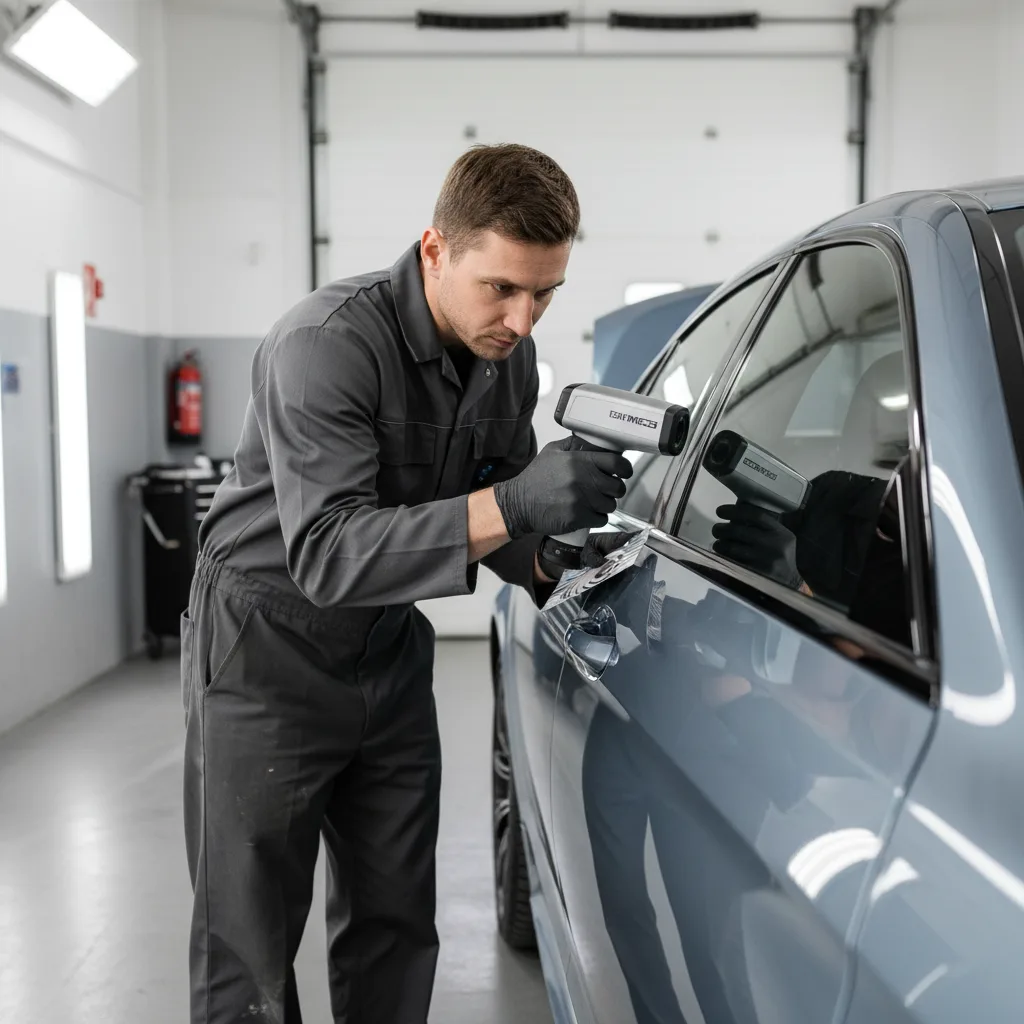
This is the device that separates serious shops from the ones winging it. A spectrophotometer reads the exact light wavelengths reflected off your vehicle’s existing paint, capturing data that a human eye simply cannot process. It measures color at multiple angles, which matters enormously for metallic and pearl finishes that shift under different lighting conditions.
The device takes multiple readings across the repair area. That data then feeds directly into a digital color matching system, where the software cross-references it against a manufacturer’s formula database and adjusts for real-world variables like paint fade, environmental exposure, and batch variation.
Here’s an honest opinion: a lot of people assume the paint code on their door jamb sticker is all a shop needs. It’s not. Paint codes tell you what color left the factory. They don’t account for years of Phoenix sun, which fades finishes faster than almost any other climate in the country. Skipping spectrophotometer analysis and relying solely on paint codes is one of the more common shortcuts shops take, and customers rarely notice until they’re standing in daylight wondering why the repaired panel looks slightly off.
Digital Color Formulation Systems
Once the spectrophotometer does its job, the data moves into a digital mixing and formulation platform. Systems like Axalta’s Cromax or similar industry-grade platforms calculate precise pigment ratios, factoring in your vehicle’s specific paint chemistry. The result is a custom-mixed formula built specifically for your car, not a generic approximation pulled off a shelf.
At Brad’s Deer Valley Collision, we’ve been investing in this technology since well before most Phoenix shops even considered it standard practice. Working in this industry since 1985 teaches you that cutting corners on color matching always costs someone more in the long run, either the customer’s satisfaction or the shop’s reputation.
The full picture of what we offer, from paint matching to complete collision repair, is outlined on our services page. If you’re ready to talk specifics, reach out and schedule an estimate. We’ll tell you exactly what your vehicle needs and why.
Surface Preparation: The Foundation of Perfect Paint Matching
Here’s something every experienced painter knows but rarely says out loud: the color match was won or lost before the spray gun ever came out. We see it constantly. A technician nails the formula, the spectrophotometer reading is spot-on, and somehow the repair still looks off. Nine times out of ten, the culprit is surface prep that got rushed.
Prep work isn’t glamorous. It’s slow, detailed, and easy to cut corners on when a shop is trying to move cars through quickly. But skipping steps here doesn’t just affect appearance. It affects how long the finish lasts, how it responds to Phoenix’s intense UV exposure, and whether the paint bonds properly to the substrate at all.
What Proper Prep Actually Involves
Good surface preparation starts with complete contamination removal. That means stripping away wax, silicone residue, road grime, and any oxidation from the surrounding panels. Even trace amounts of contamination left on the surface can cause adhesion failures, fisheyes in the clearcoat, and color inconsistency that no scanner can fix after the fact.
From there, the damaged area gets sanded to the right profile. Not too aggressive, not too light. The goal is creating a surface the primer can actually grip. Then primer is applied and blocked out flat before any color goes on. This is where a lot of shops quietly rush things, and honestly, that’s the mistake we disagree with most when people assume a fast turnaround equals quality work.
Feathering the edges of the repair zone matters just as much. A hard transition between bare metal and existing finish will telegraph through the topcoats no matter how good your auto body paint matching formula is.
Our team at Brad’s Deer Valley Collision has been doing this work since 1985, and proper prep has never changed. The technology around it has improved, but the discipline hasn’t. That foundation is what separates a repair that looks right for a week from one that holds up to years of Phoenix sun and heat.
How Phoenix Body Shops Handle Metallic and Pearl Finishes
These finishes don’t forgive mistakes.
Metallic and pearl paints have become standard on a huge portion of vehicles on Phoenix roads, and they’re genuinely harder to match than solid colors. If your shop doesn’t account for that extra complexity up front, you’ll end up with a repair that looks fine in the shade but noticeably off in direct sunlight. And we get a lot of direct sunlight here.
Here’s what’s actually happening with these finishes. A metallic paint contains tiny aluminum flakes suspended in the coating. The way those flakes orient during application determines how the color shifts at different viewing angles. Pearl finishes add mica particles that create that deep, layered iridescence. Both require multiple spray stages, and each stage affects the final appearance.
The Multi-Stage Matching Process
Good shops don’t just match the color. They match the flake orientation. That means controlling spray pressure, gun distance, and application speed with a level of precision that honestly separates experienced painters from average ones. A lot of shops underestimate this part, and that’s where the blotchy or “flat” look comes from on otherwise decent repairs.
For pearl finishes, the process typically involves three layers: a base color coat, a pearl mid-coat, and a clear topcoat. Each layer has to be applied consistently across the repair and blend zone. Skip the mid-coat or rush the flash time between coats and the repair will never quite match the surrounding panels.
At Brad’s Deer Valley Collision, our painters have been handling specialty finishes since 1985, and we use spectrophotometer readings alongside physical test sprays before touching your vehicle. We also reference industry-standard paint formulation resources to dial in complex variants.
Auto body paint matching on metallic and pearl finishes is where skill meets process. Both have to show up.
Common Paint Matching Mistakes That Compromise Quality
You can spot a bad paint job before you even walk around the car. The color sits slightly off, there’s a visible line where the new paint meets the old, or the finish looks flat compared to the panels around it. These aren’t random outcomes. They trace back to specific, avoidable mistakes.
The most common one we see is shops skipping the spectrophotometer reading entirely. Some painters still rely on the factory color code alone, assuming it’s accurate enough. It isn’t. Factory codes are starting points, not final answers. Paint shifts as it ages, especially under the Arizona sun, and a code-only approach ignores everything that’s happened to your vehicle’s finish since it left the factory.
Mixing incompatible paint products is another problem that’s more widespread than most customers realize. Using a basecoat from one manufacturer with a clearcoat from another might save a shop a few dollars, but it creates adhesion issues, color drift, and premature peeling. Industry refinish suppliers consistently warn against this, and for good reason.
Environmental conditions during application matter more than most shops admit. Temperature swings, humidity, and dust all affect how paint lays down and cures. Phoenix’s heat creates its own challenges, and auto body paint matching done without controlling the spray environment is a gamble.
Rushing the cure. That’s where a lot of otherwise decent jobs fall apart. Cutting cure time short before wet-sanding or polishing can ruin the surface texture and throw off the final color appearance.
At Brad’s Deer Valley Collision, we’ve been doing this since 1985. We don’t cut corners on any of these steps. If a shop can’t explain their process clearly, that’s a red flag worth taking seriously before you hand over your keys.
What You Should Expect at a Phoenix Auto Body Shop
Ask questions before you hand over your keys. That’s the simplest advice we can give.
A lot of Phoenix drivers assume all body shops operate the same way. They don’t. The difference between a shop that delivers a flawless auto body paint matching result and one that sends you home with a mismatched panel often comes down to equipment, training, and honestly, whether the shop cares enough to do the job right.
Questions Worth Asking Up Front
Before you commit to any shop, ask these directly:
-
Do you use a spectrophotometer for color reading, or are you eyeballing it?
-
Are your painters I-CAR certified?
-
What does your written warranty cover, and for how long?
-
Will you blend adjacent panels to avoid visible color transitions?
-
Can I get the repair estimate in writing before any work starts?
If a shop hesitates on any of those, that tells you something. No written estimate and no warranty are two red flags we’d never ignore.
Here’s an opinion that not everyone agrees with: getting three estimates isn’t always the best strategy. The lowest bid almost always reflects a compromise somewhere, whether it’s cheaper materials, skipped prep steps, or undertrained staff. Price matters, but it shouldn’t be the deciding factor for paintwork that needs to hold up under Phoenix’s UV exposure and heat.
At Brad’s Deer Valley Collision, we’ve been doing this since 1985. Our painters are certified, our equipment is current, and we back our work with a real warranty. We use digital color matching technology on every paint job, not just the complex ones, because that’s the standard every vehicle deserves.
We work with all major insurance carriers and handle the claims process for you, so you’re not stuck managing paperwork while dealing with a damaged car.
If your vehicle needs paint repair anywhere in the Phoenix area, contact us to schedule an estimate. You can also explore our full services to see everything we offer. Come in, ask your questions, and see the shop for yourself.
Frequently Asked Questions
How long does auto body paint matching typically take?
The paint matching process itself is pretty quick. Using spectrophotometer technology, we can identify and mix your color in about 1 to 2 hours. The full job is a different story. Surface prep, paint application, and proper curing typically take 3 to 7 days depending on how much damage we’re working with and what type of paint your vehicle needs.
We know some shops in Phoenix, AZ, USA rush that process, but skipping proper curing time leads to peeling and color inconsistencies down the road. At Brad’s Deer Valley Collision, we don’t cut corners on curing, because a fast job that fails isn’t worth your time or money.
Can paint matching guarantee an exact color match?
Modern spectrophotometer technology gets us to 95% or better color accuracy under standard lighting conditions. That said, a perfect visual match can be tricky on older vehicles where the existing paint has faded or the clear coat has degraded over time. Lighting conditions also affect how color looks from different angles.
That’s why our auto body paint matching process doesn’t stop at the computer reading. We verify the color under multiple light sources and spot-check the blend before we consider the job done. You’ll be able to see the work for yourself when you come by our shop in Phoenix, AZ, USA.
Why is paint matching more difficult on metallic or pearl finishes?
Metallic and pearl finishes have tiny reflective particles suspended in the paint, and those particles shift color based on the angle you’re viewing the vehicle from and what kind of light is hitting it. You can’t just match the base color and call it done. You’ve got to account for particle size, distribution, and how the layers interact with each other.
This is one area where experience really separates quality shops from basic ones. Our technicians at Brad’s Deer Valley Collision understand the multi-layer process required for these specialty finishes, which is why customers across Phoenix, AZ, USA trust us with their metallic and pearl paint jobs.
What should I ask a Phoenix body shop about their paint matching process?
Great question, and it’s one you should actually ask before handing over your keys. Find out whether the shop uses spectrophotometer technology for auto body paint matching. Ask how they handle metallic or pearl finishes specifically. Get clear answers about what warranty they offer on the paint work, and ask whether their technicians hold I-CAR or ASE certification.
Don’t be shy about asking to see photos of recent matching jobs they’ve completed. A shop that does quality work will be happy to show you. At Brad’s Deer Valley Collision in Phoenix, AZ, USA, we welcome those questions and can walk you through our process in person.
Does insurance cover the cost of quality paint matching?
In most cases, yes. Insurance companies approve repairs based on the estimates they receive, so the key is working with a shop that submits accurate, detailed estimates that include the full cost of proper auto body paint matching. Shops that cut corners on estimates often leave you with a lower-quality result because the insurer only approved a basic job.
Brad’s Deer Valley Collision works with insurance companies as a direct repair partner, which means we know how to document and submit claims correctly. If you’re dealing with a claim in Phoenix, AZ, USA, come in and we’ll help you understand exactly what your coverage includes.
Get Your Car’s Paint Looking Perfect Again
If your vehicle’s finish has been damaged, we’re here to make it right. At Brad’s Deer Valley Collision in Phoenix, AZ, USA, our I-CAR and ASE certified technicians use advanced color matching technology to restore your car’s paint to factory quality, and we’ll walk you through every step of the process. See what our customers are saying on Google and then give us a call or stop by the shop to schedule your free estimate today.