Complete Guide to Auto Body Paint Matching in Phoenix, AZ: Achieving Invisible Repairs
Complete Guide to Auto Body Paint Matching in Phoenix, AZ: Achieving Invisible Repairs
Why Paint Matching Matters: The Difference Between Good and Invisible Repairs
Picture this: you pick up your car after a rear bumper repair, pull out of the shop into the Phoenix sun, and immediately notice the repaired panel is a half-shade lighter than the rest of the vehicle. The work is structurally sound. The panel fits perfectly. But anyone standing five feet away can see exactly where the damage was. That’s a paint matching failure, and it happens more often than it should.
Paint mismatch is one of the most visible signs of a careless repair. Your car’s finish isn’t just cosmetic protection; it directly affects resale value, buyer confidence, and how you feel every time you look at your vehicle. A repair that’s structurally correct but visually off is still an incomplete repair.
Phoenix’s climate makes this even harder to ignore. The intense UV exposure here fades paint faster than in most U.S. cities, which means even a vehicle a few years old has a noticeably different tone than its original factory color. A shop that pulls the paint code and sprays straight from the formula without accounting for that oxidation is going to deliver a panel that doesn’t match. The sun will expose it immediately.
This is where professional auto body paint matching separates shops that do acceptable work from shops that deliver invisible repairs. True color matching requires spectrophotometer readings, formula adjustments for fade and environmental factors, and skilled blending into adjacent panels. It’s a technical process, not a guessing game.
Some customers assume that if the paint code matches, the color matches. That’s a common misconception worth correcting. Factory paint codes describe the original formula, not how that color looks on your specific car today. Age, sun exposure, and prior repairs all shift the actual appearance of the paint on the vehicle. Chasing a code without measuring the actual surface is how shops end up with visible two-tone panels.
At Brad’s Deer Valley Collision, we’ve been doing this work in Phoenix since 1985. We’ve seen every fade pattern the Arizona sun can produce, and we built our process around matching what’s actually on the car, not just what the code says. You can see the full range of what we offer at our services page. Invisible repairs are the standard here, not an upgrade.
The Advanced Paint Matching Technology Behind Professional Results
Color matching isn’t guesswork anymore. The tools available to a properly equipped auto body paint shop have changed the entire game, and shops that still rely on a technician’s eye alone are leaving too much to chance.
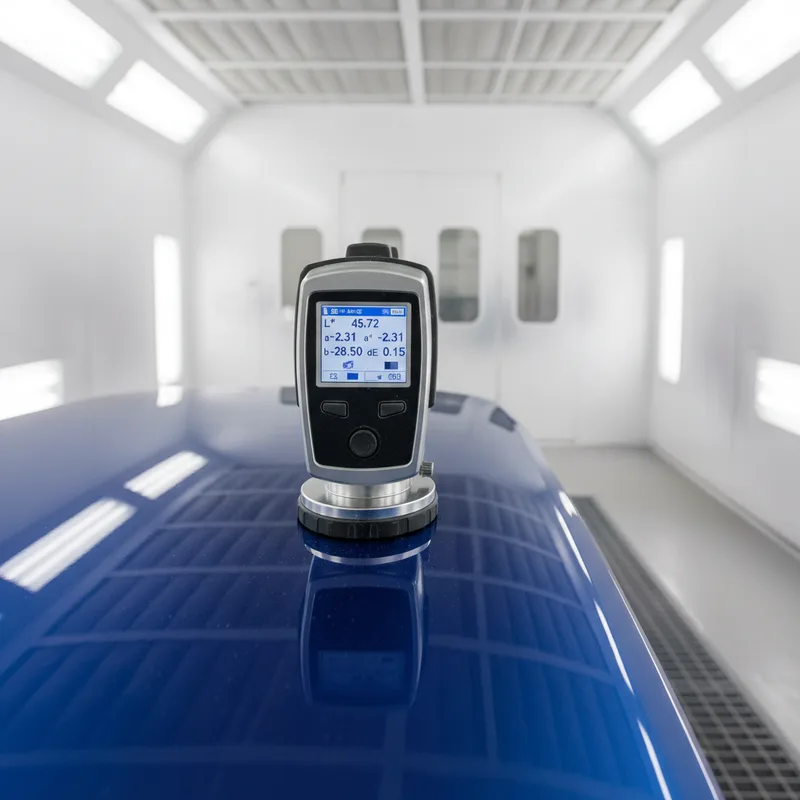
The centerpiece of modern auto body paint matching is the spectrophotometer. This handheld device scans your vehicle’s existing paint, measures how light reflects off the surface at multiple angles, and converts that data into a precise color formula. It doesn’t just read the base hue. It captures metallic flake orientation, pearl pigment depth, and any fade the paint has developed over years in the Phoenix, AZ sun. That last part matters more here than in most markets. Intense UV exposure causes vehicle finishes to shift faster than manufacturers anticipate, which means the factory color code printed on your door jamb often doesn’t match what’s actually on the car anymore.
That’s why we don’t start with the paint code. We start with the scanner.
Once the spectrophotometer collects the data, that information feeds into a digital color matching system connected to a paint mixing database. Suppliers like PPG and Axalta maintain databases with tens of thousands of formula variants for a single color code, accounting for production date differences and regional fading patterns. The system suggests the closest match, and a skilled technician then makes refinements based on the actual panel condition.
Base Coat, Clear Coat, and Why Layering Matters
Modern factory finishes use a multi-stage system. The base coat carries the color and any special-effect pigments. The clear coat goes on top, providing gloss and UV protection. Matching the repair means replicating both layers with the right product chemistry, not just spraying color and calling it done.
A lot of DIY guides treat clear coat as an afterthought. It isn’t. The clear coat thickness and application technique directly affect how the final panel reads in different lighting conditions, including the direct midday sun you’ll encounter on the 101 heading toward Desert Ridge Marketplace.
The Equipment Gap Between Shops
Here’s an honest opinion: the spectrophotometer is table stakes now, but plenty of smaller shops in the Phoenix area still don’t own one. They rely on experience and test sprays, which can work on straightforward solid colors. On tri-stage pearls or heavily faded finishes, that approach produces visible mismatches more often than not.
At Brad’s Deer Valley Collision, we’ve invested in the scanning and mixing technology that removes the variability from this process. You can see the full scope of what that investment covers across our service offerings. If you want to discuss your specific vehicle, reach out directly and we’ll take a look.
The Paint Matching Process: Step-by-Step What to Expect
Most customers assume color matching happens right before the paint goes on. It doesn’t. The process starts the moment your vehicle pulls into the shop, and every step before the spray gun even gets picked up determines whether the repair ends up invisible or obvious.
Here’s how we approach auto body paint matching at Brad’s Deer Valley Collision:
Color Code Retrieval and Spectrophotometer Reading
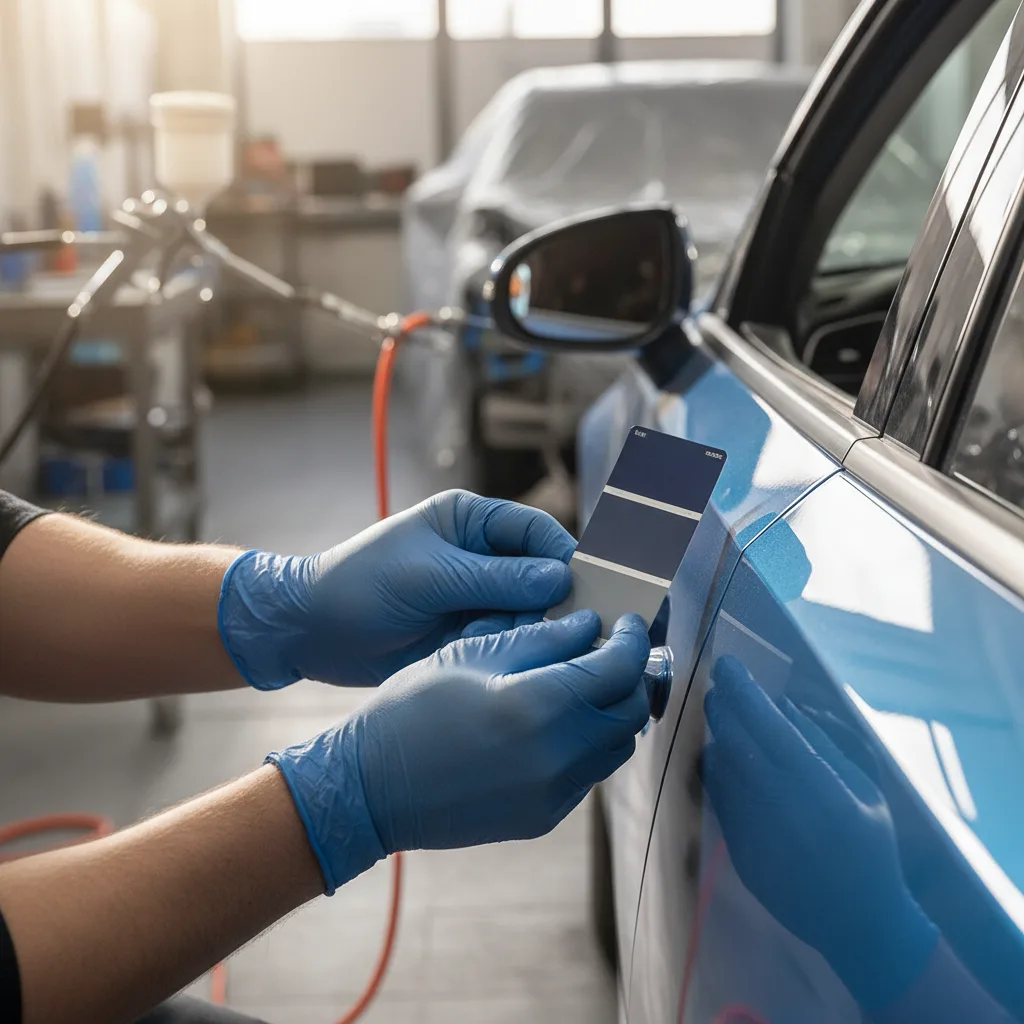
We locate your vehicle’s factory color code, typically found on the door jamb or firewall, then scan the surrounding undamaged panels with a spectrophotometer. The code gives us a starting formula. The scan tells us what the paint actually looks like after years of Phoenix sun exposure. Both matter.
Formula Adjustment for Real-World Conditions
Factory formulas are a baseline, not a finish line. Our painters adjust the mix to account for oxidation, fade, and color shift that happens naturally on vehicles driving around Phoenix, AZ. Skipping this step is one of the most common reasons repairs look patchy in direct sunlight.
Test Panel Sprayout
Before touching your car, we spray the adjusted formula onto a test card and compare it against your vehicle’s existing finish in natural light. This is non-negotiable. Any reputable shop does this. If someone skips it to save time, that’s a red flag worth taking seriously.
Surface Preparation
Good paint won’t hide bad prep. We sand, clean, and prime the repair area to give the topcoat a proper foundation. Surface prep is where invisible repairs are won or lost, and it’s also where corners get cut at shops focused on volume over quality.
Application and Blending
The color coat goes on in controlled layers, then we blend outward into adjacent panels to eliminate any visible transition edge. Clearcoat follows, then a final polish to unify the sheen across the repair zone.
Final Inspection in Natural Light
We review the finished repair outside, not just under shop lighting. The Phoenix sun is unforgiving, and we use that to our advantage before you ever see the car.
Our team has been refining this process since 1985, and the steps haven’t changed much because they work. What has changed is the technology supporting each one. If you’d like to walk through what a repair would involve for your specific vehicle, reach out to us directly or stop by. We’re here, and we’re happy to take a look.
Common Paint Matching Mistakes and How to Avoid Them
Bad paint jobs don’t happen by accident. They happen because someone skipped a step. After nearly four decades doing auto body paint matching in Phoenix, AZ, we’ve seen the same mistakes show up over and over, and most of them are completely preventable.
Skipping Surface Preparation
This is the biggest one. No amount of precision color-mixing fixes a panel that wasn’t properly cleaned, sanded, and primed before paint was applied. Contamination under the topcoat causes the finish to look uneven, peel prematurely, or reflect light differently than the surrounding panels. Prep work isn’t glamorous, but it’s where the outcome gets decided.
Rushing the Color Formulation
A lot of shops pull up a paint code and spray. That’s not enough. Paint codes are a starting point, not a finish line. Factory color batches shift between production runs, and vehicles fade at different rates depending on how they’ve been stored and driven. Skipping a test panel, or spraying directly onto the vehicle without a spray-out card first, is how you end up with a bumper that doesn’t match the door six inches away.
Ignoring Metallic and Pearl Orientation
We’ll go deeper on this in the next section, but metallic and tri-coat finishes require careful attention to spray technique, not just color formula. Technicians who treat every finish the same will get inconsistent flop, meaning the repair looks right from one angle and wrong from another.
Here’s an opinion you won’t hear often: the industry talks too much about technology and not enough about discipline. The best spectrophotometer in Phoenix won’t save you if the person holding the spray gun is cutting corners on dry time or application pressure.
Choosing a certified shop with documented experience matters precisely because these shortcuts are so tempting under production pressure. If you have questions about our process, reach out to our team before you commit to anyone.
Metallic, Pearl, and Custom Finishes: The Extra Challenge
Solid colors are forgiving. Metallics, pearls, and custom finishes are not. Walk any Phoenix parking lot and you’ll spot the repairs that didn’t account for this fact, patches that shimmer slightly differently depending on your angle, or pearl coats with a flat, lifeless section where the blending stopped short.
Metallic paints contain aluminum flakes suspended in the basecoat. The size of those flakes, how densely they’re packed, and how they orient during application all affect how light bounces off the panel. Two guns, two painters, two slightly different spray techniques, and you get two different-looking results even with identical paint codes. That’s the challenge.
Pearl finishes add another layer of complexity. Most use mica particles that create color shift depending on viewing angle, and they’re typically applied in a dedicated midcoat between the basecoat and clear. Skip the proper midcoat formula or apply it at the wrong thickness, and the repair won’t match under direct sunlight, even if it looks fine indoors.
Custom colors have no shortcut at all. There’s no manufacturer formula to pull up. Our team has to spectrophotometer-scan the original paint, build a custom mix, and test it on a sprayout card before anything goes near the vehicle. It’s time-consuming, but there’s no other way to do it correctly.
A common misconception is that blending automatically compensates for formula gaps. It helps, but blending a bad mix just spreads the problem over a wider area. Our team’s background in auto body paint matching means we address the formula first, then blend. If you’ve got a complex finish, bring it in for an assessment before assuming any shop can handle it.
Why Phoenix Auto Body Shops Should Invest in Paint Matching Technology
Technology separates a repair that lasts from one that embarrasses you in the parking lot. Shops that skip the investment in spectrophotometers, computerized mixing systems, and ongoing I-CAR training are asking their painters to succeed with one hand tied behind their backs.
Here’s the opinion that might surprise some people: a low estimate often means a shop is cutting corners on equipment, materials, or both. We’ve watched this play out since 1985. Customers who chase the cheapest bid frequently end up paying twice when the color shifts within a year.
Phoenix’s climate makes this worse. Intense UV exposure and heat cycling punish paint that wasn’t mixed, applied, and cured correctly from the start. Auto body paint matching in Phoenix, AZ demands a higher standard, not a lower one.
At Brad’s Deer Valley Collision, we’ve built our process around that reality. Our certifications, equipment, and technician training aren’t marketing points; they’re what produce results that hold up under a desert sun.
Ready to see the difference? Contact us for an estimate, or learn more about our background and full range of services. Walk-ins are welcome.
Frequently Asked Questions
What is paint matching and why is it important for collision repair?
Auto body paint matching is the process of precisely replicating your vehicle’s original color, tone, and finish after a repair. If the color doesn’t match, it’s visible to anyone who looks at your car, and that signals poor-quality work right away. A mismatched repair also hurts your resale value. At Brad’s Deer Valley Collision in Phoenix, AZ, USA, we use professional-grade equipment to make sure your repair is truly invisible, not just covered up.
How long does the paint matching process take?
The color-matching analysis itself takes a few hours, but the full painting process is longer. Surface prep, primer, base coat, clear coat, and proper curing time typically add up to 2 to 5 days depending on how much damage was done. We don’t rush the curing process because cutting corners there leads to problems down the road. When you bring your vehicle in, we’ll give you a specific timeline in your written estimate so you know exactly what to expect.
Can all paint colors be matched perfectly?
Most factory colors can be matched with 99% or better accuracy using modern spectrophotometer technology. Metallic, pearl, and tri-coat finishes require extra expertise and blending technique, but we handle those regularly here in Phoenix, AZ, USA. Vintage or discontinued colors sometimes take additional research, and we take that on as part of our standard process. We won’t hand your car back until the auto body paint matching meets our quality standard.
What is the difference between OEM and aftermarket paint?
OEM (Original Equipment Manufacturer) paint is formulated to match your vehicle’s factory finish exactly, in terms of color, texture, and durability. Aftermarket paint comes from third-party manufacturers and can vary in quality. It may cost less upfront, but it doesn’t always hold up the same way over time. At Brad’s Deer Valley Collision, we use premium materials and we’ll walk you through your options before any work starts so you can make an informed decision for your specific vehicle.
Does Brad’s Deer Valley Collision offer a warranty on paint matching work?
Yes, we do. Brad’s provides a comprehensive written warranty covering all auto body paint matching and collision repair work. You’ll see the full warranty details in your written estimate before we start anything. We’ve been serving the Phoenix, AZ, USA area since 1985, and we stand behind every job that leaves our shop. If something doesn’t look right, come back and we’ll make it right. That’s a straightforward commitment we make to every customer.
Get a Free Paint Matching Estimate at Brad’s Deer Valley Collision
If your vehicle needs auto body painting, stop by our shop in Phoenix, AZ, USA and we’ll put together a free, written estimate using precision color-matching technology so you know exactly what to expect. Our certified technicians take real pride in restoring vehicles to showroom condition, and we’re happy to walk you through the process from start to finish. See what our customers are saying on Google and then come meet us in person so we can get your car looking its best again.