Frame Alignment and Suspension Issues in Phoenix, AZ: When Minor Collision Damage Requires Professional Correction
Frame Alignment and Suspension Issues in Phoenix, AZ: When Minor Collision Damage Requires Professional Correction
The Hidden Danger: Why Minor Collisions Often Cause Major Frame Damage
You’re pulling out of a parking spot at Desert Ridge Marketplace, someone clips your rear quarter panel, and the damage looks minor. A little scuff, maybe a shallow dent. Both drivers exchange information, you drive home, and the whole thing feels like a forgettable inconvenience. But three weeks later, your steering pulls left, your tires are wearing unevenly, and something just feels off. That’s not a coincidence.
That’s frame damage talking.
Most drivers assume visible damage tells the whole story. It doesn’t. Modern vehicles are engineered with crumple zones, sections of the frame designed to absorb and redirect collision energy away from the passenger cabin. This is genuinely smart engineering, but it comes with a trade-off: even a low-speed impact can compress and distort structural components that sit well behind the point of contact. You might not see a single bent panel, but the frame underneath has shifted.
Here’s where a lot of general advice gets it wrong. You’ll often hear people say, “If it drives fine, you’re probably okay.” We disagree with that completely. Frame misalignment doesn’t always announce itself immediately. The vehicle can feel normal for weeks before you notice handling changes, and by then, suspension components are already taking uneven stress loads they weren’t designed to handle.
Phoenix roads add another layer to this. Between the heat cycles that stress metal and the occasional rough patch on the 101 near Scottsdale, a frame that’s even slightly out of spec gets pushed harder than it would in a milder climate. Small deviations compound faster here.
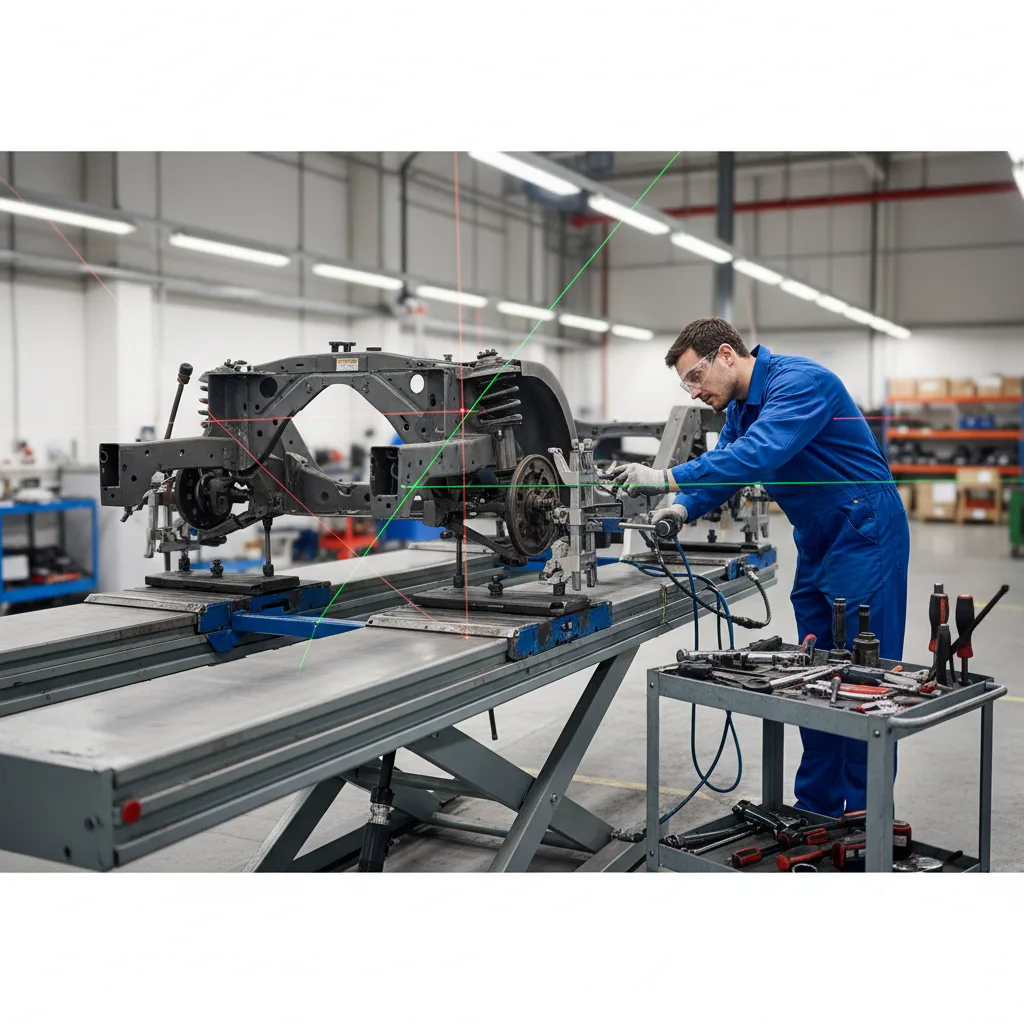
Proper frame alignment inspection requires more than a visual once-over. At a qualified shop, technicians use computerized measuring systems to compare your vehicle’s actual frame geometry against the manufacturer’s original specifications, down to fractions of a millimeter. That level of precision is the only way to catch damage that isn’t visible to the naked eye.
At Brad’s Deer Valley Collision, we’ve been doing this work in Phoenix since 1985. We’ve seen plenty of vehicles that came in for a “minor repair” and left with a full structural correction once we put them on the alignment rack. The damage was always there. It just needed the right equipment and trained eyes to find it.
Don’t let a small collision turn into a long-term safety problem. Schedule an inspection before you assume everything’s fine.
Five Warning Signs Your Vehicle Needs Professional Frame Alignment
Your car is telling you something. Most Phoenix drivers just don’t know how to listen.
After any collision, even a low-speed one, your vehicle can show clear physical symptoms of frame misalignment. The problem is that these signs are easy to dismiss or misattribute to something else. Here’s what to watch for before small damage turns into a larger safety issue.
1. Your Steering Wheel Sits Crooked on a Straight Road
Drive down a flat stretch and look at your steering wheel. If it’s noticeably off-center while you’re going straight, that’s a textbook signal that your frame or suspension geometry is out of spec. This isn’t a tire balancing issue. Don’t let anyone tell you it is until the frame has been inspected.
2. The Vehicle Pulls to One Side
A mild pull can have several causes, but persistent one-sided pulling after a collision almost always points to a frame or suspension alignment problem. If you’ve already had the tires rotated and the issue persists, it’s time for a professional frame alignment inspection.
3. Uneven or Rapid Tire Wear
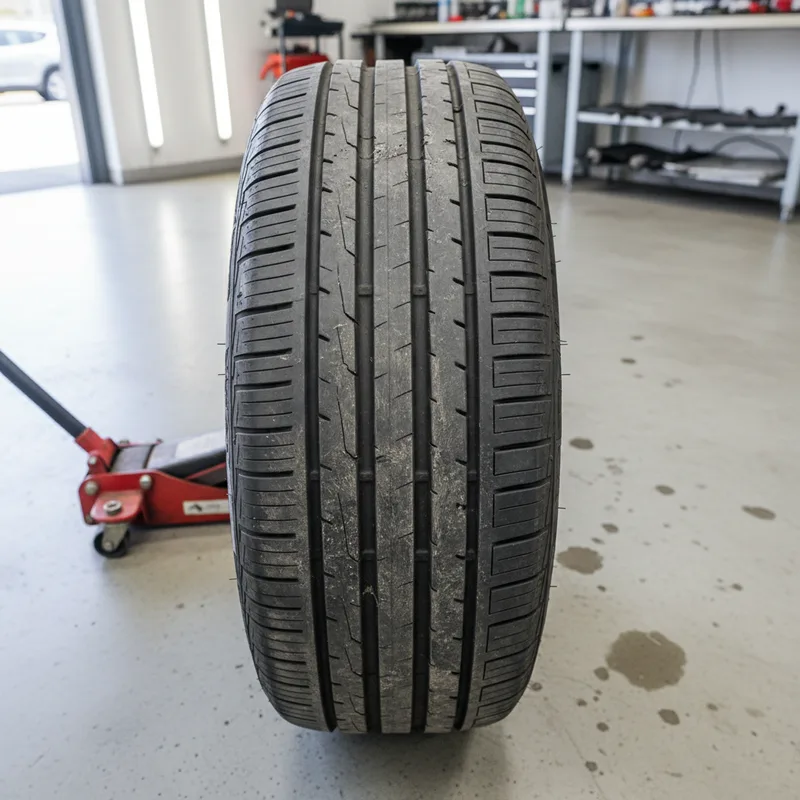
Check your tires. If one edge is wearing down faster than the rest, your wheels aren’t sitting at the correct angle. The NHTSA consistently links irregular tire wear to suspension and alignment defects. New tires won’t fix the root cause.
4. Handling Feels Loose or Unpredictable
Does the car feel vague or “floaty” through turns? That loose sensation often means your suspension components are no longer working together correctly because the frame isn’t holding them in position.
5. Visible Gaps or Uneven Panel Spacing
Stand back and look at the gaps around your doors, hood, and trunk. Uneven spacing that wasn’t there before the accident is a reliable visual indicator of frame shift.
If you’re noticing any of these symptoms after a recent collision in Phoenix, AZ, don’t wait. Schedule an inspection with our team before the damage compounds.
How Frame Misalignment Affects Your Vehicle’s Suspension and Safety Systems
Here’s something we see constantly in the shop: a vehicle comes in with obvious suspension wear on one side, and the owner has already replaced those components twice in the past year. Nobody told them the real problem was a frame that never got properly measured after a collision. The parts weren’t failing. The geometry was wrong.
Frame alignment and suspension performance aren’t separate concerns. They’re directly connected. Your suspension system is engineered to operate within precise angle tolerances, and every one of those angles references back to the frame. When the frame shifts even slightly out of spec, the geometry of your control arms, tie rods, and strut mounts shifts with it.
The result isn’t just uneven tire wear. A misaligned frame places constant stress on suspension components that were designed to move in specific directions under specific loads. Ball joints wear prematurely. Bushings deteriorate faster. Wheel bearings take on lateral load they weren’t built to handle. You end up paying for parts when the real fix was correcting the underlying structure.
The ADAS Problem Most Drivers Don’t See Coming
This is where it gets serious.
Modern vehicles are loaded with Advanced Driver Assistance Systems that depend on sensors and cameras mounted in very specific positions relative to the vehicle’s structure. Lane departure warning, automatic emergency braking, blind spot monitoring, adaptive cruise control. These systems are calibrated assuming the frame is straight.
A frame that’s shifted even a fraction of an inch can throw those calibrations off in ways the driver never notices until something goes wrong. The lane-keep assist doesn’t intervene when it should. The automatic braking reacts late. The backup camera shows a slightly skewed picture that your brain compensates for without realizing it.
Most people assume that if their airbag light isn’t on, their safety systems are fine. That’s not accurate. ADAS recalibration after any structural repair isn’t optional equipment, it’s part of a complete repair. Shops that skip this step aren’t saving you money. They’re leaving you with a vehicle that behaves unpredictably in the situations where you need it most.
At Brad’s Deer Valley Collision, our frame alignment and collision repair process includes a full assessment of your vehicle’s safety systems. We’ve been doing this work in Phoenix, AZ since 1985, and we understand that straightening the frame is only part of the job. Getting your vehicle’s systems back in agreement with that corrected structure is what completes it. Contact us if you have any concerns after a collision.
The Frame Alignment Process: What to Expect at Brad’s Deer Valley Collision
Here’s what most shops won’t tell you upfront: frame alignment isn’t a single step. It’s a sequence of precise measurements, mechanical corrections, and verification checks that can’t be rushed.
At Brad’s Deer Valley Collision, we’ve been doing this since 1985, and the process we follow is the same whether you bring in a daily driver or a commercial fleet vehicle from across Phoenix.
Step One: Full Structural Measurement
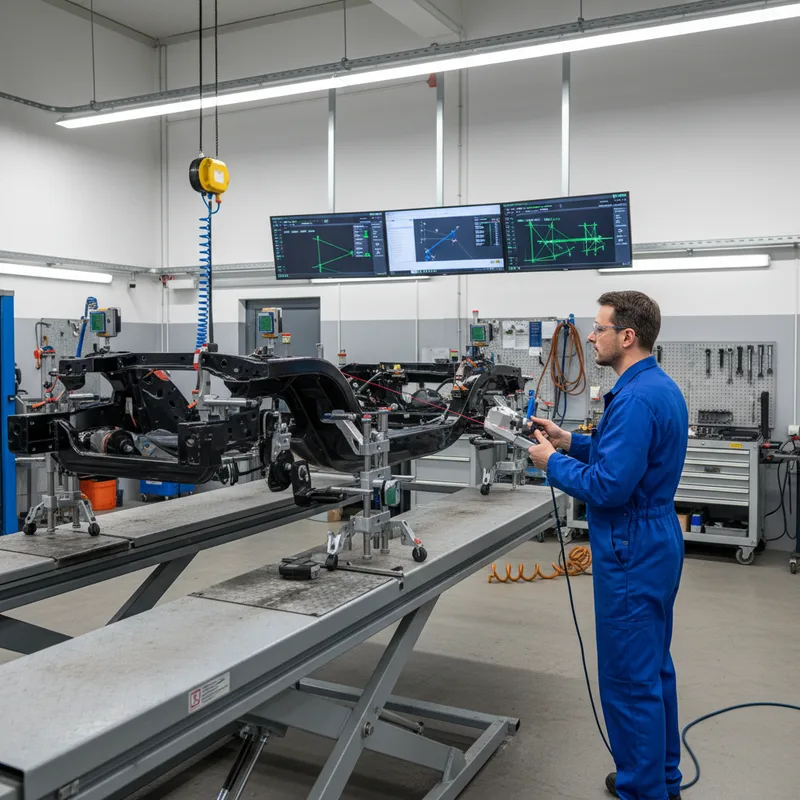
Before anything touches your vehicle, we measure it. We use computerized laser measuring systems that compare your vehicle’s current dimensions against the manufacturer’s factory specifications. Every reference point gets checked. This isn’t optional prep work, it’s the whole foundation of an accurate repair.
Skipping detailed measurement is, in our opinion, the single biggest mistake a body shop can make. A technician who eyeballs frame damage and jumps straight to pulling is guessing. Your vehicle deserves better than a guess.
Step Two: Frame Rack Correction
Once we know exactly where the misalignment is, your vehicle goes onto the frame rack. Hydraulic pulling equipment applies controlled, measured force to move structural components back into their correct positions. This isn’t brute force. It requires a technician who understands how different metals respond under stress, especially on modern unibody vehicles that use high-strength steel in ways that older cars simply didn’t.
We re-measure throughout the pulling process. Not just at the end. Continuous measurement is what separates a shop doing frame alignment correctly from one that’s just going through the motions.
Step Three: Post-Alignment Verification
The rack work is finished. Now we verify.
A full four-wheel alignment confirms that steering geometry is correct. We also check that any advanced driver assistance systems affected by the structural repair are recalibrated properly. Cameras and sensors that rely on precise mounting angles can’t be left unverified after frame work. That’s not optional.
You can review our full collision repair services to understand everything we bring to a structural repair job. When you’re ready to schedule an inspection, reach out to our team and we’ll walk you through exactly what your vehicle needs.
Common Mistakes Phoenix Body Shops Make with Frame Alignment Work
After nearly four decades in Phoenix, we’ve watched smaller shops repeat the same costly errors over and over. The mistakes aren’t always obvious to the customer, but the consequences show up fast.
The biggest one? Skipping hidden damage detection. A shop that eyeballs structural damage instead of putting the vehicle on a proper measuring system will miss bends and twists that aren’t visible from the outside. Frame alignment isn’t something you estimate by walking around the car. The measurements tell the story, not the technician’s gut feeling.
A close second is neglecting ADAS recalibration after structural repairs. We disagree with shops that treat this as optional. If your vehicle has lane departure warning, automatic emergency braking, or adaptive cruise control, those systems rely on sensors that are calibrated to your vehicle’s exact geometry. Correct the frame and skip the recalibration, and you’ve left a safety system operating on bad assumptions. The Insurance Institute for Highway Safety has documented how ADAS failures contribute to preventable accidents. That’s not a liability any driver in Phoenix should accept.
Red Flags to Watch For Before You Commit to a Shop
-
No written estimate or vague line items with no detail
-
No warranty on frame alignment or structural work
-
No mention of post-repair alignment verification
-
Unusually low bids that don’t account for full diagnostic time
-
No I-CAR or ASE certifications displayed or available on request
Ask directly whether they use computerized three-dimensional measuring equipment. If the answer is hesitant, that tells you something.
One more thing worth saying plainly: you have the right to choose your own shop regardless of what your insurance company suggests. Don’t let a quick referral push you into a shop that cuts corners on structural work. Our credentials and approach are documented, and we’re always happy to answer technical questions before you decide. Reach out anytime to get started.
Choosing the Right Shop for Frame Alignment: Credentials, Warranty, and Peace of Mind
Not every shop is qualified to touch your frame. That’s the honest truth, and Phoenix drivers deserve to hear it plainly.
Before you hand over your keys, verify that the shop holds current I-CAR and ASE certifications. These aren’t just plaques on a wall. They represent ongoing training requirements and proven technical standards. At Brad’s Deer Valley Collision, we’ve maintained those credentials since 1985, and we’ll show them to you without hesitation.
Ask for a written estimate. Every time. A shop that hesitates to put the scope of work in writing is giving you a red flag you shouldn’t ignore. The estimate should detail what’s being measured, what’s being corrected, and what equipment they’re using to verify results. Vague line items on a repair order almost always lead to surprises later.
Here’s an opinion you won’t hear everywhere: getting two or three estimates is smart, but the lowest bid is rarely the right choice for structural work. Frame alignment requires precision equipment, skilled technicians, and time. Shops cutting corners on price are usually cutting corners somewhere in the process too.
Warranty coverage matters just as much as the repair itself. Ask specifically what’s covered, for how long, and whether it transfers if you sell the vehicle. A shop confident in its work backs it up in writing.
Don’t overlook ADAS recalibration. If your vehicle has lane-keeping assist or automatic braking, those systems require recalibration after any structural correction. Most smaller shops skip this step entirely.
You have the legal right to choose your own repair facility regardless of what your insurance company recommends. Exercise it wisely.
If your vehicle needs a professional frame alignment evaluation in Phoenix, AZ, contact us today to schedule an inspection. We’ll give you straight answers and a clear path forward. See our full range of services while you’re at it.
Frequently Asked Questions
How do I know if my vehicle frame is misaligned after a collision?
There are a few things you can watch for. Uneven tire wear, a steering wheel that sits off-center, the car pulling to one side while driving, or visible gaps between body panels and doors are all common signs. That said, those symptoms don’t always tell the whole story. The only reliable way to confirm frame damage is a professional inspection using laser measurement equipment. Stop by Brad’s Deer Valley Collision in Phoenix, AZ, USA and we’ll give your vehicle a thorough post-accident frame alignment check.
Can frame alignment be fixed at any auto body shop in Phoenix?
Honestly, no. Not every shop has the right equipment or trained technicians to handle frame alignment properly. You’ll want to look for I-CAR and ASE certified technicians who use modern frame measuring systems. If your vehicle has advanced driver assistance systems (ADAS), the shop also needs to handle recalibration after the repair. Before committing to anyone, ask whether they provide a written warranty on their frame work. At Brad’s Deer Valley Collision, we’ve got the certifications, the equipment, and the warranties to back up everything we do.
How much does frame alignment typically cost in Phoenix?
The cost really depends on how severe the damage is and what equipment the repair requires. Minor frame alignment work in Phoenix, AZ, USA can run anywhere from $300 to $800. More extensive frame correction can go well above $2,000. Every vehicle and every collision is different, so the only way to get a real number is to have your car inspected. Always ask for a written estimate before any work starts so there are no surprises when the job is done.
Will my insurance cover frame alignment repairs?
In most cases, yes. If the frame damage came from a covered collision, your insurance policy should cover frame alignment as part of the overall repair estimate. The key is proper documentation. Your repair shop needs to clearly identify and document all frame damage, and that information gets submitted to your insurer for approval. We work with insurance companies regularly here at Brad’s Deer Valley Collision and can help you navigate that process so the claim goes as smoothly as possible.
What happens if frame alignment is skipped after a collision?
Skipping frame alignment after a collision is a decision that catches up with you fast. You’ll see accelerated tire wear, suspension components wearing out sooner than they should, and handling that just doesn’t feel right. More seriously, a misaligned frame is a safety risk. If your vehicle has lane assist, automatic emergency braking, or other ADAS features, those systems depend on the frame being straight to function correctly. Driving around Phoenix, AZ, USA with an unaligned frame puts you and everyone else on the road at risk.
Get Your Frame Checked After a Collision in Phoenix, AZ, USA
If your vehicle has been in an accident, hidden frame damage can make it unsafe to drive even when everything looks fine on the surface. At Brad’s Deer Valley Collision, we’ll give your car a thorough inspection and get the frame alignment back to where it needs to be so you can drive with confidence again. Check out what our customers are saying on Google and see why Phoenix drivers trust us with their vehicles after a collision.
Call us today or stop by our Phoenix location to schedule your free estimate. We’re ready to help you get back on the road safely.