Choosing a Collision Repair Shop in Phoenix, AZ: What Experience and Credentials Really Mean
Choosing a Collision Repair Shop in Phoenix, AZ: What Experience and Credentials Really Mean
The Real Cost of Choosing the Wrong Collision Repair Shop
Picture this: you’re driving home on the I-17 after a long day, and someone rear-ends you near the Deer Valley interchange. The damage looks manageable, maybe a crumpled bumper and some sheet metal damage around the trunk. You get a few quick estimates, pick the lowest one, and figure you’ve handled it. Three weeks later, your trunk lid won’t close right, your rear sensors keep misfiring, and the paint is already showing stress cracks along the repair line.
That scenario plays out more often than most Phoenix drivers realize.
Choosing the wrong collision repair shop doesn’t just cost you money. It can cost you your vehicle’s structural integrity, its resale value, and in serious cases, your safety. A cheap repair that misses hidden frame damage or skips post-repair calibration on your safety systems isn’t a bargain. It’s a liability you’re driving around in every day.
Phoenix is a big market. There are hundreds of body shops scattered across the metro, from the corridors near Desert Ridge Marketplace to the independent operations tucked between neighborhoods in Tempe and Chandler. Some of them are excellent. A lot of them are not. The sheer volume of options makes it genuinely hard for drivers to know what they’re looking at.
Here’s a professional opinion that runs counter to common advice: don’t focus on price first. Most guides tell you to get three estimates and compare. That’s reasonable, but too many people treat the lowest number as a signal of good value. In collision repair, a low bid usually means something got left out. Surface prep gets skipped. Aftermarket parts get swapped in without disclosure. Alignment gets a visual check instead of a proper measurement.
Experience matters in ways that aren’t visible on an estimate sheet. A shop that’s been operating in Phoenix since 1985, like Brad’s Deer Valley Collision, has seen vehicle technology change dramatically over four decades. That history translates directly into better diagnostic judgment and repair decisions on your car.
The stakes are real. Your vehicle is likely one of your largest financial assets, and after a collision, the repair work either restores its value and safety or quietly undermines both. The rest of this guide will show you exactly what to look for before you hand over your keys.
Certifications and Credentials: Your First Red Flag Test
Credentials matter. Don’t let anyone convince you otherwise.
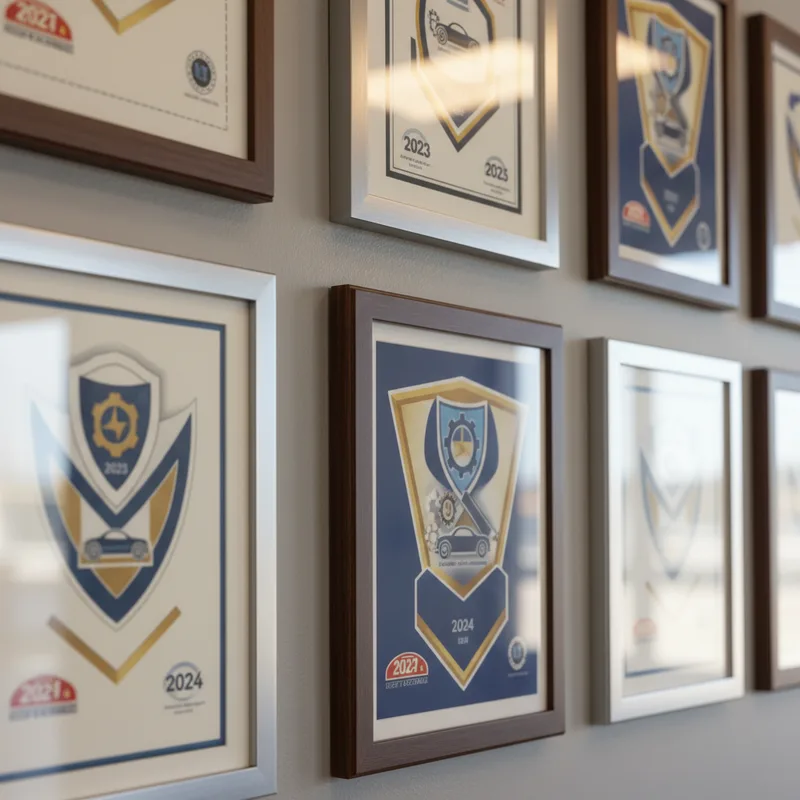
Before you hand over your keys to any collision repair shop in Phoenix, the first thing you should do is ask about certifications. Specifically, you’re looking for two: I-CAR and ASE. These aren’t just plaques on the wall. They represent real, ongoing training that directly affects how your vehicle gets repaired.
What I-CAR and ASE Actually Mean
I-CAR (Inter-Industry Conference on Auto Collision Repair) is the industry’s training standard for collision repair professionals. Gold Class status, the highest I-CAR designation, requires technicians to complete continuing education every year. That matters because vehicles change constantly. A technician trained in 2010 who hasn’t updated their skills is guessing on your modern vehicle’s repair requirements.
ASE (Automotive Service Excellence) certifications cover the mechanical and technical side of repairs, including the stuff that directly affects how your car handles after a collision. Both credentials together give you a more complete picture of a shop’s capability.
Here’s a professional opinion a lot of people won’t tell you: don’t just ask if a shop is certified. Ask which technicians hold those certifications and whether they’re current. Some shops display old credentials they’ve let lapse. That’s a red flag worth taking seriously.
At Brad’s Deer Valley Collision, we’ve been serving Phoenix drivers since 1985, and our certifications are current, displayed prominently, and backed by the real results our customers talk about. That’s not a throwaway claim. It’s a standard we hold ourselves to every day.
-
Ask to see current certification documentation, not just logos on a website
-
Verify that the technicians working on your vehicle hold the credentials, not just the shop owner
-
Treat an inability to answer these questions as a dealbreaker
Any reputable full-service collision repair shop in Phoenix should answer these questions without hesitation. If they can’t, keep looking.
Equipment and Technology: Don’t Overlook ADAS and Frame Alignment
Here’s something we see constantly in this industry: a vehicle comes back to a shop two weeks after repairs because the lane-keeping system is throwing warnings or the automatic emergency braking won’t stop triggering. Nine times out of ten, it wasn’t a new problem. It was created during the repair because the shop skipped recalibration.
Modern vehicles are not what they were in 1995. Today’s cars and trucks carry dozens of sensors, cameras, and radar units embedded in bumpers, windshields, and mirrors. These systems, collectively called Advanced Driver Assistance Systems (ADAS), are precisely calibrated from the factory. Any collision, even a moderate one, can knock those calibrations out of tolerance. A collision repair shop in Phoenix that doesn’t have dedicated ADAS recalibration equipment isn’t fully equipped to work on most vehicles built after 2016.
Frame alignment is the other piece most people underestimate.
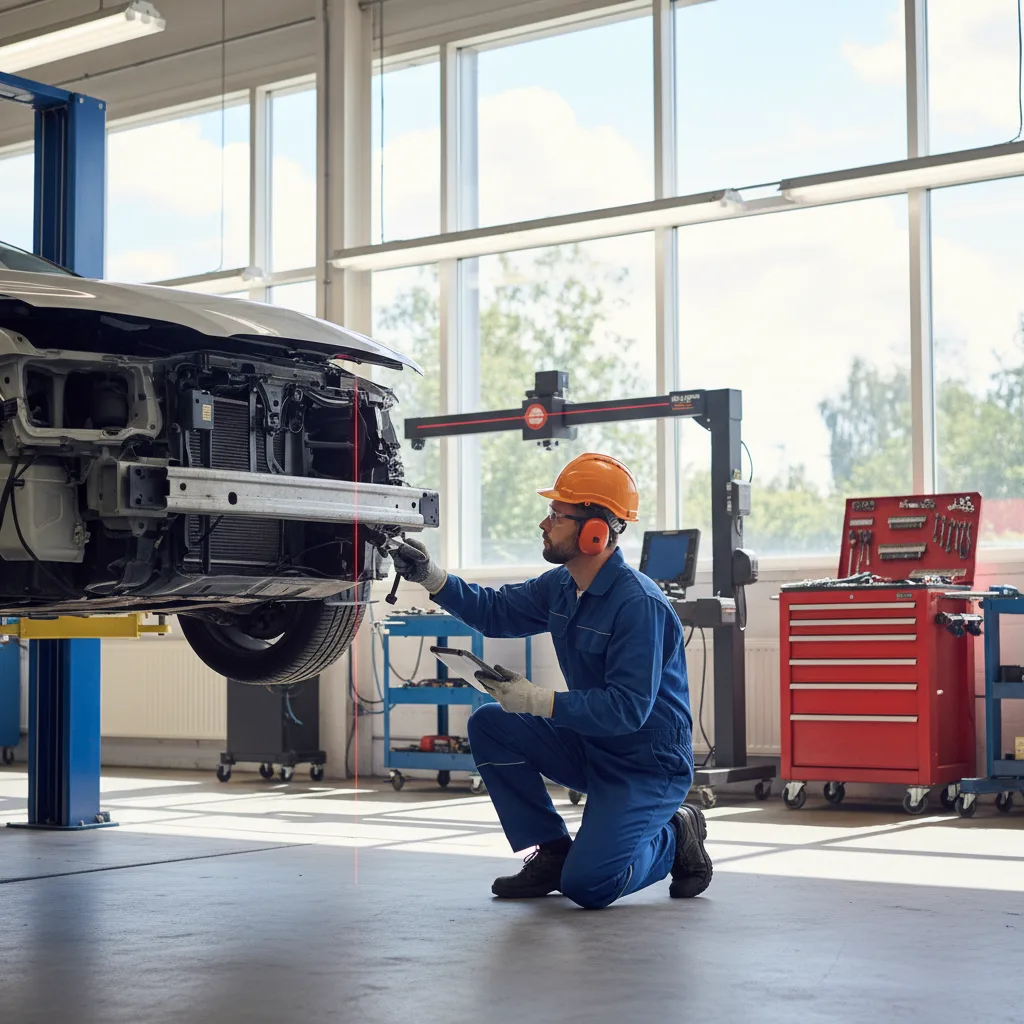
A quality shop should be running a computerized frame measuring system, not eyeballing damage or relying on old pull-and-check methods. Modern frame repair equipment uses three-dimensional measuring to verify that every structural point on the vehicle matches factory specifications. Miss that, and you’re sending someone back out onto the roads with a vehicle that handles incorrectly, wears tires unevenly, and may not protect occupants properly in a future impact.
We’ll be honest about something the industry often glosses over: a lot of shops invest in marketing before they invest in equipment. A clean waiting room and a slick website don’t fix your frame. The tools a shop runs matter far more than how nice the lobby looks.
When you’re evaluating any collision repair shop, ask specifically about:
-
ADAS recalibration capabilities, both static and dynamic
-
Computerized three-dimensional frame measuring systems
-
Post-repair alignment verification before vehicle delivery
-
OEM repair procedure access and adherence
At Brad’s Deer Valley Collision, we’ve been investing in the right equipment since 1985. You can review our full service capabilities or reach out directly to ask about how we handle your specific vehicle. See what our customers say about the results at our customer testimonials page.
Insurance Partnerships and Your Right to Choose
You have the right to choose your own shop. Full stop.
A lot of Phoenix drivers don’t realize this, and insurance companies don’t exactly go out of their way to advertise it. After an accident, your insurer may hand you a list of “preferred” or “approved” repair shops and strongly encourage you to use one of them. That list is called a Direct Repair Program, or DRP. These arrangements exist because insurers have negotiated pricing and workflows with certain shops, which helps the insurance company move claims faster and control costs.
That’s not necessarily bad. But here’s the thing: being on a DRP list doesn’t automatically make a shop the best option for your vehicle. It means they’ve agreed to work within the insurer’s pricing structure. Those are two very different things.
Under Arizona law, you get to decide where your car is repaired, regardless of what your adjuster suggests. If a shop you trust, one with verified credentials, the right equipment, and a solid reputation, isn’t on your insurer’s list, you can still take your car there. The insurer may ask you to pay a difference if the shop charges more than their approved rate, so it’s worth asking upfront, but the choice is yours.
At Brad’s Deer Valley Collision, we work directly with insurance companies and assist customers through the entire claims process, from writing accurate estimates to handling the documentation. We’ve been doing this since 1985, and we’ve seen how confusing and stressful that process can be for people who’ve never filed a collision claim before.
Our honest advice? Don’t let the path of least resistance make this decision for you. Check real customer reviews, confirm certifications, and choose the collision repair shop in Phoenix, AZ that you actually trust with your vehicle. You can also review your rights as a consumer through the Arizona Department of Insurance.
Five Critical Questions to Ask Before You Drop Off Your Vehicle
Most people ask exactly zero questions before leaving their car at a collision repair shop. They get a number, nod, and hand over the keys. We’ve watched that habit cost drivers hundreds, sometimes thousands, in surprise charges and repeat repairs.
Ask these five questions before you commit to any shop in Phoenix, AZ.
Can I get that estimate in writing, itemized?
A verbal quote means nothing. Get every line item documented, parts, labor, materials, and any anticipated supplemental charges. A shop that resists this is a shop worth walking away from. No exceptions.
What’s your warranty on parts and labor?
A confident, experienced shop backs its work. Ask specifically whether the warranty covers both parts and labor, and for how long. Vague answers here are a red flag. At Brad’s Deer Valley Collision, we’ve stood behind our repairs since 1985.
Are you using OEM or aftermarket parts?
This question matters more than most guides acknowledge. Aftermarket parts aren’t always inferior, but on newer vehicles with tight tolerances and integrated safety systems, OEM fitment can affect how those systems perform post-repair. Know what you’re getting before work begins.
What’s the realistic turnaround time?
Shops that lowball timelines to win your business create frustration fast. Ask for a realistic range and how they handle delays. Check their customer reviews to see if their estimates actually match reality.
How will you keep me updated during repairs?
Text updates, photos, a direct contact. Proactive communication separates professional shops from the rest. You shouldn’t have to chase anyone down for answers about your own vehicle.
Ready to ask the right questions in person? Contact us and see our full service offerings before you decide.
Common Hidden Damage and Why Experienced Shops Catch What Others Miss
Surface damage lies. What looks like a simple bumper repair after a parking lot hit in Scottsdale can be hiding bent subframe rails, misaligned suspension components, or a compromised crumple zone. Shops that rush the estimate miss this every time.
Here’s what we see repeatedly in Phoenix. A driver gets a cheap repair somewhere, picks up the car, and everything looks fine. Then three weeks later, the tires are wearing unevenly, the steering pulls left, or the collision avoidance system starts throwing false alerts. That’s not bad luck. That’s an incomplete inspection.
The most common hidden damage we find includes:
-
Frame and unibody damage that isn’t visible without a dedicated measuring system
-
Suspension misalignment caused by impact forces traveling through the chassis
-
ADAS sensor displacement, where cameras and radar units shift just enough to cause calibration failure
-
Hairline cracks in structural components that only show under proper lighting and inspection protocols
Honestly, a lot of people in the industry think a post-repair alignment check covers it. It doesn’t. Alignment addresses the tires. It doesn’t tell you whether the vehicle’s safety systems are reading the road correctly. Those require separate recalibration, and skipping that step puts drivers at real risk.
A full inspection from a qualified collision repair shop should include structural measurement, a suspension check, and ADAS verification before the car leaves the lot. That’s the standard we’ve held since 1985, and it’s the reason our customers in Phoenix don’t come back with surprise problems. Experience isn’t just about fixing damage. It’s about finding what others walk right past.
Choosing a Collision Repair Shop You Can Trust in Phoenix
Drivers who rush this decision almost always regret it. We see it regularly: someone took the first recommendation, skipped the questions, and ended up back in the shop two months later with problems that should have been caught the first time.
Don’t do that.
The shops worth trusting in Phoenix invest in three things consistently: their people, their equipment, and the customer experience. Certifications get renewed. Frame alignment systems get upgraded. Technicians train on ADAS recalibration because modern vehicles demand it. That investment doesn’t happen by accident, and it shows in the results.
A lot of advice out there tells you to just “get three estimates and pick the middle one.” Honestly, that’s incomplete guidance. Price tells you almost nothing about quality. What you’re really evaluating is transparency, credentials, and whether the shop can actually explain what they’re doing to your car and why. A lower number on an estimate can mean cut corners, aftermarket parts, or missed hidden damage.
At Brad’s Deer Valley Collision, we’ve been doing this work in Phoenix since 1985. You can read about our history and credentials, browse our full range of repair services, and check out what real customers say about their experience before you ever pick up the phone.
Ready to get started? Contact us today to schedule your estimate at our Phoenix collision repair shop. We’ll give you straight answers and quality work, every time.
Frequently Asked Questions
Can I choose my own collision repair shop in Phoenix, or does my insurance company have to approve it?
You have the legal right to choose your own collision repair shop in Phoenix, AZ, USA. Your insurance company cannot force you to use a specific shop. They may recommend shops through their direct repair program, and those can be convenient, but you’re never required to use them. Just notify your insurer of the shop you’ve chosen and verify your coverage limits ahead of time. At Brad’s Deer Valley Collision, we work directly with insurance companies so the process stays smooth on your end.
What certifications should I look for in a collision repair shop?
The two you want to see are I-CAR (Inter-Industry Conference on Auto Collision Repair) and ASE (Automotive Service Excellence) certifications. These aren’t just plaques on the wall. They mean the technicians have completed serious hands-on training and keep their skills current as vehicles change. Any reputable collision repair shop in Phoenix, AZ, USA should be happy to show you their credentials. If a shop gets vague when you ask about certifications, that’s a red flag worth paying attention to.
How long should collision repairs take at a quality shop?
It depends on how much damage you’re dealing with. Minor work like a bumper or fender repair typically runs 3 to 7 days. More significant damage, especially anything involving the frame, can take 2 to 4 weeks. A good collision repair shop will give you a realistic timeline upfront and keep you updated if anything changes. Be cautious of shops that promise an unusually fast turnaround. Rushed repairs tend to surface as bigger problems down the road, and that costs you more time and money in the end.
What’s the difference between OEM and aftermarket parts, and which should I choose?
OEM parts come directly from your vehicle’s manufacturer, so they’re built to fit and perform exactly as the original. Aftermarket parts are made by third-party suppliers and can vary widely in quality. OEM parts do cost more, but they’re the safer bet for fit and longevity. A trustworthy collision repair shop in Phoenix, AZ, USA will walk you through both options clearly and document your choice in writing on your estimate. Stop by Brad’s Deer Valley Collision and we’ll explain exactly what makes sense for your vehicle and your budget.
Should I be concerned if a collision repair shop quotes a significantly lower price than others?
Yes, you should take a closer look. A price that’s much lower than other estimates usually means something’s being skipped, whether that’s proper prep work, quality materials, or experienced labor. Get two or three written estimates and compare what’s actually included, not just the bottom line. The cheapest option often ends up costing more once hidden damage shows up or a repair fails early. A solid collision repair shop in Phoenix, AZ, USA will give you a fair, transparent estimate and stand behind the work they do.
Get Your Collision Repair Estimate from Brad’s Deer Valley Collision in Phoenix, AZ, USA
When your vehicle needs collision repair, you want experienced hands and honest answers. With 40+ years of expertise and the advanced technology to back it up, we’ll walk you through the entire process and make sure you understand exactly what’s being done to your car. See what our customers are saying on Google and find out why Phoenix drivers keep coming back to us.
Call us today or stop by our facility to schedule your comprehensive estimate. We’re ready to help you get back on the road the right way.